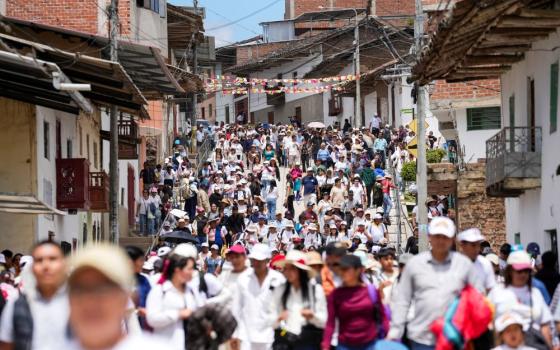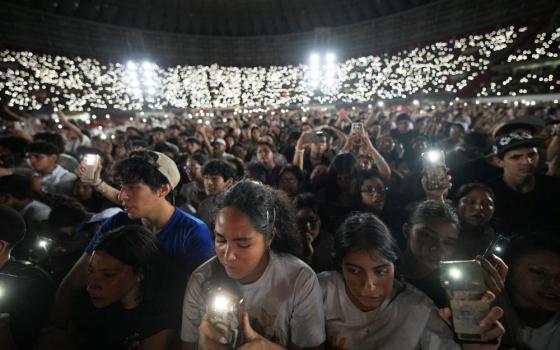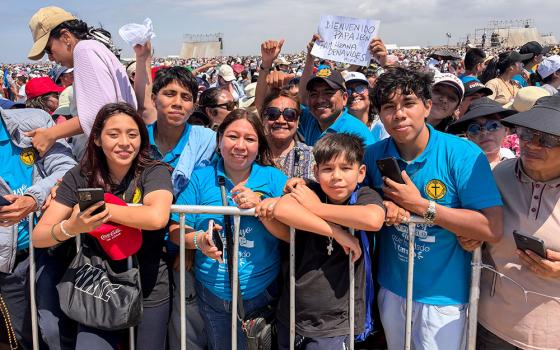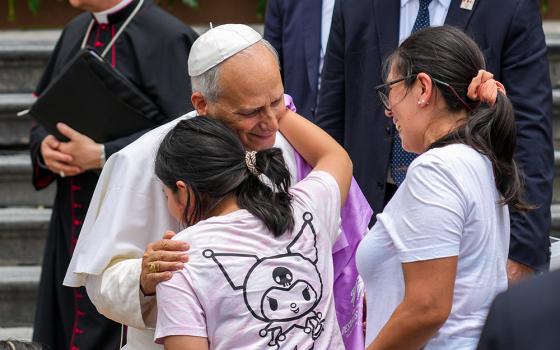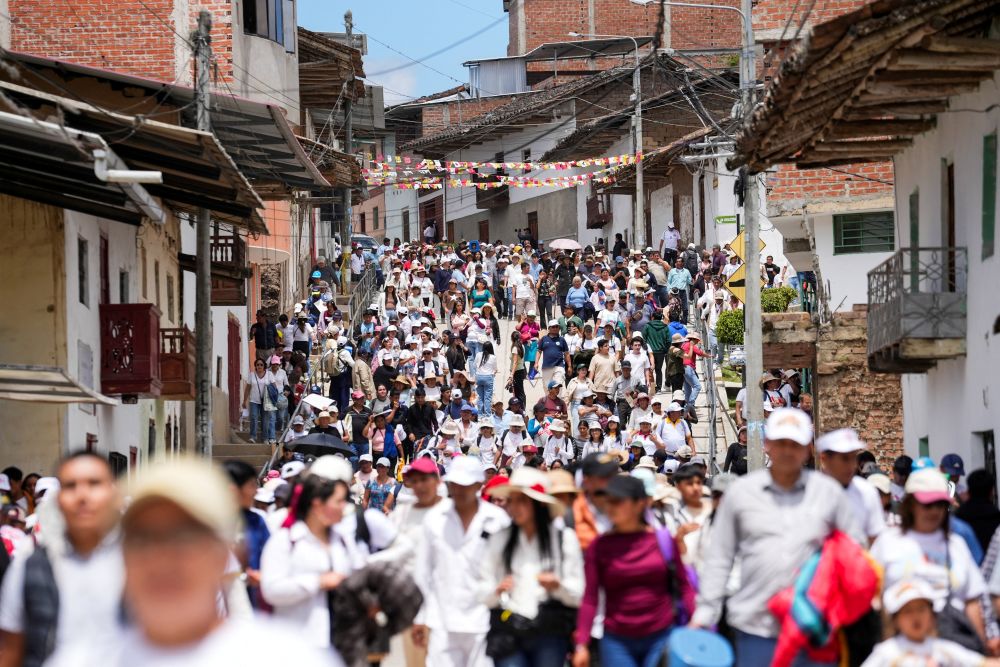
The crowd walks down the street after Pope Leo XIV celebrated Mass at an outdoor open esplanade in Santa Cruz de Succhabamba, Peru, Nov. 14, 2026. (OSV News/Reuters/Angela Ponce)
Join the Conversation
Send your thoughts to Letters to the Editor. Learn more
Davinson Correa remembers a Mass he attended in Chiclayo shortly after Robert Prevost was appointed to lead the diocese in northern Peru in 2014, in which the celebrating priest refused to refer to the new American arrival as "our bishop" during the liturgy.
A religious sister confronted the priest after that Mass: "Hey, father, you don't recognize our bishop?" Correa recalled her saying.
Prevost had only recently arrived in Chiclayo then. Though already ordained a bishop and tasked with leading the diocese, he would not be formally appointed as the bishop of Chiclayo until the following year after receiving Peruvian citizenship.
Still, Vatican guidelines maintain referring to someone in Prevost's situation as "our bishop" in the Mass' Eucharistic prayer. That subtle omission "seemed like not a big deal, but it said a lot" about attitudes toward Prevost in the diocese among its clergy, recalled Correa, a lay native of Chiclayo who was active in the diocese through his work with the Jesuit-run Centro Loyola.
"I remember hearing priests say, 'how can it be possible that they send us a gringo bishop'? " he told National Catholic Reporter, referring to the term used for North Americans throughout Latin America. "They thought: 'We have plenty of well-formed priests right here.' "
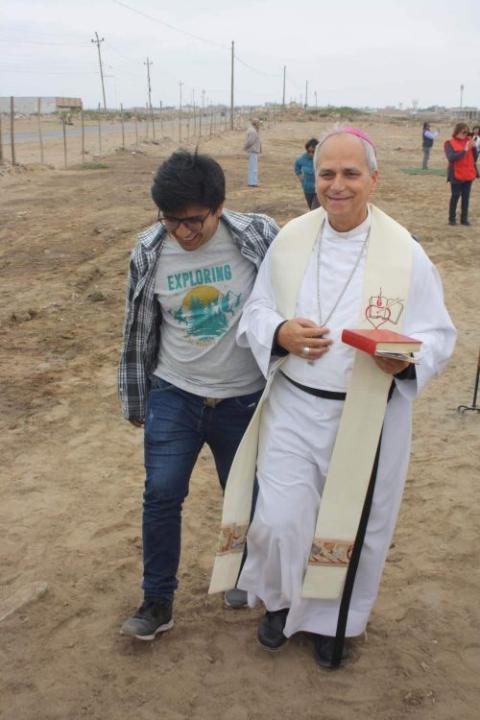
Davinson Correa and then-Bishop Robert Prevost, the future Pope Leo XIV, walk in Chiclayo, Peru in 2020. (Courtesy Davinson Correa)
More than a decade later, more than a million people lined the streets of Chiclayo on Nov. 13 to receive their bishop emeritus, better known to the world as Pope Leo XIV, who they now consider another Peruvian just like them. "The pope is more Peruvian than the potato," has become a comic refrain during Leo's visit to the Andean country where the potato originated and remains central to the diet.
A new bishop encounters an old divide
When Leo first arrived in the diocese, his nomination by Pope Francis was seen as an affront to the local clergy, who for the previous 46 years had been led by bishops associated with the conservative Catholic organization Opus Dei.
Those bishops had focused their ministry on developing three institutions that have become central to the life of the diocese, and all of which Leo had visited when he returned to Chiclayo as pope: the diocesan seminary, the local Catholic university and a Marian shrine.
But when Prevost arrived as the new bishop of Chiclayo, "the social aspect was very isolated from the experience of faith, as if social assistance had nothing to do with the church," said César Piscoya, a Chiclayo native who worked with Prevost as the executive secretary for the diocese's pastoral ministry. "The great challenge [for him] was to integrate these dimensions."
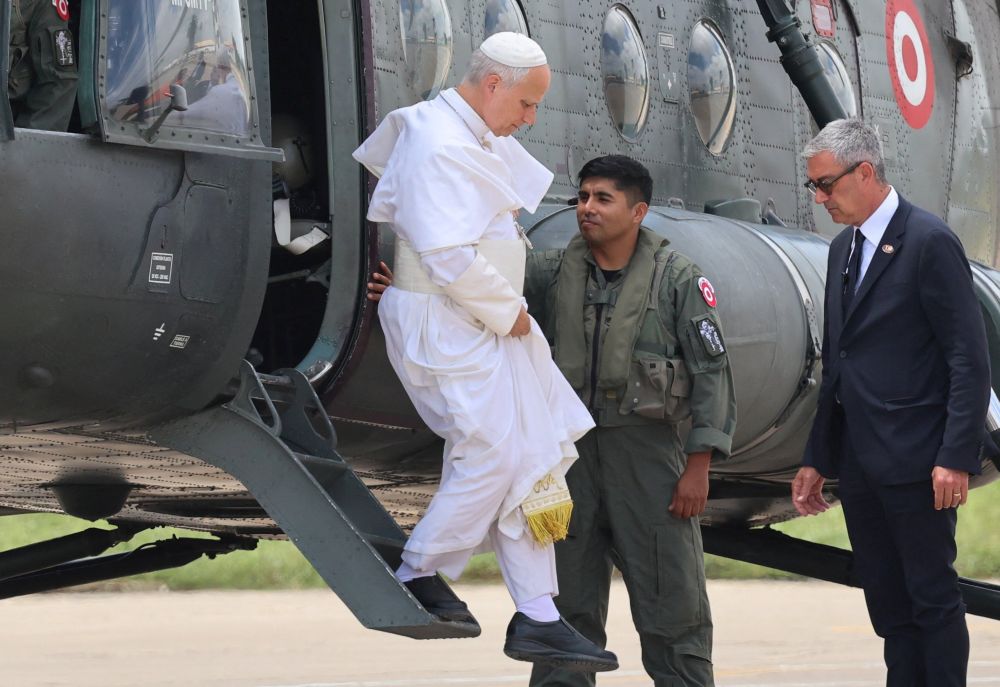
Pope Leo XIV disembarks from a helicopter at an air base in Chiclayo, Peru, after celebrating Mass at an outdoor open esplanade in Santa Cruz de Succhabamba Nov. 14, 2026. (OSV News/Reuters/Yara Nardi)
Together they developed a plan to regularly visit the diocese's then-47 parishes, three times a year, to hold meetings and retreats for the local clergy, religious and laity to spend time together, share their experiences of the church and, ultimately, learn to collaborate. Prevost also began convening regular meetings for lay and clerical representatives from each parish to gather and discuss their needs on the diocesan level.
What emerged was a shift in the diocese's priorities, making more central the work of Caritas, the diocesan charitable arm, and creating spaces for the laity to discuss their needs and visions for the church.
"I think his strategy was that of active listening, always without preconceptions," said Angélica Esquivel, a former administrative director at the University of St. Turibius in Chiclayo where Prevost was grand chancellor as the diocese's bishop.
Esquivel recalls one meeting at the university to plan a march for life, which, she said, "more traditional groups wanted to politicize" to condemn the country's national academic curriculum which some believed was promoting abortion and the use of contraceptives.
Prevost "allowed all voices to be heard, and at one point I gained the courage to say I was concerned about the stigmatization of vulnerable people" that could result from the march. "With the tilt of his head and smile, he validated my concern and, very peacefully, was able to transform the march into a festival for life."
'Now, we are all synodal parishes'
Against the backdrop of the participatory, listening church Prevost helped create in Chiclayo, his homily as pope delivered Nov. 13 to half a million people in his former diocese, many his former faithful, especially hit home.
Leo underscored "the urgent and binding duty of every baptized person to proclaim the Gospel," and said that "no baptized person can be indifferent to the task of evangelization, given that it is the church’s essential mission, her deepest vocation and her very reason for being."
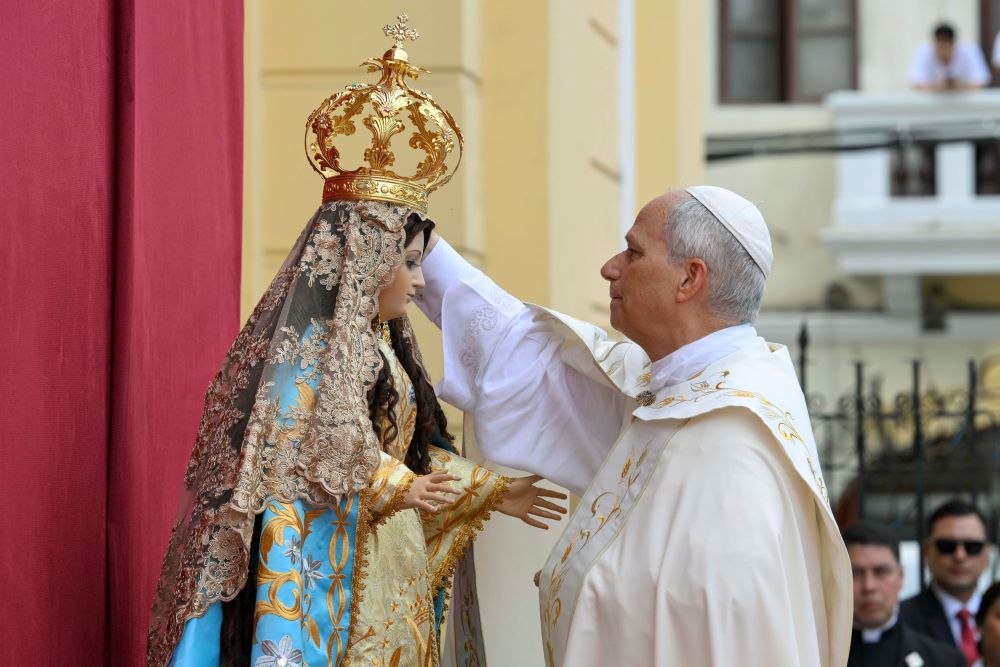
Pope Leo XIV places a crown on a statue of Mary as he presides over the rite of the coronation of the Immaculate Virgin outside the Cathedral of St. Mary in Chiclayo, Peru, Nov. 14, 2026. (OSV News/Reuters/Simone Risoluti)
Meeting later with regional bishops and the Chiclayo Diocese' clergy and lay leaders, the pope endorsed synodality — a vision of a more participatory church championed by Francis but often lambasted by his critics — calling it a "fundamental dimension of the church."
Among the front rows for the pope's speech at the shrine Nov. 14, Noemi Valerezo, who leads the pastoral ministry at Our Lady of Consolation Parish in Chiclayo, said that synodality was the central component of the legacy Prevost left in his diocese after being called to Rome in 2023.
"Synodality was what Pope Francis was asking of us as church, and he [Prevost] put it into action. Before, we just supported what the clergy wanted, but now we are more involved in our parishes and the work of the parishes," she told NCR. "Now, we are all synodal parishes."
Valerezo said the people of Chiclayo have a privileged view into understanding Leo's pontificate, since as pope he is continuing to advance the same priorities he had as a bishop.
Here in Chiclayo, "we understand his message well, and we understand where he is leading [church]," she said. "We know he is walking toward a more united and more open church, with an eye for the most needy and weakest."
And that assessment held true for Leo's message to the church community who gathered at the Marian shrine, also heard by the thousands standing atop the walls surrounding the complex and on the balconies and roofs of neighboring buildings to listen.
"Listening to social and cultural realities; defending human dignity; accompanying families, young people, migrants, indigenous peoples and those living in poverty; and working for justice, peace and the common good are not optional tasks," the pope said. "They are requirements of our ecclesial mission."
The National Catholic Reporter's Rome Bureau is made possible in part by the generosity of Joan and Bob McGrath.
Advertisement