

<div style="text-align: center;"><div style="margin-bottom: 10px; padding-bottom: 10px; border-bottom: 1px dotted #ccc;" class="full_width_image"><img style="width: 624px; max-width: 100%;" src="https://www.ncronline.org/files/styles/email_newsletter_full_width/publ… style="color: #04619d; text-decoration: none;" h

<h1>Sunday Resources</h1><div style="font-size: 19px; font-family: 'Georgia', serif;"><p style="margin-top:16px; margin-bottom:16px"><span style="font-size:11pt"><span style="line-height:150%"><span style="font-family:Calibri,sans-serif"><span style="font-size:14.5pt"><span style="line-height:150%"><span style="font-family:"Georgia",serif"><span style="color:black">National Catholic Reporter offers these resou
<div style="text-align: center;"><div style="max-width: 400px; margin: 0 auto;"><a href="https://www.ncronline.org/vatican/francis-comic-strip/francis-comic-str… style="max-width: 100%;" src="https://www.ncronline.org/files/styles/email_new

<div style="text-align: center;"><div style="margin-bottom: 10px; padding-bottom: 10px; border-bottom: 1px dotted #ccc;" class="full_width_image"><img style="width: 624px; max-width: 100%;" src="https://www.ncronline.org/files/styles/email_newsletter_full_width/publ… style="color: #04619d; text-decoration: none;" href="

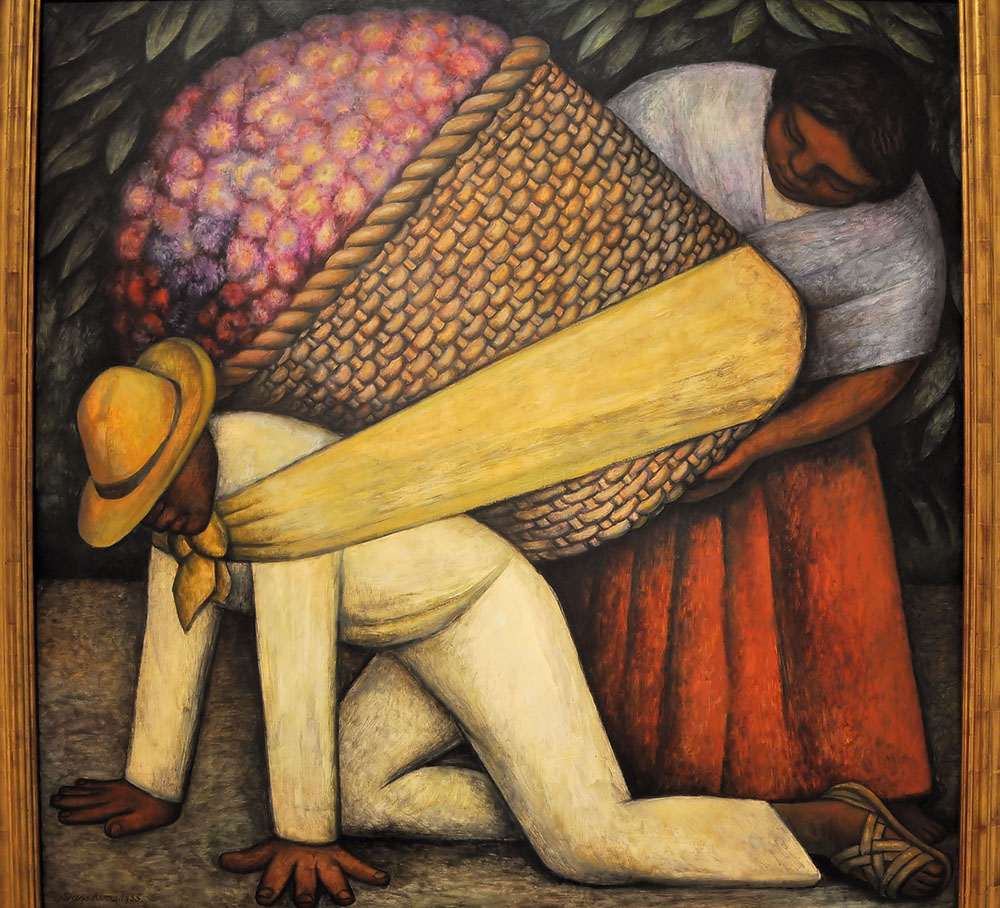
Diego Rivera's painting "El Cargador de Flores," or "The Flower Carrier," is seen at the San Francisco Museum of Modern Art. (Dreamstime/Enrique Gomez Tamez)

by Mary M. McGlone
Join the Conversation
Send your thoughts to Letters to the Editor. Learn more
Shortly before convening the synod on synodality — arguably the most important Catholic Church gathering since Vatican II — Pope Francis visited Mongolia. Mongolia? Situated precariously between Russia and China, the ancient home of Genghis Khan boasts a total of some 1,450 Catholics midst a population of 3 million.
Why on earth would an aging pope who would be welcome in many powerful nations with huge Catholic populations bother the hardship traveling to such an insignificant spot? Could he have found a smaller Catholic population anywhere in the world? (Well, yes. Vatican City's population is just over 500, so Mongolia beats them by numbers if not by percentage, and there are a few others as well.)
Unlikely as it seems, Mongolia, with a national population less than half that of Mexico City, has a cardinal — Giorgio Marengo — the church's youngest and a member of the synod on synodality.
What was the point? It seems that this was one more opportunity for Francis to demonstrate what he thinks it means to be a shepherd.
Today we celebrate the "Solemnity of Our Lord Jesus Christ, King of the Universe." That's a mouthful! Pope Pius XI established the feast in 1925 to recall that Christ should reign in the hearts and will of humankind.
The readings for the day, different in each year of our three-year liturgical cycle, orient and describe the celebration better than its grandiose title.
The centerpiece today is Matthew's scene of the judgment between sheep and goats (an unfortunate disparagement of the poor old goats who are generally smarter, albeit feistier, than sheep). Michelangelo gave us a vivid image of this scene in which Christ's arm is raised in judgment, the saints are rising and the damned are pitifully drifting into the abyss. Such works vividly depict a fearsome last day.
Jesus' parable offers a different interpretation of the end. In Jesus' parable, the end is ever-present. The coming of Christ is not some future event, but an everyday occurrence and not at all like the Sistine Chapel.
If we want artistic renditions of Matthew's depiction of judgment, we might better read Charles Dickens or study the photography of Dorothea Lange.
Rather than talk about an apocalyptic end, Jesus claimed that the king appears in the guise of every needy person and that we judge ourselves in our response to them. Along these lines, Diego Rivera's painting "El Cargador de Flores" probably reflects this parable more truly than Michelangelo's "The Last Judgment."
The coming of Christ is not some future event, but an everyday occurrence.
Rivera depicts a peasant on his hands and knees. His wife struggles to help him stand up under the weight of an enormous basket of flowers to take to market.
The message for anyone who has eyes to see is that some people's luxurious decor comes at the expense of the poor who cannot even see the beauty of what they bear on their backs.
This is where the vocation of the shepherd comes in. In a universe in which we have been given the ability to choose whether to advance the reign of God or to frustrate it, every follower of Jesus is called to be a shepherd. Every person has the ability to see what Dickens, Lange and Rivera point out, thus every one of us has a responsibility to respond.
Francis went to one of the smallest and least important churches in the world to help the rest of the world see through a different lens.
Advertisement
Francis' missionary journey to Mongolia interprets the 3,000-year-old Psalm 23 with 21st-century symbolism. Francis refreshed the souls of people insignificant in the eyes of the world. That proclaimed one message to people who feel insignificant and another to those who don't notice them.
By making the Mongolians — and all whom they represent — more visible, Francis highlighted their right to enjoy the verdant pastures of our Earth. In the full sight of all those who disparage the small, he spread a lavish table and celebrated the Eucharist with almost every Catholic in the country.
We celebrate this Solemnity of Our Lord Jesus Christ, King of the Universe, on the heels of the first session of the synod on synodality. The synod is calling us to learn how to journey together as church and as the people of the world.
These two events combine to exhort us to recognize that what is truly important in our day is the life of the flower carriers — all those people burdened in a world that loves what they provide, but rarely, barely remembers that they are the ever-present representatives of Christ the King.
When we learn to treat them as such, we will be on the right side of history — all the way to the end.
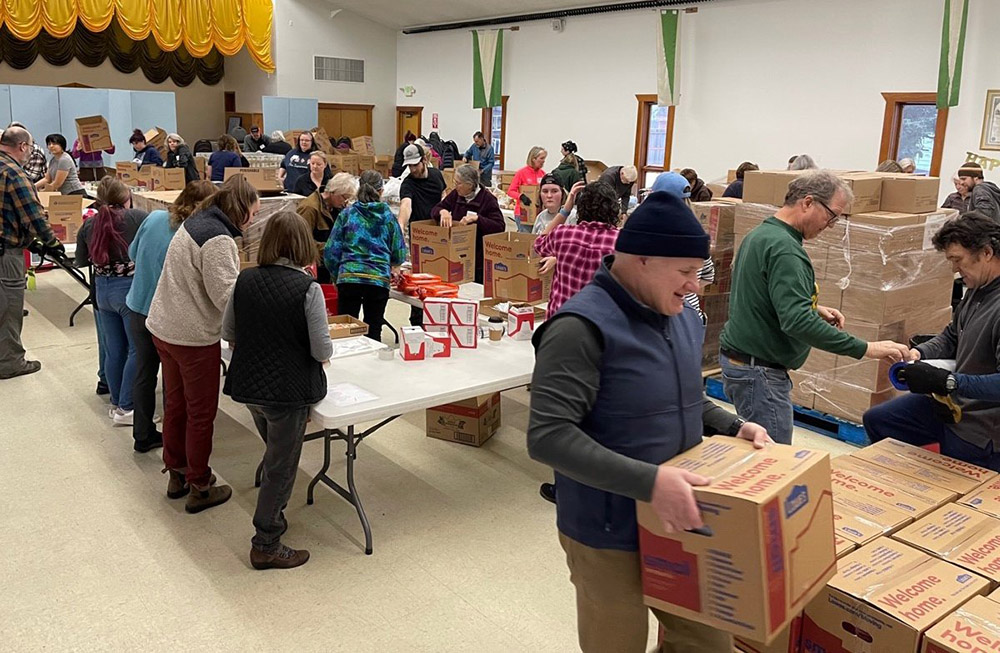
The Thanksgiving Blessing collection in Anchorage, Alaska, draws volunteers to help distribute food donations Nov. 21, 2022. The annual collaboration between local faith communities and the Food Bank of Alaska helps ensure families in the community have a holiday meal. (OSV News/Courtesy of Catholic Social Services)
by Mary M. McGlone
Join the Conversation
Send your thoughts to Letters to the Editor. Learn more
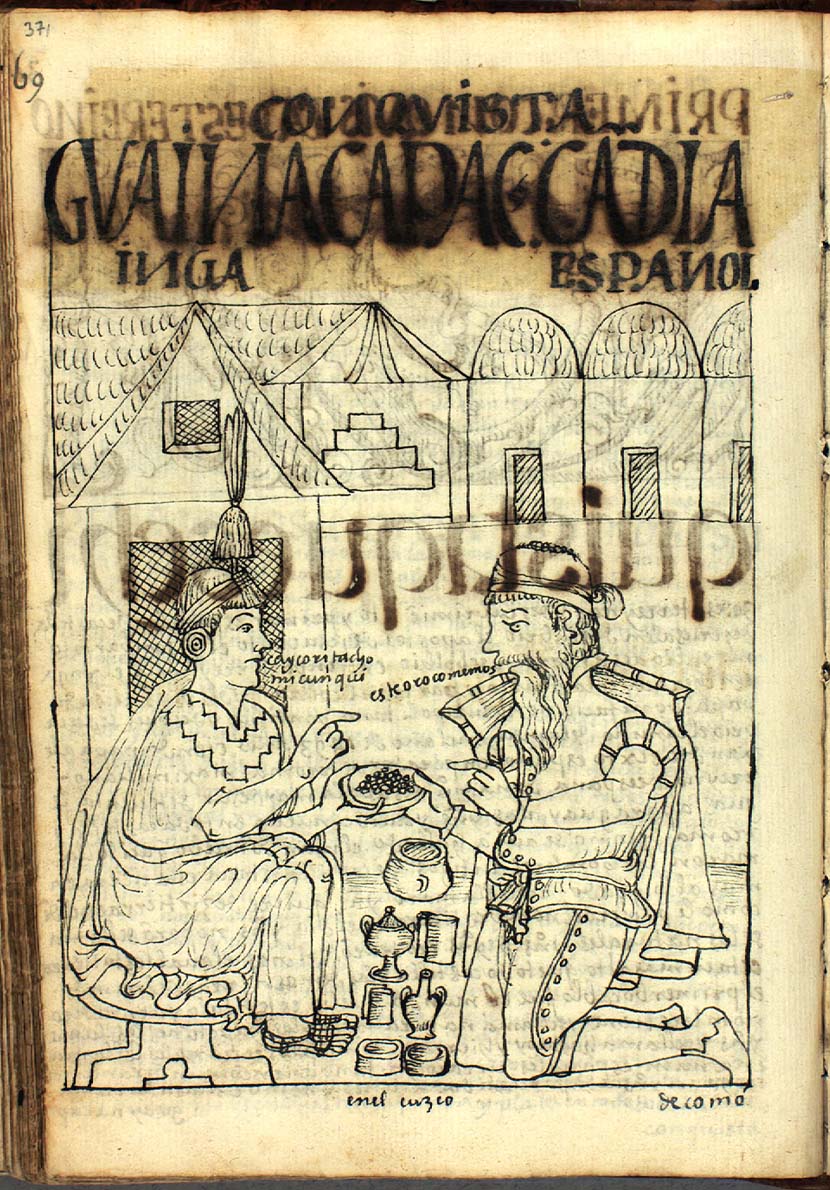
In the early 1600s, an Inca nobleman named Guamán Poma wrote a long letter to King Philip III of Spain, informing him about how Spanish conquistadors had fulfilled their charge to bring Christianity to the people of his territory, including what is now known as Peru. With the text of the letter and hundreds of illustrations, he explained that while the Spaniards did bring Christianity to the New World, their behavior generally belied the faith they preached. They rapaciously dispossessed a great civilization, showing that they were largely unconvinced of the message of love of neighbor at the core of the Gospel they supposedly believed in.
Recognizing that the popes had given Spain permission to colonize for the purpose of evangelization, Guamán Poma informed the king that the Spaniards' proselytizing task had been carried out; there were then enough Christians in the empire to continue to build the church. Thus, the time had come for the Spaniards to return home to Europe.
As everyone knows, that didn't happen. In reality, few of the conquistadors or colonizers of South and North America showed any significant evidence of being genuine Christians, much less of approaching the people of the New World as brothers and sisters in the faith.
One of Guamán Poma's most barbed cartoons shows a conquistador kneeling before a seated Inca, admitting that gold was his sustenance, the true object of his worship.
Remembering this story as we approach Thanksgiving suggests an interesting approach to Jesus' parable of a man who entrusted his possessions to his servants so that they would carry on his business.
Matthew goes all out in his rendition of this story. (Luke 19:12-27 offers a more spartan version.) Each talent Matthew mentions equaled about 20 years' wages — no mean sum! We shouldn't feel too sorry for the servant who only got one. The owner was not only wealthy, but extravagant in his trust!
While the numbers are astounding, Jesus' emphasis is on the way each servant understood his relationship to the owner.
For two of them, the master's trust impelled them to imitate his risky behavior, giving them the courage to "trade" or work with the owner's fortune, assuming risk of loss for the hope of gain. They gave the owner the highest compliment possible by imitating him.
The third placed his faith in the value of what he had at hand; fearing the consequences of a loss, he played it safe, effectively repudiating the owner's lavish approach to life.
Today's Psalm centers on the idea of fear of the Lord. Some hear that phrase as a grim reminder of the final judgment: Fear the Lord who has been watching for your missteps and will bring you to justice! Others understand fear of the Lord as the awe they feel when glimpsing the mysterium tremendum, the overwhelming grace and bounty of the loving Creator of the universe manifest in all creatures, great and small.
Advertisement
The grim will respond with prudent timidity — striving to avoid any mistake. Others will be moved to imitate the unrestrained generosity of the God who has put so much in their hands. They trust that the owner understands the risks and will stay with them through it all.
Obviously, by now, we are speaking not of the parable, but its subject: God.
People who risk imitating divine openhandedness collaborate with their creator. In the symbolism of the Hebrew Scriptures, they are the people of God who respond like the worthy wife, laboring and continuing the creative work of the God who espoused her. Like their spouse, their works will inspire admiration and imitation — another way of saying that their way of life evangelizes.
We celebrate our Thanksgiving feast as a time of thanks for life and the remembrance of how Native Americans' generosity saved the lives of North American colonists who had invaded their land. The feast invites us to contemplate the prodigal trust God shows by allowing us to participate in the ongoing work of creation. We are invited to reverence every bit of creation as a manifestation of God.
To the extent that we do that, our behavior and love will mirror the worthy wife rather than the conquistador.
Genuine thanksgiving will motivate us to accept the trust put in us and imitate God's limitless liberality. As we do so, we may just find the courage to risk investing everything we have been given and all that we are into living and sharing the Gospel.
<div style="text-align: center;"><div style="margin-bottom: 10px; padding-bottom: 10px; border-bottom: 1px dotted #ccc;" class="full_width_image"><img style="width: 624px; max-width: 100%;" src="https://www.ncronline.org/files/styles/email_newsletter_full_width/publ… style="color: #04619d; text-decoration: none;" href="

<div style="text-align: center;"><div style="margin-bottom: 10px; padding-bottom: 10px; border-bottom: 1px dotted #ccc;" class="full_width_image"><img style="width: 624px; max-width: 100%;" src="https://www.ncronline.org/files/styles/email_newsletter_full_width/publ… style="color: #04619d; text-decoration: none;" href="

<h2><a style="color: #04619d; text-decoration: none;" href="https://www.ncronline.org/opinion/ncr-voices/synod-new-kind-conversatio… the synod, a new kind of conversation is evolving </a></h2><div style="font-weight: bold; font-size: 15px; font-family: Arial, sans-serif;" class="byline">by Michael Sean Winters</div><div style="font-size: 19px; font-family: 'Georgia', serif;"><p>The nays
<div style="text-align: center;"><div style="margin-bottom: 10px; padding-bottom: 10px; border-bottom: 1px dotted #ccc;" class="full_width_image"><img style="width: 624px; max-width: 100%;" src="https://www.ncronline.org/files/styles/email_newsletter_full_width/publ… style="color: #04619d; text-decoration: none;" href="
