

<div style="text-align: center;"><div style="margin-bottom: 10px; padding-bottom: 10px; border-bottom: 1px dotted #ccc;" class="full_width_image"><img style="width: 624px; max-width: 100%;" src="https://www.ncronline.org/files/styles/email_newsletter_full_width/publ… style="color: #04619d; text-decoration: none;" href="

<h2><a style="color: #04619d; text-decoration: none;" href="https://www.ncronline.org/opinion/ncr-voices/conservative-critics-synod… critics of the synod and Francis are embarrassing themselves</a></h2><div style="font-weight: bold; font-size: 15px; font-family: Arial, sans-serif;" class="byline">by Michael Sean Winters</div><div style="font-size: 19px; font-family: 
<h2><a style="color: #04619d; text-decoration: none;" href="https://www.ncronline.org/vatican/vatican-news/praying-unity-pope-welco… for unity, pope welcomes head of Malankara Orthodox Syrian Church</a></h2><div style="font-weight: bold; font-size: 15px; font-family: Arial, sans-serif;" class="byline">by Cindy Wooden, Catholic News Service</div><div style="font-size: 19px; f

(Unsplash/Kelly Jean)

by Mary M. McGlone
Join the Conversation
Send your thoughts to Letters to the Editor. Learn more
What's the difference between an invitation and a call? We might be invited to the game on Sunday, to a party, or even to be godparent to the child of a friend. When does an invitation ("Will you marry me?") become a call? How do we know our "calling in life"?
These are some of the questions that spring from Jesus' story of the king who got stood up when he threw a wedding party for his son.
First of all, the setting. Matthew makes the king the protagonist in this story. Think about this: While you might wiggle out of a neighbor's invitation to a baby shower or potluck, in Jesus' day, an invitation from the king required acceptance — to do otherwise implied insurrection.
So, here we have this king all ready to show off his wealth and generosity by throwing an impressive feast for his son, probably the crown prince.
This is no small affair. When the menu includes calves and fattened cattle, we're talking about 750-pound calves and cattle that weigh about twice that much — not counting vegetables and wine! It's hard to calculate the insult resulting from making such preparations only to have the people you want to impress decide that they've got something better to do.
You can bet that they weren't thinking that the king was going to rule for long — nor that his heir would become a person of great power. Dissing him showed that they were counting on a change of regime.
The king was not to be deterred. If the "right people" weren't going to be with him, he would find others and make them right.
That's a description of salvation and a retake on Isaiah 25's mountaintop banquet for "all peoples." These stories portray God's future as a blowout feast for everyone humble enough to accept the fact that they can never deserve the invitation and who, at the same time, know that the invitation itself makes them worthy.
What if we thought about the images of these feasts as call stories? Most of the vocation stories we hear stress the leaving everything to follow. The fishers left their nets and boats, the women who followed Jesus left their reputations and gave from their own wealth to follow. Jesus himself warned that each would need to take up their own cross.
Advertisement
Nevertheless, the Gospels never present the reign of God as an experience of fast and abstinence. Jesus himself admitted that others called him a glutton and a drunkard (Matthew 11:19). Jesus was never accused of being too strict or ascetic!
What if we thought of our calling, our vocation, as an invitation to "the good life" in the sense of a life of fulfillment, joy, celebration, commitment, laughter and love? Isn't that what the folks who filled the king's banquet hall found?
We might think of this party as a mirror of the sacraments of initiation. Baptism, confirmation and Eucharist, symbolized by the acceptance of the invitation, the wedding gown and participating in the feast. Here, "the bad and good alike" can enjoy everything the king has prepared for them. You can imagine them dancing and singing, going back for seconds (or thirds) and popping petit fours into their mouths each time they glide past the dessert table.
This is our invitation, our vocation. All it costs, as in Isaiah 55, is the willingness to participate fully: to accept the invitation, put on the attitudes symbolized by the wedding dress, and then fully enjoy what is offered.
Let's go for it!
(Unsplash/Tim Mossholder)
by Mary M. McGlone
Join the Conversation
Send your thoughts to Letters to the Editor. Learn more
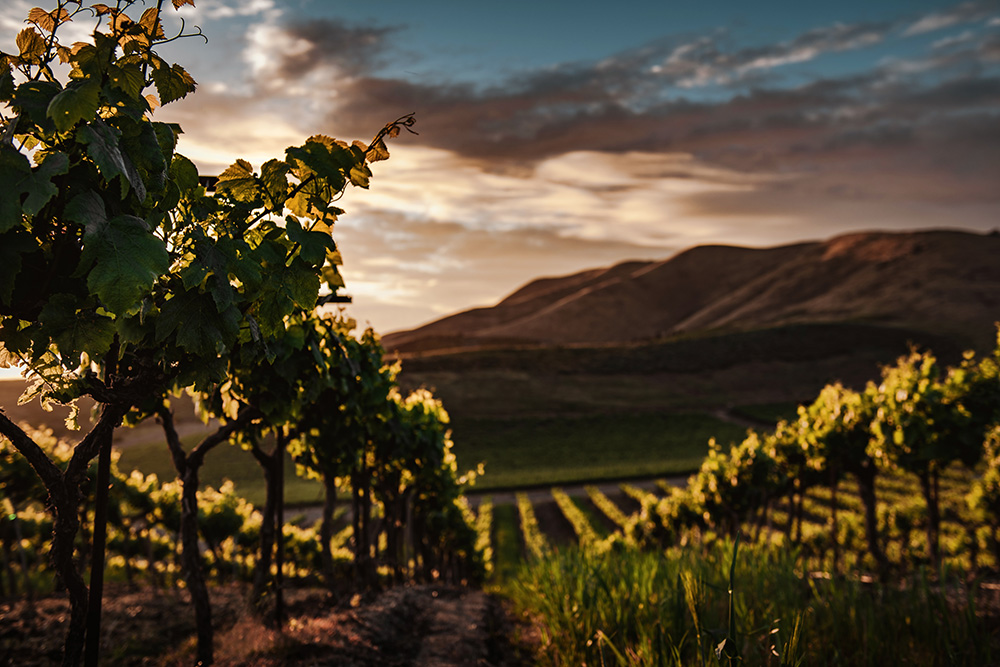
Who could fail to empathize with Isaiah's heartbroken planter? The poor man loved his land with all he had, molding it with his muscles, caressing it with his hands — never a mention of a servant to do the hard work. Once all was ready, he built a tower from which to gaze on its growth and protect it.
Alas, his hopes were dashed; the produce didn't serve even for vinegar. What was there to do other than let it go wild and let the goats have their way with it?
Jesus turned Isaiah's song of lament into a more personal parable. He transformed the relationship between proprietor and land into one between an owner and tenants. As we listen to his tale, we hear echoes of the preface to the Fourth Eucharistic Prayer: "Again and again you offered a covenant ... and taught us to hope for salvation."
Jesus' parable recounts the underside of the story, turning it into a critique of his audience of closed-minded chief priests and elders. Underlining how the parable put the religious leaders on trial, Matthew described the treatment of the son in precise parallel to what the leaders eventually would do to Jesus: "They seized him, threw him out of [Jerusalem] and killed him."
Responding to Jesus' question about what the owner should do, the leaders pronounced sentence on themselves. Applying a theory of retribution, they said, "He will put those wretched men to a wretched death." In other words, they should reap the same evil they sowed.
Jesus didn't follow their avenging lead. Instead of a violent vengeance for their evil, he simply says, "The kingdom of God will be taken away from you."
That sentence subtly reveals that by both their treatment of prophets and their way of dealing with sinners they disqualify themselves for the kingdom that Jesus would make present among them.
Jesus' words continue to echo the preface we hear so often. Phrases like "You did not abandon us to the power of death" and "He destroyed death and restored life" reveal what Jesus teaches about God's approach to fickle humanity.
When Isaiah's friend's vineyard didn't produce, the owner took away its protection and let it go wild. In contrast, Jesus gave people the freedom to judge for themselves: Did they want to live by the forgiving, loving norms of God's reign or did they prefer a kingdom of their own making? God leaves the power in our hands.
Jesus' question about what will happen to those who reject God's messengers applies to everyone who reads the Gospel. It asks us, "What kind of realm do we hope to create among ourselves?"
Over and again, when we decide how to reward or condemn others, we hear Jesus say, "Leave the judgment to me."
We heard this in Matthew 13, when Jesus warned against weeding the field. As we recalled last week, that was the angel's message to Joseph: "Do not be afraid" (Matthew 1:18-25). It is also the underlying theme of Jesus' command to forgive.
Advertisement
In the Letter to the Philippians, Paul offers another angle on this teaching. His message? "Have no anxiety."
Any sense that this is a Pollyanna approach gets kiboshed when we remember that Paul was writing from prison. He found his situation of confinement and danger of death a good place from which to teach about prayer.
"Yes," he says, "make your requests known to God, ask and do it with thanksgiving!"
He's not saying that the God "who makes all things work for good" (Romans 8:28) is unaware, but rather that asking for God's help will keep praying people attentive to how God would lead them forth. Thanksgiving keeps us conscious of how many ways God has been present to us. Because it is based on remembering God's good care, requesting help with gratitude becomes the recipe for knowing "the peace of God that surpasses all understanding."
Today's readings invite us into at least two styles of prayer. The first, as Paul says, is to pray with the trust that produces peace, remembering that God urges us toward unimaginable good in every circumstance.
The second might be more of a loving contemplation. Following Isaiah's lead, we open ourselves to feel with the God of the vineyard, the owner who is laden with almost unbearable sadness at what has happened to what he had created with such care.
The dynamic of both of these prayers is the same. They lead to love of God, to a life that Paul calls honorable, just, pure, lovely, gracious, excellent, etc. Such prayer also leads us into the mustard-seed fruitfulness that transforms the world.
<div style="text-align: center;"><div style="margin-bottom: 10px; padding-bottom: 10px; border-bottom: 1px dotted #ccc;" class="full_width_image"><img style="width: 624px; max-width: 100%;" src="https://www.ncronline.org/files/styles/email_newsletter_full_width/publ… style="color: #04619d; text-decoration: none;" href=&qu

<div style="margin-bottom: 10px; padding-bottom: 10px; border-bottom: 1px dotted #ccc;" class="full_width_image"><img style="width: 624px; max-width: 100%;" src="https://www.ncronline.org/files/styles/email_newsletter_full_width/publ… style="font-size: 19px; font-family: 'Georgia', serif;"><p>

Randy Kritkausky, an enrolled member of the Citizen Potawatomi Nation, is the author of Without Reservation: Awakening to Native American Spirituality and the Ways of Our Ancestors (2020). He is the co-founder of ECOLOGIA, an international environmental nonprofit based in Middlebury, Vermont.
<div style="text-align: center;"><div style="margin-bottom: 10px; padding-bottom: 10px; border-bottom: 1px dotted #ccc;" class="full_width_image"><img style="width: 624px; max-width: 100%;" src="https://www.ncronline.org/files/styles/email_newsletter_full_width/publ… style="color: #04619d; text-decoration: none;" href="
