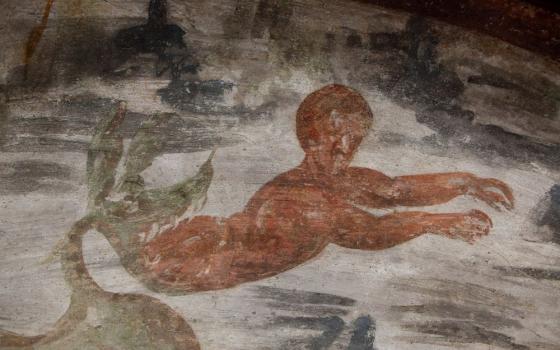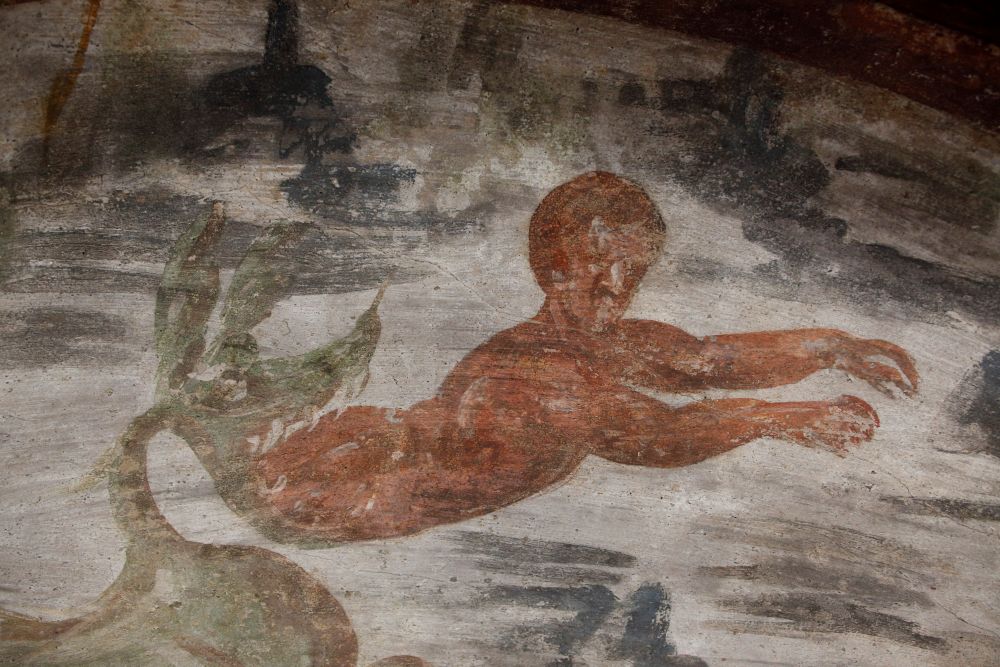
Jonah is spit out of the whale in this fresco in the burial chambers in the Christian catacombs of St. Domitilla in Rome. (CNS/Carol Glatz)

by John Dear
Join the Conversation
Send your thoughts to Letters to the Editor. Learn more
On this week's episode of "The Nonviolent Jesus Podcast," I talk about the Book of Jonah and its three acts — first, how God tells him to march through Nineveh and call the people to repent. Jonah runs away, catches the next ship out, is thrown overboard, swallowed by a whale, turns to God in prayer and is finally released.
Next, Jonah walks through the great capital city of his hated enemy, Nineveh, calls them to repent, and lo and behold, the whole city repents in sackcloth and ashes, fasts and prays, and eventually learns to live in peace with God.
In the final comical act, Jonah responds to God's compassion by throwing a temper tantrum. "I knew you were kind and gracious and merciful," he complains to God. He goes off and sulks and begs for death. The gentle, merciful God tries to reason with him, asking, "Isn't it right that I care for the 120,000 people of Nineveh, who don't know their right hand from their left, not to mention the cattle?"
It's one of the shortest and greatest books of the Bible, but it throws a great challenge at us. If God was upset with the violent people of Nineveh, what must the God of peace think about America and its permanent warfare, corporate greed, racism, executions, fascism and plans to destroy the planet with nuclear weapons, AI and fossil fuels?
We don't want to end up like Jonah, bitter, resentful and vindictive. We want to repent of the social sin of war and spend the rest of our lives celebrating God's kindness, forgiveness, compassion and universal love, and get on with the mission of peace that God gives us.
In the end, we find that it's more pleasant to be people of peace and nonviolence than sitting under our dead gourd tree, nursing our rage, feeling depressed and begging for death.
Advertisement