(Unsplash/Matthew)

by Sr. Mary M. McGlone
Join the Conversation
Send your thoughts to Letters to the Editor. Learn more
In a scene from Jesuit Fr. Bill Cain's book The Diary of Jesus Christ, Jesus asks Mary if he has disqualified himself as her son. She answers, "That would be impossible. No matter how big you get, or how surly, or how messianic, you will always be my son." Her response seems surprisingly more godlike than what we hear in today's readings.
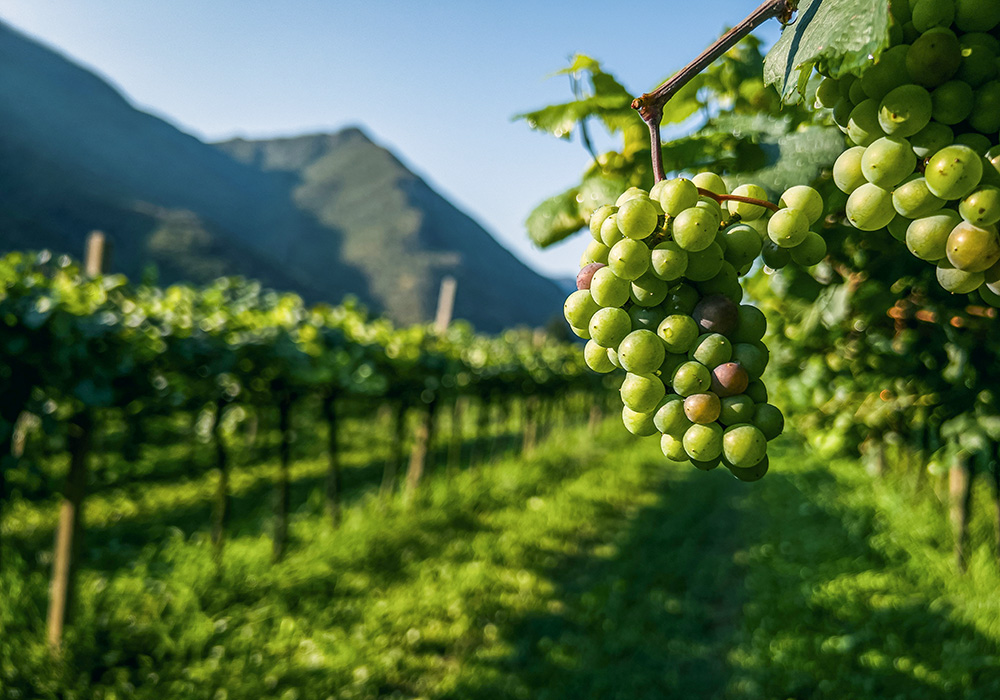
Isaiah's portrayal of the vineyard keeper sings about an anguish as miserable as any country western song. It's not about lost love but about lost children. Echoing the Good Friday reproaches, it's a heartbreaking lament of a man who gave his all: careful planning, time, labor and ultimately his whole heart to a vineyard that failed to produce.
It's easy to envision the desolate winegrower sitting on his porch, staring blankly at the sterile results of his labor, weeping softly as he realizes that the only solution is to abandon the fruitless vines and start over.
Jesus' parable of the winegrower changes the dramatis personae of Isaiah's song. Now it's not vines that fail to produce but tenants who reject the owner's dreams for them and the vineyard. He had allowed them to share his creative labor of love but they refused to recognize his part in it. They acted as if they had purchased the land and vines and therefore deserved all the produce for themselves. Their greed and arrogance made them irrational enough to assume that if they murdered the owner's faithful representatives, everything would come to them.
After telling the story, Jesus asked his hearers to decide what the owner should do. Their solution was too quick and severe to be correct: He should kill off the wicked and entrust the vineyard to others.
That mirrors the position taken by people who hear this parable and apply it to Jews and Christians. As a first step into centuries of antisemitism, such thinking assumes that the Jews were unfaithful so Christians have become God's true heirs. It's an us/them resolution that unsurprisingly sanctifies "us" via exclusivist and violent attitudes and actions.
It repeats itself in every we/they division: extreme nationalism, the refusal to accept differences, unthinking and instinctive rejection of migrants and refugees, and the willingness to remain blind to others' suffering so that we might not be inconvenienced. Could there be a more disgraceful attitude on the part of so-called followers of Jesus?
Any interpretation that sanctions violence turns a parable, a story meant to throw us off our high horses, into a comforting fable that reinforces the belief that we're rightfully privileged and to hell with the rest. We've migrated from a Gospel life to the worst ways of the world, blessing privilege, vengeance and self-righteousness.
One dimension of the errors of that approach is that it considers the kingdom of heaven, the reigning of God, as an inheritance of only one special group. (Ours, of course!) But in Jesus' teaching, the kingdom of God has precious little to do with religious institutions, nationality or any other kind of in-group.
Advertisement
According to Jesus, the kingdom of God is a community of people who celebrate that God is their true beginning, current lover and ultimate destiny. They rejoice because they know their shared life comes from and is protected and nourished by the God who desires to share divine creativity and life with them — all of them.
They share the winegrower's mourning over what does not produce. They may even risk their lives as the owner's emissaries and, most of all, they serve others because they share the owner's unwavering desire for the flourishing of all.
This makes it obvious that Jesus' description of the kingdom of God doesn't refer to a place or a future time. The time is now, and rather than any particular place, it comes to life in relationships. The vineyard owner's emissaries understood and shared his hopes for the land. Because of that, his enemies considered them in the same category as the owner: The tenants saw the faithful servants and son as nothing more than impediments to their usurping designs.
Today's liturgy addresses us all as integral parts of the community of creation. We've done nothing to deserve the privilege of life and love. Nevertheless, we can disqualify ourselves from participation in God's reign. Like so many in the past, we can reject the stone that God has placed as the cornerstone of creation's purpose.
While that is a decision that breaks God's heart, Jesus's Father is unwavering in willing our flourishing. God seeks people who will produce fruit, and gives them the vocation to bring others along.
God won't give up. Like Mary in the story from Jesus' fictional diary, no matter what we act like, God never stops saying, "You will always be my own."