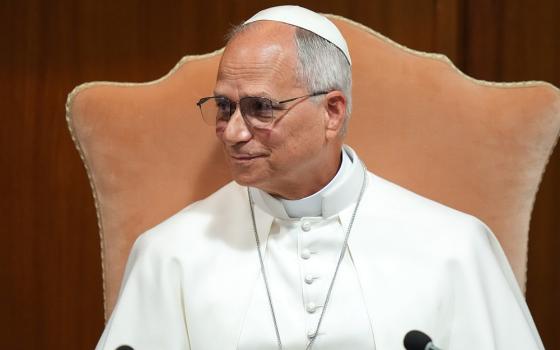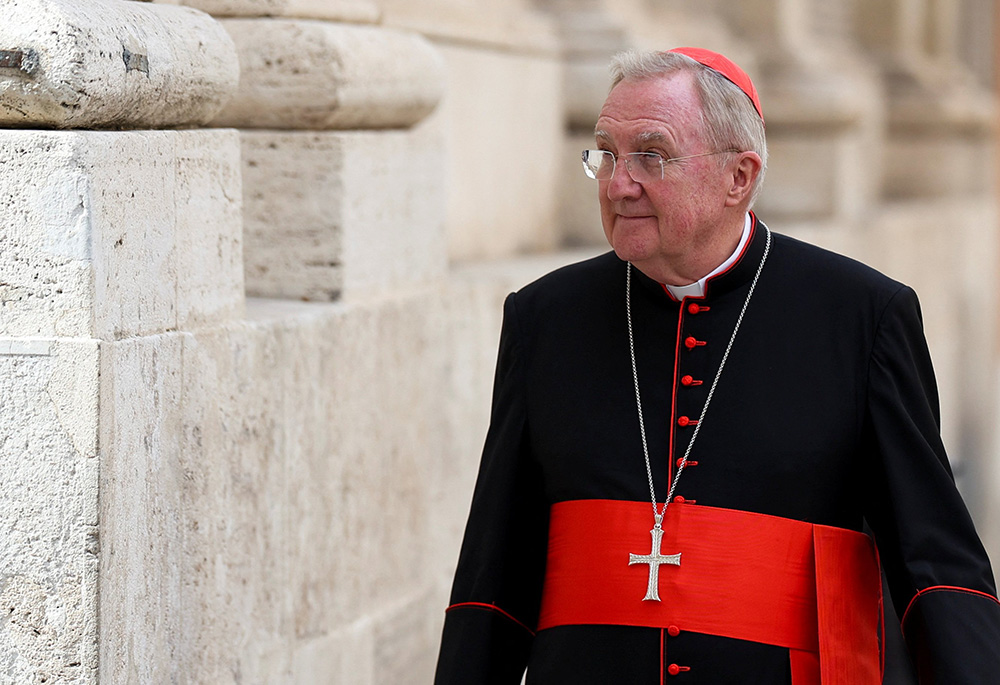
Cardinal Arthur Roche, prefect of the Dicastery for Divine Worship and the Discipline of the Sacraments, is pictured in a 2022 file photo. (OSV News/Reuters/Marko Djurica)

Join the Conversation
Send your thoughts to Letters to the Editor. Learn more
The head of the Vatican's liturgy office said that Pope Leo XIV will not be peeling back restrictions on celebrating the pre-Vatican II Latin Mass put in place by his predecessor in 2021, dashing the hopes of traditionalist Catholics seeking a reversal of the controversial decree.
"Pope Leo is not going to change Traditionis Custodes," said Cardinal Arthur Roche, prefect of the Dicastery for Divine Worship and the Discipline of the Sacraments, referencing Pope Francis' 2021 restrictions on the pre-Vatican II Latin Mass in an interview with the English Catholic magazine The Tablet published July 29.
Traditionis Custodes created new norms for the celebration of the pre-Vatican II Latin Mass, which follows the 1962 Roman Missal, declaring that priests must request permission from their bishop to celebrate that form of the Mass and that communities attached to the liturgy must celebrate it at designated locations apart from ordinary parish churches.
Publicly, Leo has not spoken at length on the issue, but Roche told The Tablet that the pope is "not going back to Summorum Pontificum" — the 2007 decree issued by Pope Benedict XIV that allowed priests to celebrate Mass from the 1962 missal.
Some Catholics have turned greater access to the old form of the Mass into a rallying cry for a church that rejects modernity, turning the liturgy into a flashpoint between more traditionally minded Catholics and those advancing a Vatican II vision of the church marked by greater participation of the laity.
Yet in the interview, Roche, who was appointed by Pope Francis to his current post in 2021 less than two months before Traditionis Custodes was published, appeared to state that the current conditions in no way marginalize Catholics with an affinity for the pre-Vatican II Mass.
"It’s interesting. When I meet with groups who want the antecedent liturgy, and I say: 'Well, the Holy Father has given you that, so what’s the problem?,' they can’t answer," the cardinal said. "But then they go away and say, 'We’re still being persecuted.' In what way persecuted? Why is the band still playing a tune that is discordant with the life of the Church?"
Advertisement
The Vatican last year granted two U.S. dioceses temporary dispensations from enforcing Traditionis Custodes, and Leo allowed U.S. Cardinal Raymond Burke to celebrate a pre-Vatican II Latin Mass in St. Peter's Basilica, spurring hope among traditionalist Catholics that the American pope would soften restrictions on the old form of the liturgy.
Yet under Leo's leadership, the Vatican has not changed its official position that the reformed liturgy remains the sole expression of the Latin-rite Mass.
In January, a text authored by Roche, who at 76 is past the retirement age for cardinals, was distributed at a meeting of the world's cardinals which said that Francis "pointed the way to unity" with the restrictions he imposed on the old form of the liturgy and wrote that "there ought to be only one rite for celebrating the Mass."
Speaking to The Tablet, Roche said that Vatican II expressed the need for the church be more missionary in its focus, "and that to prepare people to be missionary, the very central core of the life of the Church, which is the Eucharist, has to nourish people in a different way."
He said the Mass today offers Catholics more spiritual nourishment than the 1962 Mass.
"The abundant diet of scripture that is now given through the celebration of the Mass and the sacraments is something that wasn’t available to use before, but it is now," he said. Whereas the old form of Mass portrayed the priest as acting on behalf of the congregation, the cardinal said that "in fact, when the Mass is being celebrated, because the baptised people are a priestly people, they too are celebrating with the priest," as emphasized in the reformed liturgy.
The National Catholic Reporter's Rome Bureau is made possible in part by the generosity of Joan and Bob McGrath.