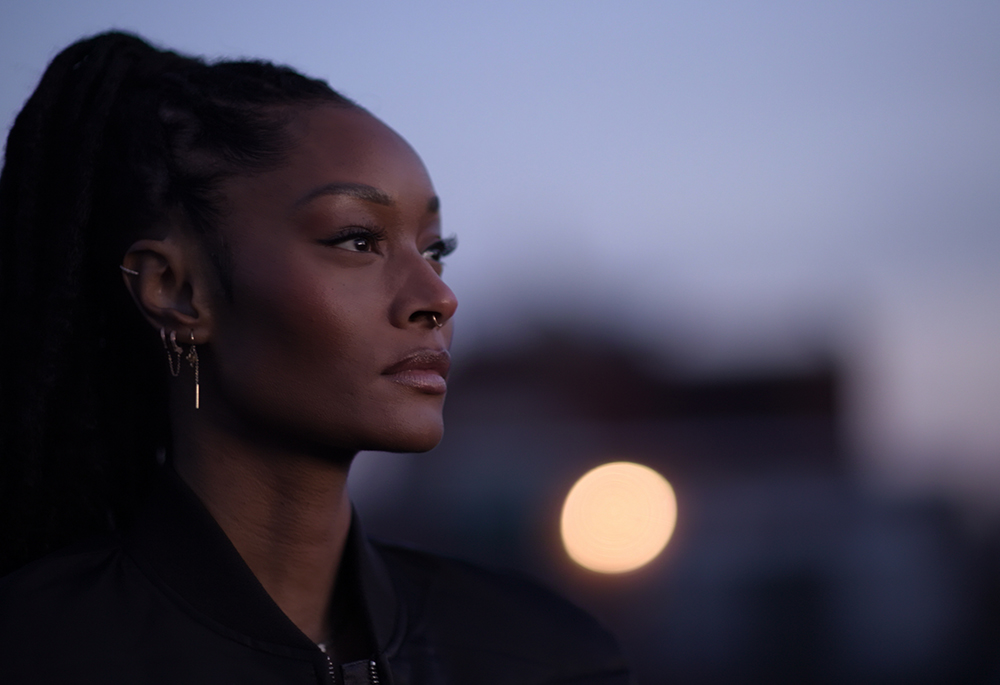
Former contestant "America's Next Top Model" Dani Evans appears in the Netflix documentary series "Reality Check: Inside America's Next Top Model." Producers interview Evans, other former contestants and supermodel Tyra Banks, the reality TV show's creator and executive producer. (Netflix)

by Rose Brennan
Join the Conversation
Send your thoughts to Letters to the Editor. Learn more
Confession can be uncomfortable; it requires contrition and humility. That was what I'd hoped I might see from the supermodel Tyra Banks when I heard she'd be reflecting on her tenure as host of "America's Next Top Model," a successful reality TV show that ran from 2003 to 2018. But in the Netflix documentary series positioned to give her that chance, Banks proves unbothered by the sins of her past.
Let me be clear: I watched "Reality Check: Inside America's Next Top Model" not as a hater, but as a part of its target audience. Having grown up in the "Top Model" heyday, I too once practiced my runway walk in grocery store aisles. And yet now, watching "Reality Check" as a woman in her late 20s, all I could think was "Tyra Banks, you will not see heaven."
Dramatic? Perhaps. Nevertheless, Banks delivers a masterclass on how not to enter the confessional.
The three-episode run of "Reality Check" includes a litany of obvious wrongs: the use of blackface in photoshoots (twice), fat-shaming contestants and using models' phobias and traumas as photoshoot fodder. But the words "I'm sorry" come out of Banks' mouth exactly once, pertaining to a photoshoot wherein contestant Keenyah Hill was sexually harassed and touched inappropriately by a male model.
When the incident was discussed at the judging panel at the time, Banks had suggested Hill use her "feminine wiles" to brush the harassment off in a way that got her point across to the male model without putting "static" in the air.
"I thought that was the best advice, but it should've been stomped down," Banks said. "So I say to Keenyah, 'Booboo, I am so sorry. None of us knew. Network executives didn't know. And I did the best that I could at that time.' "
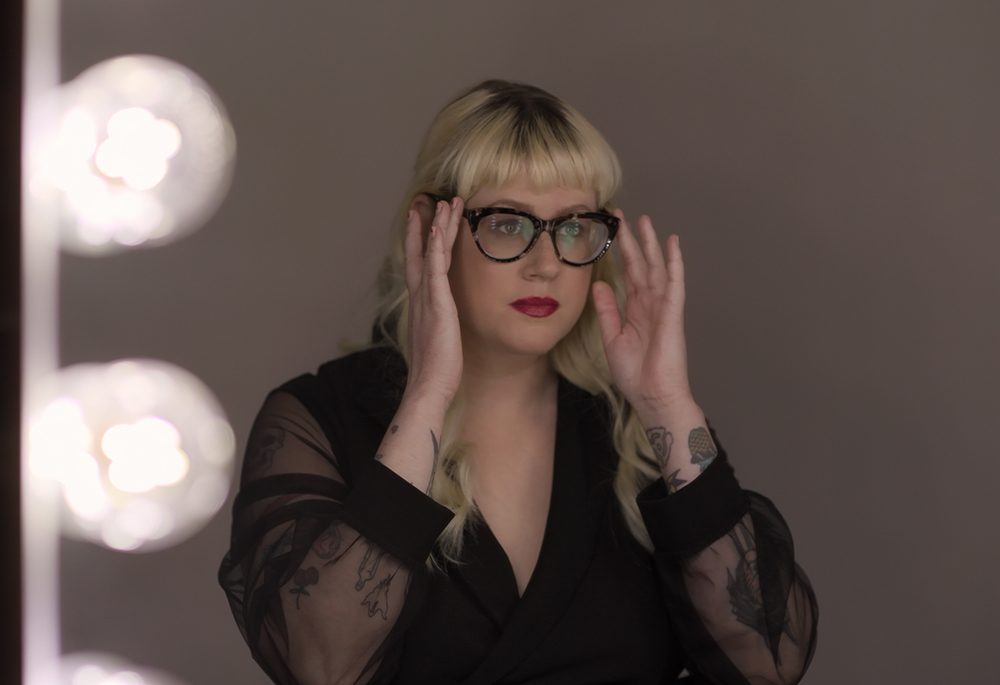
Shandi Sullivan, former contestant of "America's Next Top Model" (Netflix)
Contestant Shandi Sullivan was the unfortunate subject of what became one of the most infamous moments of "America's Next Top Model": Inebriated, she climbed into a hot tub with a man who was one of the models' moped drivers, and supposedly cheated on her boyfriend, then called him sobbing later to tell him.
"I just remember the guy looking at me, and I looked at him, and I was pretty drunk at that point. Everything kind of after that is just a blur," Sullivan said. "All I remember is just like, just like remember him on top of me. I was blacked out. No one did anything to stop it. And it all got filmed, all of it. Every moment of it."
In the documentary's second episode, a producer asks Sullivan if she thinks the "Top Model" production should have stopped it. "I think after getting out of the hot tub and like whatever happened after that, I think they should have f—ing, like, been like, 'Alright, this has gone too far. Like, we got to pull her out of this,' " she said.
This incident was portrayed as infidelity, complete with a heart-to-heart with Banks, who tells Sullivan, "Everybody's messed up, Shandi. ... But I think that we have to fight against our carnal desires." The episode in which the incident is depicted is titled "The Girl Who Cheated."
Contrition seemed to be the last thing on executive producer Ken Mok's mind when asked about the incident. He described it as "for good or bad, one of the most memorable moments in 'Top Model.' "
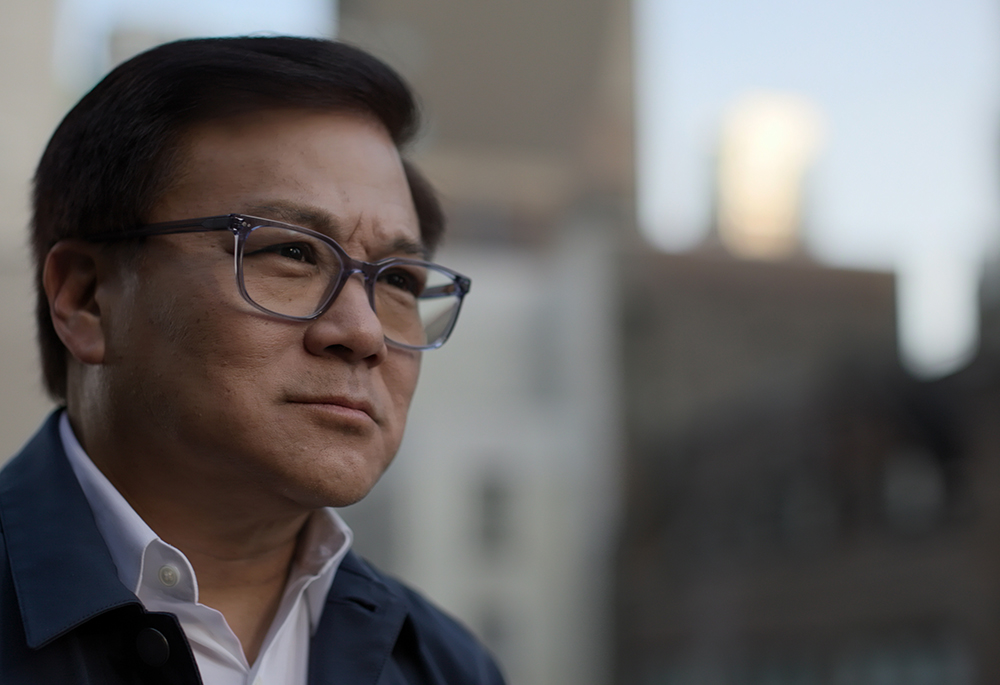
Ken Mok, executive producer for "America's Next Top Model" (Netflix)
Banks denied responsibility altogether. When asked if she remembered the story with Shandi, Banks replied, with a "creator and executive producer" chyron beside her on the screen: "I do remember her story. It's a little difficult for me to talk about production, because that's not my territory." Later she said, "I'm not head of story, that's Ken Mok, but I did become a master editor. It's important for people to know that we didn't put everything on TV."
In one episode, the models were all surprised with complimentary teeth whitening treatments – except for Dani Evans and Joanie (Dodds) Sprague. Instead, the dentist would close the gap in Evans' front teeth and fix Sprague's projecting tooth.
While Sprague was enthusiastic, Evans was reticent. But she ultimately agreed to have her gap closed when the judges panel essentially told her to do it or go home. Both women underwent major dental procedures to "perfect" their smiles. But appearances aren't always reality.
Advertisement
"They did not 'fix' anything," Sprague said. "There were many orthodontic problems that were never fixed. I've still got a crazy bite issue, and those issues will never be resolved."
Banks said she "actually apologized" for her insistence that Evans get her tooth gap closed, blaming agents who told her that Evans would not be able to get modeling work due to it.
"Hindsight is 20/20 for all of us," she said. "A lot of the things that are 20/20 for me happened in front of the world."
We can't change the mistakes of our past – not even if we're Tyra Banks – but we can and should reflect seriously on them, listen to the concerns of others and work to do better in the future. If we learn anything from "Reality Check," may it be to approach confession with a spirit of repentance and accountability, committed not just to receiving forgiveness but to true and lasting change.