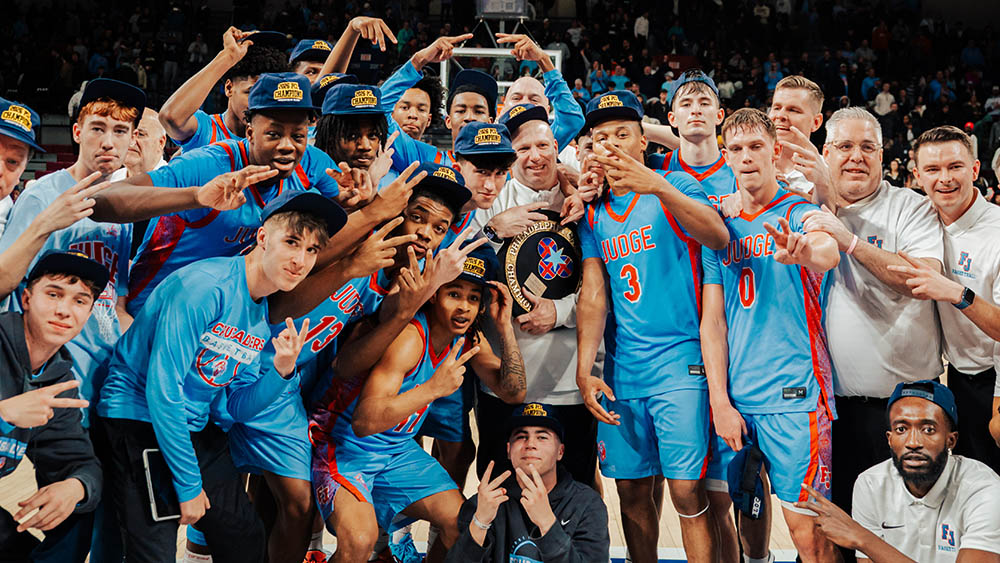
The 2025-26 Philadelphia Catholic League boys basketball champions, Father Judge High School (Jackson Miller)

by Jay Sorgi
Join the Conversation
Send your thoughts to Letters to the Editor. Learn more
Black and white high school basketball players sat together on a snowy Sunday afternoon in February 2026, linked forever by what their high school calls brotherhood — the kind forged by a Philadelphia Catholic school's charism and by the chase to win arguably the most coveted high school city basketball league championship in America.
They also shared a love of one of their mother's chicken and rice dinners that are now a Friday tradition.
"Eleven dudes go and hang out after school instead of going their separate ways. They're bonding," said Chris Roantree, boys basketball coach at Salesian-run Father Judge High School in Northeast Philadelphia, about those weekly meals shared by the squad.
In front of 9,000 fans Feb. 22 inside Philadelphia's historic Palestra on the University of Pennsylvania campus, the Father Judge players earned their second straight Philadelphia Catholic League boys basketball championship, defeating Neumann Goretti High School in a 55-52 nailbiter of a final.
"It will definitely stay with me forever," said senior guard Rocco Westfield. "I'll hang this piece of net up like I did last year. I'll hang it with these guys forever."
That kind of bonding could rarely be found on high school courts throughout America in the first 70 years after James Naismith invented the game with a couple peach baskets in Massachusetts.
The school Father Judge upended for the 2025 Philadelphia Catholic League title, Roman Catholic High School in Center City Philadelphia, may have been the first in America to field an integrated high school basketball team.
Advertisement
According to the Philadelphia Archdiocese, the governing body of high school sports in 1902 banned John Lee, a Black basketball player, from participating in league competition. Roman Catholic High School's team voted unanimously to boycott games unless Lee could play. The league relented.
The Supreme Court in 1954 similarly opened the door for integrated education in states that otherwise demanded separate and unequal schools for white and minority students.
And a Catholic school that at the time sat blocks from Music Row in Nashville, Tennessee, blew the doorway wide open.
Integrating basketball in Tennessee
In September 1954, Nashville's Father Ryan High School admitted 11 Black students.* A decade later, the school helped obliterate the ban on integrated sporting events in the South.
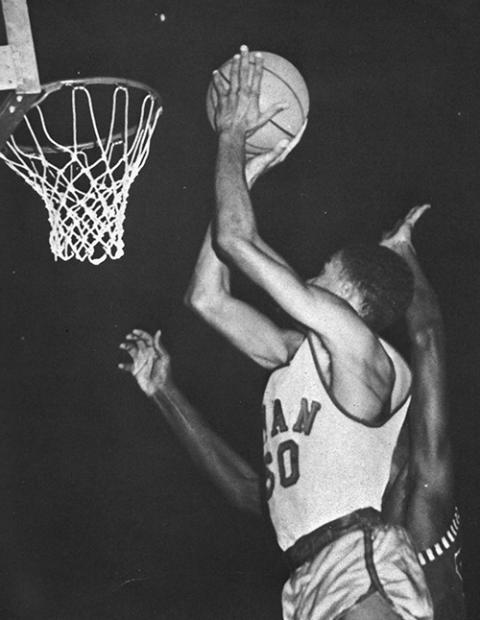
Willie Brown (50) plays for Father Ryan High School during the team's game with Pearl High School in January 1965. It was the first-ever high school basketball game between a mainly white high school and an all-Black high school in Nashville, Tennessee. (Courtesy of Burgundy Group)
On Jan. 4, 1965, Father Ryan's basketball team, which had integrated in the 1963-64 season, and Nashville's all-Black Pearl High School, came together for the region's first game between a Black high school and a traditionally white school.
"My kudos actually go to Coach Bill Derrick and to [Msgr. James] Hitchcock, who had the courage and the nerve to say, 'We're going to do this,' " said Jesse Porter, who played on the first integrated Father Ryan team.
"We've broken out of our shell. We're out in the real world, so now we get to experience what the other side is like, and they also get to experience what our side is like," added Jim McKay, a Black freshman at Ryan during that game.
Porter said the sport opened doors for the kind of acceptance he and his Black teammates at Father Ryan didn't often receive.
"I don't think that recognition as a person came until I was on the basketball court. I felt like I wasn't considered necessarily an equal in the classroom and any other place around Father Ryan, but when I stepped on the basketball court, it was a whole different ball game," he explained.
For that game, at Nashville's Municipal Auditorium, more than 8,000 people saw one of the state's best basketball showcases, won on a buzzer-beater by Ryan's Bob Dempsey.
"The experience of the game was just magical. There was no Black and white in that auditorium," Dempsey said. "It was all fans, all people happy to be there and they got a show."
A 'super' trailblazer
That same 1964-65 academic year saw Jean Fugett enter Baltimore's Cardinal Gibbons High School as a freshman, just one year after Baltimore's archbishop, Cardinal Lawrence Shehan, pushed for integration of the city's Catholic schools and other institutions.
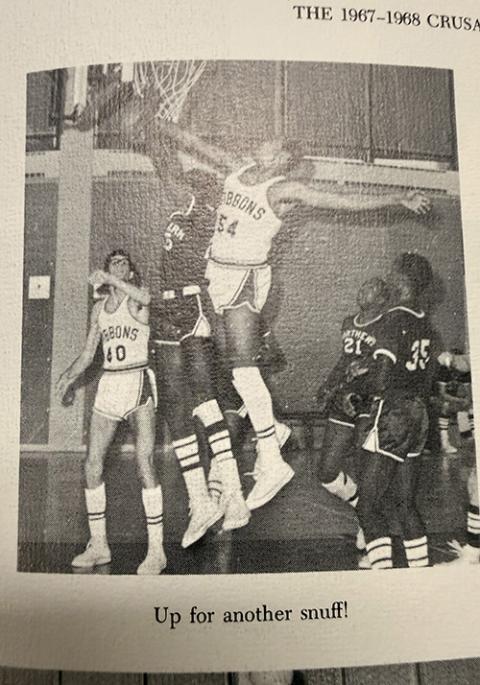
Jean Fugett (54) is seen in the 1967-68 yearbook for Cardinal Gibbons High School in Baltimore. (Courtesy of Jean Fugett)
"The cardinal called my mother and asked that she send me to Cardinal Gibbons because it was a new school, and he wanted it to be integrated," Fugett said.
One year later, the academic standout helped integrate Baltimore basketball, joining the school's varsity team as a sophomore — an opportunity he didn't take lightly.
"We were told almost on a daily basis that because of our race, we would have to be twice as good and be prepared to work twice as hard," Fugett said.
At the time, he said, he felt: "You've got to hope change is going to come. You can't make the change come to you. You just got to go wherever the opportunity is and you keep working hard."
"I've been working ever since," he added.
Fugett's work on the basketball court — averaging in double figures for both points and rebounds his senior year — and on the football field led him to become the first Black young man to receive the Baltimore Catholic High School Athlete of the Year award in 1968.
He went on to graduate from Amherst College and was a tight end for the Dallas Cowboys who caught a pass in Super Bowl X in January 1976. Fugett became a top attorney in Baltimore and the leader of a Fortune 1000 company, with his family's name on a Baltimore Catholic intergenerational center.
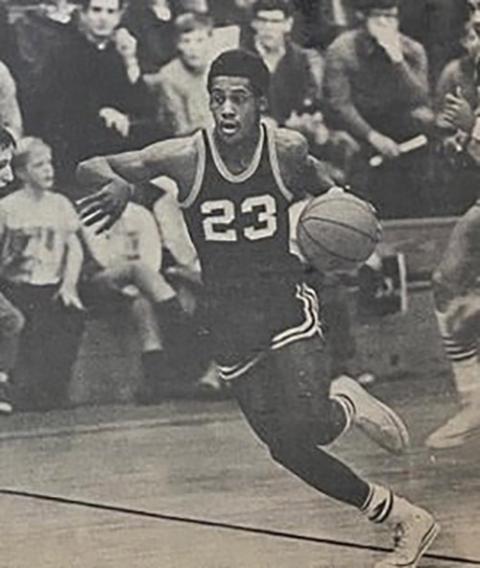
Lloyd Walton of Chicago's Mount Carmel High School in 1971 (Courtesy of Lloyd Walton)
Leading the next generation
Lloyd Walton, Lorraine McGirt and Chris Clark similarly had opportunities come their way through Catholic high schools after integration.
"I was a fish out of water, traveling about 30 miles a day to Mount Carmel [High School in Chicago] because a coach thought that I was worthy of an athletic scholarship," said Walton, a 1971 graduate of the heavily Irish Catholic school who starred at Marquette University and reached the NBA with the Milwaukee Bucks. He now leads his own company as a life coach and consultant to elite athletes.
"Most of my friends say [Mount Carmel] changed and might have even saved my life, [and] my mind, my life, my heart has opened up because there are people that treated me beyond fair that didn't have to."
Lorraine McGirt received faith-affirming acceptance at Philadelphia's Maria Goretti High School for her senior year in 1981-82 after transferring from a defunct school, though that acceptance didn't feel obvious until she hit the basketball court.
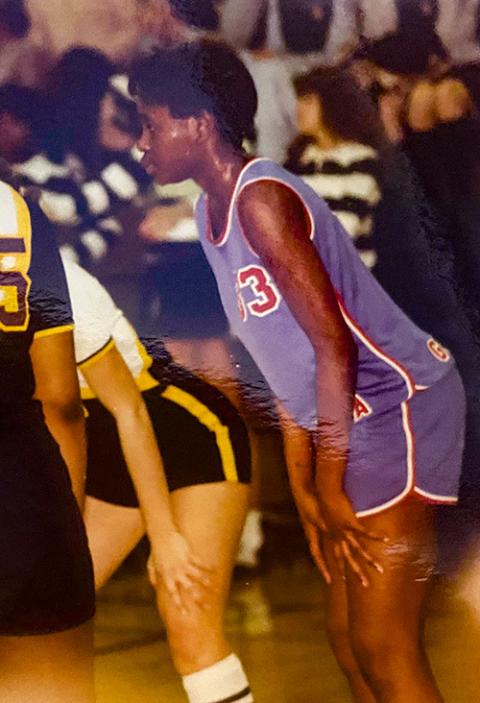
Lorraine McGirt of Philadelphia's Maria Goretti High School in 1982. She played a feature role in Penn State's rise to power in women's basketball in the 1980s. (Courtesy of Neumann Goretti High School)
"I felt like a fish out of water," McGirt said. "Our team was primarily white. Everything I was experiencing sometimes in the classroom would kind of feel isolated, [but] it didn't matter when I was on the basketball court. We all came together. We had one year together and we made it all the way to the championship game."
She said basketball let her be truly seen as a full person, including her Blackness. It led the league's MVP that year, who was white and from another team, to invite McGirt and her parents to the other player's home after the season.
"Her family said, 'Your daughter deserves this MVP trophy,'" McGirt shared, mentioning she didn't take the trophy home.
"What I didn't understand at that time, is that both our families understood what was happening. They understood the system, the politics and race all combined, but they came together and brought us together to say that despite all of those things, we want you to know that this belongs to you."
Chris Clark, a graduate of Philadelphia's St. Joseph's Prep who played at Temple University, returned to his high school alma mater as coach in 2025 to help young men feel seen, as he was as a young Black man in the early 2000s.
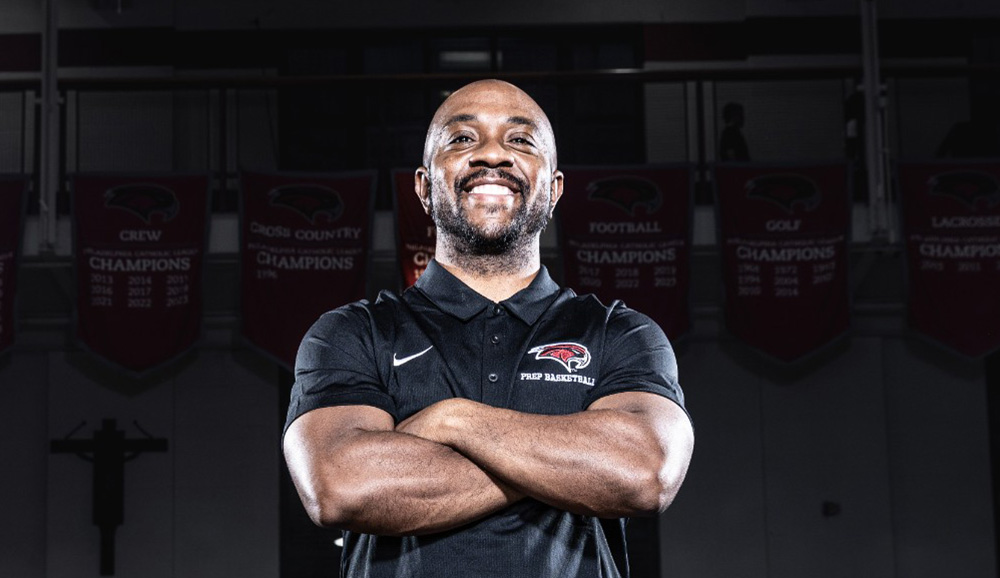
Chris Clark, a former star at St. Joseph's Preparatory School in Philadelphia and at Temple University, has returned to St. Joe's Prep to be its head basketball coach. (Courtesy of St. Joseph's Preparatory School)
"I'm so grateful that I'm back and able to teach and coach something that I'm really, really intentional about," Clark says.
"When you can help someone else, regardless of their religion, regardless of the color of their skin, regardless of their economic status, but truly being able to have empathy and being able to help someone else reach their goal and celebrate them, that transcends. That is so important to life and development. And that's what I want for these guys."
That idea of transcendence is what Coach Roantree is giving Derrick Morton Rivera, who played a major role in Father Judge's last two championship runs, and the player senses the importance of continuing this.
"It just feels good knowing that we're leaving a legacy and a standard for the younger kids that are coming," the student athlete said.
*This article has been edited to remove incorrect information about the school's founding.