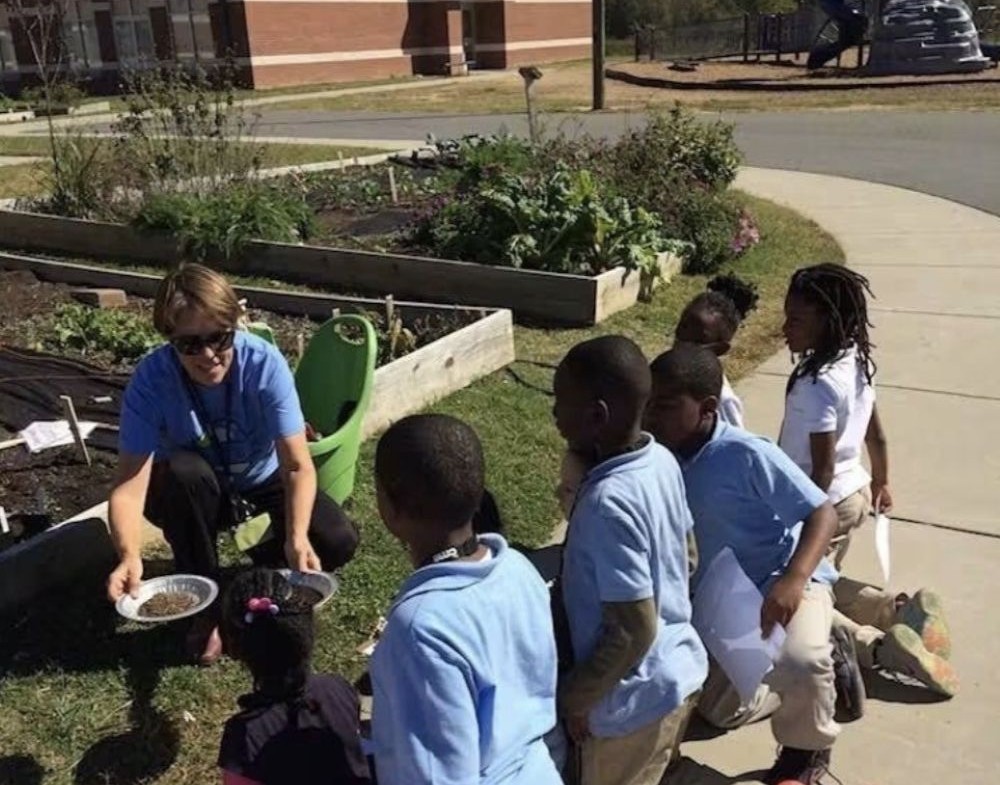
Jeffie Hardin teaches gardening and farming techniques at a North Carolina Title I school. She and her husband, Chris Hardin, moved from the suburbs to a farm that eventually became both a source of food and a kind of informal classroom. (Courtesy of Chris Hardin)

Join the Conversation
Send your thoughts to Letters to the Editor. Learn more
When Chris and Jeffie Hardin travel to Italy later this month to visit Borgo Laudato Si', the Vatican's center for ecological education at the papal residence in Castel Gandolfo, Chris plans to bring the sort of equipment he has relied on for decades.
"I'm taking my work gloves. I can't take my shovel –– it's too big," he said. "But we're taking our work boots and our work gloves."
For the Catholic couple from Belmont, North Carolina, the gesture captures an approach to care for creation that has shaped most of their married life: practicing sustainability by growing food, tending animals, conserving land, installing solar panels and teaching others in the state how to do the same.
The Hardins plan to visit Borgo Laudato Si' on Oct. 23. The Vatican center offers training for students, workers, entrepreneurs and managers, as well as environmental education. They'll spend seven days at Borgo Laudato Si', invited by managers of the center. They will also spend three days in Rome and six days in Assisi. The entire trip will focus on farming and training education. But the philosophy the couple believes they will encounter there has been taking shape in their North Carolina home for more than 25 years.
In 2000, Chris and Jeffie sold their business and suburban home and moved with their four children to an 8-acre farm in Huntersville. Neither had grown up farming. They learned in part by volunteering with local farmers. Chris said the move had helped their family slow down and live "more in line with God's desire."
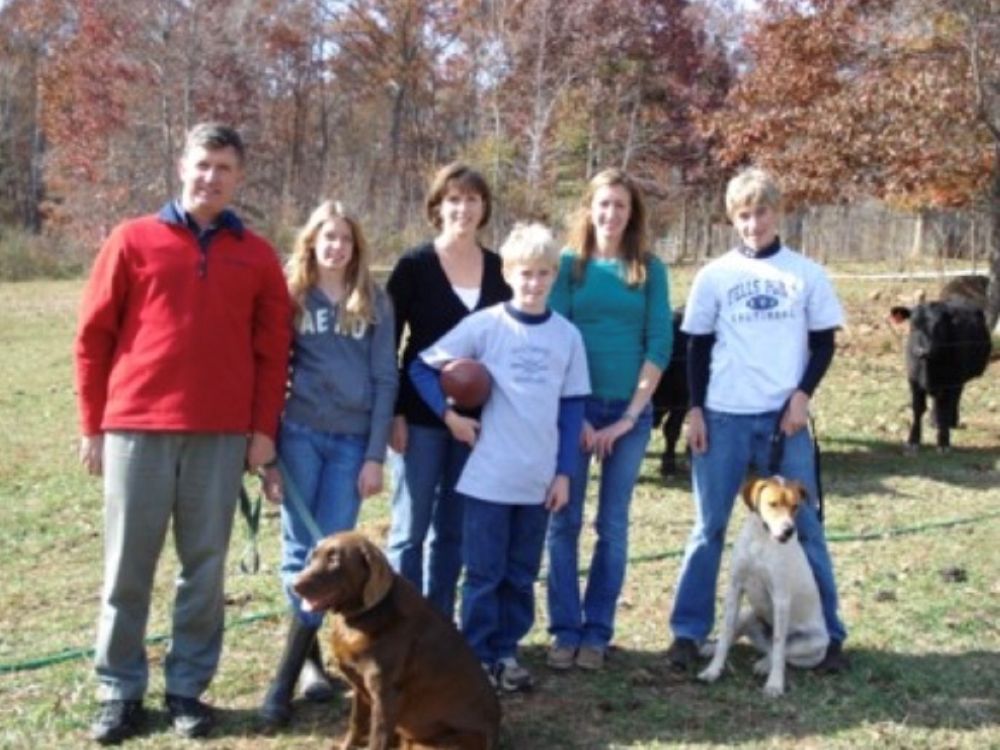
Chris and Jeffie Hardin and their four children pose in a 2018 photo. (Courtesy of Chris Hardin)
The farm eventually became both a source of food and a kind of informal classroom.
"On Saturdays we had people come out that were part of what was called a CSA working group," Jeffie recalled. CSA stands for Community Supported Agriculture, where customers sometimes spend time on a farm and then receive a share of the farm's harvest. In the Hardins' case, participants gathered in the garden, prayed and divided up the work: tending vegetables and hydroponic lettuce, collecting eggs, caring for chickens, horses, goats and cows and managing compost.
"We would always gather together at the beginning, have a prayer, talk about what we were going to do," she said.
At its height, Chris said, their farm supplied about 70% of the family's food. Their property was also connected to a larger conservation effort along Gar Creek –– a conservation plan covered a 22-acre property, including a 14-acre conservation easement and a sustainable restoration plan for eight acres of farmland.
The couple — whose children are now 23 to 31 and have left home — has since downsized the farm, but not abandoned the model.
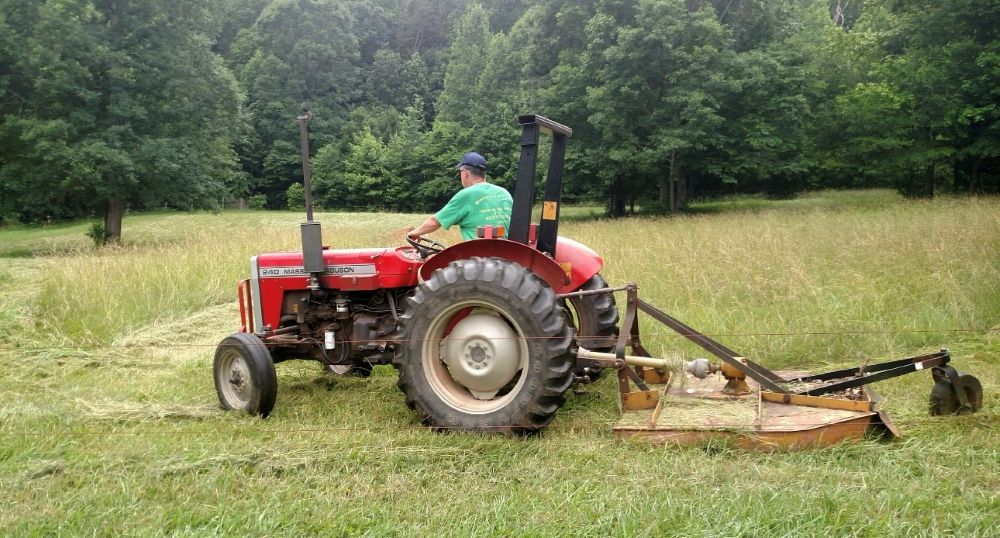
Chris Hardin works on his farm in Belmont, North Carolina. (Courtesy of Chris Hardin)
"We still raise a lot of our own vegetables," Jeffie said. And increasingly, their work happens beyond their own property, such as at churches, schools and community gardens, including with Black and Hispanic communities in the Carolinas.
"You don't need to have actual farmland to be a farmer," Chris said. "Get to know a farmer, work with them, grow any kind of food. If you live in an apartment, we can show you how to grow 20% of your own food in your apartment."
Jeffie has made education a particular focus. She has worked in public schools using gardens to turn classroom concepts into hands-on lessons and later taught about recycling, plastics, pollinators and vermicomposting (the use of worms to turn food scraps and organic waste into nutrient-rich compost). One program she developed at Charlotte-area Title I schools used school gardens as outdoor learning laboratories for elementary and middle school students.
Chris's environmental work has followed a different path. A professional engineer, he has spent more than three decades working on waste management, contaminated-site remediation, water resources, renewable energy and coal ash projects. His projects have included work in the Carolinas and a World Bank-funded remediation of an 83-kilometer canal in Tianjin, China.
That professional experience sometimes placed him inside the energy industry even as his family experimented at home with a radically smaller environmental footprint. Their Huntersville farm eventually included a 6.6-kilowatt solar-energy system and achieved roughly 75% carbon neutrality and 75% reduction, recycling and reuse of waste.
Chris now describes water, energy and food as inseparable questions. During an Earth Day presentation this year for the Sisters of Mercy in Belmont, he framed protecting the Catawba River through the lens of "integral ecology," linking water resources, farming, land use and energy production.
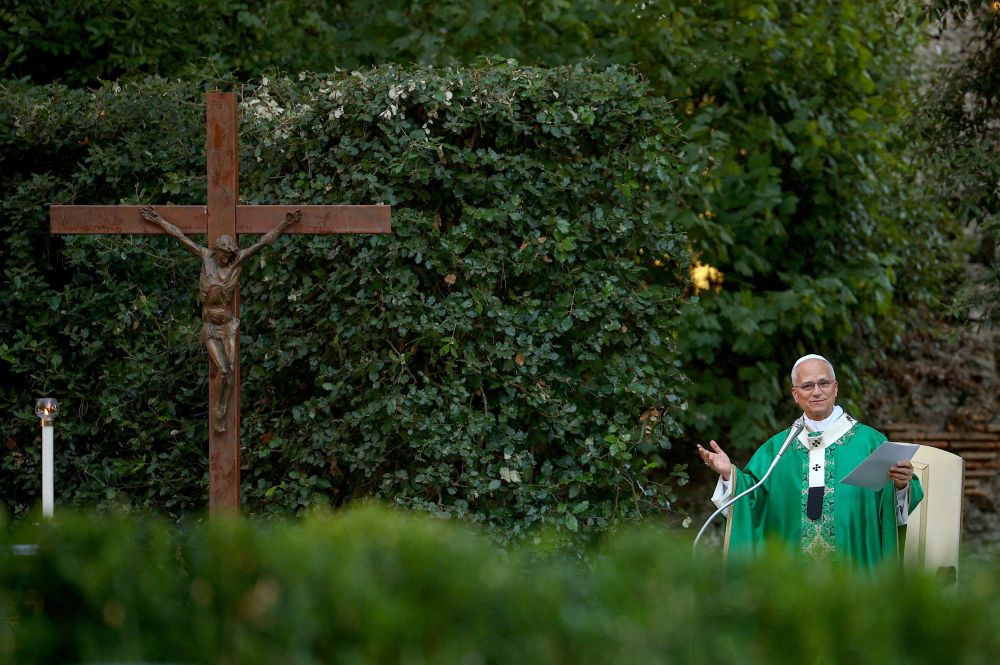
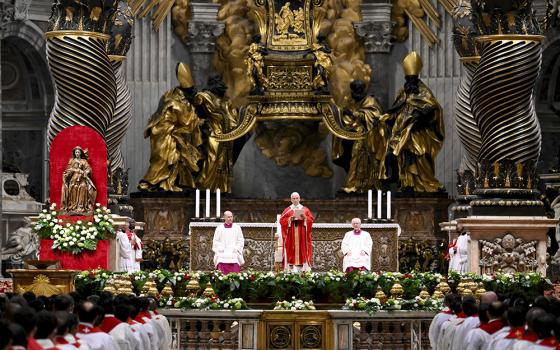
Pope Leo XIV gestures as he celebrates Mass at the Borgo Laudato Si' center in Castel Gandolfo, Italy, Sept. 1, 2026, marking the World Day of Prayer for the Care of Creation. (OSV News Reuters/Guglielmo Mangiapane)
The Hardins' family Laudato Si' Action Plan, completed in July, aims to raise or locally source most of their food, rely heavily on solar power and recycle about 80% of their waste. But its larger ambition is educational, the couple said, by turning decades of trial and error into practices other families and Catholic parishes can replicate.
The Hardins also see their farming experience as a practical form of synodality, as a way of bringing together Catholics and others who might otherwise have little in common. Chris recalled visitors noticing people with very different backgrounds and views working comfortably alongside one another. "We did real synodality," he said, joking about "young men in dreadlocks" mingling on their farm with conservative Latin Mass goers.
For the couple, that kind of encounter often happens more naturally while people are doing something concrete together. Jeffie added that environmental challenges can also cut across ideological divisions. Drought, high energy costs or concerns about food safety affect families regardless of whether they are "very conservative" or "very liberal," they said.
Advertisement
In that sense, they see care for creation as a setting in which people can listen to one another across differences and find common ecological solutions.
That is one reason Borgo Laudato Si' interests them. Chris said that in conversations about their visit, he emphasized that they were not interested simply in touring the Vatican project.
"I'll take a picture, but I don't want a photo op," he said he told someone at the Vatican facility. "We want to get to know them and how they work."
Jeffie said she is especially interested in meeting people from other countries and learning how communities adapt environmental practices to their own cultures and resources.
She said she also wants ecological education to become accessible to children rather than remain confined to universities and experts. "Kids have to know why it's important and how,” Jeffie said. "How can we translate that for everyday children, for 6-year-olds, for 10-year-olds?"
She said it's very interesting how people are dealing with the current climate crisis and sharing information about it. "Just having conversations. I think that's what I'm looking forward to."