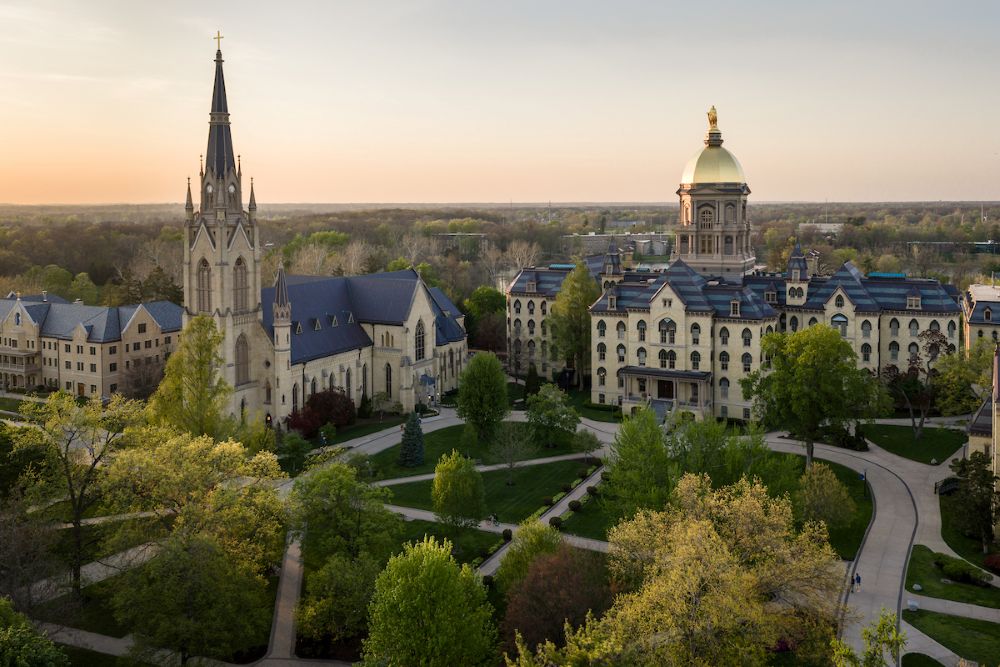
The University of Notre Dame in Indiana is home to the McGrath Institute for Church Life. Joseph Capizzi will take over as director July 1. (Courtesy of University of Notre Dame/Michael Caterina)

Join the Conversation
Send your thoughts to Letters to the Editor. Learn more
The University of Notre Dame has selected theologian Joseph Capizzi to become the next leader of the McGrath Institute for Church Life, a center that serves as a bridge between academic theology and the day-to-day ministry of Catholic communities.
Capizzi, currently dean of the School of Theology and Religious Studies at the Catholic University of America, will assume the role of McGrath-Cavadini Director on July 1. He succeeds John Cavadini, who has led the institute for 25 years and will return to full-time teaching and research in Notre Dame's Department of Theology.
Following a nationwide search, Capizzi will take charge of an institute that collaborates with Catholic leaders and communities across the country, developing programs and resources that draw on theological scholarship to support ministry and faith formation.
For Capizzi, the new role comes at a moment he said he sees as marked by both challenges and opportunities for the Catholic Church, particularly in the U.S.
"I think recently we've seen a lot of unity coming out of the American Catholic bishops, so if you're just thinking in terms of the American Catholic Church, I see this as a great source of hope moving forward that the church seems to be speaking with one voice," he said in an interview with the National Catholic Reporter.
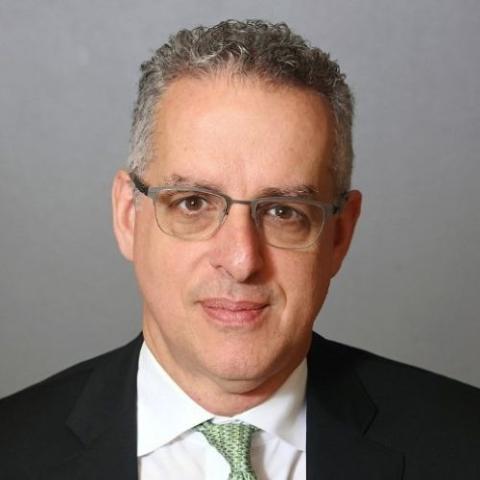
Joseph Capizzi is the new director of the McGrath Institute for Church Life at the University of Notre Dame. (Courtesy of Joseph Capizzi)
Capizzi said the institute's role will continue to involve fostering thoughtful engagement and dialogue.
"The institute has an important role to play in assisting people by bringing them together thoughtfully with great civility, openness to conversation with people of goodwill, and that's what the institute's done in the past, and I look forward to being a part of that," he said.
Capizzi arrives at Notre Dame after a long career at the Catholic University of America, where he has taught since the late 1990s. He was named dean of the School of Theology and Religious Studies in 2023 and previously led the university's Institute for Human Ecology, an organization that brings together scholars from different disciplines to address contemporary social issues.
Throughout his academic career, Capizzi has written extensively on the relationship between faith and public life, exploring topics including ethics, political responsibility, conflict and human flourishing. In addition to publishing books and scholarly articles, he is currently researching Catholic understandings of property and ownership.
The appointment also marks a return to Notre Dame for Capizzi, who completed graduate studies there and earned a doctorate in theology as a John A. O'Brien Fellow.
Capizzi said he believes Catholic universities and church institutions share a responsibility to address a growing search for meaning among younger generations.
"I think part of what we're seeing is a combination of factors, especially among young people," he said. "One is greater ignorance of the lived tradition of the church, combined with a deep desire for meaning."
Advertisement
Capizzi said many young adults are looking for a sense of purpose that extends beyond professional success or material achievement.
"The young people I've encountered, both in my little time at Notre Dame, when I've gone out there, they want meaning, they want a sense that the things that they are doing in the world matter beyond simply earning a paycheck or trying to find a way to own a house and cars," he said.
"They want a sense of engaging the world at its heart, where it matters to other human beings, and even to all of creation."
He said that this search for purpose, combined with limited familiarity with the church's intellectual and spiritual traditions, could create new opportunities for religious renewal.
"Those two things, a kind of sense that they're lacking something in their experience with the church, and then also the desire to live meaningful lives, are setting the stage for a rebirth of faith, a rebirth of an intellectual faith, in particular one that can make sense of the world that we all inhabit together," he said.
Capizzi said he hopes the institute will remain a place where academic expertise and pastoral experience can meet, encouraging collaboration among educators, church leaders and Catholic communities facing new questions and challenges.
His appointment comes during the first year of Pope Leo XIV's pontificate, a development that Capizzi believes presents a unique opportunity for Catholic institutions in the United States. Capizzi said he believes that one of the central themes emerging from Leo's early teachings is a renewed emphasis on the dignity of the human person, particularly in a period of rapid technological transformation.
"It's time right now to reaffirm the human being as a creature of a loving God," he said. "What better time to do that in a moment where technology is giving us an opportunity to articulate what the human is?"