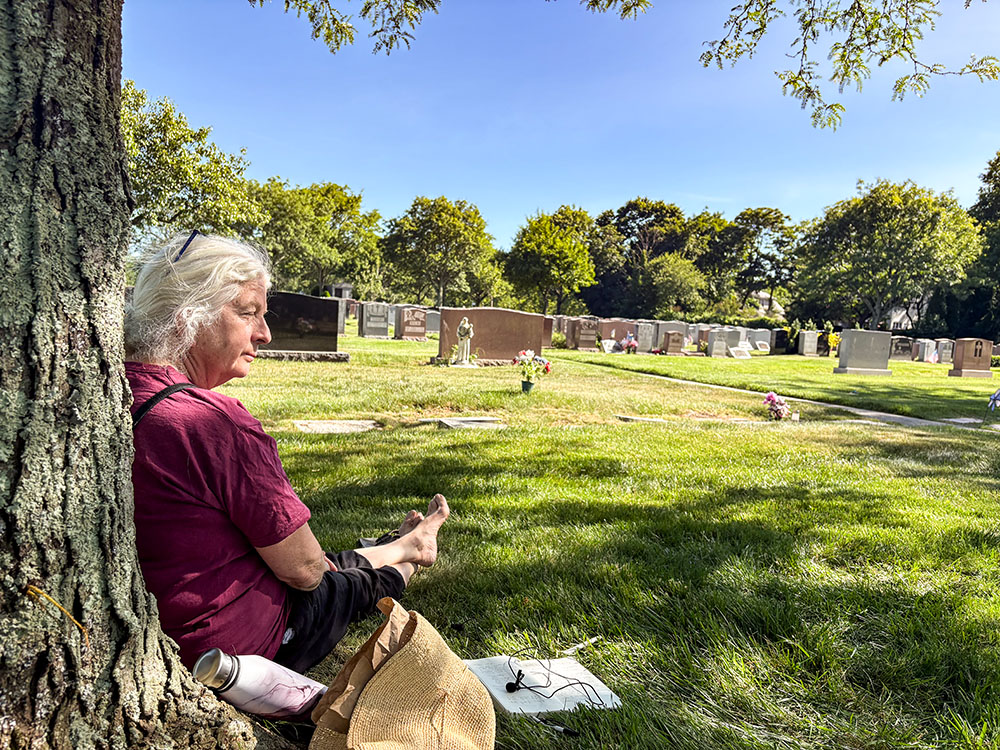
Martha Hennessy, Dorothy Day's granddaughter, sits by her grandmother's grave at Resurrection Cemetery in Staten Island, New York, June 8, 2026. (NCR photo/Camillo Barone)

Join the Conversation
Send your thoughts to Letters to the Editor. Learn more
Martha Hennessy arrives at Resurrection Cemetery in Staten Island carrying several lives with her.
She is Dorothy Day's granddaughter, one of the best-known voices in the Catholic Worker movement, an anti-nuclear activist who has gone to prison for acts of civil disobedience, a mother, a grandmother, an occupational therapist and a woman who spent decades finding her way back to the Catholic faith she once left behind.
This mid-June afternoon, though, she seems simply a granddaughter visiting her grandmother.
Before settling beneath a large tree facing Day's grave, Hennessy quietly removed a small American flag that someone had left there. Then she slipped off her shoes, leaned back against the trunk and looked toward the simple grave marker.
The gesture felt fitting.
Few American Catholics challenged the assumptions of patriotism, war and power more relentlessly than Day. Co-founder of the Catholic Worker movement, journalist, social critic and now a candidate for sainthood, Day remains one of the most influential and contested figures in modern American religious life.
Nearly 46 years after her death, her granddaughter still finds herself interpreting that legacy — not only for the church and the wider world, but for herself. Sitting a few feet from Day's grave, Hennessy reflected on Pope Leo XIV's embrace of her grandmother's witness, the future of the Catholic Worker movement, war and nuclear weapons, women in the church, prison, poverty, addiction, family suffering, and the personal, complicated inheritance of being Day's granddaughter.
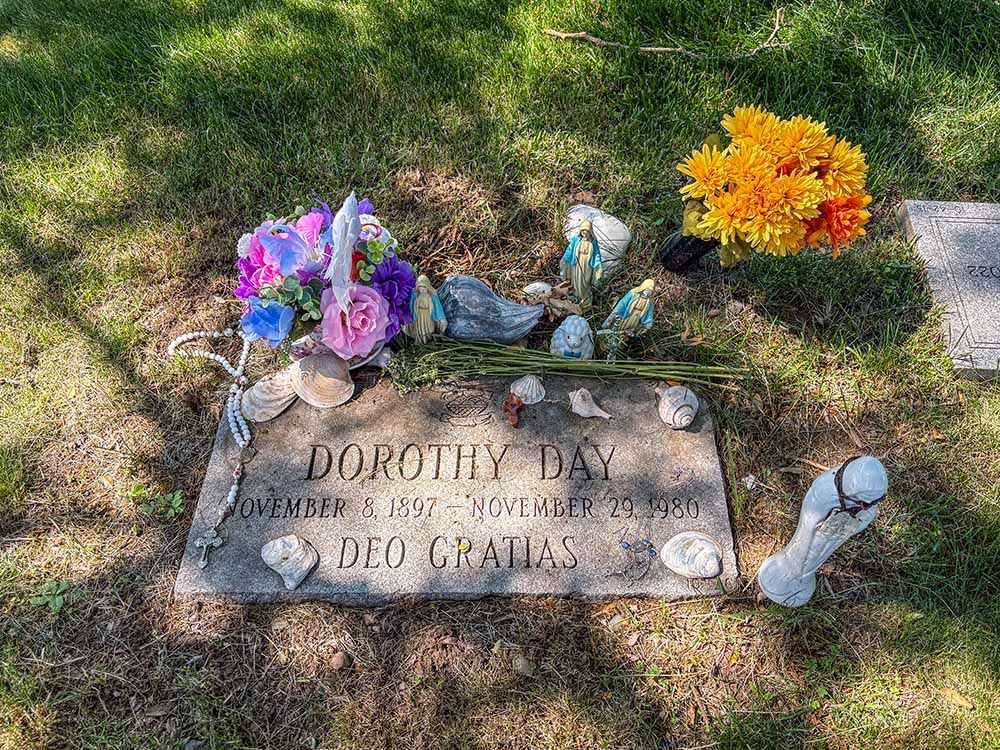
Dorothy Day's simple grave at Resurrection Cemetery in Staten Island, New York, June 8, 2026 (NCR photo/Camillo Barone)
The conversation moved constantly between public history and private memory, much as Day's own life always did.
One of the latest chapters in Day's influence arrived when the pope mentioned her in his new encyclical Magnifica Humanitas alongside figures such as St. Teresa of Calcutta, St. Laura Montoya, Maria Montessori, Wangari Maathai, Benazir Bhutto and the Rev. Martin Luther King Jr.
For Hennessy, the moment was unexpectedly emotional. She was at home in Vermont when Kevin Ahern, theologian and chair of the Dorothy Day Guild, sent her a text message saying: "Dorothy's in it."
Hennessy said she was astounded and surprised, "but also elated that she would be there."
"It just gives me hope. It gives me joy and it gives me hope that Dorothy is being recognized and acknowledged this way," she told the National Catholic Reporter.
The recognition also felt significant because it shone a light on the Catholic Worker movement that Day founded with Peter Maurin in 1933. Hennessy remains convinced that the group, a collection of communities around the globe, offers one of the clearest embodiments of Catholic social teaching available today.
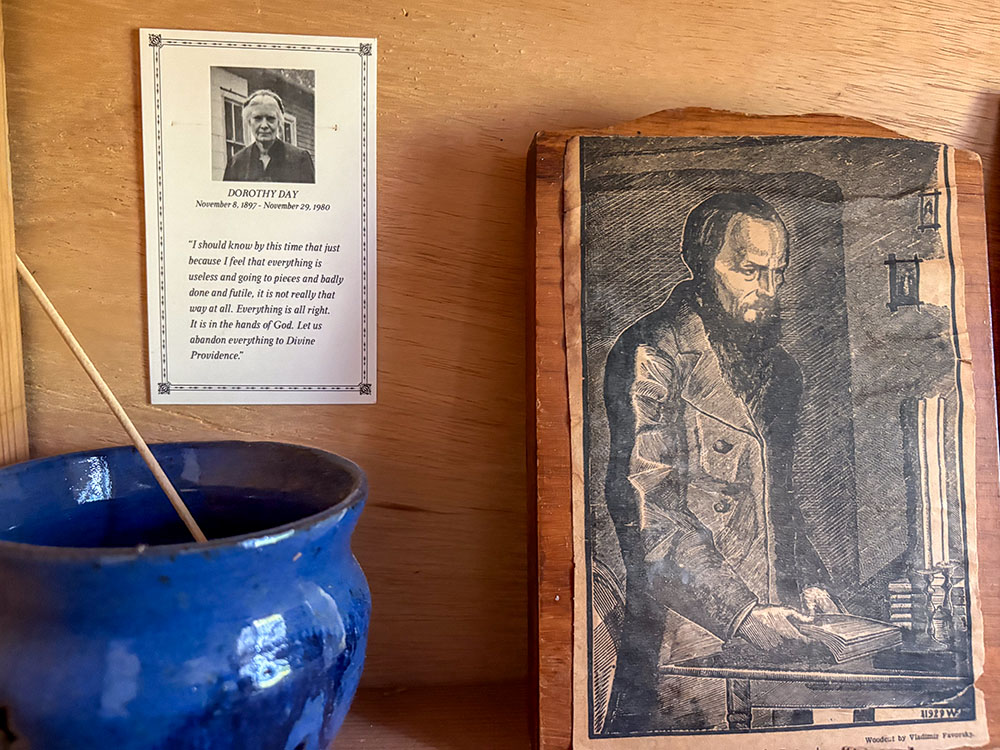
A shelf in Martha Hennessy's bedroom at Maryhouse Catholic Worker in New York, June 8, 2026 (NCR photo/Camillo Barone)
"I believe that the Catholic Worker movement has the perfect model of how to live and practice as Catholics," Hennessy said. "It's so well integrated, the works of mercy."
The movement's emphasis on hospitality, voluntary poverty, community life and resistance to war remains deeply attractive to her. At the same time, she worries that some parts of the movement have drifted from the vision of its founders.
"There are aspects of the movement that I think have drifted away from Dorothy and Peter, and that concerns me, both in a conservative sense and a leftist sense," she said.
Yet she believes the movement retains something many institutions struggle to achieve: a genuine culture of listening. Asked what synodality might mean for the Catholic Worker, Hennessy barely hesitated. "It's built into its DNA," she said. "The DNA of the Catholic Worker movement is synodality."
That conviction reflects something she sees in Day herself. Long before synodality became a defining word of Pope Francis' pontificate, Day practiced a form of openness rooted in encounter. Raised Protestant before becoming Catholic, deeply interested in Judaism, committed to dialogue with people far outside church structures, Day resisted the idea of a smaller, purer church.
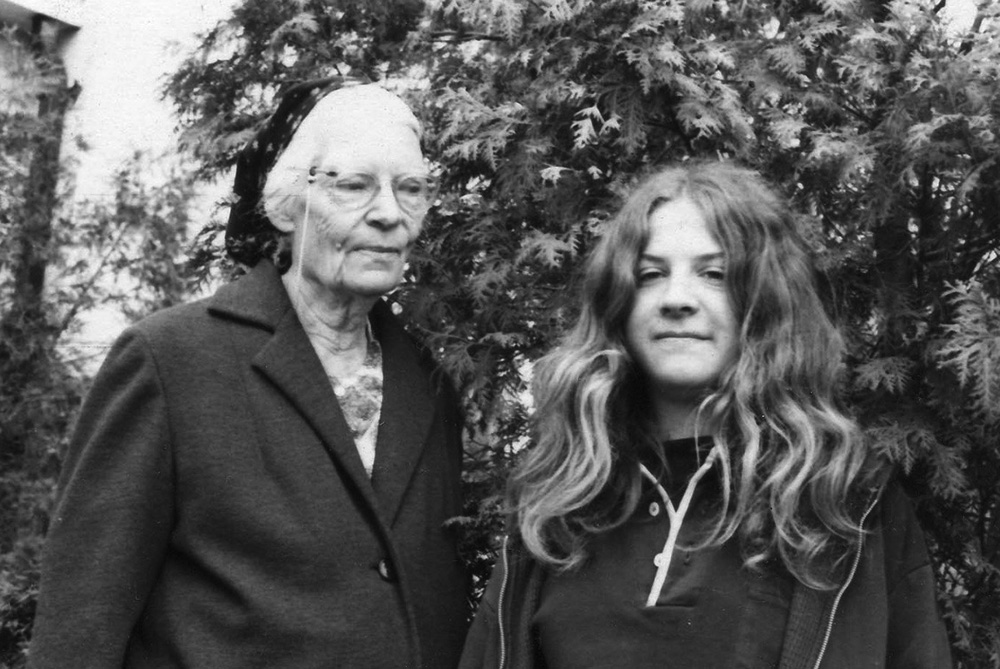
Martha Hennessy at age 16 next to her grandmother Dorothy Day, May 1972 (Courtesy of Martha Hennessy)
"We have to include one another," Hennessy said. "Living in community is not easy, and you have to tolerate. This is the same for families."
Family, in fact, became one of the recurring themes of the afternoon.
For all of Day's public accomplishments, Hennessy remembers first and foremost a grandmother.
"I grew up without my father or my grandfather," she said. "It was my mother and my grandmother who were big in my life."
Her earliest memory has remained with her for more than six decades.
"Just the very first memory of sitting on her lap, being close to her heart, feeling her love," she said. "She gave me an understanding of the presence of God as a very small child. What a gift that is."
Day's influence often arrived quietly. She would give her grandchildren books, rosaries, postcards. One card sent from Rome when Hennessy was 8 years old somehow survived two house fires. "It had Fra Angelico's musician angels on it," she recalled. "She said, 'Tack this on the wall to remind yourself to say your prayers.' "
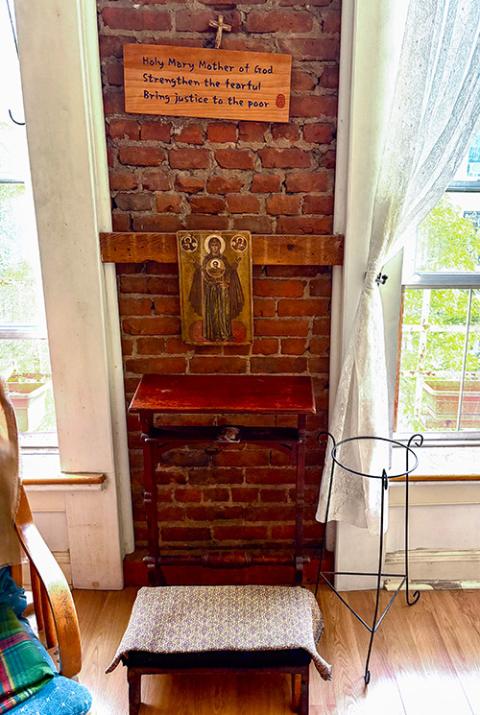
Martha Hennessy's kneeling stool in her bedroom at Maryhouse Catholic Worker in New York, June 8, 2026 (NCR photo/Camillo Barone)
For much of her adult life, Hennessy kept her distance from the church. She built a career as an occupational therapist, raised children, paid the bills and lived what she describes as a comfortable life in Vermont.
The turning point arrived in 2002.
Reluctantly, she agreed to deliver a brief speech during Day's induction into the National Women's Hall of Fame. The United States was preparing to invade Iraq and Hennessy used the opportunity to criticize the coming war. The reaction in the room was immediate. Ruth Bader Ginsburg and former first lady Rosalynn Carter went to greet her right away, thanking her for her speech.
More importantly, she suddenly understood the responsibility that accompanied her family name, she said.
"At that very moment, I understood the soapbox that I was given," she said. "I had to say to myself, all right, are you going to step up to this and start speaking out, or are you just going to go home to Vermont and live your comfortable life?"
Two years later, another crisis accelerated that transformation, when her son joined the military. "That was like the last thing I would ever want for my child," she recalled.
The decision devastated her. She reached out to peace activist Jesuit Fr. Daniel Berrigan, whom she had known since childhood but never known well personally. Their correspondence became one of the pathways that led her back to the Catholic faith. At the same time, she was wrestling with a complicated family history.
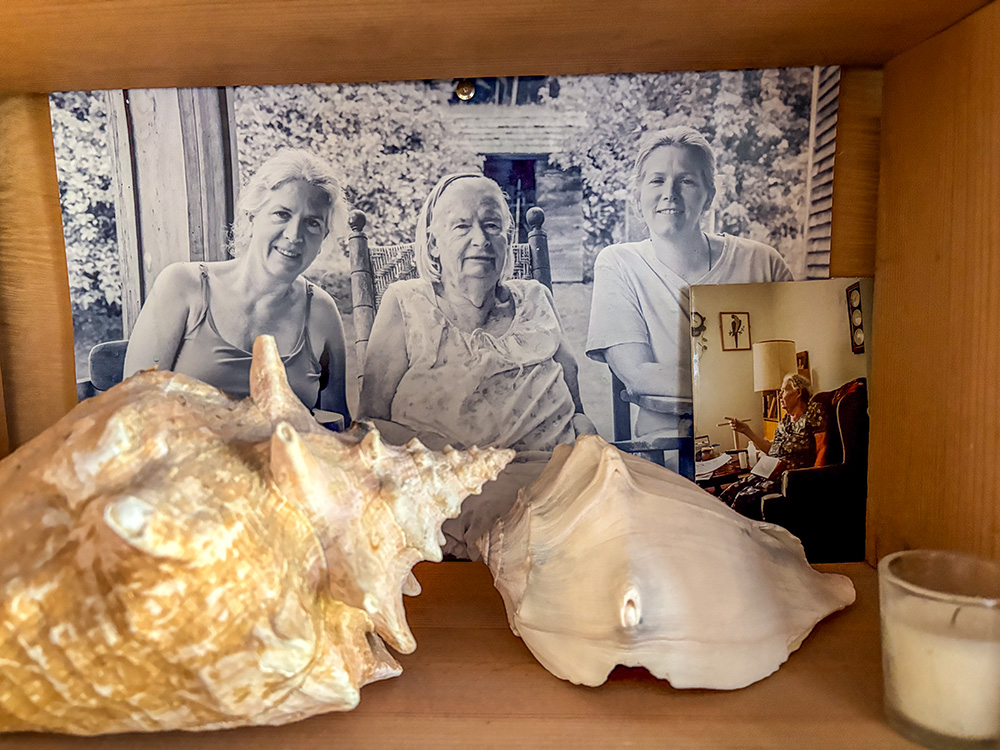
A shelf in Martha Hennessy's bedroom at Maryhouse Catholic Worker in New York on June 8, 2026, shows a picture of her, her mother, Tamar, and her sister Kate. (NCR photo/Camillo Barone)
Her mother, Tamar Teresa Day Hennessy, Day's only child, had left the church years earlier. Martha spent decades avoiding the tension between her mother's experience and her grandmother's devotion. "I ignored it for a good 25 years," she said with a laugh.
Yet when Martha Hennessy's return to Catholicism became unmistakable, her mother understood and respected it, she said.
Hennessy's father struggled with alcoholism, mental illness and the lingering effects of a gunshot wound to the head. One of her brothers — and Day's grandchildren — died from alcoholism at just 37 years old. Two other nephews later died from addiction.
"It's just so sad," Hennessy said quietly, adding that those experiences shaped every stage of her life.
"I used to rage against God," she recalled. "I was so upset. Why, why, why is the world like this? Why are these people who I love so much like this?"
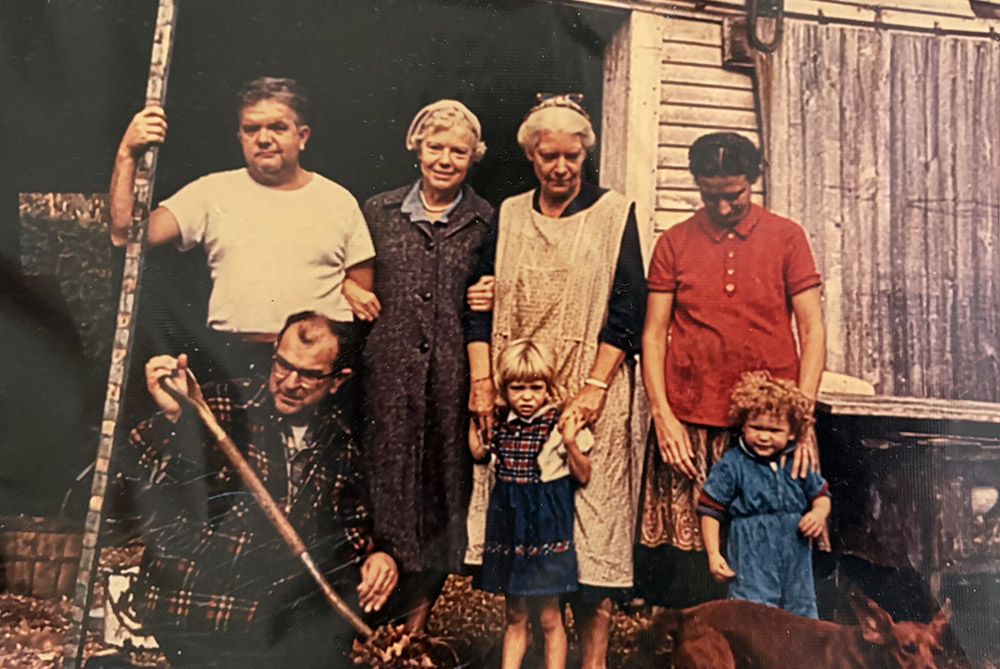
A 1960 photo shows, back row, from left: David William Hennessy (Martha Hennessy's father), Della Day (Dorothy Day's sister), Dorothy Day and her daughter, Tamar. Front row, from left: A Catholic Worker member named Stanley, Martha Hennessy and Hilaire Hennessy. (Courtesy of Martha Hennessy)
Years later, as an occupational therapist, she came to understand addiction differently under scientific, neurological lenses rather than behavioral.
Faith eventually also allowed her to hold tragedy and grace together.
"What I have learned is compromises and dichotomies and things that don't seem to make sense, and suffering that seems to be so irredeemable and unnecessary," she said. "And yet God gives us what we need. God gives us what we need to help us to grow. That can be really scary."
If war and personal suffering helped bring Hennessy back to faith, it also eventually brought her to prison.
For decades, she had opposed nuclear weapons. In 2018, she and six other Catholic activists entered the Kings Bay Naval Submarine Base in Georgia as part of a Plowshares action protesting the U.S. nuclear arsenal.
Advertisement
The action led to federal convictions and prison sentences in 2020. Discussing prison inevitably brought her back to one of the most powerful passages in her grandmother's autobiography The Long Loneliness, where Day describes her first experience of incarceration as a young suffragist.
Prison itself was far less inspiring than the ideals that led Hennessy there. "It was terrible," she said simply. "I hated it." Yet it became a place of spiritual deepening. She organized prayer groups, studied Scripture and kept a prison journal she hopes one day to publish.
"It was the spiritual that sustained me completely," she said.
By the end of her sentence, she felt more rooted in her faith than ever before. "That Plowshares action established me much more firmly in my faith," she said. "I took a huge risk. I went out on a limb, and I said to myself, 'If you're going to do this, God is going to take care of you.' "
Hennessy spoke passionately about the place of women in Catholic life, arguing that her grandmother's witness remains profoundly relevant.
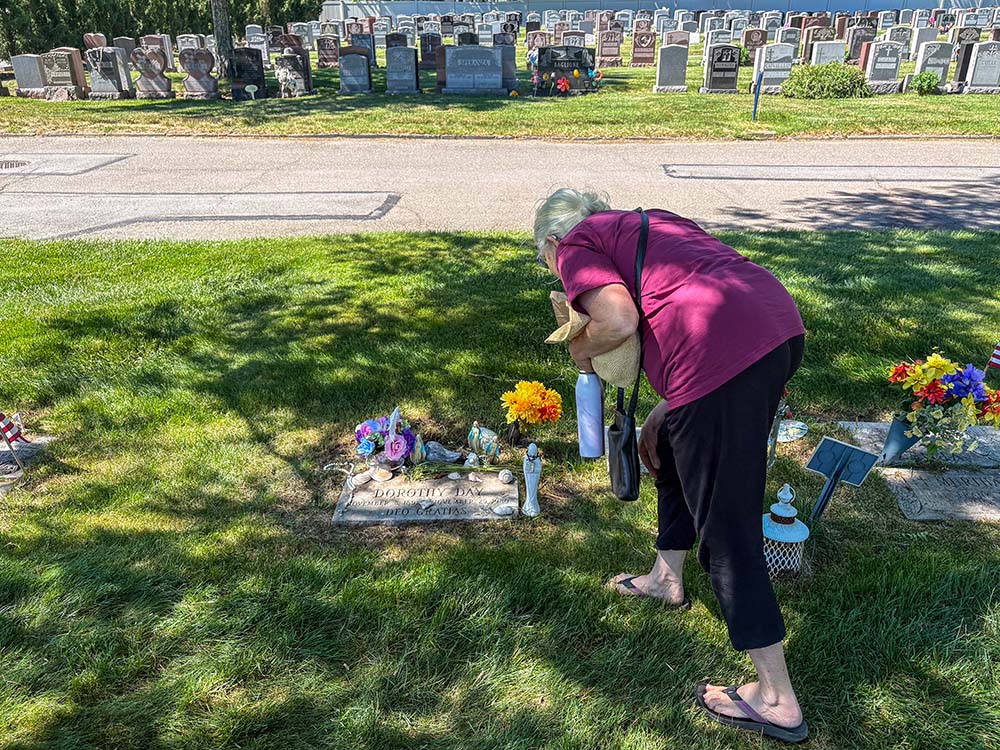
Martha Hennessy, Dorothy Day's granddaughter, bends over her grandmother's grave at Resurrection Cemetery in Staten Island, New York, June 8, 2026. (NCR photo/Camillo Barone)
"Dorothy was a single working mother in the 1920s, which was unheard of. She gives young women inspiration. She is such an example of courage, fearlessness."
The same is true, Hennessy believes, for the American Catholic Church in general. "This is why the canonization cause is so critical," she said. "She is a perfect saint for the U.S. Catholic Church."
Hennessy admitted she learned much of who Day was only after her death.
Still, one question remains. "How did you do it?" Hennessy said she would ask her grandmother today. "How did you put up with so much both within your family and within the community?"
"I would also tell her she should have been nicer to my mother and sent her to a good college," she added, laughing.
While the afternoon light was fading over Resurrection Cemetery, Hennessy stood up and looked toward her grandmother's grave one last time.
Her voice softened. "Goodbye and thank you, granny," she said. "You saved my life many, many times. Keep up the good work."