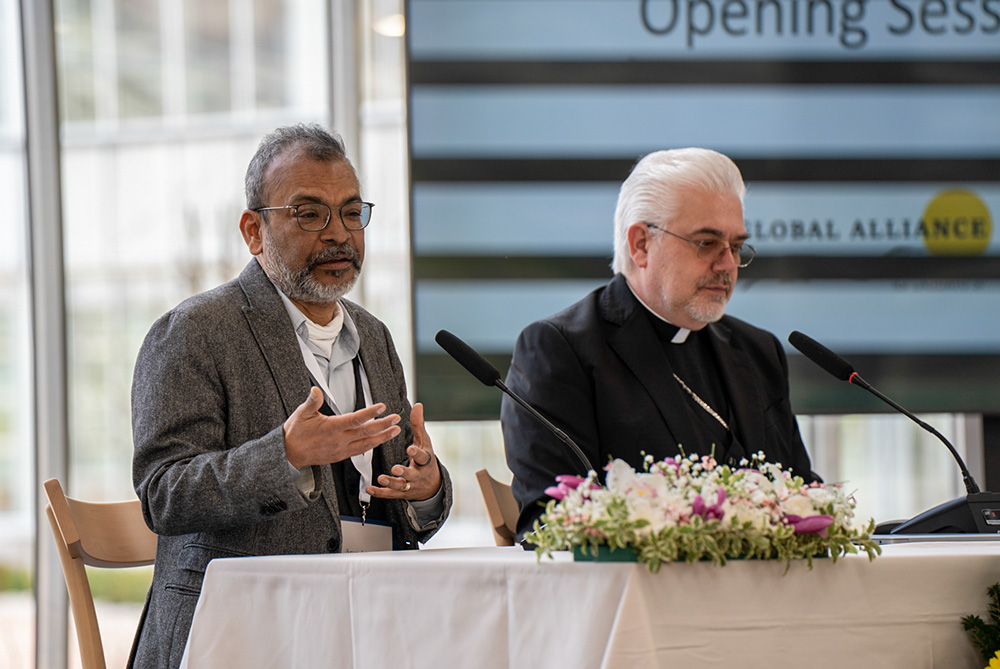
Arun Agrawal, left, a professor of sustainable development at the University of Notre Dame, speaks during a session of the first gathering of the Global Alliance on Laudato Si' held March 9-10, 2026, at Borgo Laudato Si' in Castel Gandolfo, Italy. Seated next to Agrawal is Cardinal Fabio Baggio, director of the Vatican's Laudato Si' Center for Higher Education. (Allesandro Sgarito)
by Catherine M. Odell
Join the Conversation
Send your thoughts to Letters to the Editor. Learn more
Amid the scenic papal gardens outside Rome in early March, the Vatican and the University of Notre Dame launched a new global sustainability initiative to apply Catholic principles to addressing climate change and other ecological threats facing the planet.
The Global Alliance for Laudato Si' was officially formed during a March 9-10 meeting of almost 100 scientists, researchers and environmental activists at Borgo Laudato Si', the educational sustainability center inspired by Pope Francis' 2015 encyclical on ecology and inaugurated by Pope Leo XIV last year in Castel Gandolfo, the centuries-old summer residence of popes.
The alliance aims to create an international network of academic leaders and institutions to collaborate on research, curriculum and other actions that promote stewardship of the Earth reflecting the ideas of integral ecology and ecological conversion expressed by Francis in his encyclical "Laudato Si', on Care for Our Common Home."
The burgeoning network plans to create six interdisciplinary working groups looking at three primary areas:
- Access to water, energy and food security;
- More just and sustainable economic systems;
- Developing tools and practices needed to spur collective action on environmental crises.
"We need an alliance where we can all work together," Cardinal Fabio Baggio, undersecretary of the Dicastery for Promoting Human Development and director of the Vatican's Laudato Si' Center for Higher Education, told Vatican News during the gathering.
Advertisement
Along with deepening knowledge of Francis' encyclical and developing research, Baggio said he hoped the alliance will produce models and examples of ecological conversion, "visible and touchable so everybody can learn."
Holy Cross Fr. Robert Dowd, president of the Catholic university in Indiana, said in a statement that the alliance left its inaugural meeting "with a renewed sense of purpose and hope" and that its efforts reflect "the deep connections between environmental sustainability and human dignity and flourishing."
"We look forward to the many ways this collaboration will serve the common good and advance care for our common home in the days ahead," he said.
For several years, Baggio had collaborated with scholars to lay the groundwork for the Global Alliance for Laudato Si'.
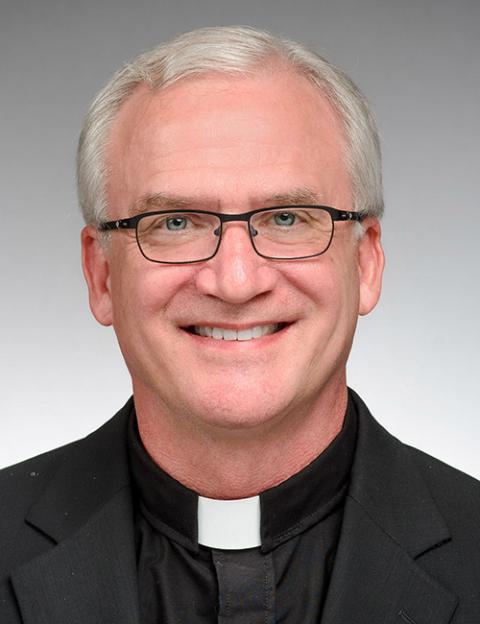
Holy Cross Fr. Dan Groody (University of Notre Dame)
A central figure was Holy Cross Fr. Daniel Groody, vice president and associate provost for undergraduate education at the University of Notre Dame.
"We've got to work together," Groody told EarthBeat in a phone interview. "The problems we face are enormous. The resources needed to do it are extensive. On the other hand, together we can have the transformative impact that we aspire to have in this faith community."
Having collaborated previously on migration issues, the cardinal asked Groody if Notre Dame could help develop a course on Laudato Si'. From there, they began meeting in Rome almost monthly with Leo's support, Groody said.
Eventually, Baggio and his team decided to host a conference of scholars in Rome to lay the best groundwork for the alliance. They were later joined by Arun Agrawal, a renowned scholar of environmental politics and sustainability who in January 2025 became the founding director of Notre Dame's Just Transformations to Sustainability Initiative, which leads the university's efforts around food, energy, water and infrastructure.
Agrawal told EarthBeat he thought the alliance's first gathering was successful.
"I told everyone that we were there because of someone who was no longer with us — Pope Francis," he said. "Francis had asked the world to listen to 'the cry of the earth and the cry of the poor.' But I also reminded them that Francis was certainly there encouraging us."
'Within two to five years, we could have hundreds of courses being offered on Laudato Si'.'
—Arun Agrawal
The scientists and scholars spent the first day meeting and connecting with each other. The second focused on commonalities they shared that they could build on as it relates to Laudato Si'. In one exercise, participants wrote on sticky notes environmental issues they were passionate about and then stuck them on a wall under the large category where they fit best. Those categories ultimately became the six working groups directing the alliance's work.
"It was interesting to see people in intense conversations about where a sticky note belonged," Agrawal said.
Agrawal is now working with Groody and others to develop a course on Laudato Si'. They plan to hold a free teacher training institute for the course at Notre Dame, at Borgo Laudato Si' and elsewhere, with the teachers then developing their own Laudato Si' courses to offer to students within 18 months.
"Within two to five years, we could have hundreds of courses being offered on Laudato Si'," Agrawal said.
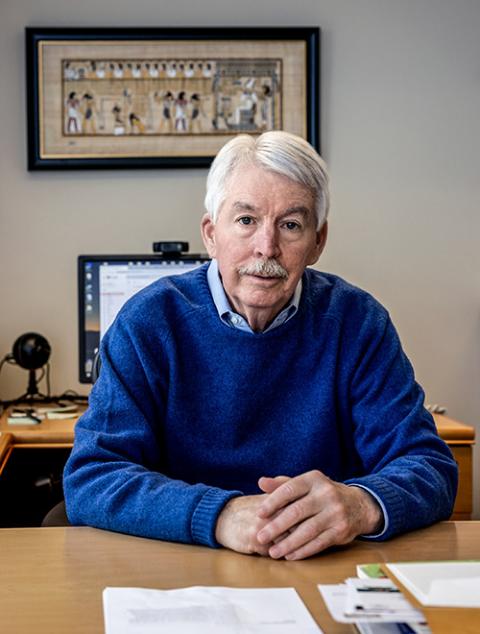
Dr. Philip Landrigan, director of Boston College's Global Observatory on Planetary Health (Boston College/Caitlin Cunningham)
Among those attending the first meeting of the Global Alliance for Laudato Si' was Dr. Philip Landrigan, director of the Boston College Global Observatory on Planetary Health.
As a pediatrician, public health physician and epidemiologist who has worked for decades on eradicating environmental harms, including lead poisoning, he sees the primary message of Francis' encyclical in tying together the preferential option for the poor and the care for the created world.
"We need to understand that damage to the Earth's environment comes back to hurt us and our children," Landrigan said.
Agrawal said that he finds his greatest hope for finding solutions to issues like climate change and pollution in working with people like Landrigan as well as his students.
"There are so many people who want to see care for the planet growing in the world," he said.
Groody shares that sentiment and is happy with Notre Dame leading in this new international environmental alliance.
"But what excites me," he said, "is how the whole ecosystem of Catholic institutions can partner together, collaborate and lift each other's work in a way that has more global impact than perhaps any other institutions could in the world today."