

<h1>Sunday Resources</h1><div style="font-size: 19px; font-family: 'Georgia', serif;"><p>National Catholic Reporter offers these resources in advance as a complimentary service to planners and preachers.</p>
<div style="text-align: center;"><div style="max-width: 400px; margin: 0 auto;"><a href="https://www.ncronline.org/vatican/francis-comic-strip/francis-comic-str… style="max-width: 100%;" src="https://www.ncronline.org/fil

<div style="text-align: center;"><div style="margin-bottom: 10px; padding-bottom: 10px; border-bottom: 1px dotted #ccc;" class="full_width_image"><img style="width: 624px; max-width: 100%;" src="https://www.ncronline.org/files/styles/email_newsletter_full_width/publ… style="color: #04619d; text-decoration: none;" href="

Jay Horton is communications manager for Georgia Interfaith Power & Light, and a ministerial candidate in the United Methodist Church. He holds an M.Div. from Emory University.
Timothy J. Burger is a contributing journalist for various publications. He has written for Time magazine, Daily Mail, Town & Country, Bloomberg News, Politico, Roll Call and the New York Daily News, among others.
<h2><a style="color: #04619d; text-decoration: none;" href="https://www.ncronline.org/opinion/ncr-voices/self-care-and-resistance-p… and resistance for the political road ahead</a></h2><div style="font-weight: bold; font-size: 15px; font-family: Arial, sans-serif;" class="byline">by Daniel P.
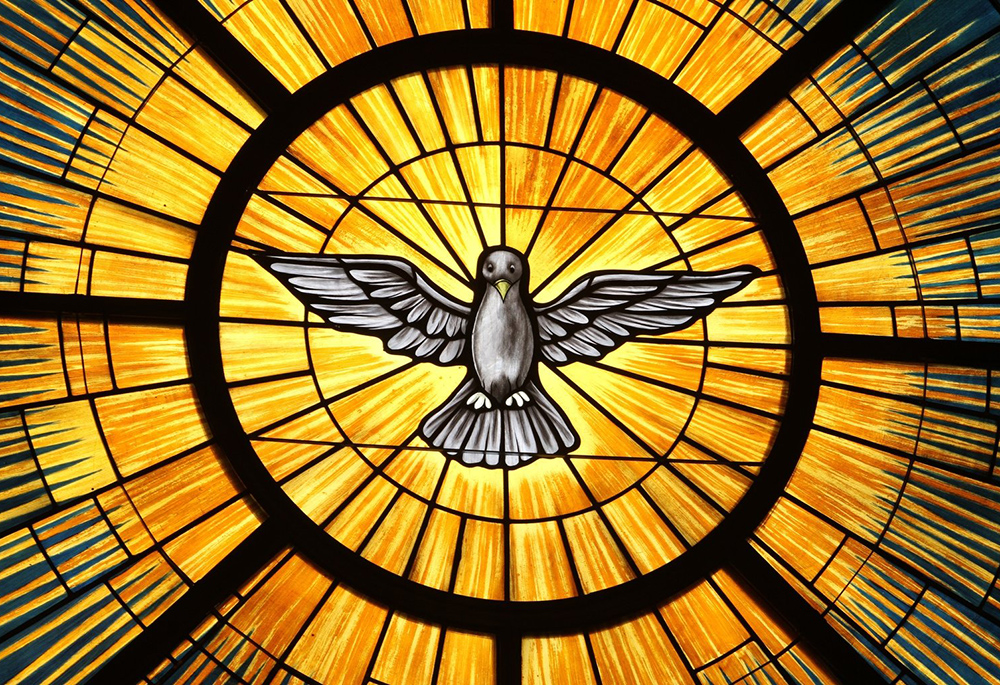
The Holy Spirit, traditionally depicted as a dove, is pictured in a stained-glass window at St. John Vianney Church in Lithia Springs, Georgia, in this May 4, 2015, file photo. (CNS/Georgia Bulletin/Michael Alexander)

by Mary M. McGlone
Join the Conversation
Send your thoughts to Letters to the Editor. Learn more
It would take Steven Spielberg to create an adequate depiction of the scene in today's first reading. Think about it, the whole community stood listening "attentively" for about six hours — and that included the children!
What brought on such a spectacle? Essentially, Nehemiah's people were celebrating a ceremony of recommitment. After being in exile and beginning to rebuild Jerusalem, Ezra and Nehemiah realized that their people were religiously illiterate. They were glad to be in Jerusalem, they loved their city, but knowing how to serve their God had become something of a lost art. The drama of this event helped them realize the goodness of the Torah, God's instructions for their life. The prostrations and "amens" expressing their recommitment to God called for rejoicing and feasting. They were intensifying their identity as a people of God.
Our psalm refrain expresses their thoughts and feelings: "Your words, Lord, are Spirit and life." Unlike a penal code which defines wrongful acts and just punishment, they understood that the law of the Lord is clear, it refreshes, gives wisdom and enlightens. With the magnificent ceremony of proclaiming the law of God, the people were swept into a new awareness that their communal identity came from their relationship with God. The law gave them a path toward becoming all that God hoped they would be.
In Jesus' time, synagogue services included prayers, a proclamation of faith, readings from Scripture and an instruction. According to Luke, Jesus was accustomed to participating in synagogue services as a well-accepted teacher. When Jesus went to the synagogue in Nazareth, his reading produced a drama different from that of Ezra's reading.
When Luke says that Jesus returned from the desert under the power of the Spirit, he's making a proclamation of faith that grounds all that follows. Such faith demands more than we might expect. It's easy to think of others as good people, admirable and just, but to believe that someone operates under the power of God's Spirit demands belief in that person plus faith that God acts through the kind of people with whom we might have coffee and doughnuts.
Jesus chose to read a passage from Isaiah that announced a jubilee year. That was fine. The scandal began when he claimed to be the one anointed to carry out all the promises it entailed. Saying, "Today this Scripture passage is fulfilled in your hearing," Jesus claimed his vocation as an envoy of God, the God whose concern concentrates on the most vulnerable.
Advertisement
Luke placed this narrative immediately after his account of Jesus' temptations in the desert. Each of those temptations offered a self-serving way for Jesus to carry out his messianic mission and he rejected them all. Although he obviously had great respect for John the Baptizer, when he described his vocation, Jesus chose Isaiah as his guide. He would not be an ascetic prophet, but one who proclaimed joy and human thriving. His goal was to bring, and be, good news.
St. Paul picks up on this theme in his preaching to the Corinthians. First of all, like Jesus who called for concern for every member of the community, Paul reminds his people that they were all baptized into the very same Spirit that guided Jesus. More than that, their unity in the Spirit outranked any distinctions among them. As members of Christ, they were to consecrate their gifts and talents for the good of the whole.
Jesus gave scandal to the people who knew him best. Thinking they knew him, they suffered from the same lack of faith that hinders too many disciples. Many believe in Jesus but lack conviction about their capacity to be his body, his presence in their own time. They may participate in the Eucharist and pray but remain ignorant of the power of the Spirit available to them through their incorporation into Christ. It's too hard to believe that they share Jesus' own vocation.
The Scriptures of this Sunday invite us to recommit ourselves to our vocation as members of the body of Christ. We might begin by asking the Spirit to help us become ever more deeply aware of our particular vocation and of the gifts and talents we've been given. Remembering Paul's message that no gift is lesser or unnecessary, we can ask the Spirit how to use those gifts for the good of all. We are one body, sharing in the needs and the joy of all others. Our vocation is to thrive together.
As baptized people, let us join Jesus in saying "The Spirit of the Lord is upon me." To the extent that we are open, the Spirit will guide us to give joyfully and become all God knows we can be. That will create a spectacle much needed by our world.
<div style="text-align: center;"><div style="margin-bottom: 10px; padding-bottom: 10px; border-bottom: 1px dotted #ccc;" class="full_width_image"><img style="width: 624px; max-width: 100%;" src="https://www.ncronline.org/files/styles/email_newsletter_full_width/publ… style="color: #04619d; text-decoration: none;" href="
