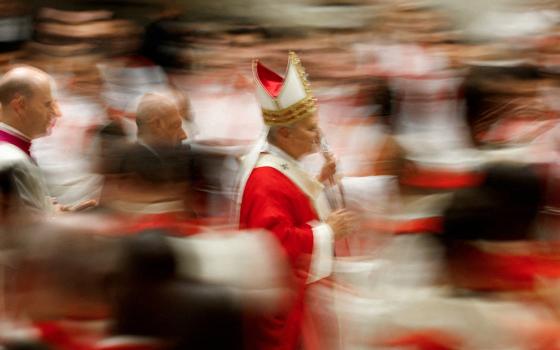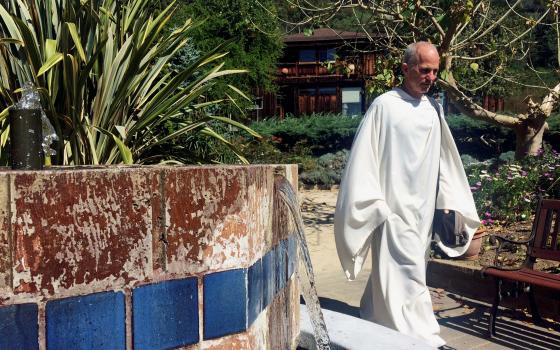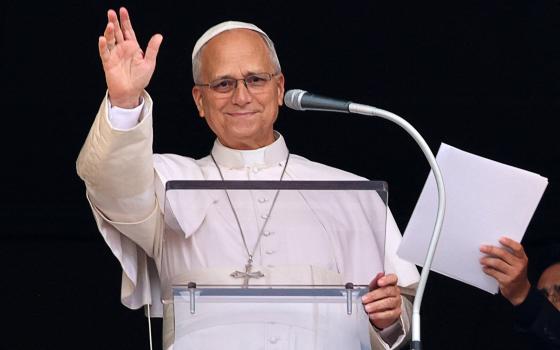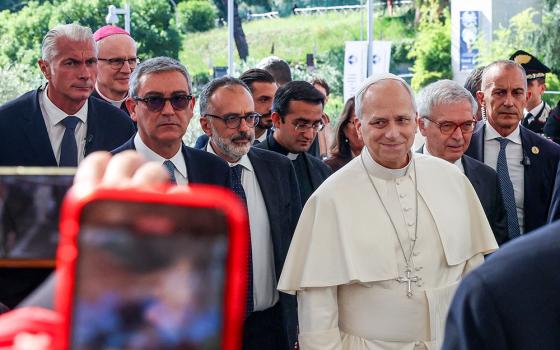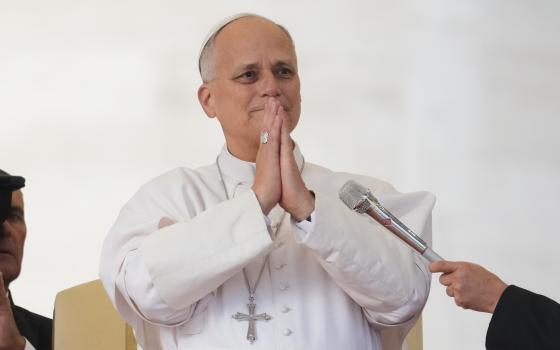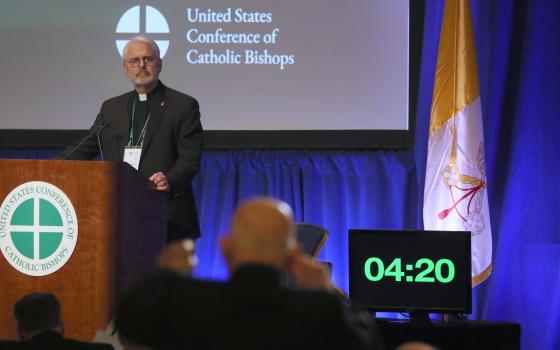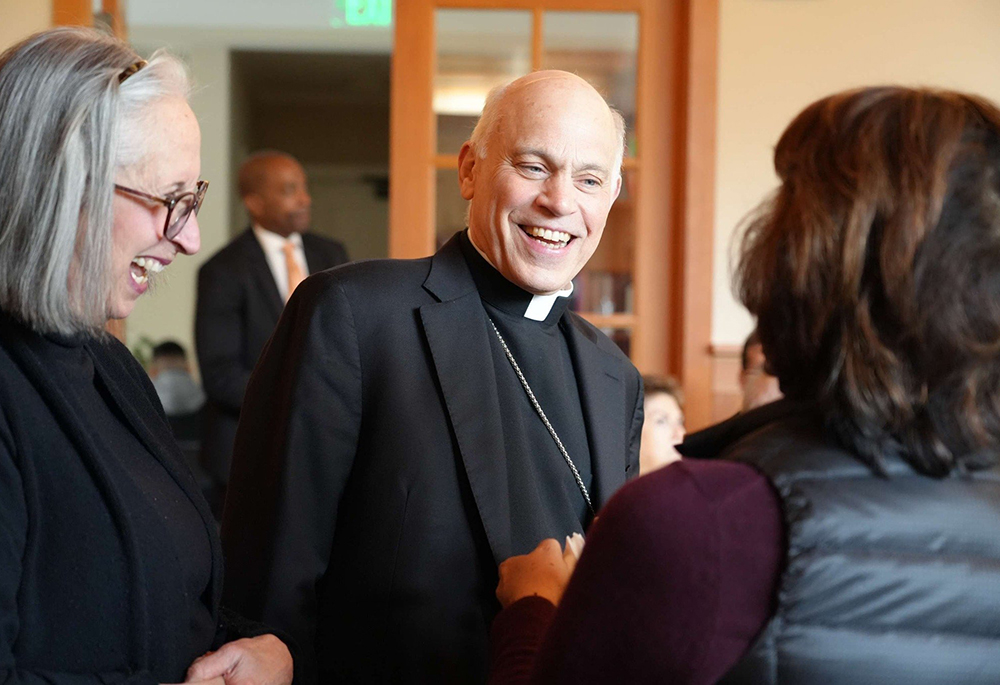
San Francisco Archbishop Salvatore J. Cordileone is pictured in a 2024 file photo. (OSV News/Courtesy of Archdiocese of San Francisco)
Join the Conversation
Send your thoughts to Letters to the Editor. Learn more
As Pope Leo XIV continues to rearrange Vatican personnel, his appointment of San Francisco Archbishop Salvatore Cordileone on July 25 to the microstate's highest court was yet another eye-catching move.
Cordileone, a prominent conservative voice in the U.S. hierarchy who has been outspoken in railing against same-sex marriage laws and advocating for greater access to the pre-Vatican II Latin Mass, was named to a five-year term as a member of the Supreme Tribunal of the Apostolic Signatura.
He will continue to lead the San Francisco Archdiocese.
The news caught the eyes of Catholic conservatives, who see in Leo someone more open to their pastoral sensibilities than his predecessor, Pope Francis. But the San Francisco archbishop's appointment may not necessarily foreshadow Leo's vision for the church, since the court itself has a recent history of including members from across the ideological spectrum.
The tribunal reviews appeals involving lower Vatican courts and administrative decisions made by Vatican offices and other church authorities, which can range from appeals over rulings in annulment cases, the removal of a priest's ministerial faculties, restrictions on a priest's ministry and dismissal from a teaching position.
Its members do not run the court's daily operations or ordinarily reside in Rome, but are called to sit on judicial panels that issue final rulings in certain cases.
The signatura's membership previously brought together churchmen with markedly different ecclesial outlooks.
In 2021, Pope Francis appointed two prominent allies — Cardinals Joseph Tobin of Newark, New Jersey, and Mario Grech, secretary-general of the Synod of Bishops — as well as German Cardinal Gerhard Müller, the former head of the Vatican's doctrine office who had become an outspoken critic of aspects of Francis' pontificate.
From 2008 to 2014, U.S. Cardinal Raymond Burke, who emerged as one of Francis' most vocal critics, was prefect of the signatura's tribunal. Though he was removed from its helm promptly after Francis' election, Francis reappointed him to the tribunal in 2017 and he remains a member alongside the new appointments.
Advertisement
A canon lawyer from San Diego, Cordileone, 70, has served as archbishop of San Francisco since 2012. In 2022, he made headlines by stating that then-House Speaker Nancy Pelosi, a Catholic whose congressional district was entirely within San Francisco, should be denied Communion because of her public support for abortion rights.
More recently, on July 10, in the wake of the excommunication of bishops and priests of the traditionalist Society of St. Pius X declared by the Vatican, Cordileone called for greater access to the "Traditional form of the Mass" so that Catholics who prefer the Latin Mass "will not feel as if they are constrained to seek spiritual nourishment outside of the family in union with Rome."
Leo's six other appointments to the tribunal include U.S. Bishop Edward Lohse of Kalamazoo, Michigan, who is also serving as apostolic administrator of Steubenville, Ohio, and two Spanish canon lawyers who are members of the conservative Catholic group Opus Dei. Like Leo himself, all the new members of the tribunal are canon lawyers.
Cordileone's appointment follows several other moves by Leo that have attracted attention but have not pointed to a single ideological direction.
In June, Leo selected EWTN News president Maria Montserrat "Montse" Alvarado, who has ties to several conservative Catholic organizations, to lead the Vatican's communications department in one of his most high-profile appointments to date.
Weeks later, the Vatican announced that the pope had promoted Salesian Sr. Alessandra Smerilli to lead the influential Dicastery for Promoting Integral Human Development, which oversees the church's work on poverty, migration, peace, economic justice and care for creation. Smerilli has publicly embraced synodality — a flashpoint among Catholics and defining feature of Francis' legacy — and has consistently advocated for the church's focus on the world's poor and marginalized.
Although the Dicastery for Communication had already been led by a layperson, entrusting the leadership of two of the Vatican's most high-profile departments to women places Leo in continuity with his predecessor's efforts to expand leadership roles for women in the Roman Curia.
Leo's other major appointments also show that he is not keen to promote ideologues: to fill his own role as head of Dicastery for Bishops he tapped the low-profile Archbishop Filippo Iannone, and he chose Australian Bishop Anthony Randazzo, a canon lawyer experienced in handling the church's response to abuse cases, as the Holy See's chief legal expert. For the Vatican's charitable arm he picked Archbishop Luis Marín de San Martín, a longtime friend, fellow Augustinian and promoter of synodality, but not ideologically tinged.
As for any deeper meaning to Cordileone's appointment, the archbishop himself did not offer much insight in a post he published on X.
"I am deeply grateful to the Holy Father, Pope Leo XIV, for appointing me as a member of the Supreme Apostolic Signatura," he wrote. "I receive this responsibility with a profound sense of stewardship, recognizing that every office in the Church is entrusted for the service of Christ, His people, and the mission of the Gospel."
He added, "Please join me in praying for Pope Leo XIV, for the Church throughout the world, and that I may fulfill this responsibility with wisdom, charity and a generous heart."
The National Catholic Reporter's Rome Bureau is made possible in part by the generosity of Joan and Bob McGrath.