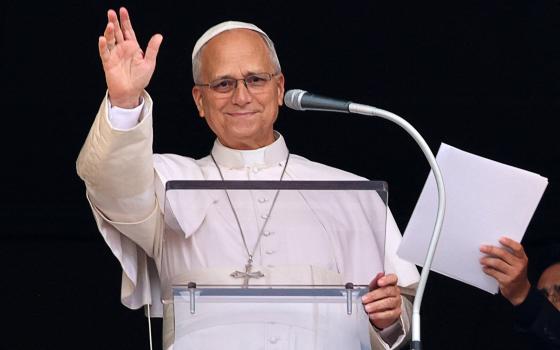
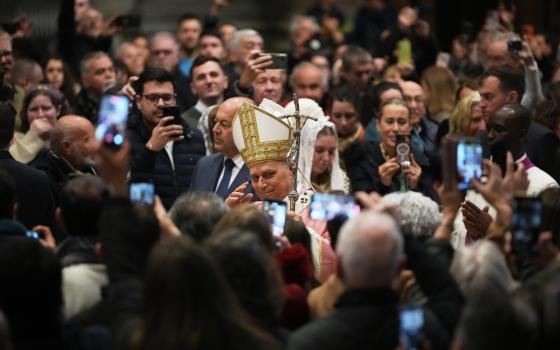
Pope Leo XIV closes the Holy Door of St. Peter’s Basilica on the feast of the Epiphany at the Vatican Jan. 6, 2026, marking the official end of the Jubilee Year 2025. (OSV News photo/Yara Nardi, pool via Reuters)

Join the Conversation
Send your thoughts to Letters to the Editor. Learn more
Closing a Jubilee that brought record numbers of pilgrims to Rome, Pope Leo XIV said the power of the 2025 Holy Year lies in its capacity to shape hearts that cherish the sacred and, in turn, reject consumerism.
"Around us, a distorted economy tries to profit from everything," he said in his homily on Jan. 6, the Feast of the Epiphany commemorating the visit of the magi to the infant Jesus.
"Has the Jubilee taught us to flee from this type of efficiency that reduces everything to a product and human beings to consumers?" the pope asked. "After this year, will we be better able to recognize a pilgrim in the visitor, a seeker in the stranger, a neighbor in the foreigner, and fellow travelers in those who are different?"
More than 5,000 people attended the Mass in St. Peter's Basilica while over 10,000 followed the livestream outdoors in St. Peter's Square despite steady rainfall.
Before celebrating Mass, Leo prayed in the atrium of St. Peter's Basilica that "we may bear witness in the world to the hope that does not disappoint." He then knelt to pray before the threshold of the Holy Door and arose to close it in silence. The door is expected to remain sealed until the 2033 Holy Year marking 2,000 years since Christ's death and resurrection.
On the eve of an extraordinary consistory of cardinals convened by Leo to take place Jan. 7-8, the pope stressed the Jubilee message of journey, saying the church is never still in its pursuit of God.
"Is there life in our church? Is there space for something new to be born?" he asked. "If we do not reduce our churches to monuments, if our communities are homes, if we stand united and resist the flattery and seduction of those in power, then we will be the generation of a new dawn."
Vatican officials estimated that more than 33 million pilgrims visited Rome during the Jubilee period, up from the 22 million people estimated to have visited Rome in 2024. Among registered pilgrims, nearly 13% came from the United States, second only behind Italy.

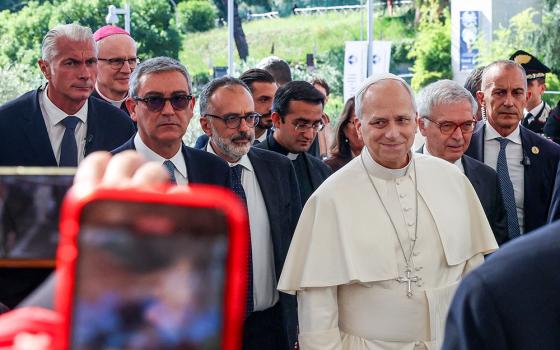
Pilgrims walk through the Holy Door at St. Peter’s Basilica at the Vatican Jan. 5, 2026, the last day it remained open before Pope Leo XIV officially closed it Jan. 6 to mark the end of the Holy Year. (CNS photo/Lola Gomez)
Jubilee closed Francis' pontificate
The 2025 Holy Year began with Pope Francis' bull of indiction "Spes Non Confundit" ("Hope Does Not Disappoint") published in May 2024, in which he extolled the dire need for Christian hope. In the document, the late pope pointed to a world in which nations are burdened by unjust debts, society is driven by profit at any cost and people are robbed of their dignity by limited opportunity, prejudice and endless incarceration.
In December 2024, the 88-year-old pontiff opened the Holy Door of St. Peter's Basilica for the second time in his pontificate; he celebrated the extraordinary Jubilee of Mercy in 2016. This time, however, he crossed the doors threshold seated in a wheelchair.
In typical Francis fashion, he opened a holy door at Rome's Rebibbia prison two days later, the first time a holy door was designated at a prison. The frail pope summoned the energy to stand and cross the door's threshold on foot among the prisoners.
The following months saw the pope continue with Jubilee activities as his health declined. Stifled by bronchitis, Francis asked aides to read his speeches at his final public events. The late pope, notoriously a ceaseless worker, continued to give audiences until his hospitalization Feb. 14, and Jubilee events continued in his absence presided by other cardinals.
With his death on Easter Monday April 21, following his final public appearance from the balcony of St. Peter's Basilica, Francis became the first pope to open the Holy Door of St. Peter's Basilica without closing it.
During the interregnum, the Jubilee brought additional speculation about papal contenders. Cardinal Pietro Parolin, Vatican secretary of state, saw his chances of becoming pope diminish after presiding over Mass for the Jubilee of Teenagers and largely failing to connect with the crowd of 200,000 teens in St. Peter's Square.
From there, it was only a matter of days until the new pope was elected to see through the rest of the holy year.

Pope Francis crosses the threshold of the Holy Door of the Church of Our Father at Rome's Rebibbia prison Dec. 26, 2024, before presiding over a Mass with inmates, prison staff and Italian government officials. (CNS photo/Vatican Media)
The Holy Door closes, and a pontificate opens up
Inheriting a calendar largely shaped by the Jubilee, much of Leo’s schedule was already set when he first donned the white papal vestments.
Regardless, Leo found a window to make the first trip of his pontificate to Turkey and Lebanon Nov. 27-Dec. 2. Without the constraints of a Jubilee year, however, Leo's schedule for 2026 stands wide open and speculation is increasingly mounting on his next destinations. (He has signaled that Algeria could be a front-runner).
It is no surprise then, that the pope used the occasion to convene the world's cardinals on the heels of the Jubilee's close. Though virtually no information has been provided on the meetings, the consistory is expected to focus on the organization of work within the Roman Curia.
With the Jubilee behind him, the consistory could be the starting point for the Leo agenda to begin in earnest.

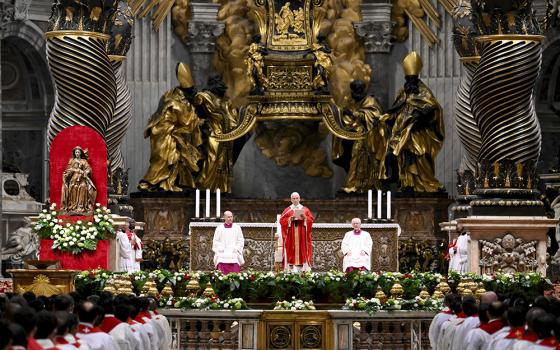
Pope Leo XIV is handed his crosier as he celebrates Mass on the feast of the Epiphany in St. Peter's Basilica at the Vatican Jan. 6, 2026. (OSV News photo/Yara Nardi, Reuters)
Advertisement
Jubilee offers a papal platform
Shortly after his election to the papacy May 8, the Jubilee quickly gave Leo a platform to show his distinctive messaging to a number of various groups with dedicated Jubilee meetings: Eastern Catholic Churches, government leaders, Vatican employees, bishops, priests and even Catholic influencers.
Celebrating Mass during the Jubilee of Priests, he told those he was about to ordain: "Today’s world offers models of success and prestige that are dubious and short-lived. Do not let yourselves be taken in by them!" Instead, he encouraged them to model themselves after those dedicated to service of God and neighbor.
After a quiet start to the pontificate, the Holy Year then thrust Leo onto the largest stage of his pontificate during the Jubilee of Youth in July. Vatican officials estimated that more than 13 million pilgrims came to Rome to mark that Jubilee.
The occasion injected a dose of excitement into the tame pontificate. Leo surprised the approximately 120,000 young people gathered in St. Peter's Square for the opening Mass of the youth Jubilee showing his vigor. He then presided over the vigil which drew more than a million young people.
As questions over migration dominated U.S. headlines through the summer, the Jubilee of Migrants gave the pope a natural platform to make a spiritual appeal for the care of migrants, cementing his position as an advocate for migrants and refugees on the heels of the Francis pontificate which placed migration issues front and center.
The pope also spoke to marginalized groups for the Jubilees of the Poor, which he has made a defining issue of his pontificate thus far, and of Prisoners. "No human being is defined only by his or her actions," he told prisoners in St. Peter's Basilica. "Justice is always a process of reparation and reconciliation."
The pope's Saturday Jubilee audiences, focusing on the role of hope in the lives of various holy people, also gave him a chance to outline his spiritual preferences. Before pilgrims in November, the pope extolled Dorothy Day, the American Catholic journalist and social activist who is remembered for her advocacy for workers and migrants. "To hope is to take a stand. To hope is to understand in our hearts and show in our actions that things must not continue as before," he said. "Dorothy Day took a stand."
The National Catholic Reporter's Rome Bureau is made possible in part by the generosity of Joan and Bob McGrath.