
A portion of "St. Teresa of Avila" (1660s) by Juan Antonio De Frias y Escalante (Artvee)

by Jean P. Kelly
Join the Conversation
Send your thoughts to Letters to the Editor. Learn more
"Oh, humility, humility! … Whenever I hear people making so much of their times of aridity, I cannot help thinking that they are somewhat lacking in it," wrote St. Teresa of Avila in her epic work about the soul's journey toward God, The Interior Castle. What would the 16th century doctor of the church have made of an entire book devoted to a modern writer's midlife spiritual dryness?
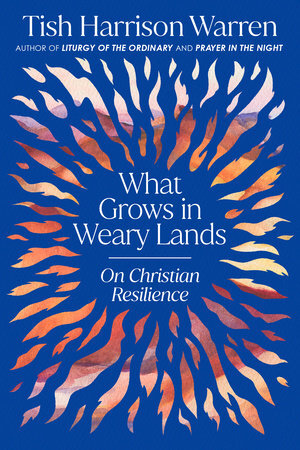
In What Grows in Weary Lands: On Christian Resilience, Tish Harrison Warren, an Anglican priest and former New York Times writer, documents her first encounter with what Teresa and other monastics taught about spiritual desolation. In a lively blend of memoir, reporting, social commentary, hagiography and apologetics, Warren attempts to translate monkish habits for Christians navigating such a challenge in today's comfort-seeking, digitally distracted age.
As a Catholic Benedictine oblate familiar with the wisdom Warren hopes to reintroduce, I found her effort only partially successful. Catholics may appreciate her encouragement, but her guidance often feels thin, sometimes impractical for diverse life stages and economic realities, and ultimately limited by its distance from core practices that assure Christian endurance: seeking sacramental grace, surrendering to God's will through sacrifice, and cultivating virtue.
Warren describes how, even amid professional and personal success, she was overtaken by a spiritual malaise she could neither explain nor shake. Like millions of Americans, she was exhausted, she recounts, and God seemed distant. "I would sit to pray, but it felt as though the line had gone dead," she writes. "I did not feel a sense of God's nearness. I didn't feel much of anything at all." Faced with the choice to numb out, flame out or go deep, she chose depth, opting to foster what early Christians called fortitude and what she calls "resilience."
For readers unfamiliar with monastic teachings, Warren offers accessible reinterpretation of saintly insights, attitudes and customs that seem countercultural but are in fact timeless. In times of sacred stagnation, the author urges believers to "stay in their cells" as desert hermits did; today resisting impulsive job changes, church-hopping or abandoning difficult relationships simply because stability becomes uncomfortable. She encourages the continuation of prayer and communal worship even when they bring little personal satisfaction. She warns against self-deception, distinguishes Christian hope from optimism and addresses the need for repentance.
Drawing on examples from her own life and those of saints — including desert hermits, Sts. Teresa of Ávila, John of the Cross, Benedict and Thérèse of Lisieux — she offers examples and models of perseverance. She echoes the desert father who advised letting "the silt settle" in a glass of muddy water, a metaphor for escaping the world's noise so as to hear God's voice.
'What fuels resilience isn't willpower or guilt. It is neither self-empowerment nor self-flagellation. It is learning to practice silence and solitude.'
—Tish Harrison Warren
"A contemplative life is simply one that seeks to remain open to the constant presence of God," Warren writes. "What fuels resilience — what will keep us going when life gets hard and tiring — isn't willpower or guilt. It is neither self-empowerment nor self-flagellation. It is learning to practice silence and solitude."
While well-researched and readable, the book at best offers only an introduction to what St. John of the Cross dubbed the "dark night of the soul." Readers, especially Catholics, hoping to mature past such plateaus may finish each chapter still asking, "But how, exactly?"
The saints that Warren cites offer concrete remedies, but these are not probed in the book, perhaps because they are unpalatable to modern sensibilities. Detachment, for instance, is a virtue core to Teresa's method of prayer, but is represented only by the cliché advice of fasting from social media. Application of Dorothy Day's "duty of delight" is reduced to splurging with a cupcake. The monastic practice of memento mori — remembering life's transience as a path toward God even in this life — is reframed as fostering a "sense of futility" rather than orienting toward eternal love and truth.
But the most striking omission from Warren's suggestions are those needed to grow a virtue every saint considered essential: humility.
Absent is Teresa's belief that faith grows deeper only if virtues of detachment, love of neighbor and humility are actively cultivated. Missing from Warren's introduction to St. Benedict's rule of life, which has guided monastics as well as lay believers since the sixth century, are the 12 concrete steps of humility, such as restraint from impulsive speaking and performing menial tasks without complaint. Thérèse of Lisieux's "little way" of ego death, today often dismissed as pusillanimous, is glossed over, lacking context about her standards of humility: Christ and the Virgin Mary.
Warren's lone recommendation for growing in this virtue is her denomination's liturgical communal penance practice. Catholics familiar with the sobering yet liberating grace offered by individual sacramental confession — an unflinching examination of conscience followed by naming one's failings aloud to another human in persona Christi — might find such a solution insufficient.
Advertisement
Based on experience with a yearslong dark night, including many months when she did not pray at all, Teresa taught believers to expect and accept both consolations and desolations as equally likely, and equal gifts. She warned that too much emphasis on dryness indicated a lack of spiritual freedom and courage, qualities she felt necessary in order to carry the cross alongside Christ.
Warren concludes that "one of the gifts of aridity is that, in desolation, our naïve, unexamined ideas about God, and about what God's love ought to look like are dashed against the rocks of reality so that a truer, more enduring trust might be built from the wreckage." On this, the author and the saints she quotes wholeheartedly agree.
Weary Lands is an admirable book, planting seeds of Catholic monastic wisdom for dry seasons. Yet those cultivating a fertile, lifelong relationship with the divine will find a richer wellspring at the source: writings by the saints themselves.
"I would not want any other prayer than that which makes the virtues grow in me," Teresa once wrote. "If it should be accompanied by great temptations, dryness, and trials leaving me with greater humility, I would consider it good prayer."