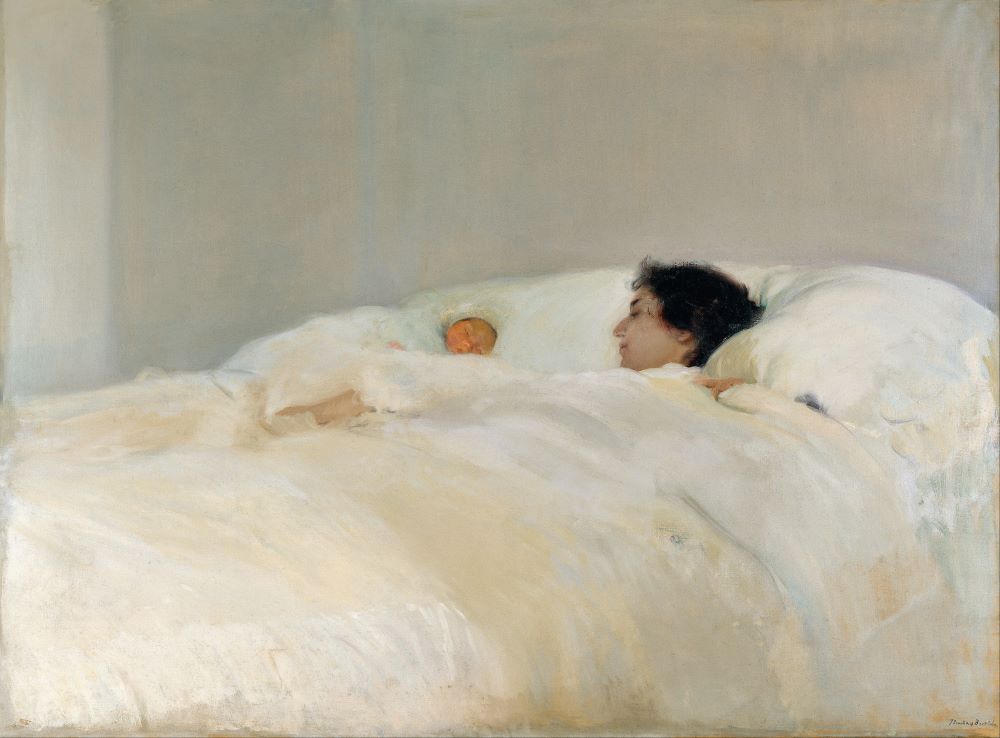
"Mother" by Joaquín Sorolla, 1895 (Artvee)

by Marissa Papula
Join the Conversation
Send your thoughts to Letters to the Editor. Learn more
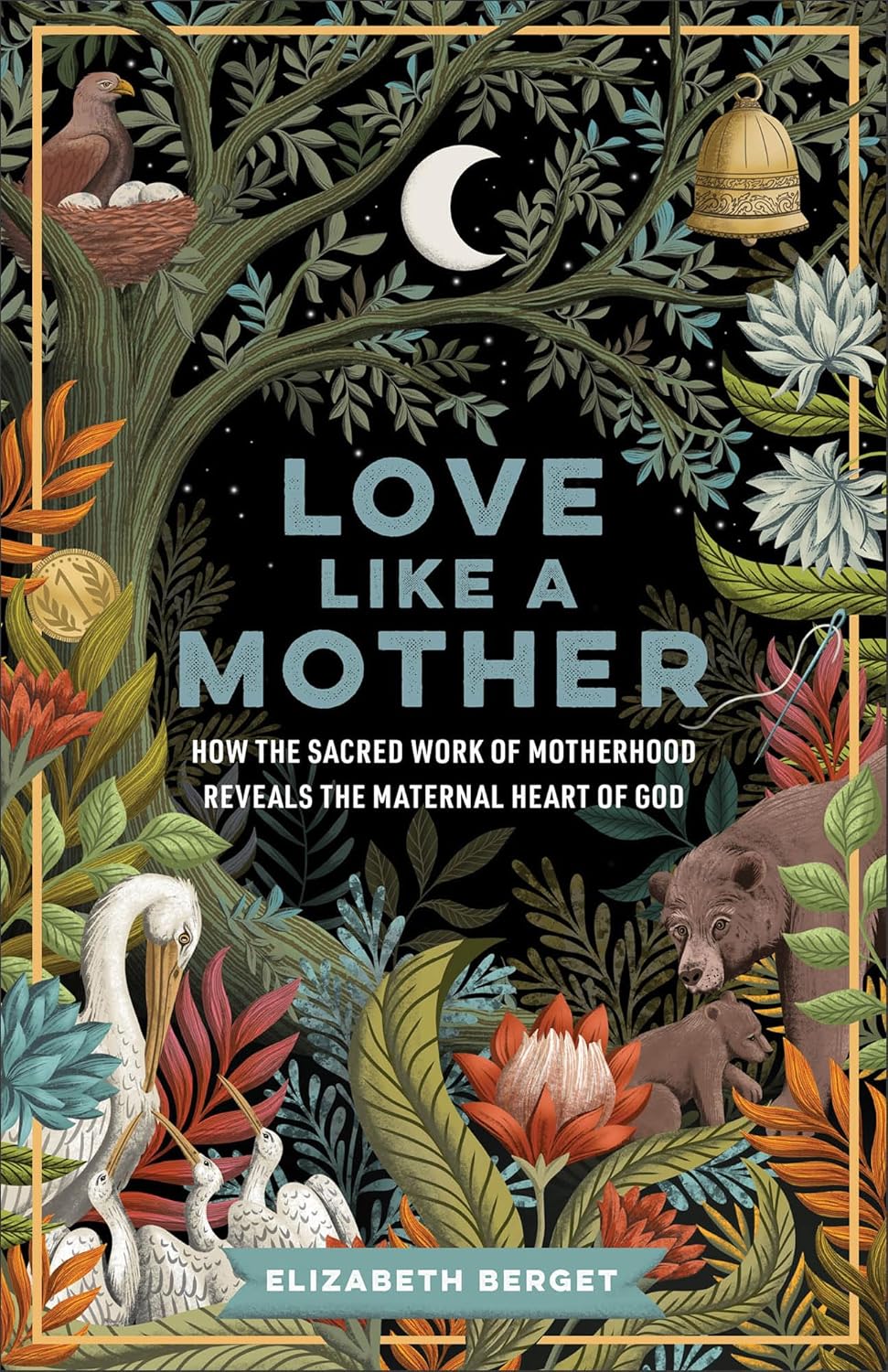
Who wants an encounter with God that is "leaky, vulnerable, porous, wet, soft?" According to Elizabeth Berget, we might actually want to know God in such a human way — and, as she claims in the new book Love Like a Mother: How the Sacred Work of Motherhood Reveals the Maternal Heart of God, we already have.
The "leaky, vulnerable, porous, wet, soft" God of Berget's writing reflects her claim that biblical texts, Christian history, art and women's lived experience are saturated with maternal imagery for God. This descriptor pulls double duty, referring both to pregnant, birthing and postpartum bodies and to the physicality of Jesus' miracles.
In assembling her expansive view of God, Berget rummages through metaphor, story and encounter with a childlike wonder and enthusiasm. She draws connections between bodily fluids, baby gear, Biblical verse and our best theology, as if on a "seek and find" quest, each epiphany a marvel. The prize for her sleuthing? The expansion of our spiritual imagination, moving readers from a "one-note" experience of God to "both hands pressing down on the [piano] keys in harmony," offering a galvanizing redemption of the holy labor of motherhood itself.
Music to our ears, indeed.
Berget's work is durable. Moving readers through a thematic arc following pregnancy, labor, birth, loss, feeding, sleep, protection and the mental load of motherhood, Berget provides readers examples, references and experiences that stack her thesis of the existence and endurance of a Mothering God. She invokes timeless voices, including Julian of Norwich and Teresa of Avila, and introduces lesser-known appearances of God-as-Mother, like in Medieval art depicting bleeding pelicans and yonic renderings of Jesus' crucifixion side wound.
Motherhood is of God, shared with God and powerfully reveals God. We need not depart from our everyday to know this divine love.
Her engagement with Scripture is particularly deft. Berget draws parallels between the disruptions inherent to parenthood and the "ministry of interruption" that characterized Jesus' miracles. She contrasts the masculine God of Isaiah with the comforting, nourishing, feminine God who, per the very same prophet, is as entwined with her beloved as a mother nursing her child. In 1 Kings, God cares for Elijah like a mother tending a toddler, offering him a "a snack and a nap" when he clearly needs it.
Berget is diligent with etymology. For example, after tracing the roots of the Hebrew words for "birth" and "breath," the author brings the didactic into dialogue with daily life:
We mothers experience a shred of the raw energy that existed in the precreation deep or the cresting waves of the flood. I wonder whether, as we bear down and as the birth waters burst forth, we reflect a God who delivered all of creation … It matters that our bodies can turn a cluster of cells into a baby with a beating heart and conscious brain. It matters that we contain ovaries and uteri and have waters that burst as we labor. It matters that we breathe and moan and rock and sway, or chuwl, in our own process of co-creation … our bodies are places where we can meet God — in pregnancy, labor, birth, and even in miscarriage, stillbirth, and infertility.
Love Like a Mother is light on its feet. Themes of memory, materiality and embodiment emerge through lighthearted references to overstuffed diaper bags, newborn car seats, white noise machines and blackout curtains. Complex theological claims are balanced with tales of toddlers throwing food from their high chairs. The levity affords Berget room to navigate rocky theological terrain without leaving readers behind; however, this same levity at times downplays the seriousness of birth trauma and the physical toll of childbearing on women's bodies.
Reading Love Like a Mother resurfaced a sensation I often feel when gathered with other young mothers commiserating over birth stories: Mine doesn't belong. I struggle to relate to those who found their births redemptive or empowering, and have suffered through many a dismissive, "But wasn’t it all worth it?" or "Just look at your beautiful baby!" that closes the already narrow space for women who don't fit into the prevailing discourse.
Advertisement
Importantly, Berget does reveal her own excruciating experience of the manual removal of her placenta following the birth of one of her children, as well as the harrowing anxiety of discovering a potentially fatal antibody in another during the final hours of labor. But her stories are buoyed with humor and resolved with tear-soaked, euphoric unions with newborns. Given her efforts elsewhere to include marginalized voices speaking to adoption, fostering, miscarriage and stillbirth, I was disappointed by how little attention was paid to cesarean birth, traumatic birth and fraught postpartum experiences.
Still, given the dominant American discourse and its torrent of bellicose, virile and hegemonic impressions of God, Berget offers a redemptive alternative that is at once pliant and powerful, compassionate and courageous. "When we convince ourselves that the way to God lies only in the high and lofty paths of holiness," she writes, "we miss out on the downward call of God to find him in what's right before us."
Thanks to Berget, the ongoing and ever-complicated work of fumbling for the least-wrong way to talk about God advances, and a warmer light illuminates the path. Motherhood is of God, shared with God and powerfully reveals God. We need not depart from our everyday to know this divine love.