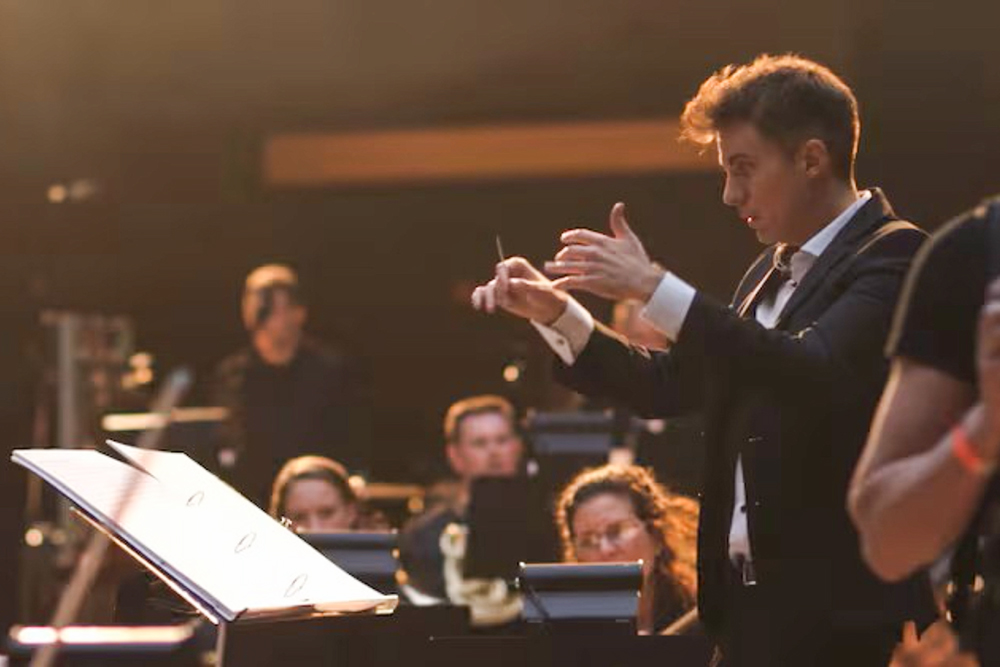
Rob Gardner conducts a past performance of "Lamb of God," his concert work about Jesus Christ's death and resurrection. (Courtesy of Church of Jesus Christ of Latter-day Saints)

by Jim McDermott
Join the Conversation
Send your thoughts to Letters to the Editor. Learn more
The Passion has inspired endless adaptations, from symphonies to motion pictures to Broadway musicals. This Holy Week, the Metropolitan Opera in New York City hosted a one-night-only contemporary Passion oratorio. Written by Mormon composer Rob Gardner, "Lamb of God" featured Tony winners Jessie Mueller and Santino Fontana and Tony nominees Brandon Victor Dixon, Norm Lewis and Joy Woods, telling the story of the Passion from the point of view of those around Jesus.
In a phone interview with NCR, Gardner explained what led him to tell the story of Jesus' death and resurrection, in a sense, without him. "I just couldn't figure out how to tell the story," he shared. "I think it was probably that I found Jesus to be unrelatable, because he's God. But I could imagine what Peter was feeling, or Martha or Thomas. It finally dawned on me, why not tell the story through the people around him?"
Gardner decided to focus in particular on the characters from the Passion and Resurrection narrative that are "often maligned" — Peter, who denies Jesus; Thomas for doubting; Martha for being worried and busy; Judas; Pilate. "I wanted to give them, for the lack of a better phrase, the benefit of the doubt and consider what was going on for them," he explained.
For a script, he allowed the characters only what they say in Scripture. But as he worked with their words and actions, Gardner found himself discovering whole new aspects of these figures for himself. "You think of Thomas," he suggested. "If every single person that you know and love is telling you that something amazing happened, do you really not believe all of them? No."
Advertisement
"I think he was hurt," Gardner posited. "Everybody he knows got this special witness, got to see this man who they thought was dead and to embrace him. And he was left out."
"How does it feel to have not only your friend but God decide to leave you out," Gardner wondered.
Broadway giant Lewis, who plays Pilate in the production, found a similar humanity in the character known for condemning Jesus to death. "I think he was trying to appease his constituents, but also trying to figure this man out," Lewis explained in a phone interview. "Is this guy telling the truth or what?"
And Lewis found Pilate's struggle resonates with our own faith questions. "In our modern-day lives, even though I believe, there are questions that we all have where we don't necessarily see any tangible evidence. And sometimes you wonder, where does my faith lie? Am I believing strong enough?"
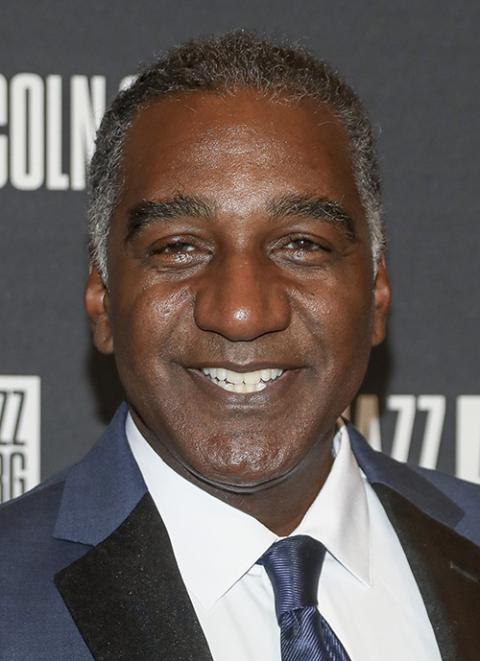
Singer Norm Lewis in a 2024 file photo (AP/Invision/Andy Kropa)
One of the great surprises for Gardner in writing "Lamb of God" through the eyes of everyone but Jesus was how it actually helped him get in touch with the humanity of Jesus, as well. "When Jesus goes into the Garden of Gethsemane, he takes with him Peter, James and John. Why?" he wondered. "They're not going to be able to help him."
In wrestling with that question, Gardner realized that Jesus' desire reflected the same impulse that he himself felt during hard times. "When I'm going through something terrible, if I'm rewriting a score and I'm sitting there stressed out, I want my friends close by, even if they can't help."
He came to see the hurt that Jesus experiences in that moment as enabling God to have a different kind of appreciation for us as we struggle. "There is a greater power out there that actually can help," Gardner said, "but also one who is saying, 'I'm here outside the gate and I'm not sleeping,' because he understands what it's like to come outside and find somebody sleeping."
The Passion is in many ways a hard story to tell. "It's the darkest week of their lives," Gardner noted. He didn't want his oratorio to shy away from the painful moments of the story. "Frankly, those are really fun to write sometimes musically," he admits, "and often they're left out of sacred music."
But Gardner resisted the temptation to have "Lamb of God" fall into despair. "I wanted to make sure we never went too long without getting at least a glimmer of light and hope," he explained. "I didn't want that darkness to overcome us, because I don't think it did them."
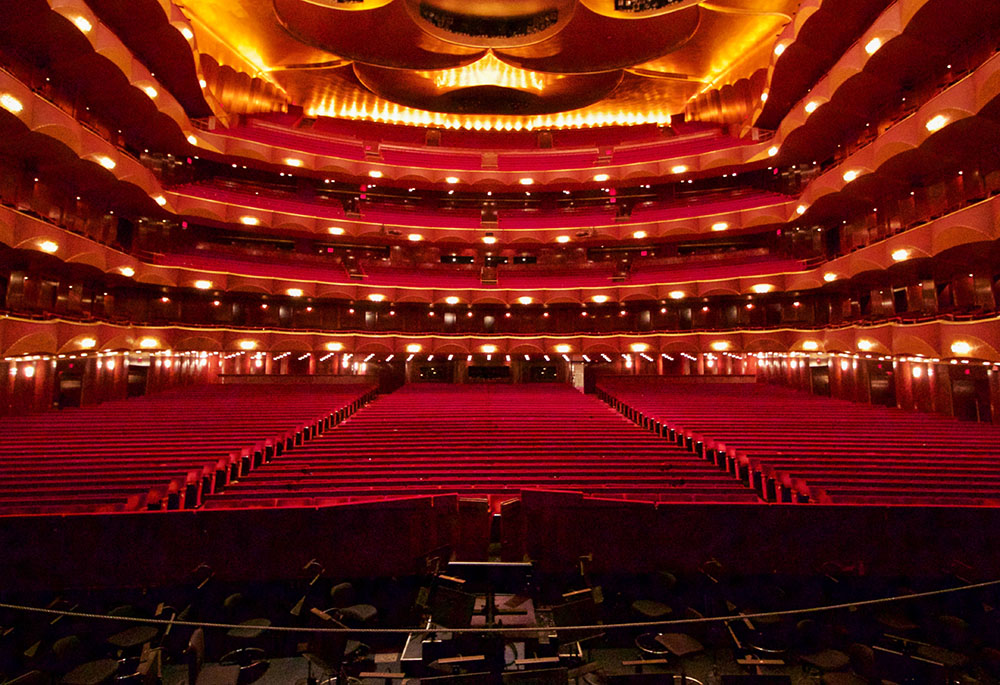
The auditorium of the Metropolitan Opera House in New York City (Wikimedia Commons/Grenoble17)
In addition to being performed in New York, a 2021 concert version of "Lamb of God" is currently available for streaming for free on YouTube. For as much enthusiasm as Gardner has in talking about the discoveries he made in writing "Lamb of God," he's emphatic in his hope that his oratorio will enable audiences to make their own discoveries.
"I feel like as a composer, it's my job to make people feel things, but I don't want to dictate what it is they're going to feel," he explained. "I want to let people experience it themselves, because then it will be personal."
Gardner believes the Passion story has much to say to people today regardless of their religious background or perspective. "In a world of divisiveness, I wanted to find some compassion for everybody," Gardner said. "I hope it brings these people to life in a way that the audience gets to realize, 'Oh I'm a little bit like Peter, I'm a little bit like Martha, I'm also maybe a little bit like Judas. How do I learn from their experience, and learn not to judge others when I see them making mistakes?' "
"There's grace for all of us."