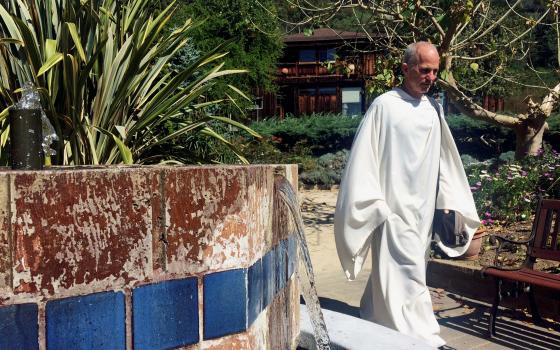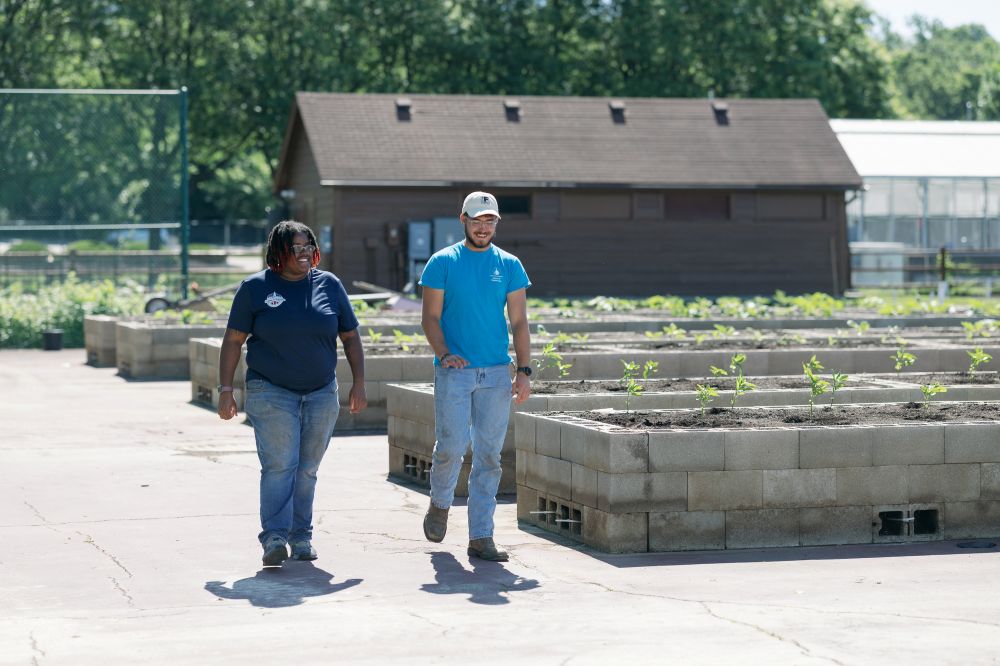
Students at the University of Dayton help grow a variety of produce on the campus' Flyer Farm, a 3-acre urban agriculture project. Most of what grows at the farm is given away to feed the hungry across the Dayton region. (Courtesy of University of Dayton)

Join the Conversation
Send your thoughts to Letters to the Editor. Learn more
For most mornings this summer, Zac Kissell, a rising junior at the University of Dayton, has woken up early to begin his work in the dirt.
He has tended garden beds where zucchini, squash and tomatoes grow. He has worked in orchards of fruit trees. He has helped take care of chickens and harvest honey from beehives.
As a mechanical engineering student during the academic year "I'm on my computer or on the screen almost all the time of the day," he said. "So getting out here, being back in nature, is a wonderful reconnect for me."
But Kissell hasn't toiled in fields near his home in Fort Wayne, Indiana, or on the farms of western Ohio where the Marianist school is located.
He's been right on campus the whole time.
Since 2017, the University of Dayton has tilled and maintained Flyer Farm, a small plot of land on and around six former tennis courts on the western edge of the university's footprint.
The urban agriculture project has brought farming back to the school 176 years after it was founded on farmland. But rather than feeding the student body, like decades ago, most of what grows at Flyer Farm today is given away to feed the hungry — an ever-growing population — across the Dayton region.
"It's part of the Marianist [charism] that we are good stewards of the earth, and it's been a mantra here at the university to do things for the common good, and that's been a part of it," said Steve Kendig, executive director of energy utilization and environmental sustainability at Dayton.
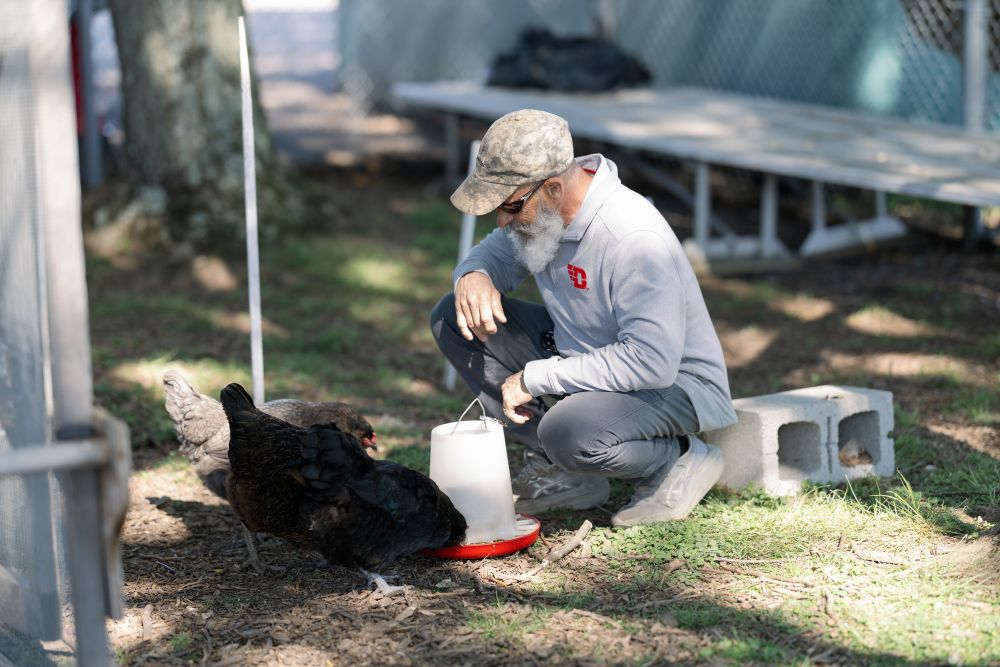
Steve Kendig, executive director of energy utilization and environmental sustainability at the University of Dayton, feeds chickens at the Marianist school's Flyer Farm. (Courtesy of University of Dayton)
For more than a decade, Dayton has established itself as a leader in Catholic higher education in turning church teaching on the environment into real-world practices.
Through its Hanley Sustainability Institute, founded in 2014, it has established academic and research programs in environmental and energy fields and led campus-wide initiatives. That same year Dayton committed to divest its $670 million investment portfolio from fossil fuels — a year before Pope Francis issued his encyclical "Laudato Si', on Care for Our Common Home" that provided a spark for hundreds of other Catholic institutions to follow suit. In 2019, the Marianist school flipped the switch on a 1.2-megawatt solar array, and in July announced it reached a purchase agreement to source 100% carbon-free electricity through converting wasted heat to energy.
In a way, Flyer Farm (named after the school mascot) returns Dayton to its roots.
Back in 1850, Marianist Fr. Leo Meyer purchased the 125-acre Dewberry Farm, part of which the religious order converted into St. Mary's School for Boys, and later the University of Dayton. For the school's first 70 years, a portion of the land remained a farm which students worked in part to feed the campus.
With that history, a group of students at the Hanley Sustainability Institute expressed interest in establishing an urban agriculture program at Dayton, including a composting program. In 2019, they built the first garden beds on tennis courts of the former National Cash Register Company headquarters at Old River Park.
"It was just a couple students starting with a couple beds in the ground, and then it kind of took off from there," Kendig said.
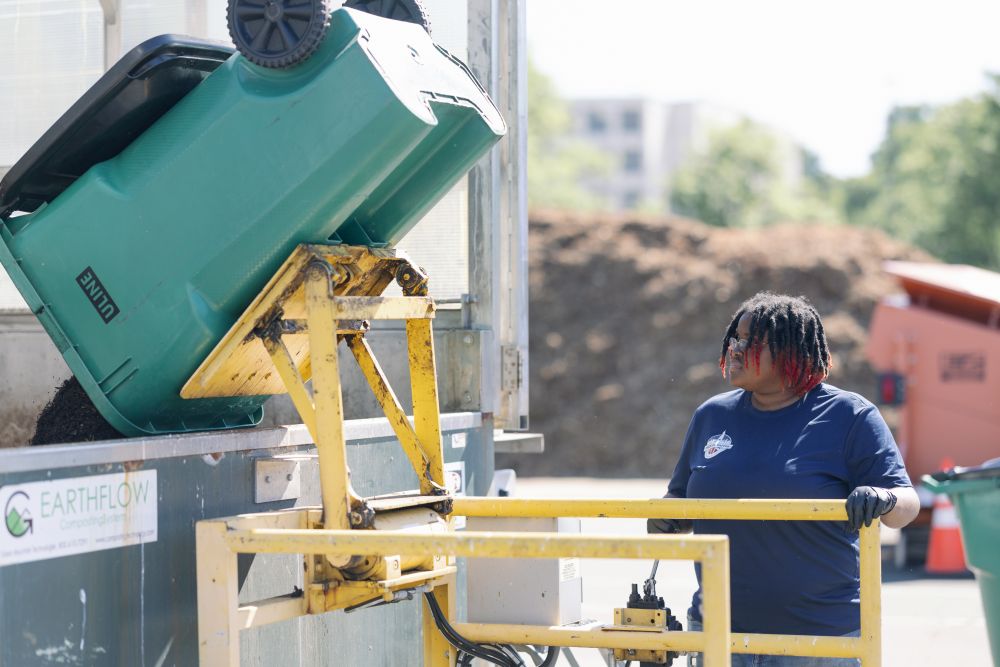
A University of Dayton student empties a bin of food waste into the campus' in-vessel composter. During the academic year, Dayton composts a ton of food waste each day. (Courtesy of University of Dayton)
Presently, there are 33 40-foot garden beds, with rows of tomatoes, peppers, green beans and snap peas. The 3-acre site also has a small orchard of 20 fruit trees planted along the fenceline, growing apples, plums and peaches. There are chickens that lay eggs and a three-beehive apiary that last year produced 100 pounds of honey, which sold out quickly in the campus bookstore.
In addition, it houses a full composting program, complete with an in-vessel (enclosed) composter that processes food waste to feed the soil with beneficial microbes year-round.
During the academic year, Dayton composts a ton of food waste each day, Kendig said. That includes 100% of food scraps from its cafeterias and coffee shop, as well as leftover food from students living near campus through a neighborhood bucket collection program that students started.
"Everybody is buying into composting on campus," said Patrick LaPerle, Dayton's urban agriculture compost manager and the lead grower at Flyer Farm.
Composting has not only reduced food waste by roughly 85%, Kendig said, it has saved the school tens of thousands of dollars annually in trash costs by minimizing what it throws out.
Advertisement
It's also an example of circular sustainability in action, as leaves and wood chippings from the campus are used as the bulking agents in the composting recipe. LaPerle takes particular pride in not receiving a single odor complaint since composting began. Instead, the operation has attracted local attention from other universities and municipalities seeking to replicate their practices.
"For a compost site, it is very neat and tidy. And even the health department brought their people there to train to see what a site should look like," he told EarthBeat.
One of Kissell's many tasks is assisting with the composting. Along with the five students working on the farm, engineering and horticultural classes have partnered with Flyer Farm, building misting systems to keep the chickens cool in the summer and provide water to the raised garden beds.
The small operation at Flyer Farm provides a learning lab for students and demonstrates how urban agriculture can be done "just about anywhere you can find space," Kendig said.
Initially, the food that LaPerle and students grew at Flyer Farm was used by the school's catering department. In summer 2024, it partnered with Miami Valley Meals, a nonprofit kitchen where a team of chefs prepare meals for bulk distribution through local partners for people experiencing food insecurity.
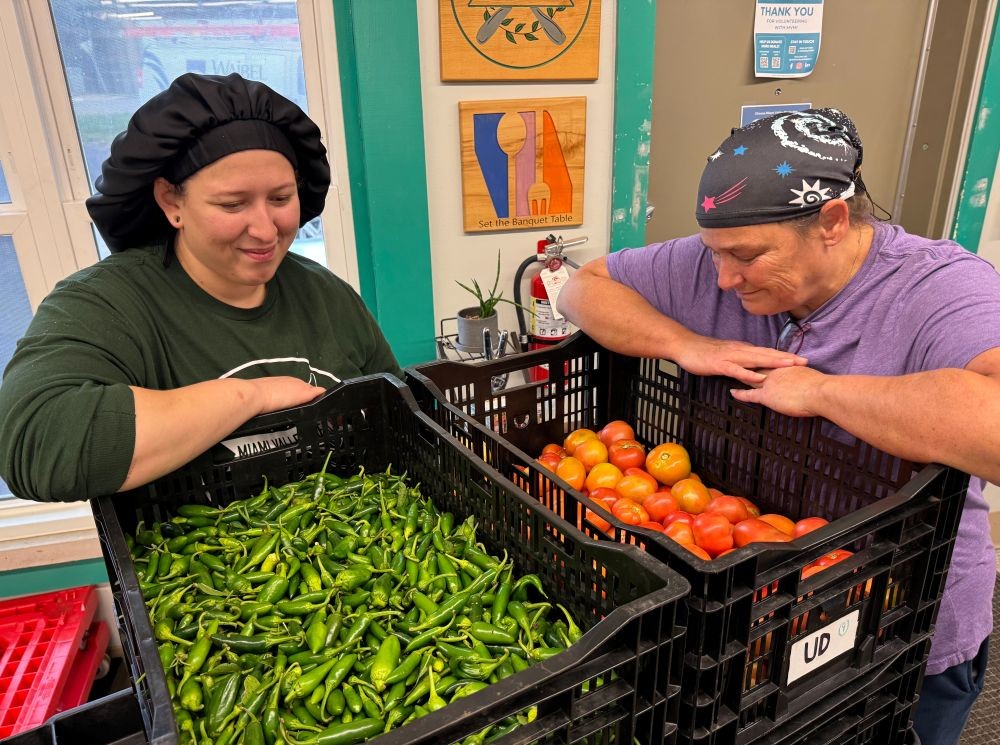
Crates of peppers and tomatoes from the University of Dayton's Flyer Farm are delivered to Miami Valley Meals, a nonprofit kitchen where chefs prepare meals for bulk distribution through local partners for people experiencing food insecurity. (Courtesy of Miami Valley Meals)
To date, Flyer Farm has donated more than 7,000 pounds of food to Miami Valley Meals, including nearly 900 pounds of produce in July. Along with providing local ingredients, the partnership has helped reduce the kitchen's own food costs, exacerbated by inflation and other factors.
"We rely on surplus and rescued and donated food to make meals for the community, so this was really awesome to us to get fresh produce that was grown a couple miles away," said Taylor Naragon, Miami Valley Meals communications director.
The need for food assistance has grown rapidly in Dayton in recent years, exacerbated by the COVID-19 pandemic and continued rising costs of food and other goods. Roughly 16% of the 87,000 people in Montgomery County experience food insecurity, according to the 2024 Map the Meal Gap report from Feeding America.
Flyer Farm collaborates with chefs at Miami Valley Meals to determine what to grow. Tomatoes are regularly sought for their versatility in meals. Peppers and eggplant have also proven popular. LaPerle says he can grow almost anything but prefers to focus on foods more expensive in grocery stores and ultimately what people like to eat.
"What makes me really happy, to be honest with you, is the fact that I'm going to grow something and it's going to be used," he said. "I do not want to grow something that's going to end up back in the compost right away."
The chefs at Miami Valley Meals turn what grows at Flyer Farm into thousands of fresh meals it delivers through 70 partner agencies, including the university's own food pantry at its Brook Center.
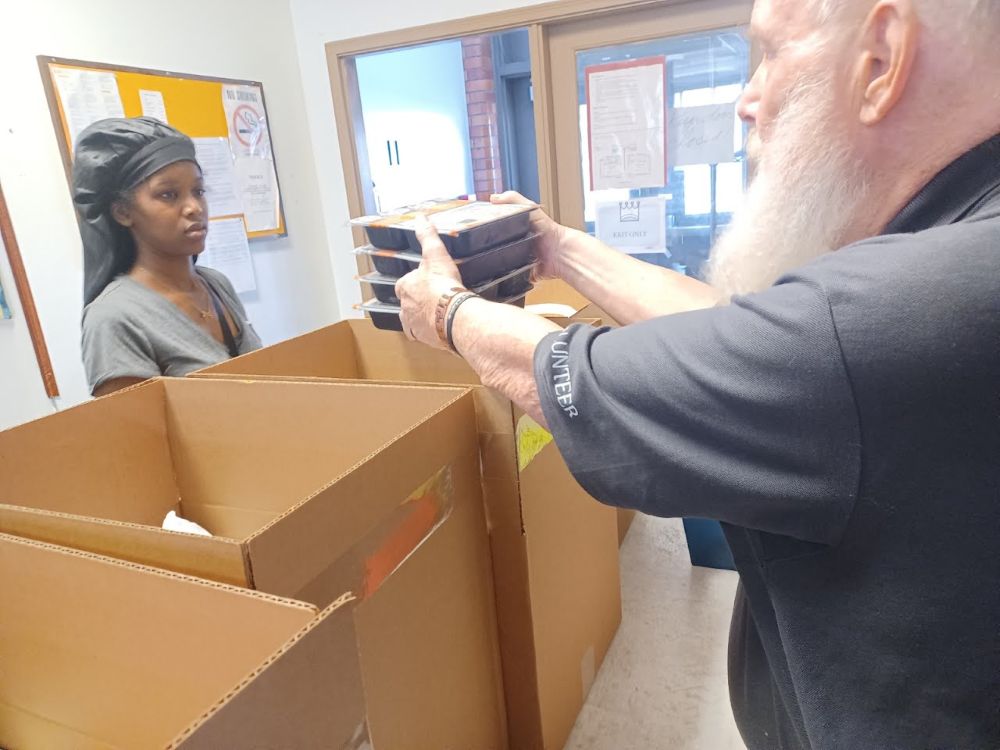
A volunteer at the St. Mary's Parish food kitchen in Dayton, Ohio, hands out meals prepared by Miami Valley Meals. Produce used in the meals is grown at the University of Dayton's Flyer Farm. (Sabrina Furlow)
Another partner is the food pantry at St. Mary Catholic Church, which provides assistance to more than 11,000 people each year. Each week it receives 120 meals from Miami Valley Meals.
In the four years Sabrina Furlow has led the food pantry, she's seen the need for help grow, at times doubling from year to year. The Twin Towers neighborhood, where St. Mary's is located and just north of the university, is among the poorest in the city.
"People can't make ends meet, even people on Social Security, you know, they need help … Some people have two jobs and they still can't make it and they come to our food pantry," she said. "Trying to go to the grocery store and finding a good deal, I mean it's almost impossible because the way the prices are going up so much."
In serving people who are hungry, Furlow sees the end of the chain for the food grown at Flyer Farm. She called the program a "fantastic" display of Catholic values in action.
"It's amazing how we can all come together, and then no matter where they're at, where they're from … help the people in need."