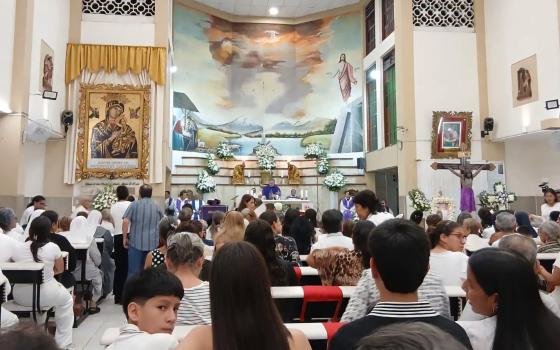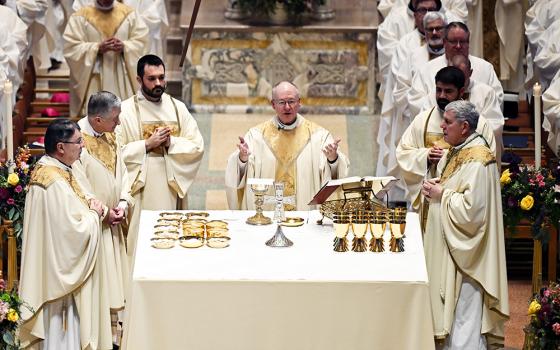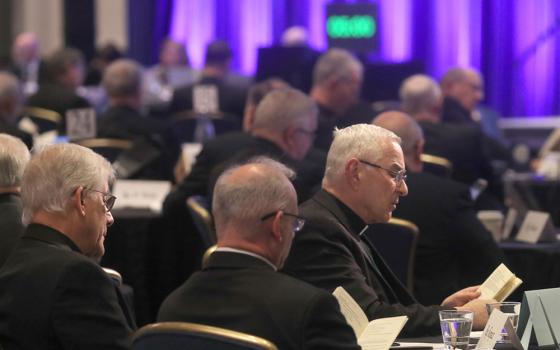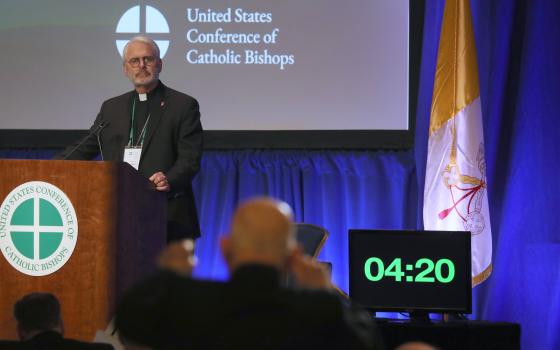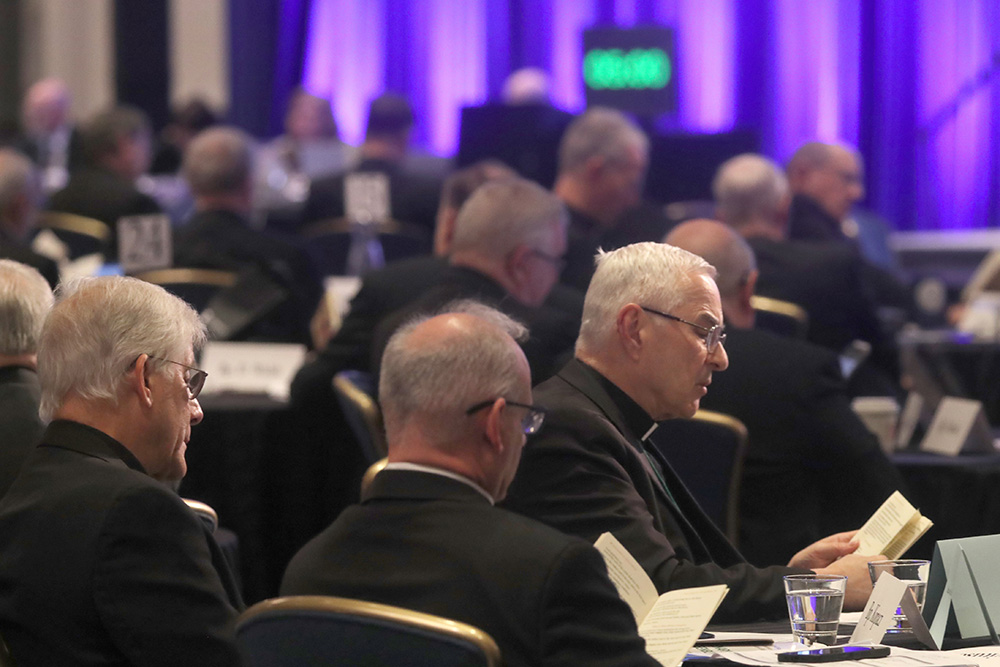
Bishops pray during a Nov. 12, 2025, session of the fall general assembly of the U.S. Conference of Catholic Bishops in Baltimore. (OSV News/Bob Roller)

Join the Conversation
Send your thoughts to Letters to the Editor. Learn more
The United States Conference of Catholic Bishops holds its plenary meeting next month. The agenda is light, a couple of updates on important issues like migration, adopting a budget, and some guidelines for financial reporting and investment.
The bishops' conference is at a turning point in the road, but many bishops seem reluctant to acknowledge that fact. The old culture warrior model of church leadership epitomized by Archbishops Charles Chaput and Joseph Naumann is giving way to a different approach that is both more pastoral and less worldly. There is frustration with a conference that pours cold water on most initiatives, but there is little leadership directed to rebuilding the organization.
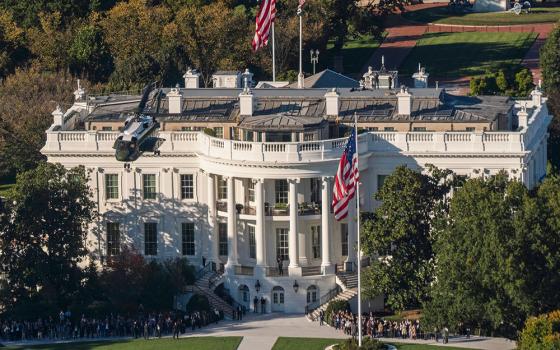
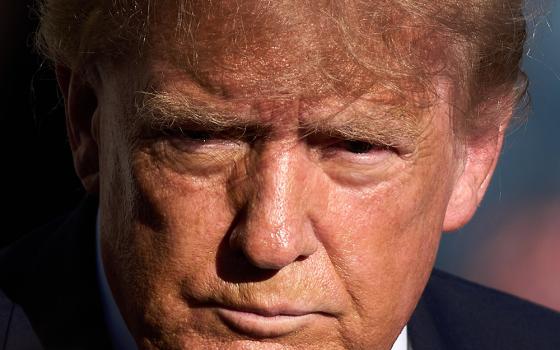
When 12 bishops visited the White House last week, the features of this turning point were in evidence. The culture war valuation of abortion as the preeminent issue resulted in the fact that probably 80%-90% of the staff at any chancery are Republicans, inclined to overlook President Donald Trump's many faults because he delivered on abortion. If they were consulted, they would not likely warn a bishop away from such a meeting.
Newer archbishops did not stop to ask: Why aren't we having this meeting after the election? The apology offered by Archbishop Jeffrey Grob revealed a man who is sincerely trying to think through how to engage the culture without becoming complicit with the culture, while also having the courage to admit to a rookie mistake.
This issue of what replaces the culture war model and how it can be enfleshed is what the bishops should be talking about next month. We do not have an agenda about what the bishops will discuss in executive session, so perhaps they will discuss it there. But they should have the debate in public session. In the 1980s, the bishops' conference consulted widely before drafting their pastorals on peace and the economy, and they should do the same now. Let them hear from liberal and conservative Catholic laypeople, from theologians and from frontline workers at Catholic Charities or the Catholic Legal Immigration Network.
Unfortunately, on the most important decisions to be taken at the Baltimore meeting — the election of a new secretary of the conference and six committee chairs — the nominations do not offer much of a choice. When I saw the list, I remembered the old joke about problems in the Reagan administration: "The right hand doesn't know what the far-right hand is doing." The list does not reflect the reality of a conference in transition.
The candidates for the position of secretary are Bishop Kevin Rhodes of Fort Wayne-South Bend, Indiana, and Bishop Earl Fernandes of Columbus, Ohio. Rhodes is currently serving as secretary, having been elected last year to fill the remainder of Oklahoma City Archbishop Paul Coakley's term, after Coakley was elected president of the conference. The secretary is not only a member of the executive committee, he is tasked with compiling the lists of candidates for conference offices. Given the rightward tilt of the list this year, I would vote for Fernandes, but Rhodes will win handily.
Bishop Steven Maekawa of Fairbanks, Alaska, and Bishop Michael Pham of San Diego are the nominees to chair the Committee on Cultural Diversity. In their mercy, the bishops should not make Maekawa fly to Washington multiple times a year for committee meetings. Besides, Pham is a rock star. Born in Da Nang, Vietnam, he fled that nation in 1980 with two siblings, and the rest of the family followed in the next couple of years. After a couple of years in Minnesota, the family moved to San Diego, and in my several trips to San Diego, I have heard nothing but praise for their bishop. He also was the first bishop to accompany migrants to court appearances to protect them from Immigration and Customs Enforcement. Pham is the one candidate among the 12 for committee chairs who is demonstrably trying to implement the vision of Pope Francis and now Pope Leo XIV.
Advertisement
The Committee on Doctrine nominees are Bishop William Joensen of Des Moines, Iowa, and Bishop Steven Lopes of the Personal Ordinariate of the Chair of St. Peter, home to Anglicans who have swum the Tiber. Joensen was one of the bishops who was part of the unfortunate visit to the Oval Office but has said the bishops were "exploited" when the White House sent around video of them praying with the president. I doubt that will have any bearing on the choice. Lopes was a longtime secretary to the late Cardinal William Levada, prefect of the Congregation for the Doctrine of the Faith, so it is hard to imagine the bishops not selecting him.
The other committee chair elections are not unimportant, but the choices offered do not reflect the need for the conference to find a new path forward.
Why does it matter? First, because the body of bishops tend to defer to the work of any particular committee. Second, because any one bishop going off the rails tags the whole body with whatever taint his derailment confers. Third, as members of the administrative committee, these committee chairs can help move the conference in a direction more in line with the reform agenda begun by Francis and continuing under Leo, or they can resist it.
Last year, in choosing a conference president, the bishops chose the path of resistance. Coakley serves as the ecclesiastical adviser of the Napa Institute, the right-wing organization founded by Tim Busch to promote conservative politics and economics within the church. The institute's annual conference is a who's who of wealthy, conservative Catholicism.
Many of us had hoped that Coakley would grasp that in electing Leo, the cardinals voted for continuity with Francis, but in an interview with EWTN this past summer, it became clear he did not get the memo. On immigration, he called the current situation migrants face "challenging." I can think of stronger, more morally precise words to describe the horrific nightmare that the Trump administration has foisted on our migrant brothers and sisters.
When the conversation turned to the Tridentine rite, and Cardinal Arthur Roche's assurance that Leo would not be overturning Francis' restrictions, Coakley said, "I am not sure we've heard the last word from this pontificate on Traditionis Custodes [the document restricting the old rite] ... Cardinal Roche has spoken but until Pope Leo has spoken, I'm not sure that we know for sure what the way forward will be." Is Coakley really questioning Roche on the most controversial issue that crosses his desk? Does he think the cardinal would get out front of the pope on such an issue? This is why the bishops erred in selecting Coakley as their president: He is clinging to the remnants of an ecclesiastical agenda that is more in line with the rich right-wingers at Napa than with the bishop of Rome.
There is one election at the bishops' meeting that is a done deal even though we do not have the names of the candidates. The bishops will select a new general secretary, the chief administrative official at the conference. They are sure to choose the current associate general secretary, Rev. Paul Hartmann. The bishops have promoted the associate general secretary to the top spot for decades. They elect the general secretary but not the associate, so the system is essentially rigged to enforce continuity. That system fails when the conference is at a crossroads.
The culture warrior approach has failed the Catholic Church in the United States. Throughout the pontificate of Francis, people in Rome would ask: What's wrong with the Americans? Following the lead of Leo is the obvious way forward for the bishops, but I fear the forces of resistance are still in control.
Editor's note: You are reading a selection from Michael Sean Winters' weekly newsletter. To get the full edition — including the "In the News" link roundup — delivered 24 hours before it appears online, sign up here!