

<h2><a style="color: #04619d; text-decoration: none;" href="https://www.ncronline.org/opinion/ncr-voices/starting-pay-attention-edu… to pay attention to education reform</a></h2><div style="font-weight: bold; font-size: 15px; font-family: Arial, sans-serif;" class="byline">by Michael Sean Winters</div><div style="font-size: 19px; font-family: 'Georgia', serif;"><p>Education is
<div style="text-align: center;"><div style="margin-bottom: 10px; padding-bottom: 10px; border-bottom: 1px dotted #ccc;" class="full_width_image"><img style="width: 624px; max-width: 100%;" src="https://www.ncronline.org/files/styles/email_newsletter_full_width/publ… style="color: #04619d; text-d

<div style="text-align: center;"><div style="margin-bottom: 10px; padding-bottom: 10px; border-bottom: 1px dotted #ccc;" class="full_width_image"><img style="width: 624px; max-width: 100%;" src="https://www.ncronline.org/files/styles/email_newsletter_full_width/publ… style="color: #04619d; text-decoration: none;" href="

<div style="text-align: center;"><div style="margin-bottom: 10px; padding-bottom: 10px; border-bottom: 1px dotted #ccc;" class="full_width_image"><img style="width: 624px; max-width: 100%;" src="https://www.ncronline.org/files/styles/email_newsletter_full_width/publ… style="color: #04619d; text-decoration: none;" href="

<h2><a style="color: #04619d; text-decoration: none;" href="https://www.ncronline.org/spirituality/christ-king-universe-reign-vulne… the King of the Universe: The reign of a vulnerable God</a></h2><div style="font-weight: bold; font-size: 15px; font-family: Arial, sans-serif;" class="byline">by Mary M.
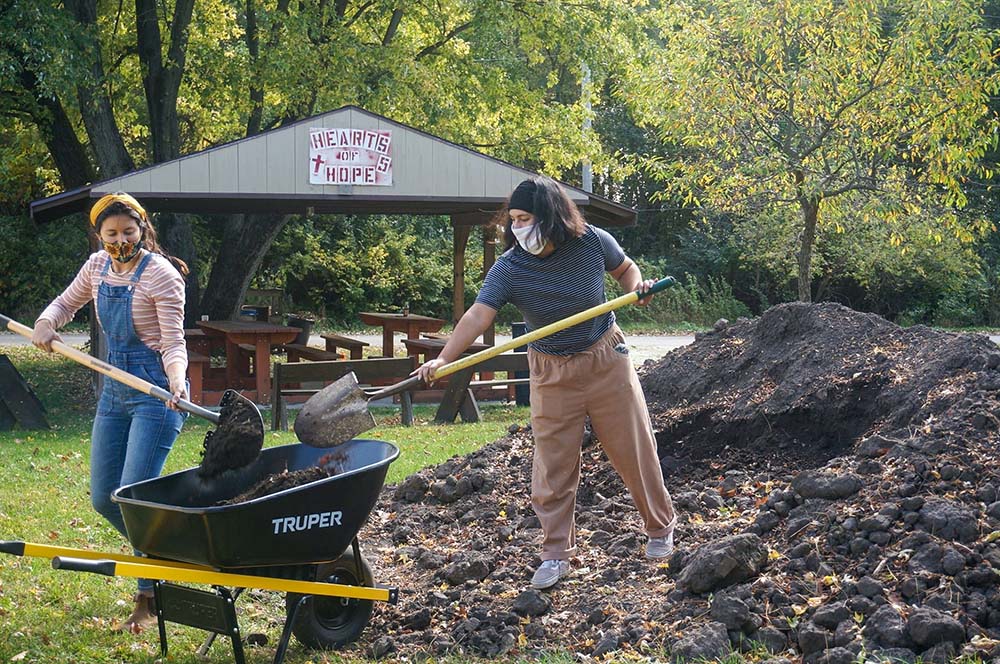
People work on a garden at Sacred Heart Parish Mission in the Diocese of Joliet, Ill. The food grown is distributed to people in need of food assistance in the community. (CNS/Courtesy of Joliet Diocese)
by Mary M. McGlone
Join the Conversation
Send your thoughts to Letters to the Editor. Learn more
Christmas lights are shining all over the world. Whether in the Southern Hemisphere's summer, the northern winter or the eternal spring of equatorial places, we set up luminarias, burn candles and put lights on trees, creating an atmosphere of cheer wherever we look. Yet no matter the display, compared to what Scripture tells us about the time of Emmanuel, even our most lavish decor seems paltry.
Isaiah tells us that with God's coming, deserts will sparkle and the land itself will seem to sing. In "Laudato Si', on Care for Our Common Home," Pope Francis said something similar: "The destiny of all creation is bound up with the mystery of Christ. ... The creatures of this world no longer appear to us under merely natural guise because the risen One is mysteriously holding them to himself and directing them towards fullness as their end ... The very flowers of the field and the birds ... are now imbued with his radiant presence."
Francis calls all of creation a sacrament of Emmanuel, God with us. And God keeps saying, "I am doing something new! Do you not perceive it?" (Isaiah 43:19).
What are we to perceive? That was John the Baptist's question about Jesus. Just imagine, he was in prison and wondering if his work had been in vain. Jesus was not throwing tyrants from their thrones, or overwhelming people with the fear of God. He preached far more mildly — and with more humor — than John.
So, John sent his disciples to ask, "Are you really the one? Is this how it will be after all that I said?" When we face what seems to be indomitable evil, we ask the same.
What do we expect when we pray, "Lord, come and save us?" Today's psalm proclaims that the Lord keeps faith and secures justice for the oppressed. We look at tyranny, wars and starvation and ask, "When? Where?"
It's a beautiful thing to repeat Francis' words that the Risen One is directing all toward fullness in God. These days we enjoy Christmas trees, foods and gifts. We chant, inviting Emmanuel to be with us. We sing "Joy to the World," and savor the gentle harmonies of "O Holy Night," but what does all of this say to the six o'clock news?
Paul calls us to the patience of farmers. What we may not realize is that we need that patience with ourselves more than with God. What are we doing to make the necessary difference, to increase the realm of love in our world, to risk our comfort like prophets do? Do we have the patience to continue on when we don't see dramatic signs?
Today's Gospel suggests that, rather than look for Jesus in the crib or even the tabernacle, we should listen to what he told John's disciples. Where do we find Christ active today?
Certainly, in the work of physicians who remove cataracts, prescribe antibiotics, vaccines, reading glasses and implant cochlear implants for people who cannot hear. We see Christ's saving work where the people of Uganda have the means to purify their water, where World Central Kitchen is providing food in Gaza and Ukraine, where teachers sacrifice material gain to help others develop their potential. We see it where missionaries leave their homes and security to serve their neediest neighbors. We see it in peaceful protests for justice for immigrants and on behalf of democracy. We see it wherever one person reaches out to help or comfort another.
Advertisement
Each of these scenes depicts the ongoing nativity of Christ among us.
God has given birth to a creation capable of participating in divine life. Jesus gave a replicable witness to that truth. Like him, we need to pray without ceasing to open ourselves to grace. We need to consecrate time to pondering our Scriptures to better understand God's ways among us. We need to reflect and pray with others who hear the same call.
Then, with the boldness of the Word become flesh, we must speak out in truth and integrity and act with the audacity of Jesus and the prophets to continue the life-giving, risky work of Christ in our world — any and everywhere.
Francis taught that God is drawing the entire creation toward the fullness of all we can become. That fullness is dynamic, growing as we rejoice in our limitless and loving union with one another, God and all of creation. In this season, and always, we are called to be the lights that manifest the presence of Christ among us.
(Unsplash/Art of Hoping)
by Mary M. McGlone
Join the Conversation
Send your thoughts to Letters to the Editor. Learn more
When I finished high school, my father thought it would be a great experience for me to learn from working in an office for the summer. Instead, I found a job as a counselor in a camp sponsored by Catholic Charities. Our campers were girls between the ages of 9-14, the majority of whom came from an orphanage in the city.
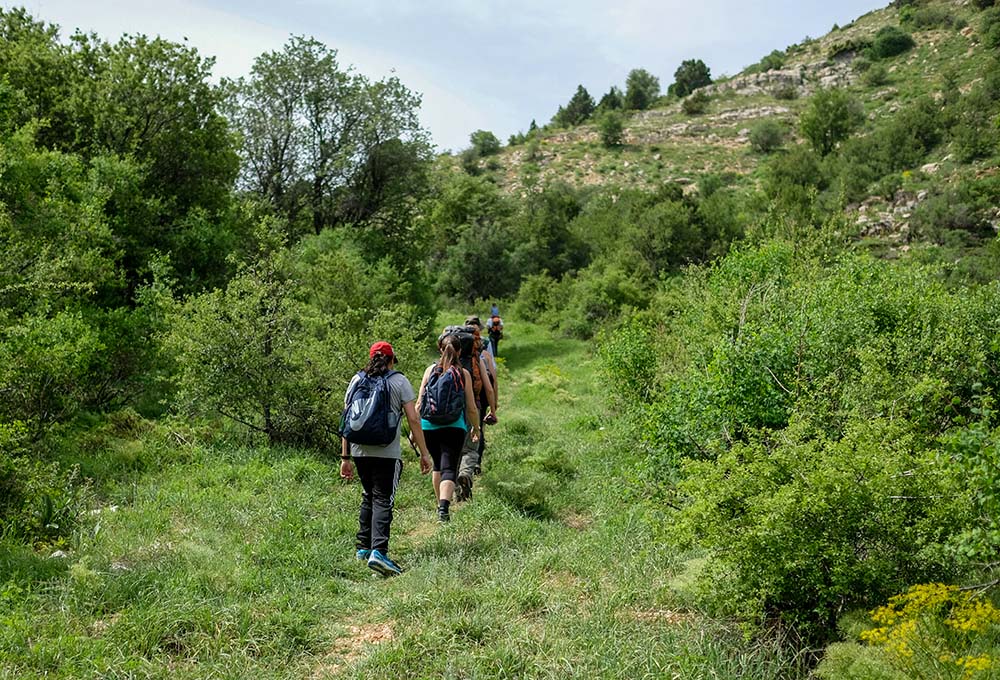
The camp sat at something over 7,000 feet in altitude and from it we could look up at "Twin Peaks," a pair of mountains 11,420 feet above sea level. Early in the camp session, we started getting the girls in shape for their end-of-camp hike up Twin Peaks.
Happily, we didn't know that this hike is officially classified as "hard," meaning that it's long, has significant gain in altitude and the possibility of unmarked tracks, etc. Innocent of that knowledge, we carried their lunches and led our little troopers up. Almost all of us — big and little — succeeded in reaching the summit and finding our way back down. One counselor stayed behind with stragglers when their energy ran out.
When we started, Twin Peaks was fully in sight. After about a half an hour, the incline hid the high mountains. As the climb grew more difficult, we had to remember that the goal was really there even though we couldn't see it. If we hadn't believed, we would have given up.
I thought of that climb when reading Paul's statement that hope comes from "endurance and ... the encouragement of the Scriptures." This coincides with Isaiah's promise that a savior would "sprout" from the people and "the Spirit of the Lord shall rest on him." Isaiah promised that the coming One would establish justice and peace throughout creation and that "Earth will be filled with knowledge of the Lord." An invisible dream!
This Sunday, our wild friend John the Baptist appears with his never-subtle message, "REPENT!" He's broadcasting a call to assume a new mentality. John preached that one like Isaiah's "sprout" was coming and that everyone had to make ready to recognize him.
John called the preparation "metanoia," or repentance. Metanoia has little to do with saying "I'm sorry," or making a confession. It's far more demanding than that.
John wanted to clear the way for the Messiah. To do that, he didn't demand worship, prayer or fasting; one might almost think he avoided those expressions of formal religiosity. No, John cuts to the quick: "Produce good fruit! You think you're part of the chosen people? God can raise up children of Abraham from stones — and right now you do resemble those rocks!"
John called for a mindset that relied completely on Isaiah's promises, a metanoia perspective in which people believe so firmly that they act from the certainty that God's future is already present. They see God's reign emerging now; they sense that humanity and all of creation are on the way to becoming all God created us to be.
This mentality doesn't look backward to an ideal past but toward what theologian John Haught calls "an unprecedented, planetary, super-organic state of fuller being." That's a way of being that Paul described more simply as the process of all creation groaning in the birth pangs of the glorious future of the children of God (Romans 8:18-28).
Advertisement
John is the perfect messenger to prepare us for the Nativity. He readies us for One to come, the One whose passion for God and creation is so contagious that it can only be described as the fire of the Holy Spirit. John proclaims that the time is ripe, that this is the moment. He calls us to metanoia faith. He maintains that the kingdom of heaven is at hand and that we can discern the Spirit at work among us if only we look with new eyes.
This second Sunday of Advent invites us all to live John's style of metanoia. Because this prophetic invitation comes from the Spirit, we can believe that it's possible. The Baptist echoes what Moses taught: that the reign of God is not far away in the heavens or across the sea, "No, it is very near ... in your mouth and [it's] in your heart to do it" (Deuteronomy 30:12-14).
The time is ripe; this is the moment to make straight the paths, to remind ourselves that Christ is alive and the Spirit is active among us.
In this fracturing world, we're all on a long climb. We'll find ways to care for those whose stamina runs dry while the rest of us move forward. All we need is the conviction that we are on the way to something dreamed of, but currently out of sight. We can keep going if we believe.
<div style="text-align: center;"><div style="margin-bottom: 10px; padding-bottom: 10px; border-bottom: 1px dotted #ccc;" class="full_width_image"><img style="width: 624px; max-width: 100%;" src="https://www.ncronline.org/files/styles/email_newsletter_full_width/publ… style="color: #04619d; text-decoration: none;" href="