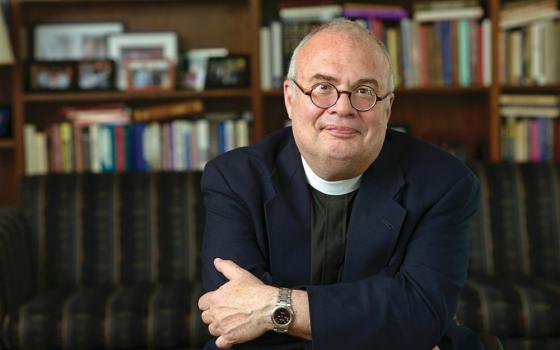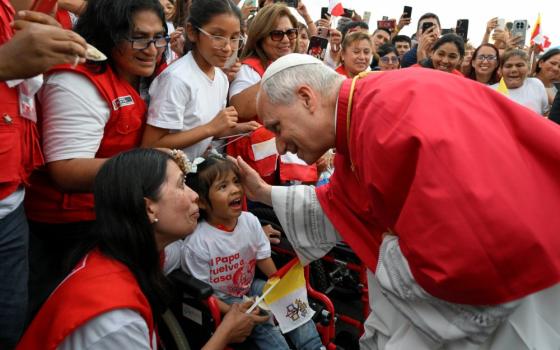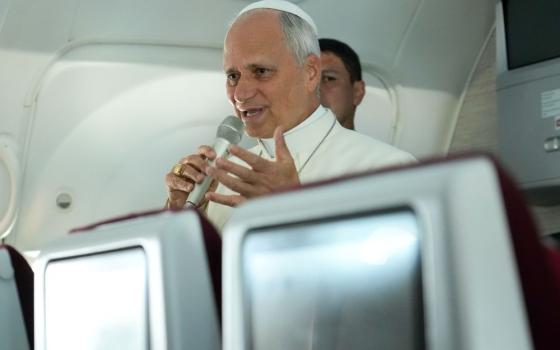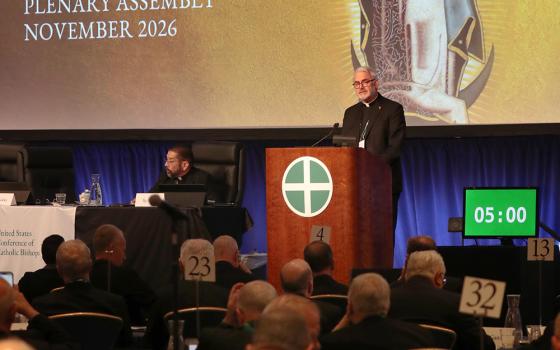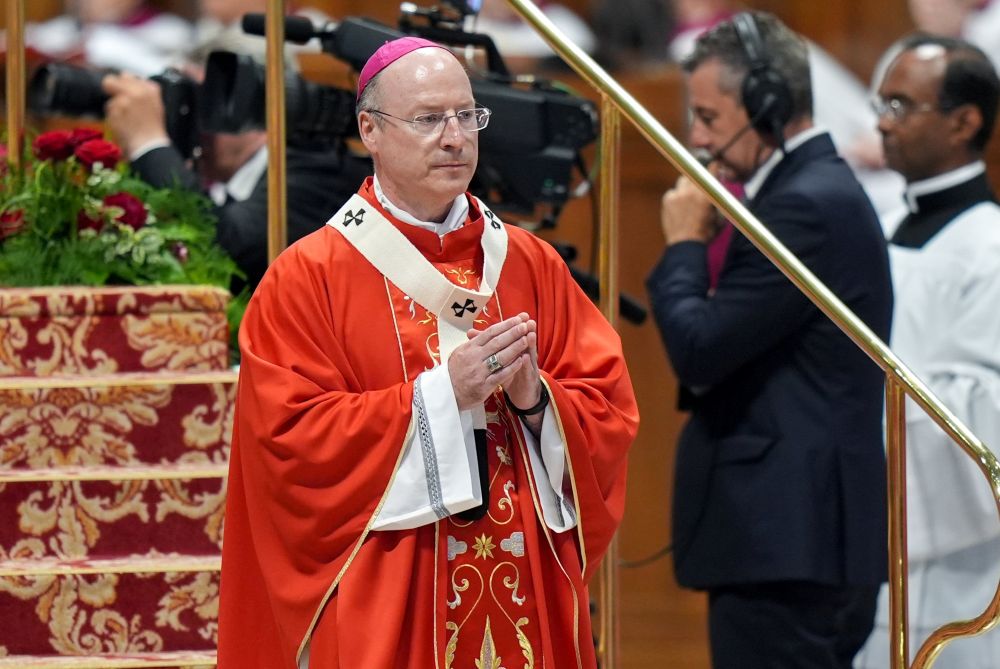
Archbishop Shawn McKnight of Kansas City, Kansas, walks back to his seat after receiving the pallium from Pope Leo XIV during Mass in St. Peter’s Basilica at the Vatican June 29, 2025.(CNS/Lola Gomez)

by Michael J. O'Loughlin
NCR CEO & executive editor
Join the Conversation
Send your thoughts to Letters to the Editor. Learn more
The Archdiocese of Kansas City, Kansas, is home to one of the world's largest communities of traditionalist Catholics and until recently was led by a conservative firebrand who had criticized Pope Francis and who this month prayed over President Donald Trump in the Oval Office.
But Archbishop Shawn McKnight, appointed last year to lead the archdiocese, is making his mark, critiquing spiritual practices he says are "problematic" while finding ways to welcome traditionalists and throwing his weight behind synodality, an effort to make the church more collaborative and in line with the Second Vatican Council.
"It's important that we listen to the Holy Father and to be receptive to his pastoral vision," McKnight said in a recent interview.
He recently released a 17-page pastoral letter, "Renewal from the Heartland." In it, he compiled the findings of the archdiocese's synodal process, in which thousands of Catholics took part in online consultations and about 1,000 more participated in 32 listening sessions, held in parishes, schools, community centers and even two prisons. The letter describes the hopes Catholics have for a church that is more centered on community, that connects them to God and that offers clarity on what it means to be disciples in today's world.
While some early synodal efforts focused on contentious issues — debates in Rome over communion for divorced and remarried Catholics or how welcoming the church should be to LGBTQ people — McKnight said synodality to him is more about a way of exercising leadership.
Rather than a "town hall" in which Catholics debate difficult topics, McKnight said he views the synodal process as an opportunity for church leaders to develop a style of leadership that places special value on deep listening.
That begins with "discernment and listening, first and foremost, to the voice of the Holy Spirit in the faithful," he added.
The path to synodality has been rocky at times and individual bishops have great leeway in how enthusiastically they embrace the idea.
During his 12 years leading the church, Francis held synodal gatherings on family life, youth and the church in the Amazon. But his most forceful endorsement of synodality came with the launch of the synod on synodality in October 2021.
Rather than seeking a checklist of items aimed at church renewal, the yearslong effort sought to usher in a new style of church leadership, where bishops consulted widely with lay and ordained Catholics. Through a series of meetings in Rome, and implementation efforts in individual dioceses, Francis sought to change the style of how bishops led the church.
When Francis died in 2025, the future of synodality was an open question. But Pope Leo XIV offered his full endorsement, and as NCR's Justin McLellan reported last month, the Vatican is now preparing for another major synodal gathering in 2028.
But not every Catholic leader has been on board.
Cardinal Raymond Burke endorsed a book critical of synodality in 2023 and even McKnight's predecessor, Archbishop Joseph Naumann, was a critic, once stating that there were "concerns amongst Catholics that this process can be manipulated."
That didn't stop McKnight from moving ahead.
"When I arrived in May of 2025, from right out of the gate, I said basically that I'm looking to promote synodality as envisioned by Pope Francis and now by Pope Leo," McKnight said.
Advertisement
To that end, the archdiocese launched the first phase of a renewal process earlier this year, modeled on synodality, and in fall 2027 it will host a synodal assembly. McKnight said this kind of consultation ultimately helps church leaders make better decisions.
"It does not replace the need for decision-making bodies and the magisterial authority of the bishops and the pope," he said. "It has to do with how we're exercising the authority that we hold because of the sacrament of holy orders in the way that Christ would want us to exercise authority as shepherds in his church."
The 58-year-old McKnight said synodality could also help bridge a divide between traditionalist Catholics and those yearning for a church that is more inclusive of lay collaboration.
In his letter, the archbishop warned about looking "nostalgically at the past," a temptation he said is not uncommon in his archdiocese, home to one of the world's largest communities of Society of St. Pius X, a breakaway traditionalist group that the Vatican declared schismatic earlier this year. But even some priests and lay Catholics who are in communion with the church are tempted by nostalgia, McKnight said. He pointed to the use of kneelers during Communion and the insertion of the St. Michael prayer during Mass as examples of this kind of "problematic" nostalgia.
Synodality can help find common ground — even here.
McKnight said he visited a local parish that offers Mass in Latin and learned about how they minister to Catholics who have extricated themselves from SSPX. He realized many of these Catholics suffer social and even professional repercussions when they leave, given the strength of SSPX in the local community. The Catholic parish offering Latin Mass can serve as a refuge, meeting the desire for more traditional-feeling liturgy while staying committed to the teachings of the church.
"We can be pastorally accommodating to people, but also, we're not giving up on Vatican II; we're not going to go backwards," he said. "We do need to go forward and we need to put things in perspective in terms of what's most important in terms of the mission of the church. "
McKnight said he hopes that while he can only speak for the church in Kansas City, he hopes other Catholics see value in synodality, especially as the church continues to figure out ways to speak to an increasingly distracted and fractured world.
"To me, it's about how we understand ourselves as church, especially in light of the teachings of the Second Vatican Council, particularly Lumen Gentium," he said. "It's the whole church, the whole people of God, that's engaged in the life and mission of the church."