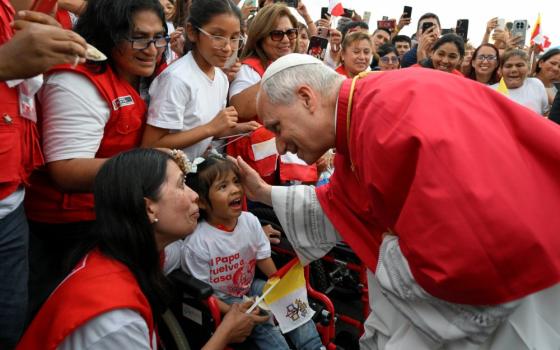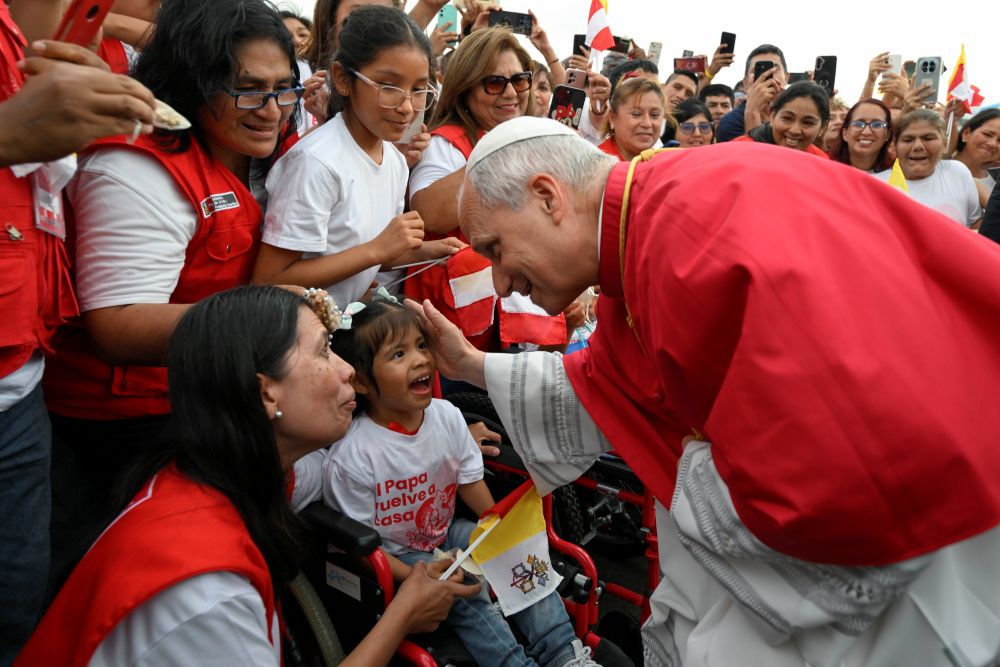
Pope Leo XIV greets a child as he arrives at Callao air base in Lima, Peru, Nov. 11, 2026, during his Nov. 6-17 apostolic journey to Uruguay, Argentina and Peru. (OSV News/Vatican Media/Simone Risoluti)
Join the Conversation
Send your thoughts to Letters to the Editor. Learn more
The last time Pope Leo XIV was in Peru he was still Cardinal Robert Prevost, celebrating Mass in the far north of the country in 2024 to mark the 60th anniversary of the diocese where he first served as missionary priest nearly four decades earlier.
"Now I return as the successor of Peter, called to serve the universal church," Leo said today (Nov. 11) moments after arriving in the capital city of Lima. He is beginning a six-day stint in Peru that will take him throughout the country where the future pope had served for more than two decades as a missionary priest and bishop.
The pope emerged from the plane at the Callao air base outside Lima where had traveled from Argentina in his shining red mozzetta, taking his white skullcap in his hand due to the strong gusts of wind on the tarmac and bearing a firm grin. He was met by a beaming Keiko Fujimori, Peru's newly elected right-wing president, and throngs of screaming, impassioned children along the runway.
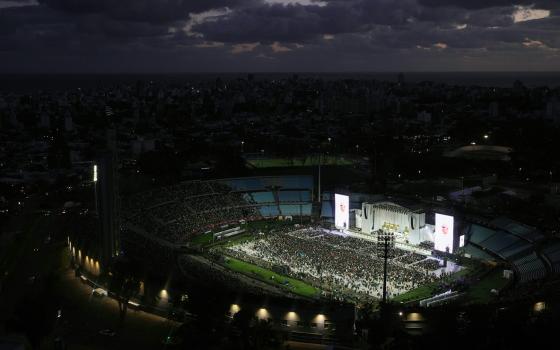
Along the 7-mile route the pope traveled into the city center, an unbreaking string of some 3 million people hoping to catch a glimpse of the pope lined streets, waving flags and holding signs. Even police officers lining the streets to keep the crowds at bay held out their phones to record the pope's passing convoy, and banners decorating lightposts with images of the waving pope read "the pope returns home."
After being received in Peru's government palace, adorned with tall banners bearing the yellow and white of the Vatican flag, the pope traveled to Peru's Grand National Theater to address Peruvian government officials, where he was met with a cheer of "el papa es peruano'": "the pope is Peruvian."
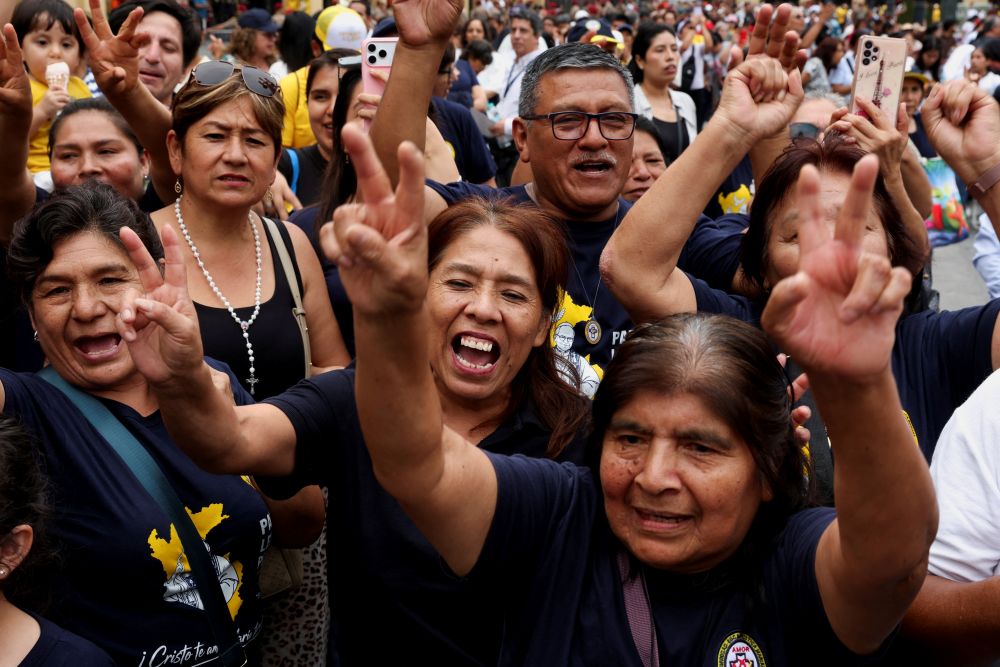
People cheer after Pope Leo XIV arrived at Callao air base in Lima, Peru, Nov. 11, 2026, during his Nov. 6-17 apostolic journey to Uruguay, Argentina and Peru. (OSV News/Reuters/Alessandro Cinque)
In a break from the stilted, lofty speeches to government officials which are typically the pope's first public address upon arriving in foreign country, Leo's address in his first speech in Peru struck a deeply personal chord.
The Chicago-born pope began by recalling how, for the decades he had spent in Peru, he had "shared in the lives of its people, listened to their concerns, and learned from their faith." After serving for some 12 years in Augustinian missions in the country's north and then leading the worldwide religious order from Rome, Prevost was named bishop of the northern Peruvian city of Chiclayo in 2014 by Pope Francis. Because Peruvian law requires that the country's bishops be Peruvian citizens, Prevost was naturalized as a citizen in 2015.
"That act symbolized a bond that this people had been weaving into my life long before," Leo said in his first public speech in Peru. "Today I understand how much of this land remains with me and how much of my own story also belongs to you."
Now as pope, Leo said that he recognized how his time in Peru was "part of the journey through which the Lord was forming me as a shepherd."
"I can tell you, with deep gratitude, that I am also returning to my homeland," he said.
As a missionary priest in Peru, Leo learned a model of church organization deeply rooted in the principles of the Second Vatican Council, chief among them the active participation of the laity in the life of the church. And later as bishop of Chiclayo, the future pope promoted synodality in his diocese — the vision of a more collaborative church championed by Pope Francis — and prioritized his diocese's charitable activity and increased the church's outreach to the poor and migrants.
As a parish priest and formation master in Trujillo, Peru, in the 1990s, Prevost was engaged in marches and petitions to advocate for human rights under the authoritarian government of Alberto Fujimori.
In Peru again some 30 years later as pope, Leo was received by Fujimori's daughter, who was elected president in June and traced the history of the pope's ministry in Peru in her greeting to Leo before his speech. Though the pope had voted in the November U.S. midterm elections, he did not vote in the Peruvian presidential elections that elected Fujimori, despite being a citizen of both countries.
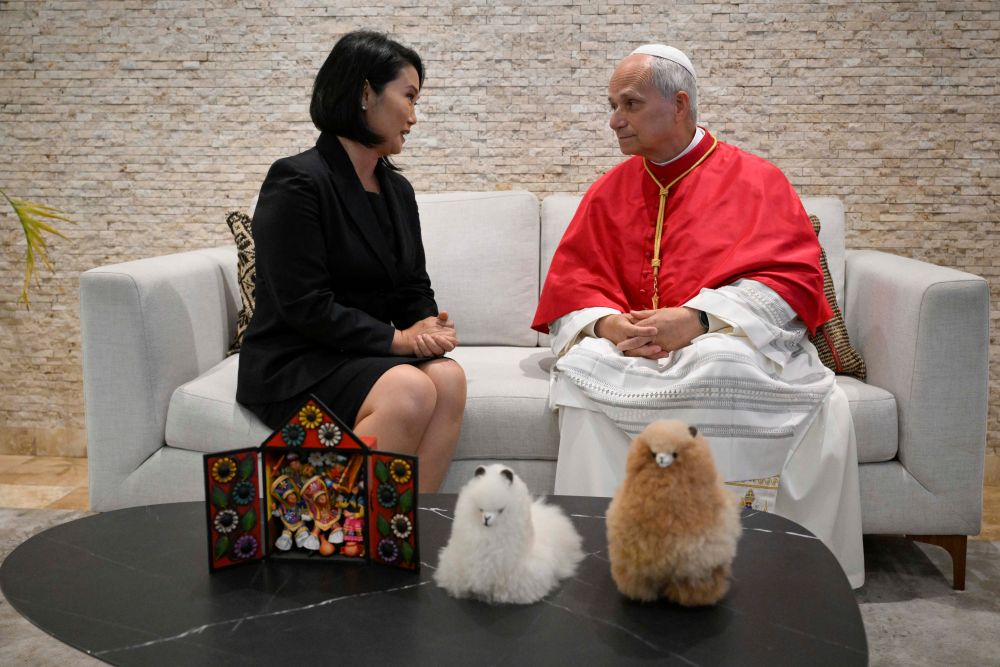
Pope Leo XIV speaks with Peruvian President Keiko Fujimori after arriving at Callao Air Base in Lima, Peru, Nov. 11, 2026, during his Nov. 6-17 apostolic journey to Uruguay, Argentina and Peru. (OSV News/Vatican Media/Simone Risoluti)
That decision raised questions about how the pope understands his identity as a dual citizen, but also opened debate over what kind of ties a pope should maintain with his home nation, or, in Leo's case, home nations.
If his first speech in Lima is any indication, Leo intends to keep strong ties with his life before his election to the papacy. The pope recalled the acts of solidarity he witnessed among the disasters he lived through in Peru and reminisced about the hospitality he received — even cracking a joke about the good Peruvian ceviche he used to eat, drawing laughs from the crowds in the theater.
Advertisement
In a speech St. John Paul II delivered during his first trip home to Poland after being elected pope in 1979, the Polish pope said he wished for the good of his home nation "as if I still lived in this land and were still a citizen of this state."
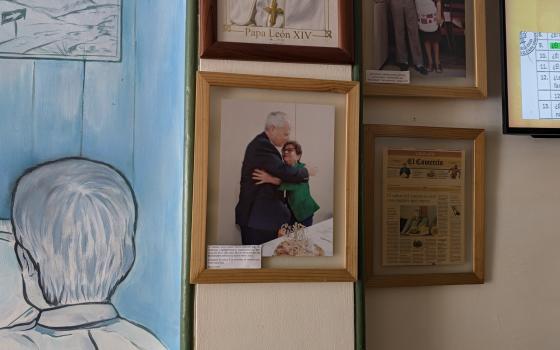
For Leo, his identification as a citizen of both the United States and Peru clearly does not take on the past tense — the pope is even expected to pick up his renewed Peruvian ID card during his visit to the country.
And Leo made clear that even if he is now bishop of Rome, his pastoral DNA remains deeply Peruvian.
"I have received so much from you," the pope said in his speech. "There are faces, conversations and gestures of affection that, even after so many years, continue to stay with me."
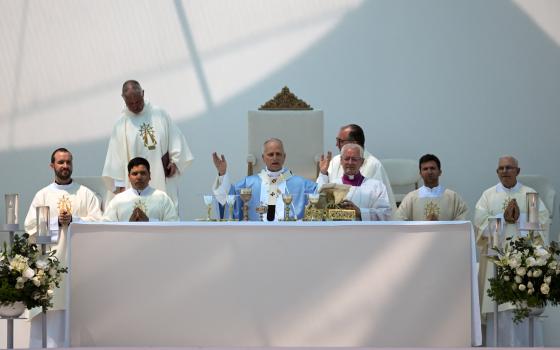
Leo's homecoming will only become more pronounced when he travels to his former diocese of Chiclayo Nov. 13. After the large-scale Masses, meeting with the clergy he once oversaw and visiting significant religious sites he used to visit, Leo will end his days at the bishops' residence, spending two nights in what was, for eight years, quite literally his former home.
The National Catholic Reporter's Rome Bureau is made possible in part by the generosity of Joan and Bob McGrath.