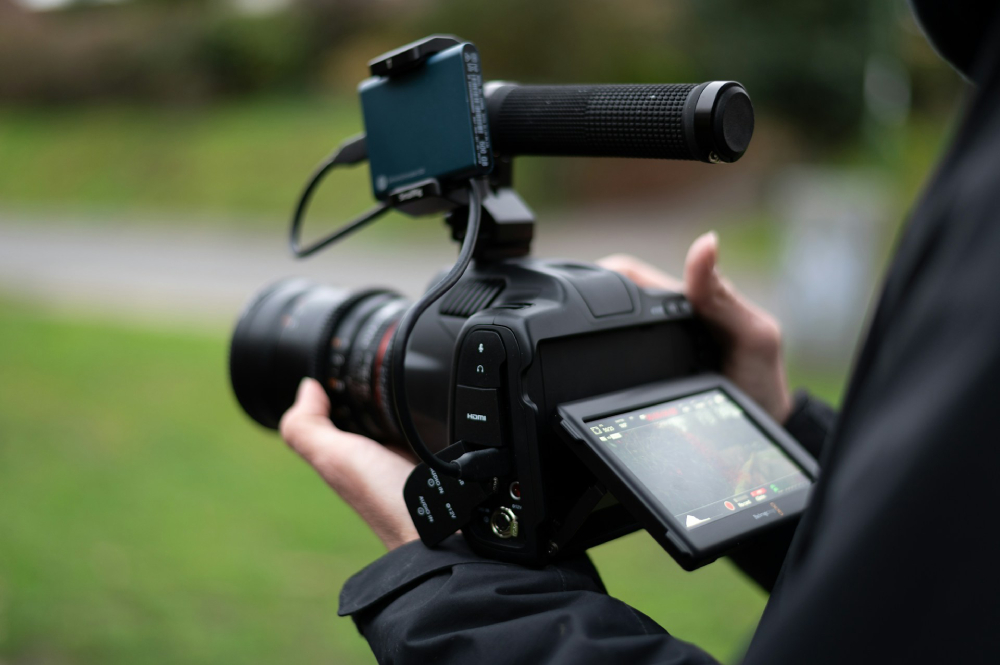
(Unsplash/Harry Shelton)

Join the Conversation
Send your thoughts to Letters to the Editor. Learn more
I am pleased to share with NCR readers the documentary video from this year's The Way Forward gathering which was held at the University of St. Thomas in St. Paul, Minnesota. The conference, which I wrote about at the time, focused on issues of communications and evangelization in a digital age.
I am always shocked to realize how much young people today rely on video and pictorial images to inform them. Back when I was in college, professors would routinely assign a book a week and the contents of the book became the subject of class discussion. And, if you wanted to call someone, you had to return to your dorm or put some change into a payphone. Today, a student has access to so much information on the phone in their pocket.
Artificial intelligence poses a special challenge in that it can aggregate information, but it can't discriminate. It can't form a value judgment about the veracity of the information it is conveying to you, only that it is popular. Living in a country which elected Donald Trump twice as president, forgive me for thinking that we should teach our young people to scrutinize information to ascertain if it is true, not merely if AI serves it up as a widely held fact.
After a group of us started The Way Forward in 2022, we reached out to Sebastian Gomes and the team at America Media to make a video of our second gathering. The first purpose was to let people who were not in the room garner some flavor of the discussions that transpire at these events. First timers often say, "I had no idea these kinds of frank discussions were even happening in the church today." The discussions are conducted under the Chatham House rule, so there is no transcript, but we hoped the video would convey something of what was on the table for discussion.
Our second purpose was documentary. At the end of the first gathering, which was held at Loyola University in Chicago, the response was a bit overwhelming. We thought the event was a one-off but halfway through, several prelates told us that we had to find a way to keep this going. One theologian said the meeting had been one of the outstanding ecclesial events of his life. The videos document the progression of the gatherings, which have improved each year.
Advertisement
In 2025, we gathered at Fordham University to examine Pope Francis' encyclical Fratelli Tutti. Sebastian had the idea to use the parable of the good Samaritan, which features so heavily in the encyclical, as a thematic thread through the video he produced. This lent the video a didactic quality and after we distributed it to the participants and others, some bishops told me they had used the video to start conversations with their clergy, or the directors of religious education, adult faith formation groups or even in high school classrooms.
We asked Sebastian to give the video about the St. Paul gathering a similarly didactic quality. And, unsurprisingly, he hit a homerun. This video can easily serve to start a conversation about how we can proclaim the Gospel in a digital age in a variety of ecclesial settings.
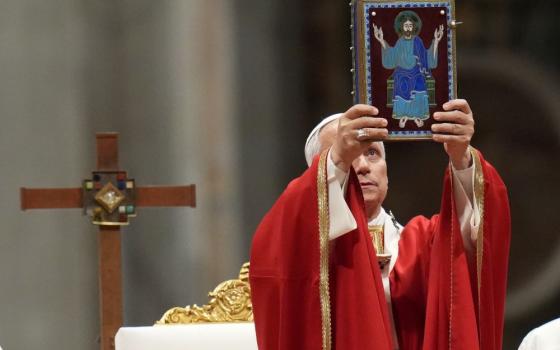
The videos also do something that print can't do: It shows how the beautiful liturgies we celebrate at the gatherings are really a central part of the experience. In St. Paul, we worshiped in the beautiful Chapel of St. Thomas on the university campus, one of the three great churches in the Twin Cities designed by the French architect Emmanuel Louis Masqueray at the beginning of the 20th century. (The cathedral in St. Paul and the basilica in Minneapolis are the other two.) Both Masses featured a choir led by Jacob Benda, who is on the faculty at St. Thomas, and the music was sublime. Chicago Cardinal Blase Cupich, an alumnus of the seminary at St. Thomas, was the principal celebrant and homilist on the first day of the gathering and St. Paul-Minneapolis Archbishop Bernard Hebda was the principal celebrant and homilist on day two. His closing words in that homily also close this video.
Praying together at the start of the day centers all the participants and, I believe, makes the conversations possible. You can have an academic conversation on any topic in any setting, but an ecclesial conversation among Catholics has to find its "font and apex" in the Eucharist, as the Vatican II council fathers taught us in Lumen Gentium. The Mass reminds us that our understanding starts and ends with something we can never fully grasp, which is a good invitation to humility. Humility is, in turn, a precondition of synodal discussions.
You can find all the videos at The Way Forward website here.
Part of what makes these gatherings work is that we keep attendance at around 80 people. But how I wish everyone could participate! This new video gives you a chance to start reflecting on the challenges and opportunities posed by digital culture as we Catholics seek to proclaim the Gospel. I hope you enjoy it and share it.
You are reading a selection from Michael Sean Winters' weekly newsletter. To get the full edition — including the "In the News" links roundup — delivered 24 hours before it appears online, sign up here!