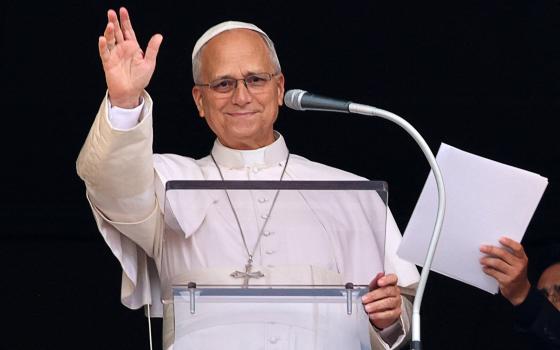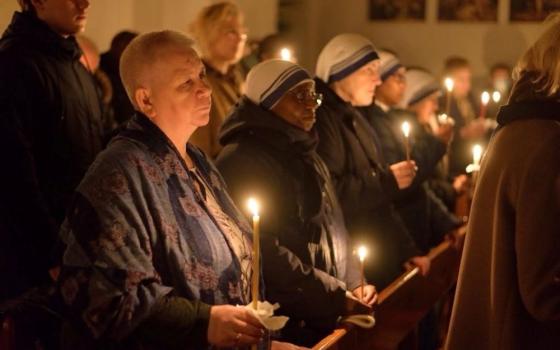
A participant types notes during the fifth annual Way Forward ecclesial gathering, held Feb. 25-27, 2026, at the University of St. Thomas in St. Paul, Minnesota. (Courtesy of University of St. Thomas/Nick Wosika)

Join the Conversation
Send your thoughts to Letters to the Editor. Learn more
On Feb. 25-27, I was privileged to be a part of the fifth annual Way Forward ecclesial gathering of bishops, theologians and other church leaders. This year, we met at the University of St. Thomas in St. Paul, Minnesota, a beautiful campus equipped with a top-notch staff with whom to work. Archbishop Bernard Hebda was a most gracious host. Full disclosure: I am one of the organizers of these gatherings, not only a participant.
This year, we focused on communications and evangelization in a digital age. As always, we invite the participants to reread one or two magisterial texts to focus the discussion, and we chose St. Pope Paul VI's 1975 apostolic exhortation Evangelii Nuntiandi and Pope Francis' 2013 exhortation, Evangelii Gaudium. Both texts, issued nearly 40 years apart, start from the premise that the church exists to proclaim the Gospel, and that preaching the Gospel is intended to build up the church.
There are dozens of academic conferences on this issue or that. Our focus is always to ignite a specifically ecclesial discussion: What do these issues mean for the life of the church? How should a Catholic leader, in the episcopacy or the academy or the world of journalism, focus on these topics qua Catholic? The panels are designed to tee up a conversation, not to present fully developed theses, and they succeeded thoroughly. The conversation never lapsed into technospeak but penetrated how our Catholic theological tradition informs the way we encounter these new digital technologies.
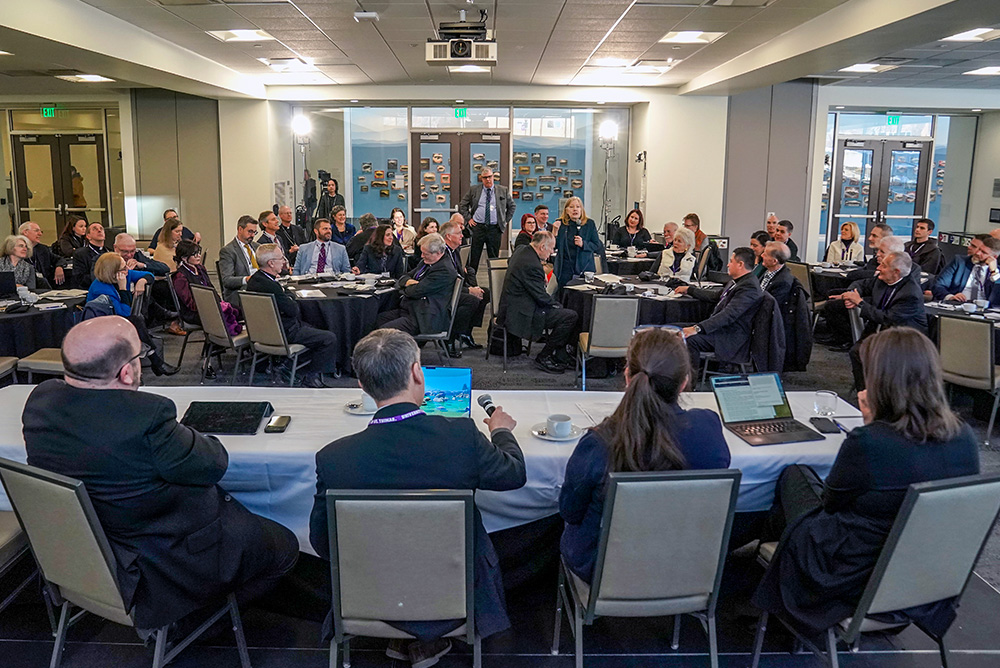
A discussion takes place on the first day of the Way Forward ecclesial gathering, held Feb. 25-27, 2026, at the University of St. Thomas in St. Paul, Minnesota. (Courtesy of University of St. Thomas/Nick Wosika)
This year, we asked each presenter to provide a précis, or abstract, of their presentation. This helps the participants rekindle their thoughts after everyone flies home, but it also permits those not in attendance to gain a sense of what was discussed. You can find the précis by clicking on the names of the presenters on the Catholic Way Forward website.
It became clear that the challenges for the church posed by social media and artificial intelligence are different, at least at this stage in the development of AI. The challenges of social media are both psychological and ethical. For example, Cathleen Kaveny of Boston College used the traditional framework of the seven deadly sins to assess the difficulties in becoming a social media influencer. I have always thought the seven deadly sins are more adept at addressing human motivations and psychological evils than the Decalogue. Jewish law does not consider motive: Only one mitzvah, prayer, requires the right motivation. The seven deadly sins recognize that all of us are prone, more or less, to vainglory, and sloth, and greed, and that we need to attend to the virtue opposite to help defeat the attraction of the sins. The seductive attraction of gaining clicks for posting something extreme is a grave danger.
What emerged from the discussion was the clear identification of the central problem with social media influencing: Evangelization involves an encounter with the risen Lord, and social media influencers point to themselves. Apologetics is better suited, for good or ill, to the algorithms of social media, and apologetics is not evangelization. Many were also concerned that the lack of diocesan boundaries on social media means a prominent bishop or two may have more direct contact with a bishops' clergy and people than the local bishop himself. Self-restraint is not enough. The church will need to find some cultural and/or canonical solutions to this problem.
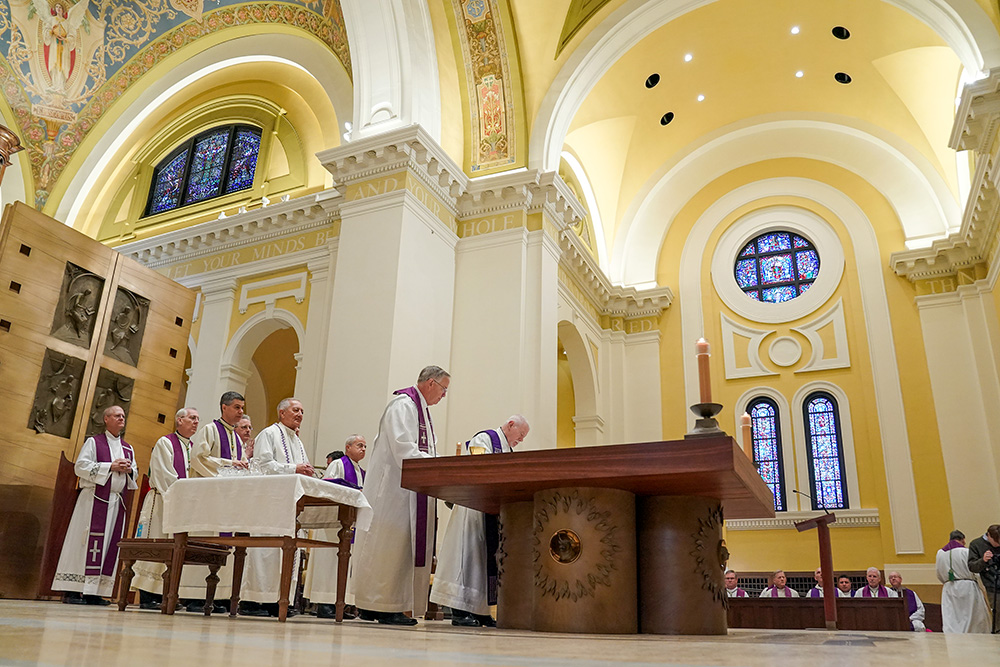
Liturgy is celebrated Feb. 26, 2026, in the Chapel of St. Thomas during the fifth annual Way Forward ecclesial gathering at the University of St. Thomas in St. Paul, Minnesota. (Courtesy of University of St. Thomas/Nick Wosika)
If there was a central theme running through the discussion about AI, it was this: How do we humanize it? As Fr. Lou Cameli states in his précis: "In our quest to utilize the best contemporary means of communication, we can never forget the necessary and irreplaceable human mediation needed to proclaim the Word of God." This is not a communications strategy. This is Christology. Jesus Christ, God becomes man, is the mediator of divine revelation and so his church can only lead people to the Father through him and his humanity.
This is not all abstract. As one participant noted, contract language can require "significant human contribution" to all of a company's output. Apps that allow a person to "talk with Jesus" are an abomination. Even some apps that claim to provide magisterial answers to issues rip the teaching from an ecclesial context: You can obey the teaching, and should, but that is not the same thing as conversion and inculturation.
AI also poses unique environmental and social justice issues. The amount of water and electricity these data processing centers use is outrageous. And when CEOs start talking about cost curves, you know they are contemplating reducing employment. The opacity of the companies that run AI does not invite confidence that these problems will be faced in a humane way. Market-based solutions never account for the demands of justice. Who will regulate this industry, and how?
Advertisement
Each year, the organizers invite some new theologians to join the mix. I had not previously met Kristin Colberg of the College of St. Benedict and St. John's University, Daniella Zsupan-Jerome of St. John's School of Theology and Seminary, Jesuit Fr. John Dardis from the Jesuit Curia in Rome, Meghan Sullivan from the University of Notre Dame, Irina Raicu from Santa Clara University, and Franciscan Fr. Casey Cole, who produces the "Breaking in the Habit" YouTube videos. They are rockstars, one and all.
Part of the dynamic of these gatherings is to keep them relatively small, 80-90 people. I always wish we could double that number or triple it because the conversations are so rich and frank, the bishops, theologians and other church leaders are so engaged, and everyone leaves not only with new ideas, but with new relationships. The shared liturgies — which were especially beautiful this year thanks not only to the architecture of the Chapel of St. Thomas but even more to the glorious music provided by Jacob Benda and the musicians and choir of the university — ground the subsequent discussions in the Eucharist and set the aspirations for the group. The Eucharist truly is the "source and summit" of Christian life and thought. This gathering was lively, thoughtful and filled with faith.