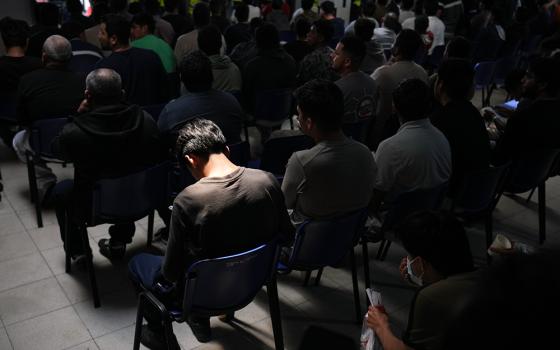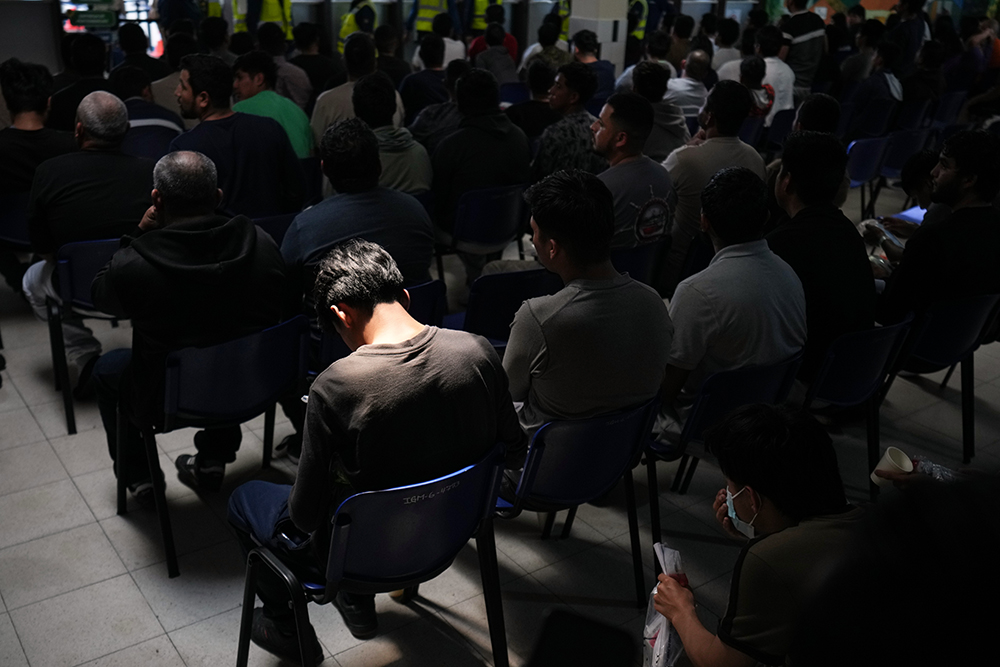
People deported from the U.S., including Mexican nationals, wait inside a processing center after arriving on a repatriation flight at La Aurora airport in Guatemala City Aug. 21, 2026. (AP/Moises Castillo)

by Yolanda Chávez
Join the Conversation
Send your thoughts to Letters to the Editor. Learn more
I followed the recent U.S. midterm elections from Mexico, where I fled last year under threat of U.S. Immigration and Customs Enforcement and where I am trying to rebuild my life after 36 years in California. Like so many, I welcomed the shift in political direction as a sign of hope and a check on the present administration's performance, but I wonder if anyone else is asking what comes next.
For years as a Californian in immigrant ministry, I walked with families who were under constant threat of detention, deportation and separation from loved ones. I think about them still; some, like myself, had to leave, while some remained but were afraid to step outside their homes. Political change opens possibilities, yes, but the consequences of what we have lived through remain with us.
What does it mean to acknowledge that?
What responsibility does a society assume when it begins to understand the harm it has allowed?
I would like to believe that this political change also expresses voters' acknowledgment of immigrant families' suffering. But I must pause before making that claim. A society can reject an administration without really having listened to those who suffered under its decisions. It can desire a different direction while leaving intact the ideas that made persecution acceptable. So rather than simply celebrating a shift and assuming things will soon be better, we must seriously ask ourselves: What has changed in the way we see those who were detained, separated from their families, or forced to leave?
After all, the harm unfolded in plain sight. There were public denunciations, testimonies and families trying to explain what they were experiencing. Who listened? Who discredited them? Who considered their suffering tolerable?
We must also ask what conditions we place on dignity. Must an immigrant prove that they work, pay taxes, care for their children and serve their community before their suffering matters to us? Those contributions deserve recognition, but their dignity does not depend on them. People who are unemployed, who need help, or who cannot tell an admirable story also deserve protection. If we defend only those we consider exemplary, we leave intact the idea that some people must earn the right to be treated humanely.
Advertisement
What would repair mean? Those who have suffered need to be involved in shaping that answer. They may ask for safety, opportunities for family reunification, the restoration of rights, or public acknowledgment of what happened. Some losses will be irreversible. Acknowledging them requires resisting the temptation to present a new political chapter as the end of a story that continues in people's bodies and families.
As I write, the faces held in my heart's memory return to me. I remember especially a night of prayer and lament, when immigrants gathered and the psalms accompanied us. No church authorities were present; it was just us, members of the immigrant community, gathered to bring before God what we were living through. Most of those present were also those who sustained the life of the parish in various ways. They needed to feel sustained by it in return. Did the church sufficiently respond to their need?
All Catholic churches must face this question.
How far did our hospitality extend when accompanying others made us uncomfortable or required us to take a public stand? Our words about human dignity need to be examined alongside our practices.
I want a different future; and so I ask what commitments we are willing to sustain, for responsibility for harm does not end when we stop voting for those who legislated it. Taking responsibility requires answering for consequences and transforming the conditions that allowed people like me to be treated as disposable.
Disposable. That word names what we lived through: torn from places we'd helped sustain, our familial and relational bonds broken, our suffering accepted as the cost of policy, our labor used, but our presence deemed intolerable. What must change so that no individual or family is ever treated this way again? Who will answer for what we lost?
Our dignity remains intact. Can the same be said for the society that proved itself capable of treating us as though we had none?