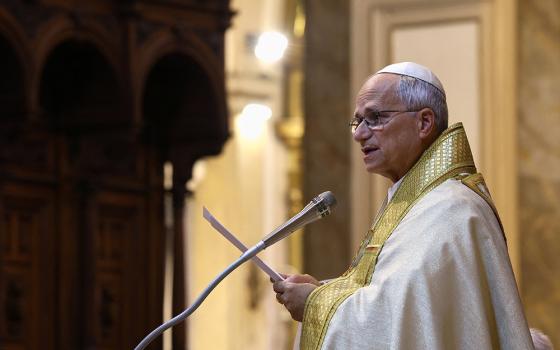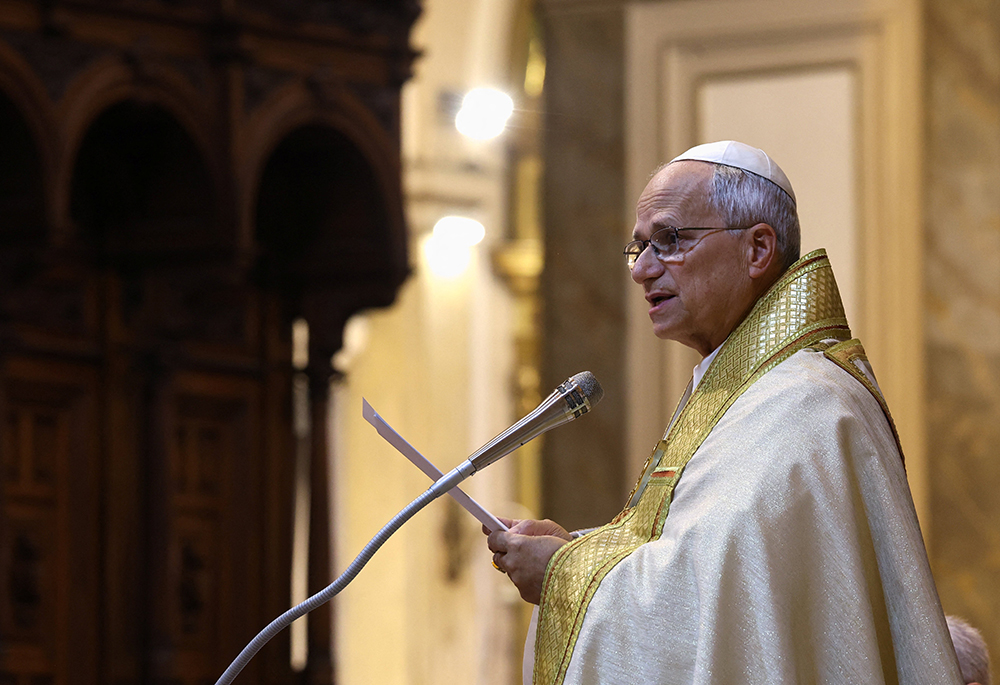
Pope Leo XIV speaks as he leads vespers at the Metropolitan Cathedral of the Most Holy Trinity in Buenos Aires, Argentina, Nov. 9, 2026, during his Nov. 6-17 apostolic journey to Uruguay, Argentina and Peru. (OSV News/Reuters/Yara Nardi)

Join the Conversation
Send your thoughts to Letters to the Editor. Learn more
In the city where Pope Francis developed the vision of social justice he would come to champion on the global stage, his successor took up what became a beloved refrain from the late pope among the most poor of the Argentine capital.
Meeting with representatives of labor communities in Buenos Aires, Francis' hometown and where the future pope served as archbishop for 15 years, Pope Leo XIV cited the the three "T's" which he said his predecessor upheld as "the requirements of social justice:" tierra, techo y trabajo — land, housing and work.
Just nine miles away, in the same slum where Argentine soccer legend Diego Maradona was born, a banner touting those same words hung in a warehouse over bales of compressed plastic. There, at the "Youth in Progress" co-op in Villa Fiorito, a self-managed waste and recycling plant located in a slum located about a 30-minute drive outside of the Argentine capital, the late pope's legacy still looms large.
Francis, the 'waste picker pope'
In Argentina, where no comprehensive government recycling programs exists, many urban poor make a living by collecting and selling recyclable goods otherwise abandoned on the streets of city slums, a practice which exploded after the country's 2001 financial crisis. As archbishop of Buenos Aires from 1998-2013, Jorge Mario Bergoglio, the future Pope Francis, became one of the most prominent advocates in the defense of the country's cartoneros, or waste pickers, and eventually giving rise to his nickname of the "papa de los cartoneros" — "waste picker pope."
In 2008, Bergoglio began celebrating an annual Mass for those organizing and participating in such informal labor movements, regarded as "popular movements," in one of Buenos Aires' central plazas. The yearly event began drawing visibility to the precarious reality of the capital's waste pickers — which gradually gained government recognition and support through a series of grants and incentive programs in the early to mid-2000s — but above all they gave the future pope a platform to lend his support to these marginalized groups.
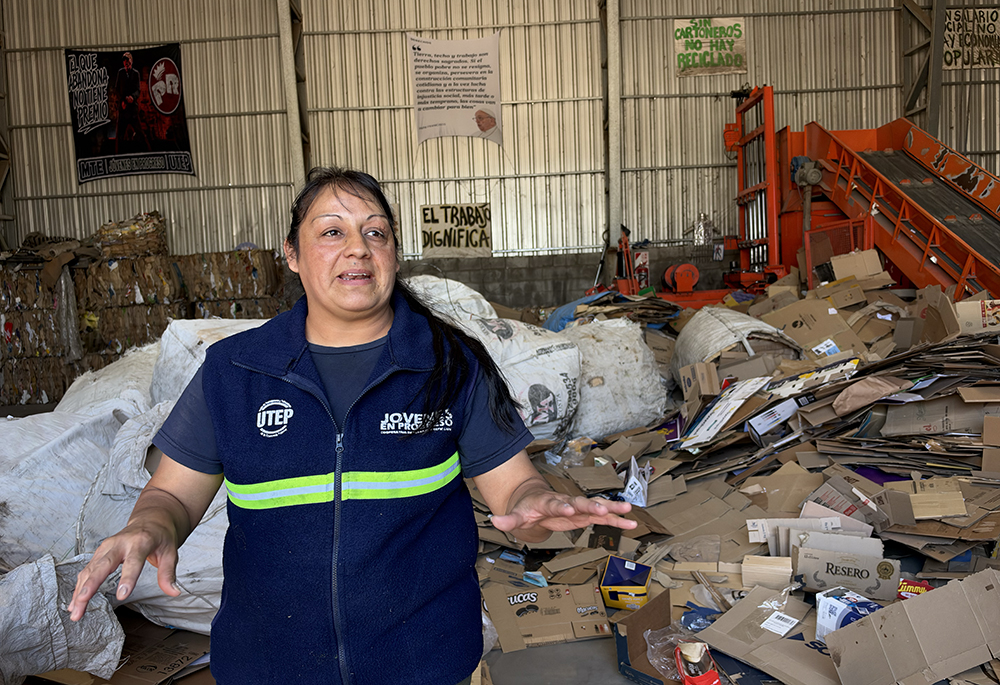
Paula Godoy, president of the "Youth in Progress" recycling cooperative in Villa Fiorito on the outskirts of Buenos Aires, is pictured at the cooperative's warehouse. A banner citing a speech by Pope Francis hangs behind her. (NCR/Justin McLellan)
"He accompanied us in the fight," said Paula Godoy, president of the "Youth in Progress" co-op. "Every meeting that we had with him, [his message] was: 'Don't stop fighting, don't stop making demands, don't stop building and thinking of others.' "
She added that the church in Argentina "is very influential in the state," and that Bergoglio, "brought to the table the voice of who cannot typically reach those places was very important."
Advertisement
Even after his election to the papacy, Francis continued to advocate for those working in the informal labor sector, a reality common throughout Latin America, organizing the World Meeting of Popular Movements at the Vatican in 2014.
Leo also met with representatives of those popular movements championed by his predecessor in 2025, telling them that just "as the church accompanied the formation of union leaders in the past, today we ought to accompany the popular movements."
Leo arrives in another Argentina
The political landscape of the Argentina Leo encountered upon his arrival on Nov. 8 would hardly be recognizable to Francis, who never returned to his home country after his election to the papacy in 2013.
Argentine President Javier Milei was elected in 2023 promising a wave of hardline austerity measures and cuts to social spending, actions criticized by the local bishops' conference.
"Today we are living through a massacre in our country," said Elisabeth Godoy, Paula's sister who also works in the co-op in Villa Fiorito. "With Milei, we lost many rights which we fought to win: health coverage, retirement assistance, government supplements for income."
Regardless of a different government, and a new pope, the messages Leo has delivered in the Argentine capital have had a similar ring to those of his predecessor.
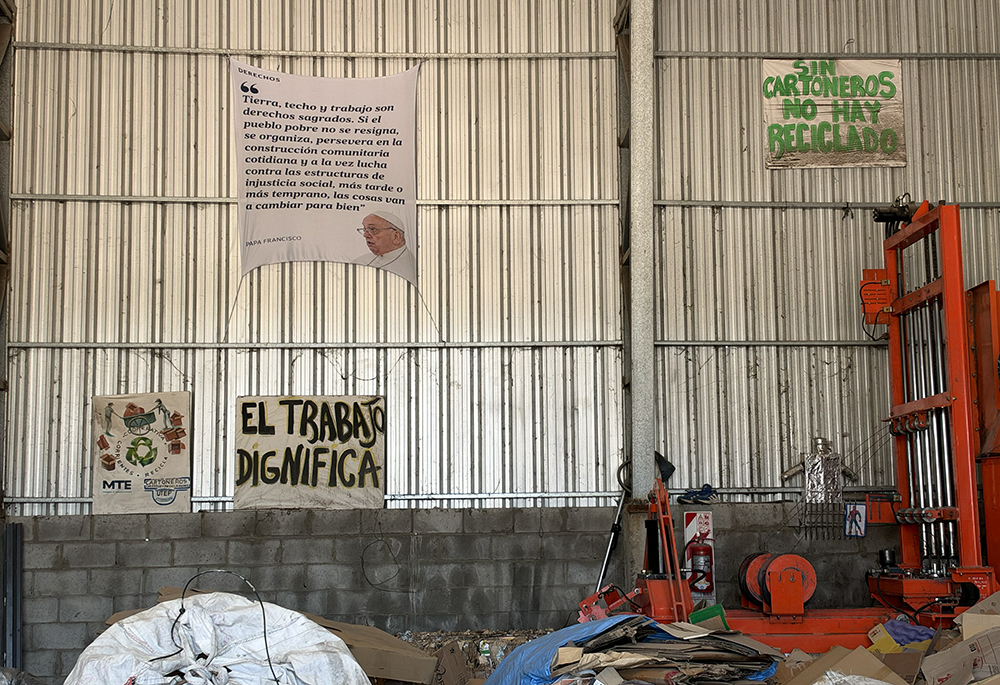
A banner citing a speech by Pope Francis hangs in a warehouse at the "Youth in Progress" recycling cooperative in Villa Fiorito on the outskirts of Buenos Aires. (NCR/Justin McLellan)
In his first speech given after arriving in the country, delivered to government officials, Leo said that "the economy must be at the service of the people, not the people at the service of the economy," a phrase widely interpreted as a jab at the Argentine president seated alongside him. At the Catholic University of Argentina the next day, he said that government officials are "indispensable in promoting stable policies that foster full employment and social inclusion within an ethical framework."
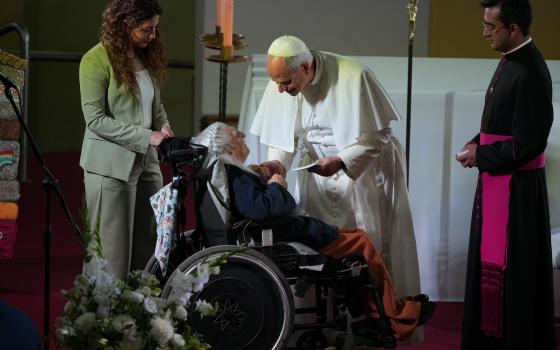
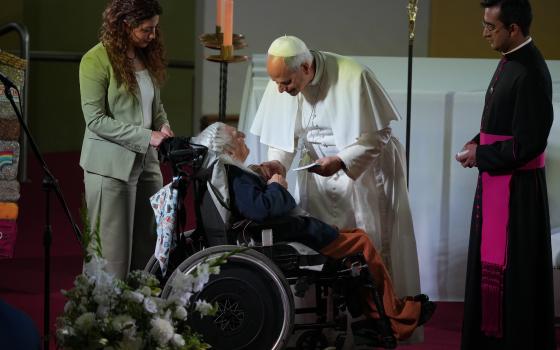
Even the pope's visit to a home for people with disabilities on Monday (Nov. 9) was read as a rebuff of the president's policies, which included shutting down Argentina's national disability agency in the name of spending cuts. There, he expressed his hope that "Argentina may be capable of performing great works of charity, such as we see here."
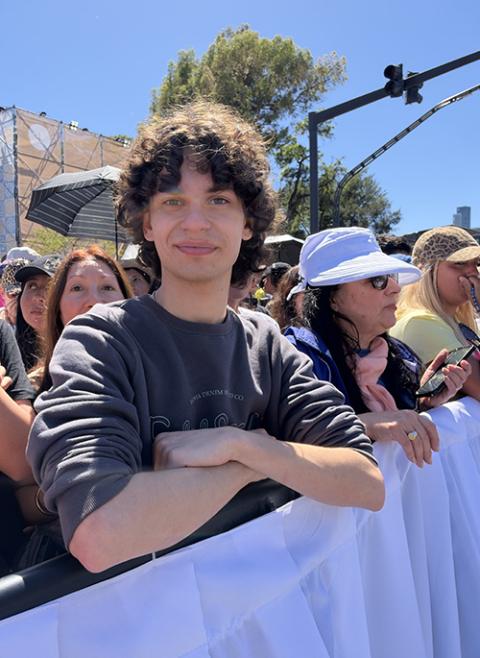
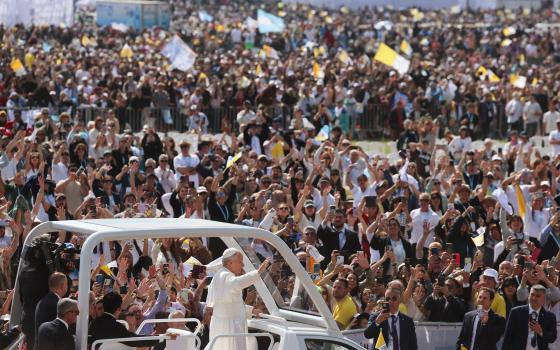
Martín Millan, 20, a native of Buenos Aires, was among the 2.5 million who attended Mass with Pope Leo XIV in the Argentine capital. (NCR/Justin McLellan)
Martín Millan, a 20-year-old native of Buenos Aires who was among the 2.5 million people who attended Mass with the pope on Monday said that the Milei government has shown a "complete disregard for more endangered people, like pensioners or people with disabilities."
The pope's words in Argentina, therefore, are "extremely important; we do not live to serve the economy," he said. "Milei's followers will certainly take a message from that, from his presence."
Leo’s advocacy for the marginalized in Buenos Aires echoes themes he has emphasized since his election, but in the city so closely associated with Francis his words have a particular resonance.
As bishop in Buenos Aires, Bergoglio placed "one of the most important principles of the church’s social doctrine, that of social justice, at the center — which today charts a course entirely opposed to the dehumanization we are experiencing on a global scale," said Juan Grabois, a labor organizer who worked with the late pope in Argentina and was later named by Francis to the Vatican’s social justice office.
"[Francis'] legacy is our inheritance, and it is very gratifying to hear Leo continue in that direction today," he said. "Those words that had such a profound impact on Francis continue to resonate with all of us: 'Do not forget the poor.' "
The National Catholic Reporter's Rome Bureau is made possible in part by the generosity of Joan and Bob McGrath.