
Religion News Service
Join the Conversation
Send your thoughts to Letters to the Editor. Learn more
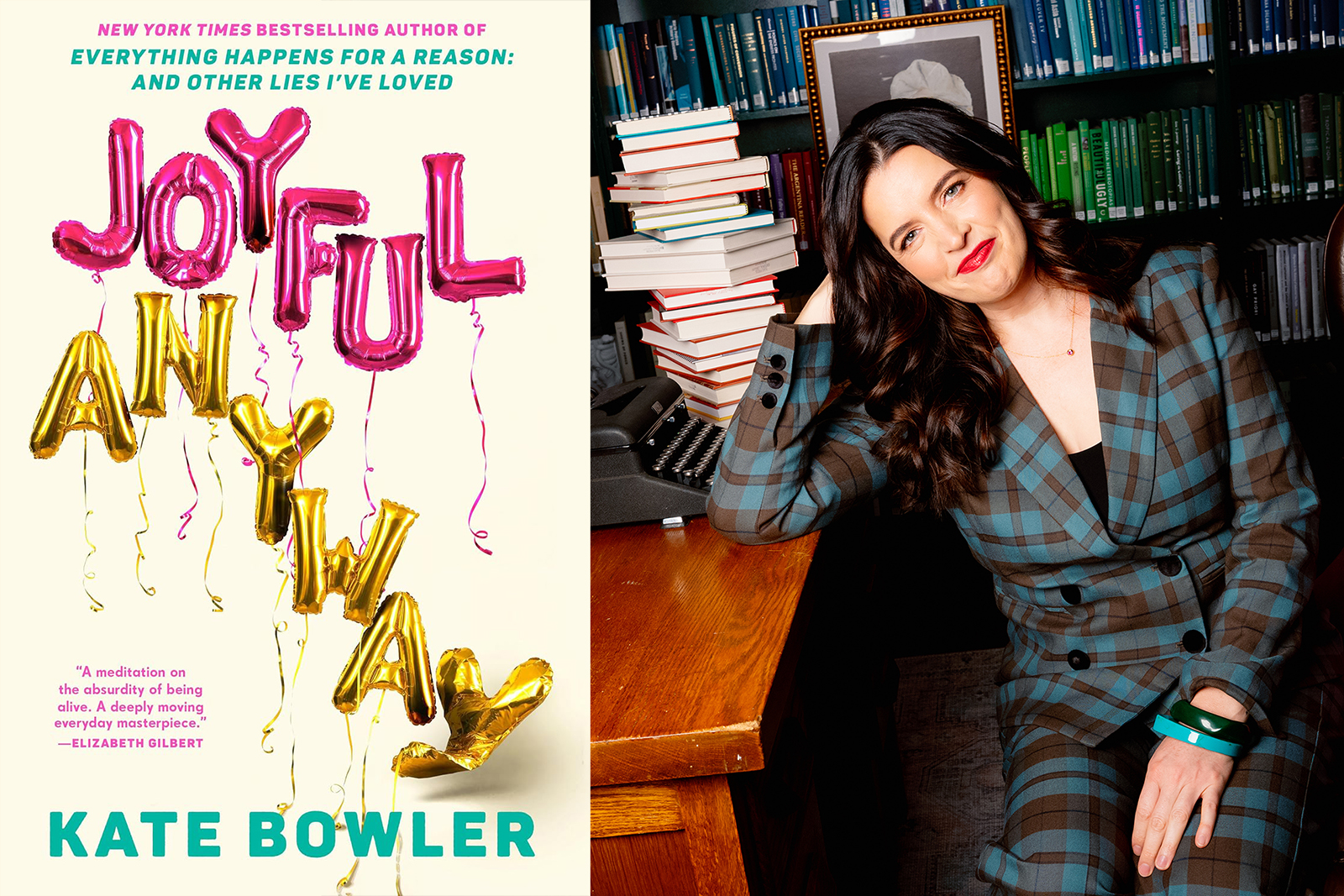
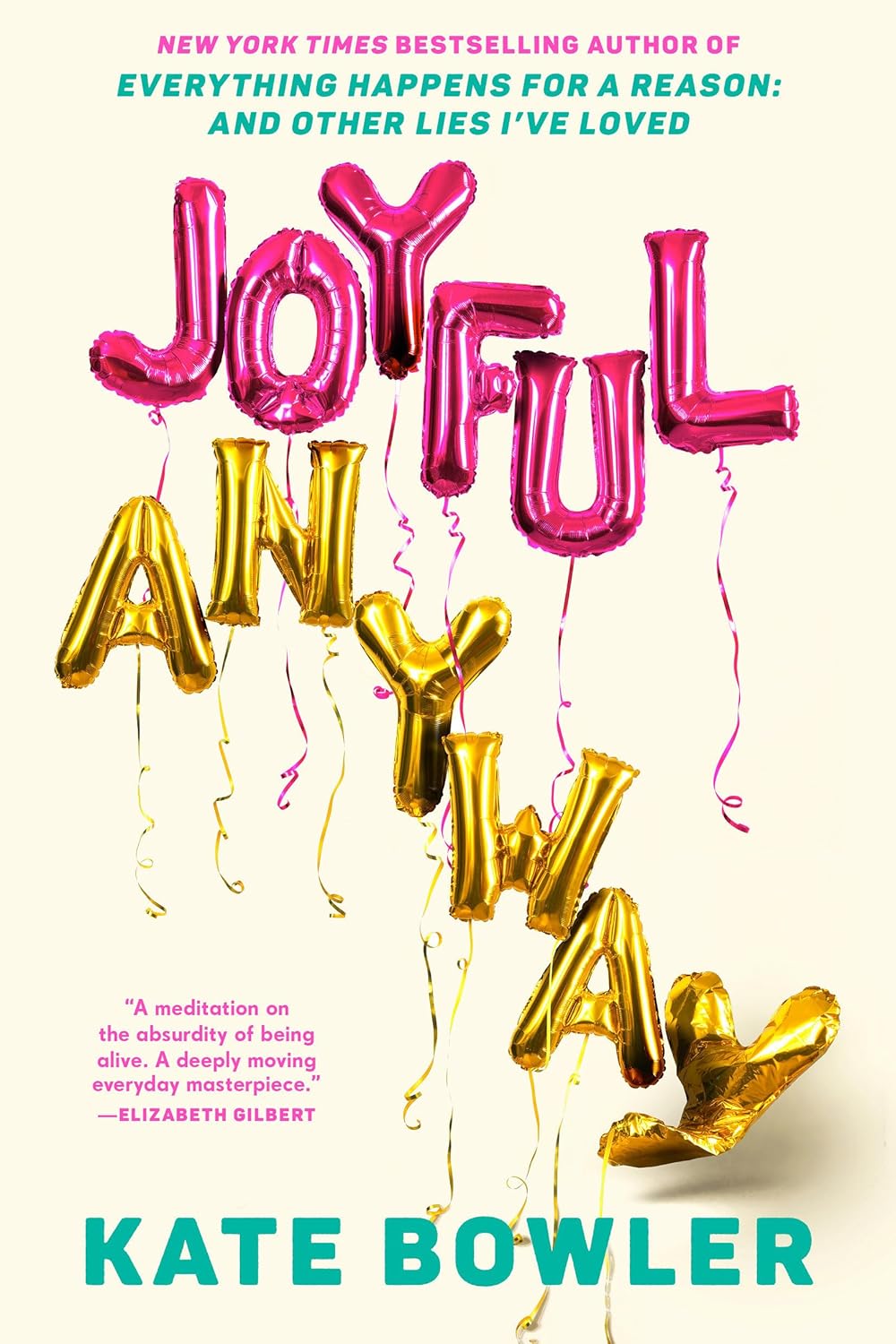
Kate Bowler spent the past decade bashing the American cult of positivity and the pursuit of optimal happiness. Her experience battling stage 4 colon cancer in her 30s taught her the fallacy of such thinking. Where her earlier books pondered mortality and grief, Bowler’s latest book is, of all things, about joy.
Kate Bowler, who teaches American religious history at Duke Divinity School, to talk about her new book, Joyful, Anyway.
RNS: When did it dawn on you, even in the midst of your pain, and maybe because of it, that joy can sometimes make an appearance?
Bowler: I think mostly when I realized I’d had an experience of it that felt almost embarrassing to talk about, because joy is weirder than I think I realized. I had that stretch right after I was diagnosed with cancer. It was just a time of undoing. Everything that mattered was slipping away from me so quickly, and I was very angry, and I was heartbroken, and I just had this one strange little stretch where I felt bubblewrapped in love, love from other people, love from God, and it was such a difficult thing to explain, how can something so beautiful coexist with a moment of utter devastation, and I think it took a long time for me to be able to look back on that experience and realize that there was something very mysterious in the quality of joy that had really broken into my life.
I wonder if a lot of people who experience grief or are in mourning might look at these episodes of joy and feel guilty about them?
Yes. I’ve now spent years in this community of people who have survived, sometimes just barely, terrible undoings and their aftermath, and when people report to me these surprising moments of elation, when you somehow feel a ‘yes,’ bubbling up inside of you, or you just randomly start crying in something that should be devastating. People typically say, “Oh my gosh, I felt so bad, I felt so guilty, I felt like it was so inappropriate. But I really recognized myself in the psychological description of joy, in which it says that it can engage both our reward system and engage our stress systems. Meaning, we can have these both/and experiences of elation and also undoing, in which we feel weirdly, bizarrely, not just happy, but like, OK — everything matters, and nothing matters.
Explain the difference, which you do really well in the book, between happiness and joy.
I thought they were the same. I thought they were both just positive emotions, and they must just be different flavors of the same ice cream. But it turns out they have a distinct psychological profile. Happiness will feel like ease, it will feel relaxing, it will feel like the accumulated good things, where you’re kind of climbing a ladder of good feelings, and you get to have a beautiful view, and that’s because even just the word happiness comes from the word "hap." It’s the Norse word for chance, which just means like happenstance, the stuff that happens to you. We experience happiness that way — it’s the temperature of our coffee and the music playing and the friend you get to call later and the job that came through. It’s very contextual and circumstantial, and it’s also very incremental. It takes a lot of things coming together to make us happy.
Joy, on the other hand, is not relaxing. Joy is this big, bright, enlivening feeling. It’s like it startles us awake. It will make us say, "Yes, yes, it is good to be alive." And that’s why I think, whereas happiness is just a lot of positive things happening to you, joy isn’t just a positive emotion. It’s a story. That’s why it touches existential themes, like, "Is it good to be alive?" Joy, when it bubbles up inside of us, presents itself as an answer to that question.
And how does a person open oneself up to joy? I mean, should we expect it, or is it something that we have to prepare for?
It’s very annoying, because it is very one hand clapping. How can you make yourself into a joyful person when, as Karl Barth says, joy is a gift, so that’s a surprise, as well as a task. So how can we make ourselves people who are more likely to have joy happen to them? I think most of the ways we could think about it are kind of counterintuitive. You think it would just be like the lady on Instagram yelling “Choose joy” in a really loud voice, you think it would be something you could will your way into. I think this is where a lot of our culture’s obsession with mindfulness and careful attention also makes us think, well, I just have to be somebody who focuses on the positive things, and then joy is going to come my way.
Unfortunately, because joy is such a surprise, and we can’t will it, we’re left with trying to cultivate it indirectly, and one of those things is to clear out of our path some of the stuff that makes us unsurprisable. Joy is a surprise. What makes us unsurprisable? You would think it would be sadness, right? But as we talked about, sadness and joy can coexist, so it’s not that. It’s very likely going to be a lot of the qualities that characterize the age of AI, the age of this certain kind of producer self. If we are hyper dedicated to our routines, to our efficiency, to making everything useful, to saying, well, rest is only just going to make me more productive. If we are that kind of person, that kind of person is going to be very hard to surprise. So we have to clear out, I think, a space inside of us that says, "Am I someone that can be interrupted even by something beautiful?"

"Joy isn’t just a positive emotion. It’s a story," says Bowler. "That’s why it touches existential themes, like, 'Is it good to be alive?' "
And you write about how joy is often mixed in with sorrow or pain. You can’t detach the two. Explain that.
I think joy has to meet us in a place of aching humanity. There’s different historical theological language for that ache, like Friedrich von Schiller, a German playwright, called it "sehnsucht" like bittersweet longing. Other people use musical words for it, like the Fado, the blues, like "saudade," musical forms that are bittersweet, that are beautiful and stir in us a feeling that we are longing for something we may never have. I think that is the human condition. That is where joy has to meet us. So I think when joy comes to us, it meets us as the sweetest response to our longing.
In the way that grief and love are part of the same language, it reminds us that we can have beauty, but just for a moment, because that’s what joy is. It’s just a moment, it’s not a stable state, we don’t get to stay there, which really sucks, but like it meets us in a moment of temporary wholeness. It’s as if all the broken pieces are somehow glued together, and then it’s gone. So, yeah, I think joy meets us as an already longing, grieving self, and when it happens to us, it’s not like it convinces us that everything will always be okay. It’s like it rings a note that will keep on ringing.
You don’t discuss this in your book, but I wondered if there is a Christian obligation to be joyful?
There’s definitely a Christian performance of joy as a form of spiritual mastery. And sometimes when I talk about joy, I do get a lot of responses like, "My joy is in the Lord" kind of defensive certainty. How dare you tell me I’m not constantly joyful? So I do think sometimes joy, hilariously, makes its way into the way we’ve expressed our religious certainty. But I think that joy has a special place in Christian theology, and as a glimpse into the divine mind — as a reminder that God didn’t just make us and robots and sent us out.
There’s sort of three parts that are qualities of joy, where we can notice it. One is gratitude. The other is hope. But the other is delight, and delight is for no reason. That’s what makes it delight. Otherwise it would just be useful. I think joy delighting us ends up really being part of our best guess about why God created us. It gets down to our kind of deep ontology. What are we for?
One last question. There’s a lot of lists in the book, and I wondered, is it helpful to keep jotting down experiences of joy? Does that help?
I think the best use of the past is to treat it like a series of little bread crumbs, small reminders (of) our hope and our delight and our gratitude. They sparkle wherever we have lived and wherever we have loved. When we feel like maybe the present is empty or the future is uncertain, I think turning toward the past and writing down our own little reminders that it happened at all is a really beautiful way to set us up for more.
That’s great. Feels like your book is like that.
Thanks. I really loved how weird joy is, and this has been a really nice part of doing that book tour, is just hearing other people’s (stories). Even in our brokenness, even in our terrifying fear of the headlines, people are still being found by joy.
Advertisement