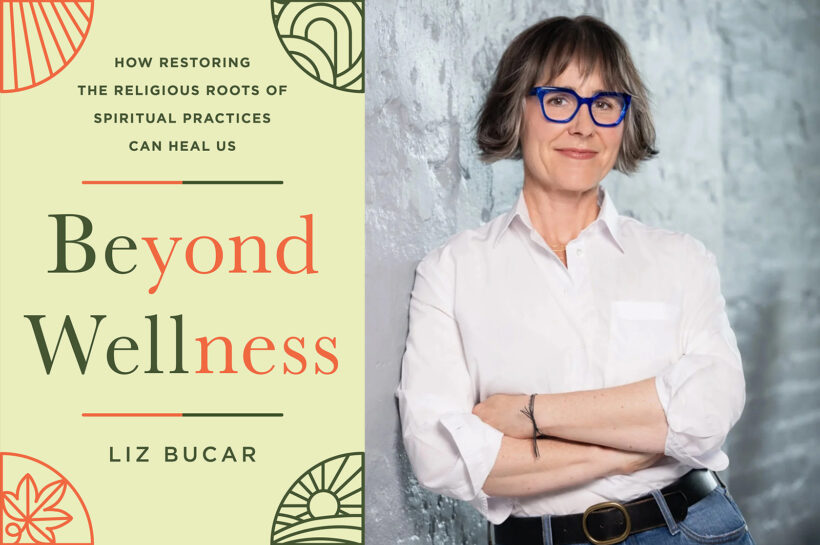
Beyond Wellness: How Restoring the Religious Roots of Spiritual Practices Can Heal Us and author Liz Bucar (RNS/Liz Linder)

Religion News Service
Join the Conversation
Send your thoughts to Letters to the Editor. Learn more
SoulCycle. Psychedelic retreats. Yoga. Meditation.
Increasingly, people are turning to these practices not just for physical benefits, but to find meaning outside of institutional religion. But according to Liz Bucar, a scholar in religious ethics at Northeastern University in Boston, the spiritual impact of these practices is limited when divorced from their religious origins.
"I think people don’t know the ingredients of what they’re putting on their plate," said Bucar, using an analogy that many Americans treat religion as a "salad bar" where they can curate their own spiritual experiences. "We often just dip into a technique, and we don’t really know the fuller context it comes from."
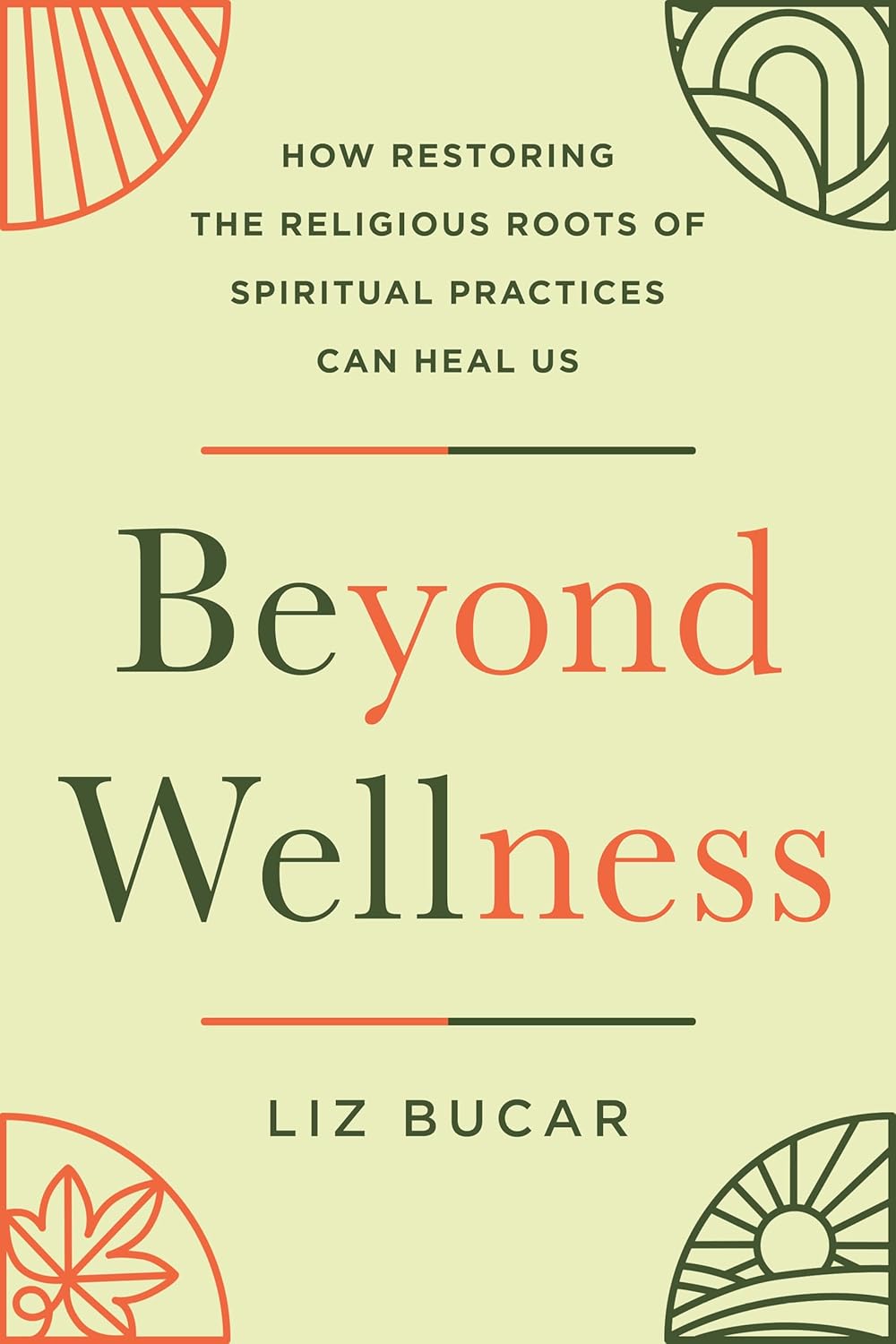
Her upcoming book, Beyond Wellness: How Restoring the Religious Roots of Spiritual Practices Can Heal Us, which publishes on April 28, doesn’t make the case for religious conversion. But it does suggest that when spiritual practices are devoid of ethical frameworks and communal obligations, they’ll fail to satisfy people’s hunger for purpose.
RNS: Let’s talk about the spiritual salad bar. What is it, and why isn’t it meeting people’s spiritual needs?
Bucar: A lot of Americans don’t always like to order off the menu — we’d rather curate our own religious and spiritual experience. Partly this is driven by the fact that we like to have free choice. Part of it is a distrust of religious institutions and expertise. I don’t really think that combining is a problem; borders between religions are porous. But to think of these practices as without quote, unquote religious baggage does the practice a disservice. Some of that baggage is why the thing works. The stuff we erased because we didn’t like it, because it sounded too religious or didn’t serve our taste, might be the thing about the practice that really helps us remake ourselves. Most people are drawn to spiritual practices because they think that they’re powerful and can change us, but I think we should know what we’re changing ourselves into.
What can mindfulness teach us about the risks of separating a spiritual practice from its religious context?
The book goes through seven different practices, and part of what I talk about is that anything that’s powerful enough to change us can have adverse side effects for some people. Mindfulness is an interesting example of that. If I’m trying to do a mindfulness practice based on Buddhist forms of meditation, for example, like Vipassana, those practices were within a particular religious worldview. Maybe you’re all about individual self-optimization, and the technique is based on a worldview where the self is an illusion. You can find yourself embracing a practice that clashes with your worldview and core values.
Sometimes, a spiritual practice’s religious origins can be harmful — for example, diets or exercise classes tied to Christian teachings that moralize thinness. How should folks navigate spiritual practices with religious roots that don’t align with their values?
Diet culture is one place you can see some religious strands, even if it’s something as simple as a moralizing of food, the idea that some food is good and some food is bad. That’s not based on nutrition. It’s based on categories of profane and pure. It’s about looking underneath the hood. Where’s the hidden religious logic here? Then you can decide, maybe I don’t want to be so strict about food categories. What are other religious ways of thinking about food, where it’s used communally or to honor the ancestors? How is ritualized fasting different than dieting for weight loss, and what can we learn from that about our own relationship with food?
When researching psychedelics for this book, what did you learn about how religion might deepen psychedelic experiences?
I have only taken a psychedelic once in my life, and it was for this book, and it was with a religious community. I took Ayahuasca with a Santo Daime community for three days in a yurt in Oregon with no food. The religious container made that both possible and meaningful for me. I really trusted the leader, Jonathan Goldman. Having a guide is part of what is sometimes missing from the spiritual salad bar, that trust in another person, that they are witnessing you and seeing something that you can’t see yourself. The religious community made me feel safe. There were guardians watching over us the whole time. But also, there was the religious liturgy that made it feel contained. There were hymns being sung in Portuguese as a way to ride the wave of the psychedelic effect. They would build in emotion and then calm down. There was an altar with items, and that for me created a sort of discipline and gravitas.
Some psychedelic facilitators use religious language as a legal loophole. What does it look like for psychedelic practices to be authentically linked to religious roots?
I think the key ingredients are the community, the integration and the ethical framework. Without that, I think it could just lead to more narcissism. The spiritual salad bar is so individual. We want the mystical experience. We want the magic, the awe. But none of that matters really if you don’t integrate it and change your life afterwards. Religion helps me think about this. There’s this amazing experience. How does it change my life? I feel lonely. What does real community look like? It’s not just belonging. It’s having obligations to other people.
Many of the folks who partake in the spiritual salad bar are skeptical of institutional religion. How do you encourage them to explore religious roots, given that hesitancy?
I’m really upfront and vulnerable about where I am in that. I am still a skeptic, right? I am also itchy about religious institutions. I am not planning to convert to a major world religion right now. I just want to invite people to come along. I get religion has a PR problem. Can you put that aside for just a second? Let’s think about what we might have given up when we said that. What are some frameworks, concepts and histories that would help you make sense of what the heck is going on the world right now? What could we imagine going forward?
Advertisement