(Unsplash/Grant Whitty)
by George Cassidy Payne
Join the Conversation
Send your thoughts to Letters to the Editor. Learn more
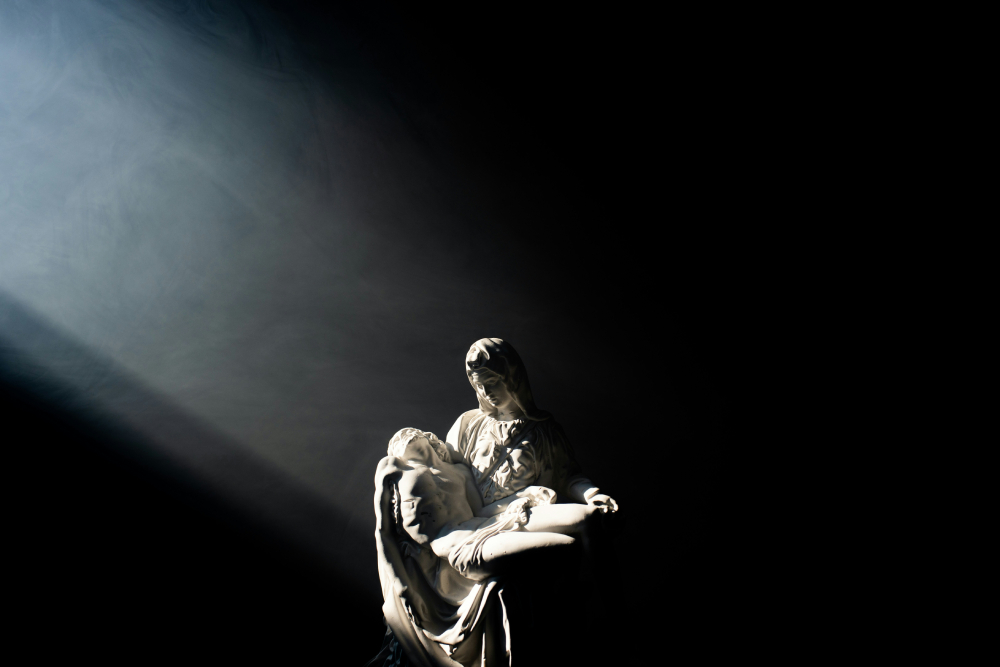
The Catholic Church often speaks of healing. It speaks of reconciliation, redemption and renewal. Yet for many Catholics, especially those who have experienced discrimination or abuse within the institution, healing can feel like a promise made before the wound has even been acknowledged.
For theologian Annie Selak, that tension lies at the heart of the church's contemporary crisis.
"The wounds of the Church are more deceptive," Selak writes in her forthcoming book, The Wounded Church: Tending to the Harm within Catholicism. "They often fail to startle the attention of an onlooker."
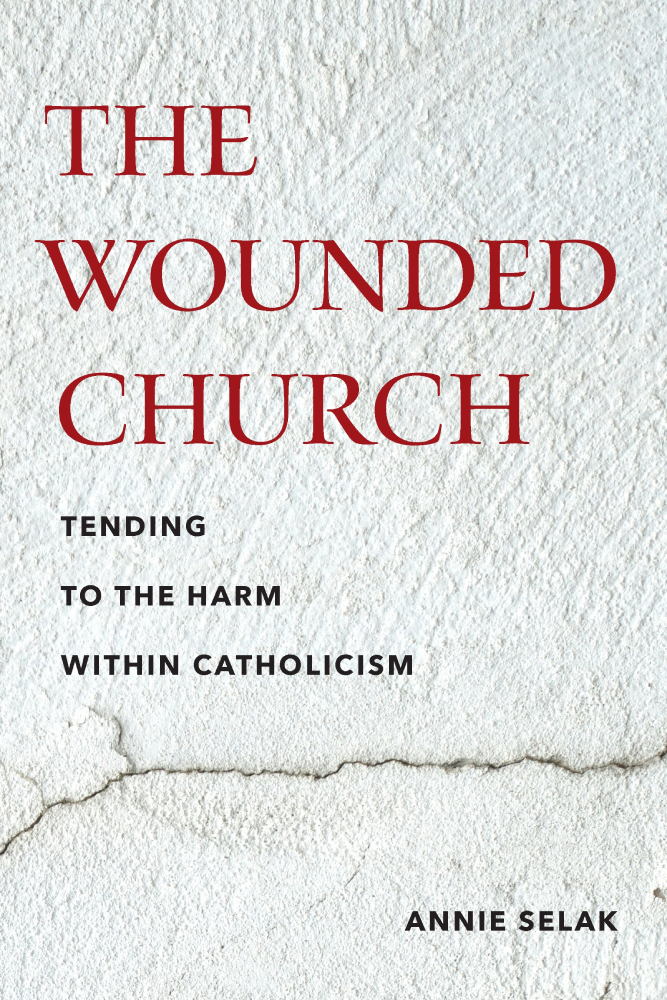
Selak, a feminist theologian and visiting scholar at Georgetown University's Center on Faith and Justice, has spent years examining the places where the church fails to embody its own mission. Her work approaches racism, sexism, clericalism and clergy sexual abuse, not as isolated failures but as symptoms of deeper institutional realities.
The Wounded Church develops what Selak describes as a "feminist ecclesiology of injury," an approach that begins with lived experiences of harm rather than idealized visions of what the church ought to be.
When I spoke with Selak by phone, she returned repeatedly to a question that animates both her scholarship and her faith: What happens when the church begins not with its strengths, but with its wounds?
Of the injuries she examines, clericalism proved the most revealing.
"I think that clericalism is a hell of a drug," she said. "It runs so deep."
Selak expected to encounter examples of clerical power in her research on the clergy sexual abuse crisis. What surprised her was how that culture extended beyond ordained leaders themselves.
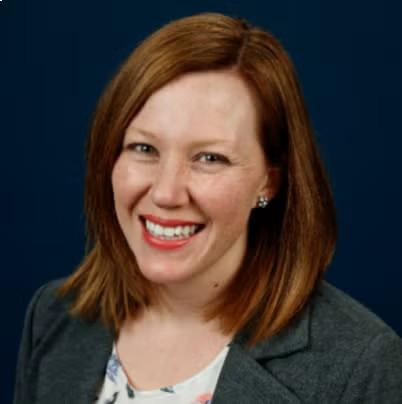
Annie Selak, Ph.D. is the author of The Wounded Church: Tending to the Harm within Catholicism. (Courtesy of Georgetown University)
While studying the Los Angeles archdiocese's handling of abuse allegations, she found herself drawn not only to the actions of church officials but also to the role of influential laypeople who helped sustain the system.
"There was one lay person, a judge," she recalled. "He was so willing to turn his attention somewhere else. That sense of clericalism is so deep. It changes our instincts. Even a judge can be warped in their perception."
For Selak, clericalism is not merely a problem of individual behavior, but rather a culture that shapes relationships, language and assumptions about authority. It adapts to reform efforts and survives structural changes.
Looking at recent developments in the Synod on Synodality, she acknowledged meaningful progress in expanding leadership opportunities for women. Yet she remains struck by how deeply embedded clerical distinctions remain.
"We were sitting around a table with bishops and everyone was called by their first name," she said. "But at Mass, you don't use first names for the bishop. The depths through which clericalism extends stick with me."
If clericalism reveals one wound within Catholicism, racism reveals another.
"Racism is an actively bleeding wound in the Church," Selak said.
She sees evidence of that wound in overwhelmingly white parishes located in multicultural neighborhoods, in religious imagery that portrays Jesus and Mary as white despite their historical context, and in what she describes as the church's reluctance to engage honestly with racial injustice.
For Selak, acknowledgment cannot be reduced to statements, committees or one-time initiatives.
"Wounds cannot be checked off a list," she said. "Healing is ongoing."
What happens when the church begins not with its strengths, but with its wounds?
She pointed to efforts within her own Washington, D.C. parish to build sustained relationships with Black Catholics who have left the church through restorative justice circles and community pilgrimages. Such work, she argues, requires relinquishing control and embracing the uncertainty of genuine encounter.
"We are too transactional in our churches," she said. "We go to Mass and do not know the people around us."
Yet despite her critiques, Selak has not abandoned hope.
Indeed, hope occupies a central place in her theology, though it is a hope she carefully distinguishes from optimism or denial.
"I think healing can happen," she said. "But there is a rush to heal that can deny the reality of harm.
Drawing on trauma theory and Christian understandings of resurrection, Selak argues that faith communities often move too quickly toward restoration narratives without fully attending to suffering. Genuine hope, she suggests, begins with truthfulness.
"The role of hope is that there is nothing beyond God," she said. "God is still calling each and every one of us."
That conviction has sustained her through personal and professional costs. Earlier in her career, after publishing a widely read essay about young Catholics following Pope Benedict XVI's resignation, she was warned that continued public advocacy could jeopardize her employment.
Advertisement
"Very rarely are institutions willing to protect Catholic women," she said. "They perceive talking about sexism as controversial."
Still, she believes the rewards of remaining engaged outweigh the costs.
"If we think about vocation as God giving us gifts and talents that meet the needs of the world, following that call is a joy that can only come from God," she said.
When asked what the church might look like if it truly took its wounds seriously, Selak did not describe a new program, policy or structure. Instead, she imagined a community.
"It would be a community where everyone knows each other by name," she said. "People travel with each other in the highs and the lows, grappling with hard questions without easy answers."
Such a church would be diverse, accountable and outward-looking. The Eucharist would not function primarily as an obligation, but as a commissioning.
"Mass is about being sent," she said. "It is not about coming together to fulfill a Sunday obligation."
In Selak's vision, the church's future does not depend on forgetting its wounds or explaining them away. It depends on learning to see through them, allowing them to reveal truths about power and responsibility that might otherwise remain hidden.
Healing, she insists, begins not with closure but with attention.