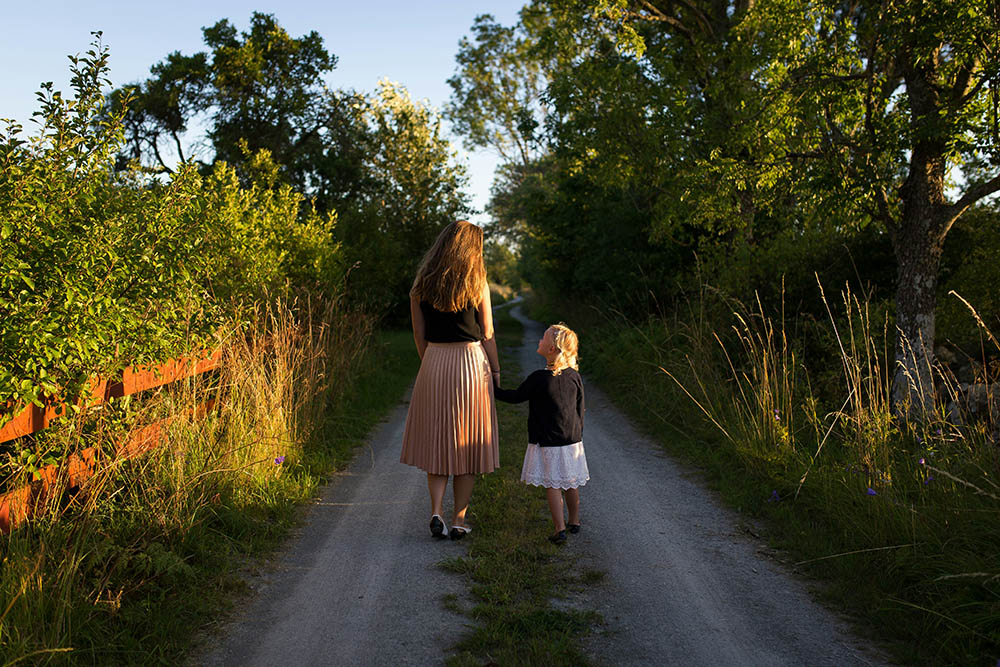
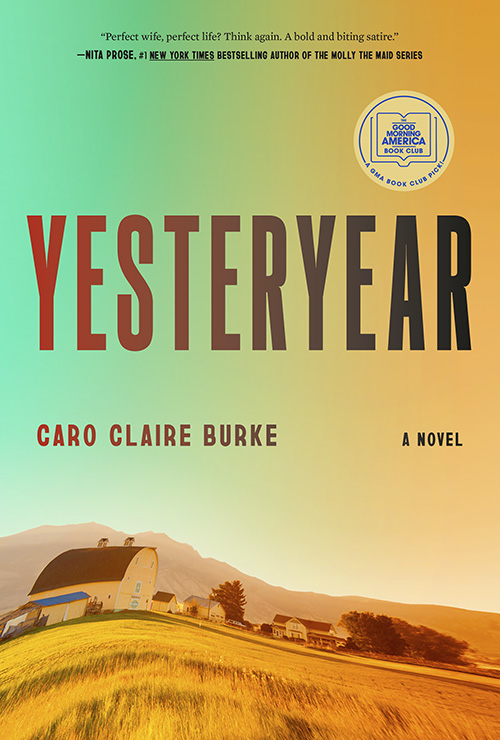
The questions raised by the "tradwife" phenomenon are high stakes, so much so that its comedy is easily overlooked. With her debut novel, Yesteryear, Caro Claire Burke succeeds in conveying the humor of a complicated drama. (Unsplash/Jon Flobrant)

by Renée Roden
Join the Conversation
Send your thoughts to Letters to the Editor. Learn more
The "tradwife" — a portmanteau neologism referring to a "traditional wife" who embraces domestic labor and subservience to her husband — has become a lightning rod for internet ire. But what is often overlooked is that, setting aside its ideology, the aesthetics of tradwifery online is often downright funny. The performance of a femininity plucked straight from a 1950s ad campaign and planted in a 2026 TikTok algorithm results in a camp piece of miniature cinema whose very presentation skewers the retrograde ideals it sells.
But a darker question pulses underneath the pixels: If this image is a caricature of the feminine, who is the intended audience?
The questions tradwifery raises are high stakes: women's rights, the value of domestic labor, the performance of genders and the power distribution between genders, to name a few. The humor of it all may be easy to miss, but in Yesteryear, Caro Claire Burke captures the joke. In Burke's debut novel, a tradwife influencer living with her husband and children on the seemingly idyllic Yesteryear Ranch, wakes up to find herself in 1855 — with no dishwasher, car or indoor toilet waiting for her in the wings. It's showtime, baby.
Natalie Heller Mills, our Instagram-famous antihero, ascends from the small corners of rural Idaho to attend undergraduate at Harvard, where the purity culture of her conservative Christian upbringing clashes with the bacchanalia of co-ed life.
What follows when a vulnerable woman makes a deal with the devil of patriarchy?
After the chaos of her freshman year, Natalie drops out and marries Caleb, a feckless youngest son of wealth and privilege. Before long, Caleb falls into the manosphere and Natalie, already procreating, launches their 500-acre farm project. The bulk of the novel toggles back and forth between Natalie's distressed navigation of the 1855 version of her farm and the origin story that led to the creation of her viral Instagram account.
Burke's Natalie is a not-too-subtle allusion to Hannah Neeleman, the proprietor of Ballerina Farm and the subject of a controversial 2024 profile in The Times. What pulses under the surface of the conversation on Neeleman is explored to delicious lengths in Yesteryear: What follows when a vulnerable woman makes a deal with the devil of patriarchy?
Equally, the novel poses the question of female agency. Natalie's choices are often unlikeable and inconsiderate, but they are also those of a desperate, cornered animal; a "farm dog," she calls herself more than once. "Is it a choice if there's only one option?" Natalie asks herself at critical moments of decision.
Advertisement
To Natalie, life is flattened into a performance — of gender, of self — orchestrated to secure righteousness under His eye. But security is a carrot always dangling just out of reach. Patriarchy may harm both men and women, but Natalie is the one beholden to the invisible male deity inside her head, through whose eyes she judges herself and struggles to perform perfection. Natalie lives under the belief that "He" is watching — an allusion to an all-loving God, an audience of 5 million Instagram followers, or, one begins to realize, an ever-present male gaze through which Natalie lives her life.
By the end, "Online Natalie" and "Offline Natalie" have bifurcated to such an extreme that Natalie no longer knows who — or where — she is. Still, she feels an omnipresent eye and an invisible audience watching her perform. "It's a test," she thinks, more than once. Of what?
The all-seeing eye, the audience that never sleeps. Performing her life for feedback from an enthusiastic – and largely male, thanks to a shoutout from a manosphere influencer – audience eager to watch her submission exerts an unbearable strain on Natalie. Burke plays with the intimacy between the incel male culture that festers in the online manosphere and the tradwife aesthetics of accounts like Natalie’s. Natalie is desperate for the small amount of agency success will give her, but she is ambivalent about the male attention and female ire that drive her metrics up. The algorithm runs on anger, and that rage accumulates in Natalie like a ticking time bomb.
Burke swings big, and the conceit of the novel is a winning joy ride. But the author's cacklingly delicious world-building limps, rather than bounds, toward its conclusion. In the book's third act, the sparkle of the spell Burke has masterfully woven falters over the absurdity of Natalie's decisions in a moment of extreme duress. One wonders who in their right mind would do such a thing. Perhaps that is the point.
People lie, Natalie once tells her daughter, because they cannot bear the truth. But in the end, the truth arrives in the form of the women who have escaped from the glass castle of Natalie's imprisonment.
Although far from a happy ending, the healing that does arrive comes in the form of women who are not afraid to tell the truth; who are not afraid to embrace a dangerous and unpredictable world; who find narratives of God other than a dominating, invisible male eye to ground themselves in.
Yesteryear points to the source of freedom from patriarchy: the women around us who reach for liberation themselves and come back to show their sisters — and brothers — the way.