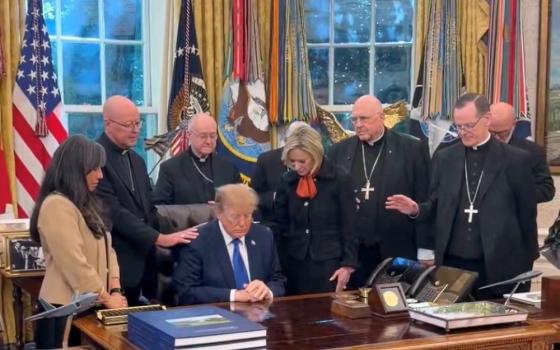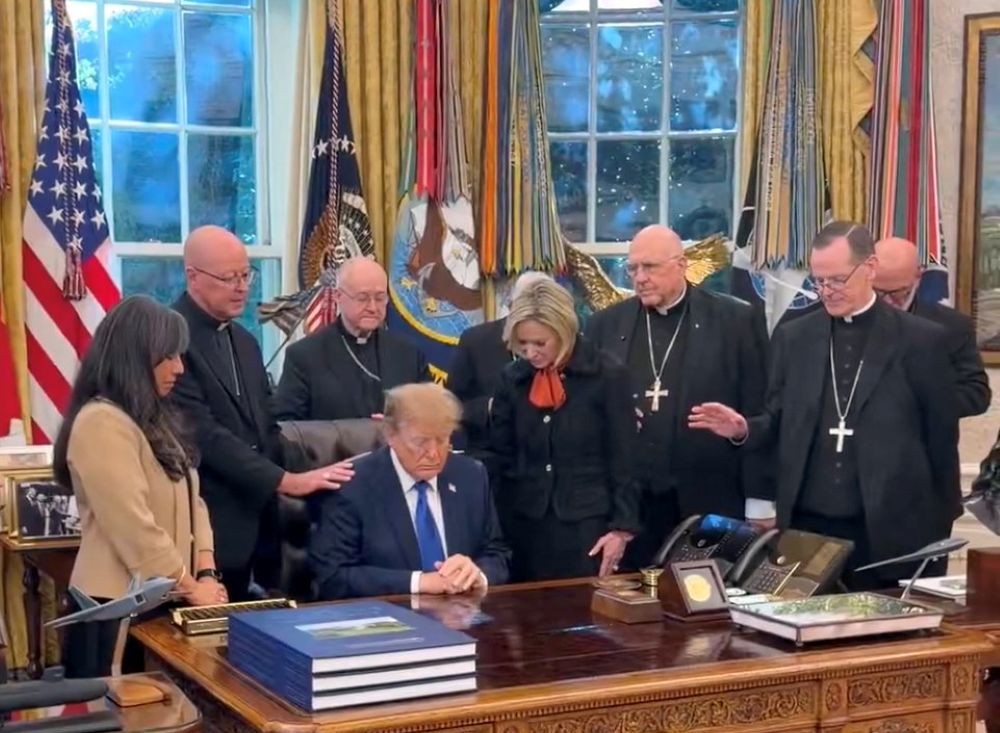
Denver Archbishop James Golka and a group of U.S. bishops pray over President Donald Trump in the Oval Office of the White House in Washington in a video posted on X Oct. 22, 2026, by the administration's communications staff. (OSV News screenshot/@MargoMartin47 on X)

Join the Conversation
Send your thoughts to Letters to the Editor. Learn more
Denver Archbishop James Golka, one of 12 Catholic bishops who prayed in the Oval Office with President Donald Trump earlier this week, has defended his participation in the Oct. 22 White House gathering, acknowledging that the encounter, which took place just 12 days before the midterm elections, caused considerable hurt and raised questions about political endorsement.
In an Oct. 23 interview with Denver Catholic, the archdiocese's publication, Golka said he accepted the invitation despite concerns about the administration's policies and the possibility that the prayer would be interpreted politically.
"I understand that many people saw the video, posted by the Administration twelve days before an election, as an endorsement. That was never my intention," Golka said.
The archbishop said he had originally expected a private meeting but recognized that images of the gathering could become public and be used for political purposes. He decided to attend, believing that praying for elected officials, regardless of political affiliation, was part of his responsibilities as a Catholic priest.
His decision has drawn criticism, including from Catholics who viewed the video, circulated by White House staff's and Trump's political social media accounts, as an inappropriate display of episcopal support for the president.
Golka, who was named Denver archbishop Feb. 7, said the backlash has affected him personally, particularly as some of the criticism has come from friends and people hurt by the bishops' appearance.
"I'm heartbroken that people are hurt, and that there are people intentionally using this moment to sow disunity," he told Denver Catholic.
The archbishop emphasized that he does not support the church endorsing political candidates or parties. Asked by friends why he participated, Golka said in the interview that he explained that he was acting as a Catholic priest, whose vocation includes praying for and blessing others.
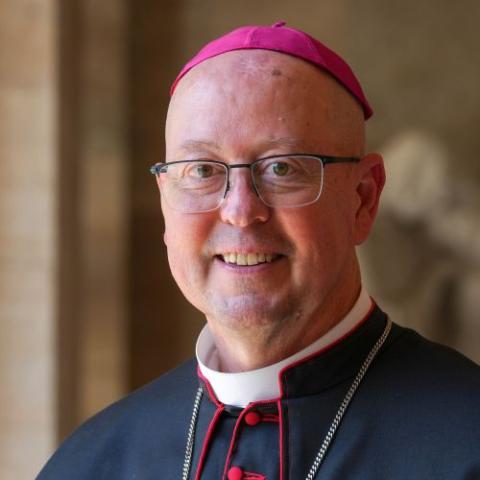
Archbishop James Golka of Denver poses for a photo at the Pontifical North American College in Rome June 29, 2026. (CNS/Lola Gomez)
According to Golka, he and the 11 other bishops participated in a three-hour meeting with White House Faith Office officials before meeting the president. Discussions included immigration enforcement, religious worker visas, abortion, religious freedom and school choice, he said.
Golka said the invitation followed an earlier meeting in June, when religious leaders presented concerns about immigration, religious liberty and visas for clergy and other religious workers.
That earlier encounter reportedly resulted in the creation of task forces to examine the concerns raised. Golka described subsequent progress as encouraging.
However, the archbishop did not specify what progress had been achieved or whether the October meeting produced concrete policy commitments.
"One meeting does not change policy," Golka said, emphasizing that Catholic leaders must continue engaging government officials and advocating for the church's teachings regardless of which political party holds power.
He also highlighted the practical consequences of federal policies for Catholics in Colorado, including immigrant families fearful of intensified enforcement and priests experiencing difficulties obtaining or renewing religious worker visas.
According to Denver Catholic, approximately 1 in 5 priests serving in the archdiocese relies on religious visas. Golka also cited Colorado's ongoing legal battle over the inclusion of Catholic families in the state's universal preschool program.
He argued that advocating for unborn children, immigrants and poor families requires sustained engagement with political leaders, even when church officials disagree with their policies.
Yet several questions about the organization and consequences of the White House gathering remain unanswered.
The U.S. Conference of Catholic Bishops previously told NCR that it neither organized nor was affiliated with the meeting. USCCB spokesperson Chieko Noguchi also said conference leadership had not been informed of the event.
Bishop Scott Bullock of Rapid City, South Dakota, who attended the gathering, told NCR on Oct. 23 that "the USCCB was not unaware of this meeting," although he did not specify which leaders knew about the meeting or when.
Golka's interview did not clarify whether the participating bishops had informed USCCB leadership before the meeting or whether any coordination occurred in the months following the June discussions.
Bullock told NCR that a representative from the Heritage Foundation, a conservative think tank closely aligned with Trump's political movement, had contacted him with an invitation to participate. Golka meanwhile identified the White House Faith Office as the organizer but did not specify whether Heritage played a role in recruiting bishops or coordinating the gathering.
Another unresolved issue concerns the filming and distribution of the prayer. Although Golka acknowledged anticipating that the encounter might become public, his comments did not clarify whether the participating bishops had been explicitly informed that a recording would be released through administration and campaign social media channels.
Golka did not indicate in his comments to the archdiocesan publication if he and the other bishops knew the meeting with Trump would be recorded and distributed.
Advertisement
NCR asked for additional clarification from the Archdiocese of Denver about the extent of the USSCB leadership's awareness of the Oct. 22 gathering, the Heritage Foundation's involvement in organizing the meeting and whether the 12 bishops had been informed beforehand that the prayer with Trump would be recorded and shared publicly.
NCR also asked Golka to elaborate on the specific requests presented during the three-hour meeting with White House officials, including whether the administration made any concrete commitments concerning immigration, religious worker visas, pro-life issues and other Catholic priorities.
The archdiocese did not immediately respond to the additional questions.
The event comes as USCCB president Archbishop Paul Coakley of Oklahoma City has urged Catholics to put their faith before politics ahead of the Nov. 3 elections, emphasizing the church’s nonpartisan mission. Bishops are scheduled to meet for their annual fall gathering in Baltimore next month, about two weeks after the midterm elections.