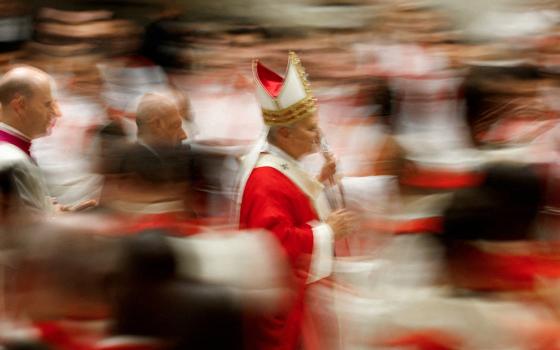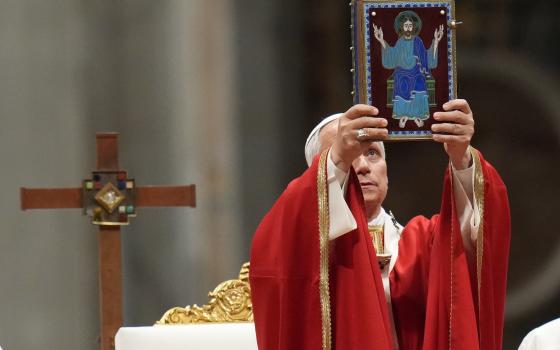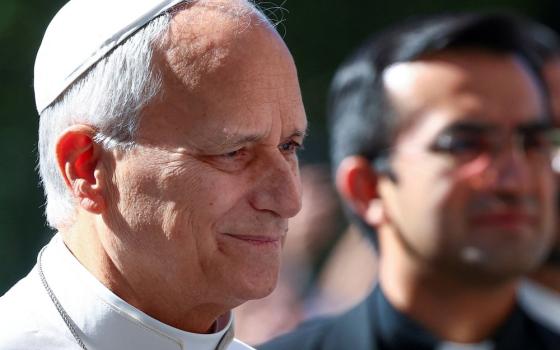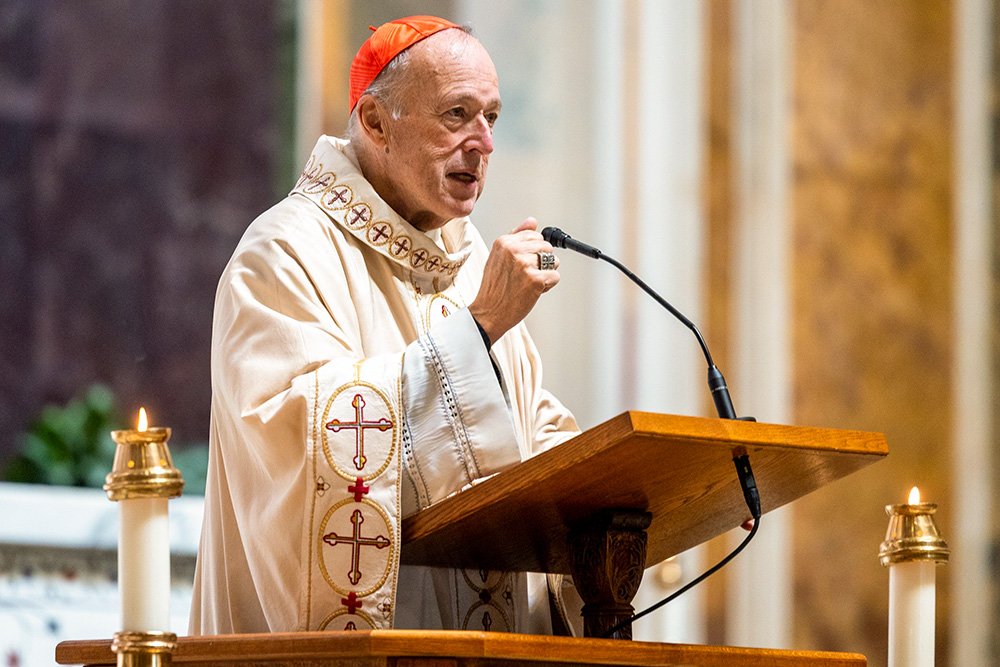
Washington Cardinal Robert McElroy gives his homily at a Labor Day Mass on Sept. 6, 2026, at the Cathedral of St. Matthew the Apostle in Washington. (OSV News/Catholic Standard/Mihoko Owada)

OSV News
Join the Conversation
Send your thoughts to Letters to the Editor. Learn more
As artificial intelligence accelerates changes in the workplace, Cardinal Robert McElroy said the coming transformation of labor raises a fundamental question about the future of human work.
"Will there be meaningful work left?" the archbishop of Washington asked during his homily at a Labor Day Mass celebrated Sept. 6 at the Cathedral of St. Matthew the Apostle in Washington.
"And the answer to that is: No one knows," he said.
The Mass, organized by the Catholic Labor Network and celebrated a day ahead of the federal Labor Day holiday, brought together parishioners, workers and representatives of organized labor for a celebration focused on the dignity of human labor, economic justice and workers' rights.
The prayers of the faithful included prayers for those unable to find work, people facing unsafe conditions or inadequate wages, workers in agriculture, manufacturing and public service and union leaders representing workers.
McElroy began his homily by reflecting on the Scripture reading at the Mass from the Book of Genesis, telling worshippers the created world is a gift from God entrusted to humanity and people participate in its continuing development through their labor.
Advertisement
"When we are workers, we are co-creators with God," he said.
The cardinal described work as a way people participate in creation, contribute to their communities and express something of themselves, even when the work itself can be difficult.
"Work is given to us as a way of self-expression, of our need, of our human need, to create, to contribute to, to build up here on this earth," he said.
There is a dignity to human work that should never be damaged or undermined, the cardinal said.
That dignity, he said, became a defining concern of modern Catholic social teaching during the Industrial Revolution, when Pope Leo XIII issued his 1891 encyclical Rerum Novarum in response to low wages, dangerous working conditions, economic insecurity and the exploitation of workers.
McElroy said the world is now approaching another economic transformation.
"Today, we are on the cusp of another revolution that will dramatically affect work in our world and the dignity of labor," he said.
The cardinal said he recently joined other U.S. cardinals for discussions in Silicon Valley with leaders of artificial intelligence teams at companies on the cutting edge of the technology.
Among the topics they discussed, he said, was the effect AI may have on the workforce, particularly when paired with increasingly capable robotics.
"The labor market is going to radically change in the next 20 years," McElroy said. He predicted "tremendous dislocations of workers," saying, "Millions of workers who have jobs now will not have those jobs 10 years from now."
McElroy said workers must have a voice as governments, businesses and society confront decisions about artificial intelligence and automation.
"We, as a society, have to be at the table, seeking this vision of work and seeking to make sure that exploitation does not grow, and that the wealth of the country doesn't increasingly go to fewer and fewer at the expense of the working class," the cardinal said.
The challenge for labor, he said, is to prepare for changes with "tremendous repercussions for all workers."
Preparation, he added, should include thoughtful structures to preserve "continued creation through labor" and help build up the human family.
"Let us do everything that we can to vindicate workers in this moment in which we live, and in the years which are going to come, which will transform human labor, that we might have a labor force and a labor opportunity that truly reflects the gift of God to us all, the call of God to us all, and the wonderful talents we have to build up the creation that God gave us in the Book of Genesis," McElroy said.