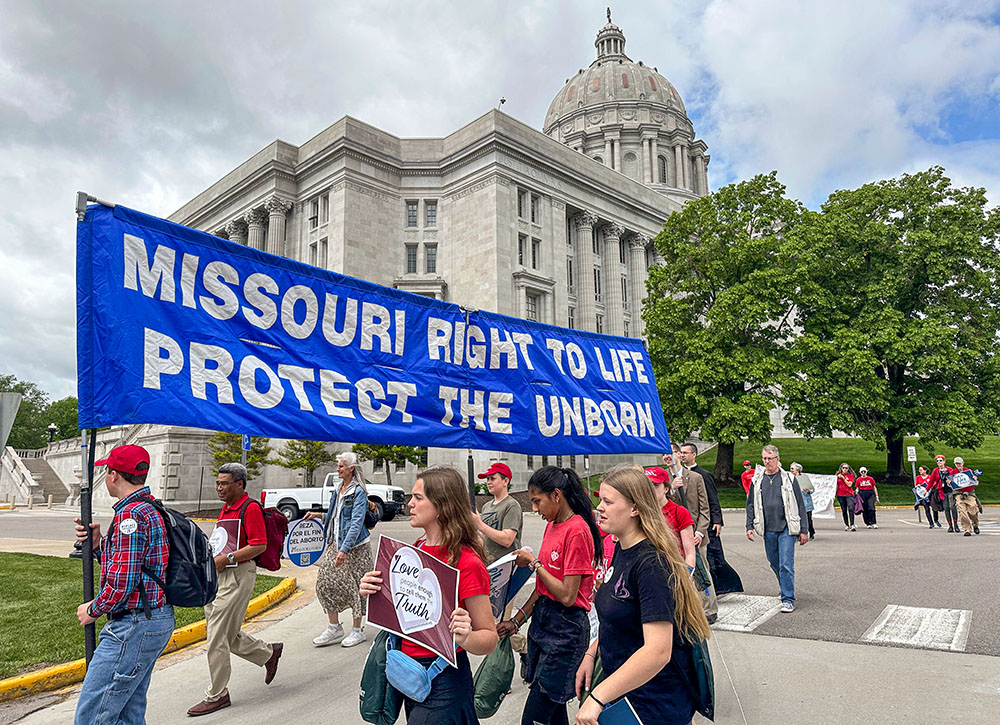
Participants in the Midwest March for Life walk past the Missouri Capitol in Jefferson City on May 1, 2025. (AP/David A. Lieb)

by Brian Fraga
Staff Reporter
Join the Conversation
Send your thoughts to Letters to the Editor. Learn more
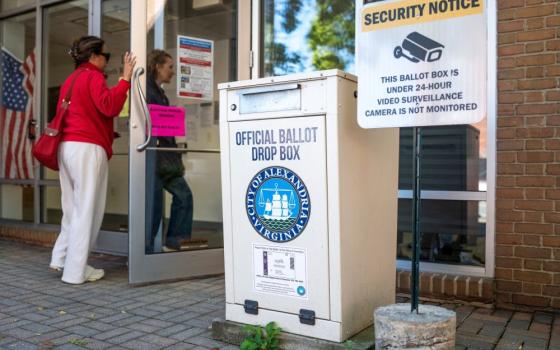
Abortion is on the ballot in four states this November, and the Catholic bishops in those states have been speaking out in hopes of convincing voters to side with the pro-life campaigns ahead of Election Day.
Despite polling data and campaign finance spending reports that suggest they face an uphill battle, the bishops in Virginia, Nevada, Idaho and Missouri in recent weeks have been issuing statements through their respective state Catholic conferences, which have been producing video ads, flyers, prayer cards and lawn signs, among other resources.
"Our state Catholic conference has produced bulletin inserts to educate people on Catholic social teaching and Catholic moral teaching in asking them to take the high road and to educate their friends and family and coworkers as well," said Las Vegas Archbishop George Leo Thomas.
Thomas told National Catholic Reporter that he plans to release a pastoral letter by mid-October urging Catholics and the wider public to reject Question 6, a proposed amendment that would enshrine abortion rights in the Nevada state constitution.
"The archdiocese and the Diocese of Reno are fully prepared to take on the battle" against the amendment, Thomas said.

Las Vegas Archbishop George Leo Thomas in a 2023 file photo. Thomas says he plans to release a pastoral letter urging voters to reject Question 6, which would enshrine abortion rights in the Nevada state constitution. (CNS/Lola Gomez)
More than a dozen states have had abortion-related ballot measures since the U.S. Supreme Court in 2022 overturned Roe v. Wade. In most of those cases, abortion rights supporters have won, including in several states that lean conservative.
On Nov. 3, voters in Virginia and Nevada — abortion is legal in both states — will consider ballot measures that would amend their state constitutions to protect abortion rights. In Idaho, where abortion is banned in most cases, residents will vote on a measure that would legalize the procedure up until fetal viability or after viability in medical emergencies.
And in Missouri, voters are being asked to decide on a measure that would repeal the constitutional amendment they narrowly approved in 2024 that protects abortion rights in the state. The proposed amendment, put on the ballot by state lawmakers, would prohibit most abortions as well as gender-affirming care for minors.
"This isn't a perfect amendment. It doesn't eliminate all abortions in the state of Missouri," said Missouri Catholic Conference Executive Director Jamie Morris. The measure would permit abortions in cases of rape, incest, medical emergencies and fatal fetal anomalies.
The 2026 measures, coming during a midterm election cycle, follow a record year for abortion-related ballot measures.
Advertisement
In 2024, residents in 10 states voted on 11 abortion measures, the most in a single year. Measures protecting legalized abortion succeeded in seven states and failed in three states. Voters that year in Nebraska passed a measure amending the state constitution prohibiting abortions after the first trimester.
Prior to 2024, the side favoring access to abortion had prevailed in every state that voted on abortion-related ballot measures.
Recent polling indicates that a majority of Americans — 61% — still believe that abortion should be legal in most or all cases. According to an April survey by the Public Religion Research Institute, only 36% of Americans say abortion should be illegal in most or all cases.
That polling data is reflected in the states where voters are considering abortion-related ballot measures. In Idaho, for example, a January survey from Boise State University found that 60% of state residents supported the language in that state's abortion rights measure. A 2025 poll indicated that 62% of Virginians supported a constitutional amendment legalizing abortion.
In Nevada, 64% of voters in 2024 approved Question 6, which is on the ballot again in 2026 because the state constitution requires that amendments be approved twice by voters. Thomas, the archbishop of Las Vegas, said the Catholic community in his state faces a "steeply uphill" effort to cut into that polling deficit.
"I'm sure that within that 64%, there would be people who were close to being undecided," Thomas said. "So I think that by having some education, especially around parental notification, we have a chance to pull that number down."
The Catholic bishops in the states deciding abortion-related measures this November have been making similar critiques.
In Nevada and Virginia, the bishops have portrayed the proposed constitutional amendments as extreme measures that would make it difficult, if not impossible, to regulate abortion facilities. They have been arguing that the amendments would result in minors obtaining abortions without parental consent, would endanger women's health by allowing unlicensed medical personnel to perform abortions, and would permit late-term abortions up until the moment of birth.
"Fundamentally, we want to protect the life of every mother and every baby, that's the most fundamental matter of all," said Jeff Caruso, executive director of the Virginia Catholic Conference, who told NCR that the campaign spearheading the proposed amendment has raised nearly $3 million. He said the pro-life side has raised less than $1 million.
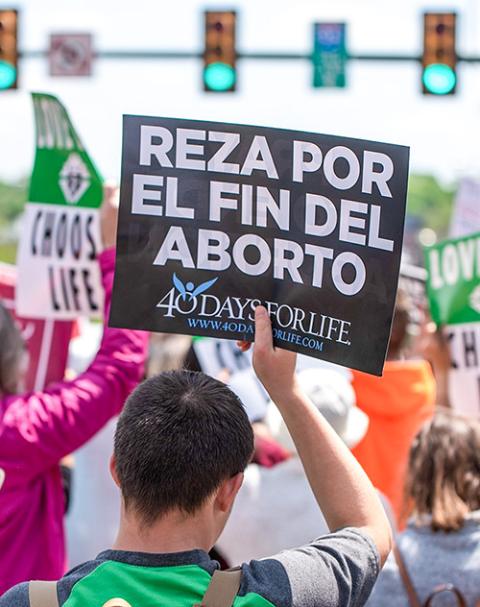
A participant in the Virginia March for Life in Richmond April 27, 2022, carries a sign in Spanish reading, "Pray for an end to abortion." (OSV News/The Catholic Virginian/Michael Mickle)
"That's definitely a disadvantage," Caruso said. "We're trying to overcome that with very robust efforts in both of our dioceses."
Morris told NCR that Missouri's 2024 ballot measure that enshrined abortion rights in the state constitution resulted in several laws that regulated abortion being declared unconstitutional.
"The other thing it did was in giving this broad right to reproductive healthcare and reproductive freedom, it also prohibited our legislature from establishing any new set of regulations that would interfere with this right to reproductive healthcare," Morris said.
A poll conducted in September by SLU/YouGov of likely Missouri voters shows support and opposition for Amendment 3 are neck and neck. The poll shows 43% of voters support the initiative while 44% oppose it, with 13% of voters undecided.
That the polling is that close in Missouri has Morris feeling "cautiously optimistic," especially considering that the political action committee spearheading the campaign against the measure has raised more than three times as much money as the campaign supporting the amendment. Morris also noted that the 2024 amendment passed by less than 3 percentage points.
"We were very close," he said. "I think our side was outspent 10 to one. I'm not one for moral victories, especially in situations like this, but it was somewhat positive that in a climate where these abortion amendments had not really been going in our favor nationwide, it passed by a very narrow vote."