(Dreamstime/Yuri Arcurs)
by George Cassidy Payne
Join the Conversation
Send your thoughts to Letters to the Editor. Learn more
Amanda Derington, a licensed therapist based in Kansas, was exhausted. For hours, she had sat with a client cycling through fear and agitation. The woman believed people were following her. She spoke in fragmented bursts and struggled to make even simple decisions.
Stepping outside to move her car, Derington, who is Catholic, felt something shift. A sudden awareness came over her: a sense that she was actually ministering to Jesus in that person, which reordered everything. She returned to the room steadier, more patient, able to continue the work.
Across the United States, mental health challenges are mounting. Nearly one in five adults — about 23% — experienced a diagnosable mental illness in the past year, and more than 49,000 people died by suicide in 2023, according to the Centers for Disease Control and Prevention.
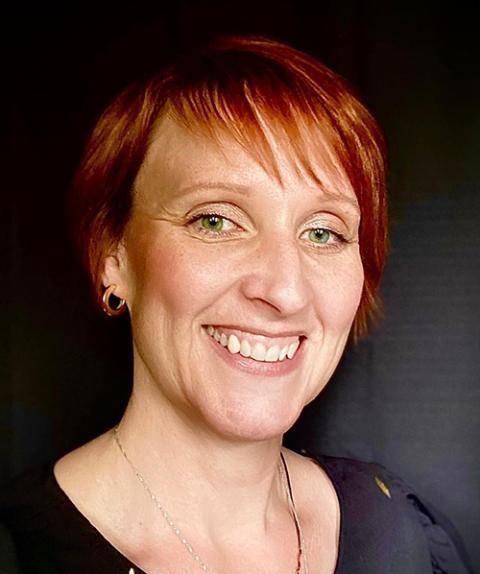
Amanda Derington, a licensed therapist based in Kansas (Courtesy of Amanda Derington)
Every day, Americans search for support amid long wait lists and a system stretched thin. Across both secular and faith-based settings, therapists are working to meet that need. For Mental Health Awareness Month in May, National Catholic Reporter spoke with several Catholic clinicians to understand their approach.
What emerged was a particular emphasis: accompaniment, careful discernment around spiritual language, and a commitment to seeing clients as whole persons shaped by relationships, meaning and sometimes moral and spiritual struggles.
Many people seeking care want their spiritual lives acknowledged. Studies show that more than half of patients in psychiatric or outpatient settings would like spirituality to be addressed in therapy. Catholic counseling responds by integrating clinical skill with attentiveness to the spiritual dimension of suffering.
This approach has deep roots. Nearly a century ago, figures such as the Rev. Anton Boisen, a Presbyterian minister who was an early leader in clinical pastoral work and hospital chaplaincy, emphasized care for the whole person — mind, body and spirit. By the mid-20th century, Catholic universities and seminaries were training professionals in psychology and social work with attention to both ethical and spiritual dimensions. Today's practitioners inherit that tradition.
'Questions of meaning, transcendence, spirituality — these are human experiences. People bring them into counseling whether we acknowledge them or not.'
—Timothy Powers
For some, this integration begins in the classroom. At St. John Fisher University in Rochester, New York, visiting psychology instructor Timothy Powers explores how spiritual questions can be responsibly woven into counselor education. He sees spirituality as inseparable from mental health.
"Questions of meaning, transcendence, spirituality — these are human experiences," he said. "People bring them into counseling whether we acknowledge them or not."
But he is also clear about the risks, saying: "Religion can also be traumatic. Therapists have to navigate both realities carefully."
Advertisement
Catholic clinicians work within a tension. They practice evidence-based care while engaging the moral and spiritual questions clients often carry. According to Powers, faith can console, but it can also complicate. The task is to discern when to name spiritual realities, when to hold back and how to ensure belief supports healing rather than deepening harm.
Powers traces this sensitivity to experience. "There have been countless moments sitting with people in pain," he said. "It helps me recognize where the divine is present, not only in moments of joy but also in desolation. Meaning is still unfolding there."
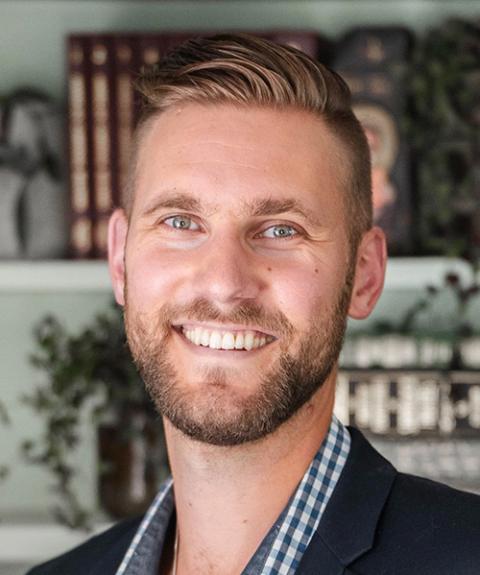
Clark Jaman, a counselor in Saskatoon, Canada (Courtesy of Clark Jaman)
He has also seen how spiritual frameworks can wound people when they are misapplied, citing clients who interpret depression as moral failure, trauma survivors who have been urged toward premature forgiveness, and individuals who view suffering as punishment.
"My work hasn't been religious in an institutional sense," he said. "But there is an all-benevolent presence that shows up. It doesn't bypass suffering. It supports change."
Chris Nowak, a therapist with the Diocese of Fort Wayne-South Bend, Indiana, describes her approach in similar terms. "My formation gave me permission to stay," she said. "Not to rush resolution, but to honor suffering. Pain doesn't automatically disappear. But when it's held in a safe space, it can begin to guide healing."
This tradition has a name: accompaniment. Rooted in the Latin compati — to suffer with — it resists the instinct to fix. Instead, it asks the therapist to remain long enough for another person to feel fully seen.
Clark Jaman, a counselor in Saskatoon, Canada, put it this way: "Our instinct is to give advice, but advice can short-circuit deeper discovery. When someone experiences genuine empathy and presence, they begin to uncover clarity and strength they couldn't access before."
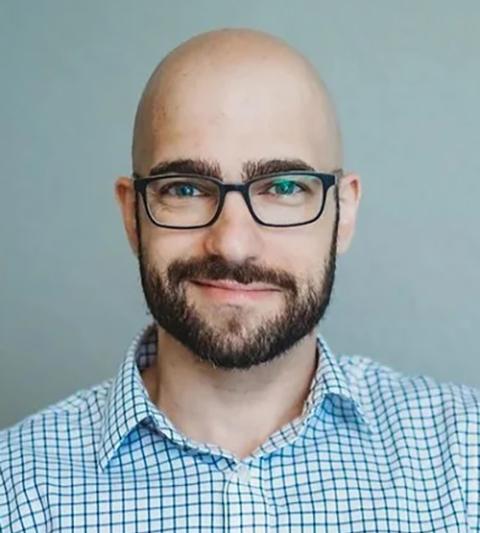
Andrew Koumis of Alpine Family Counseling in Colorado Springs (Courtesy of Andrew Koumis)
For Derington, accompaniment can take on an explicitly theological dimension. Her experience with the distressed client did not replace clinical judgment; it transformed her posture within it. The task remained the same — stabilize, support — but the orientation shifted from frustration to encounter.
Several clinicians also spoke about mercy. For Andrew Koumis, who leads Alpine Family Counseling in Colorado Springs, mercy is not abstract. It is a way of seeing that clients should not be reduced to what they do at their worst. They are wounded but capable of healing.
"Addiction, anxiety, depression, trauma — they all point to wounds," he said. "We tend to focus on behavior, but the suffering underneath is what matters. Healing begins when we locate the wound."
For some clinicians, faith is explicit. For others, it remains in the background. Wiljar Schanck, a counselor and doctoral candidate at the University of Rochester, rarely names her faith directly in sessions but she said it shapes her understanding that each person carries dignity and a story worth honoring.
'Faith, at its best, doesn't speak louder than the client. It listens more deeply.'
—Wiljar Schanck
She views her role was not to direct but to remain present long enough for something to unfold.

Wiljar Schanck, a counselor and doctoral candidate at the University of Rochester (Courtesy of Wiljar Shanck)
That attentiveness reflects a broader theological current. Annie Selak, a Catholic feminist theologian at Georgetown University in Washington, D.C., said that listening — especially to those on the margins — is essential to the church's witness. In practice, this can mean training parish staff in mental health awareness or reimagining the good Samaritan as a model of accountable, compassionate care.
This also requires confronting institutional failures. For example, she said, listening to survivors of clergy sexual abuse reveals a moral imperative to stand with those harmed, even when institutional responses fall short.
"In cases like this," Selak says, "the call of justice is clear."
For Powers, therapy is less about providing solutions and more about "helping people look for them, encouraging small steps." In a system that often rewards efficiency, this approach can seem slow. It resists quick answers. It makes room for uncertainty and asks the therapist to stay.
Or as Schanck put it: "Faith, at its best, doesn't speak louder than the client. It listens more deeply."
And that listening, these therapists stress, allows something, often healing, to begin.