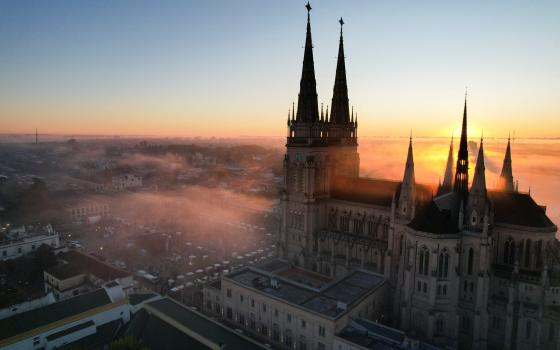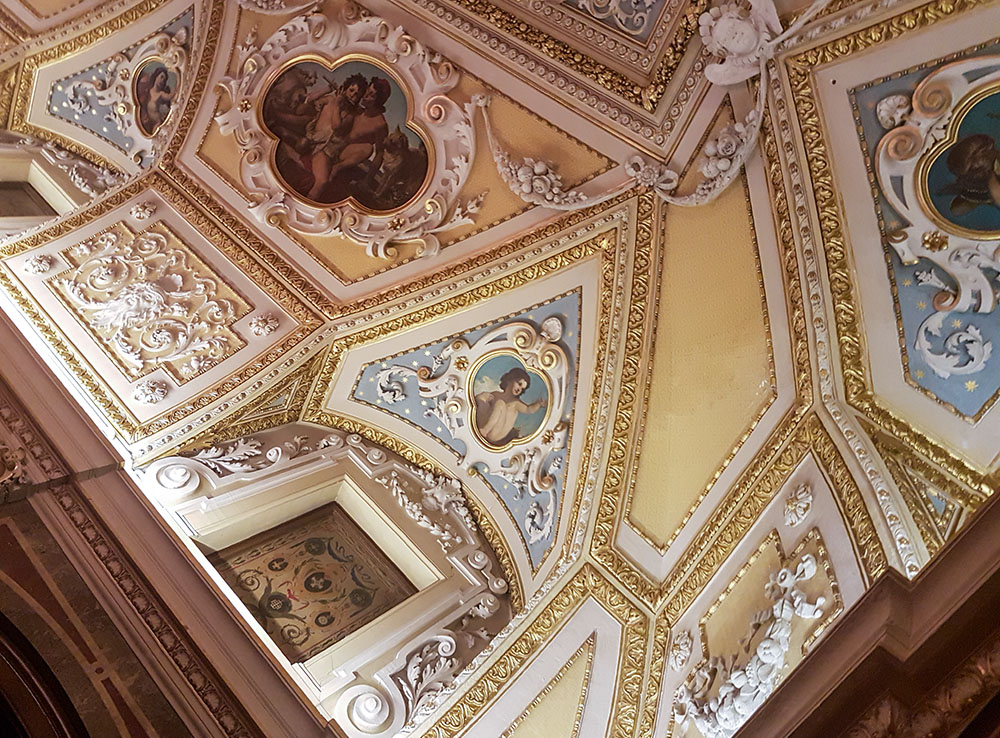
An ornamental ceiling with frescoes is seen in the interior of the Puchberg Castle in Wels, Austria, in a file photo. The castle was recently the site of a Catholic symposium on "Shaping Synodality in Europe." (Wikimedia Commons/Dieter Zoubek)
by Jonathan Luxmoore
Join the Conversation
Send your thoughts to Letters to the Editor. Learn more
When Catholic leaders from across Europe met in mid-September to discuss "Shaping Synodality in Europe," a consensus quickly emerged that the church's new guiding principle was here to stay.
But there were questions about how synodality can best be applied — in a continent of differing societies, cultures, languages and histories.
"This meeting was extremely important in bringing all of Europe together," said Myriam Wijlens, a Dutch canon law professor at the German University of Erfurt and a consultor to the Synod of Bishops' general secretariat in Rome.
"It confirms a real dialogue is underway, particularly between Catholics in Eastern and Western Europe, who are now gaining trust by encountering each other's pains and anxieties. This deepening in mutual understanding needs to continue," she told NCR.
The symposium, held Sept. 14-17 at the Puchberg Castle in Wels, Austria, and hosted by Catholic Private University of Linz, Austria, was attended by representatives of 29 bishops' conferences. Organizers described it as marking a milestone in implementing the synodal process started by Pope Francis. It produced the workings of a European "roadmap" for the next synodal assembly in Rome in 2028, addressing the continent's "wounds and challenges," while also focusing on empowerment and transformation.
Advertisement
"As a church, we too often give answers to questions no one has asked — we are being called out of our self-preoccupation and back into the reality of people's lives," explained pastoral theologian Klara-Antonia Csiszar, the Austrian convener. "Europe isn't only a geographical space. It's a space of condensed experience, of war and fear, violence and flight, polarization and exhaustion, loss of trust, loneliness, abuse and religious estrangement. But Europe is also a space of great longing — for peace, community, dignity, justice and hope," Csiszar said.
Keynote speakers included Fr. Tomas Halik, the Czech Templeton Prize laureate; Jesuit theologian Fr. Christoph Theobald; and the Vienna-based sociologist of religion Fr. Paul Zulehner.
The symposium's 21 roundtables, modeled on Rome's 2021-24 Synod on Synodality, engaged in "conversations in the Spirit" and submitted reports on "consultation, responsibility, decision-making and accountability" that will be presented to church leaders for further "evaluation and discernment."
The symposium was sponsored by the Swiss-based Council of Bishops’ Conferences of Europe, whose president, Lithuanian Archbishop Gintaras Grusas, has strongly backed synodality, as have the vice presidents, Cardinal Jean-Claude Hollerich of Luxembourg, and Cardinal Ladislav Nemet of Serbia, who urged the church in his symposium address to overcome its "fear of democracy." If this gave the Linz gathering a formal status, it also highlighted its Europe-wide reach.
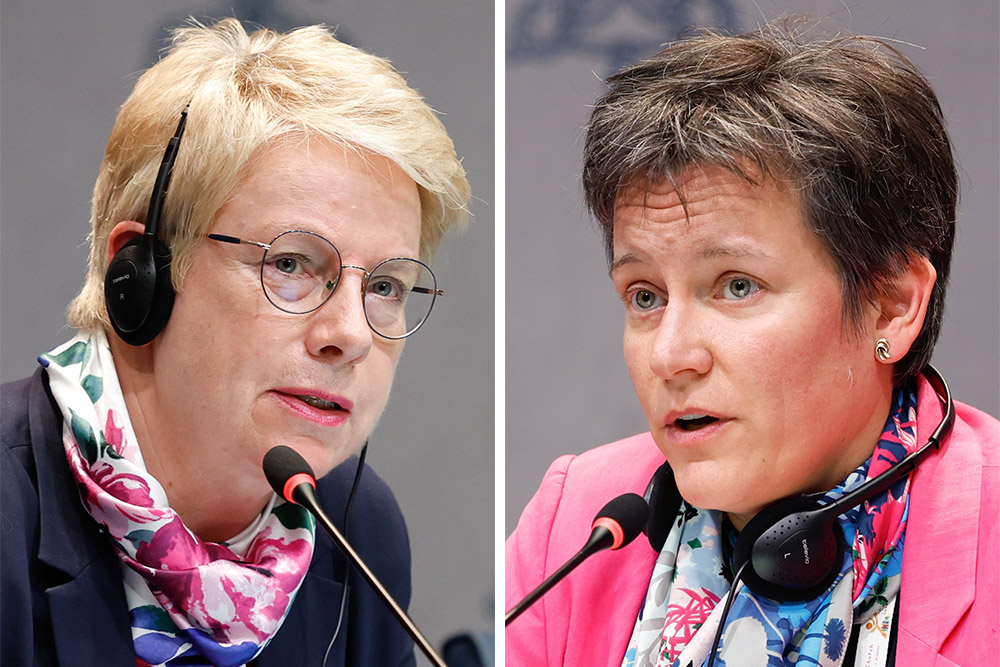
Myriam Wijlens, left, and Klara-Antonia Csiszar are photographed at different press briefings for the Synod of Bishops at the Vatican in October 2024. (CNS photos/Lola Gomez)
"Rather than just caring for its own internal affairs, the church is signalling to wider society that it's possible to set out a shared vision of where we stand and what we need to do," said Wijlens, who's also served since 2008 with the Vatican's Dicastery for Promoting Christian Unity.
"The Catholic Church is the only institution in Europe which brings people together culturally and spiritually, giving it a unique opportunity to express the continent's diversity."
Support for synodality has been particularly strong in Germany, where Catholic groups have urged the ordination of women deacons and a rethink on priestly celibacy and homosexuality, with several of the church's 27 dioceses and archdioceses defying Vatican instructions by authorizing same-sex blessing ceremonies. A six-year "Synodal Way" reform process ended in Germany last January, and was expected to give way this November to a permanent Synodal Council, mixing bishops with lay and clergy representatives.
While the German council still awaits Vatican approval, the synodality principle has been questioned by more conservative bishops' conferences, particularly in Poland and Eastern Europe, who say it lacks clear definition and risks undermining episcopal authority.
It was vigorously endorsed at the Linz symposium, however, by the German bishops' president, Bishop Heiner Wilmer, and his Austrian counterpart, Archbishop Franz Lackner. Lay Catholic movements in both countries have continued to demand change.
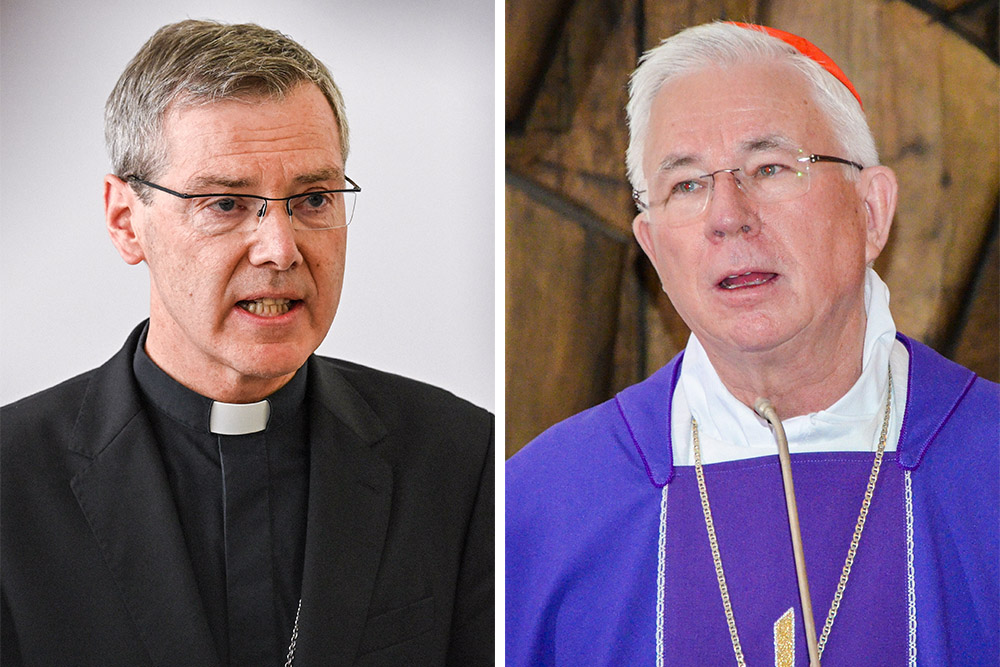
Left: Bishop Heiner Wilmer of Hildesheim, Germany (OSV News/KNA/Harald Oppitz); right: Archbishop Franz Lackner of Salzburg, Austria (CNS/kathpress via KNA/Paul Wuthe)
In June, the Central Committee of German Catholics rejected a Vatican statement barring laypeople from preaching at Mass; the committee insisted the ruling contradicted the synodality spirit.
This September, the German We are Church movement warned that lay patience with "traditional hierarchical structures" had now "run out," while Austria's lay-led Catholic Action network demanded "synodal assemblies" in each diocese.
Wijlens said continuing encounters will be needed to give "synodality" a fuller depth — just as key concepts from papal infallibility to collegiality required gradual discernment and practical application.
With most European bishops paying at least lip service to synodality, Csiszar said the new European road map will set out suggestions for a "renewed culture of ministry and service" and for "listening, enabling, transparency and accountability," while looking at "the puzzle of structures and culture of leadership" and offering new forms of "vocational coaching."
It will also advocate a "European church forum for interpreting the signs of the times," where Catholics and non-Catholics at all levels can "encounter one another."
"The church is not a museum, protecting objects behind glass," Csiszar told the symposium.
"Nor is it a finished product. The church is an event, happening day by day in the life people share, in their relationship to the world and to Christ."
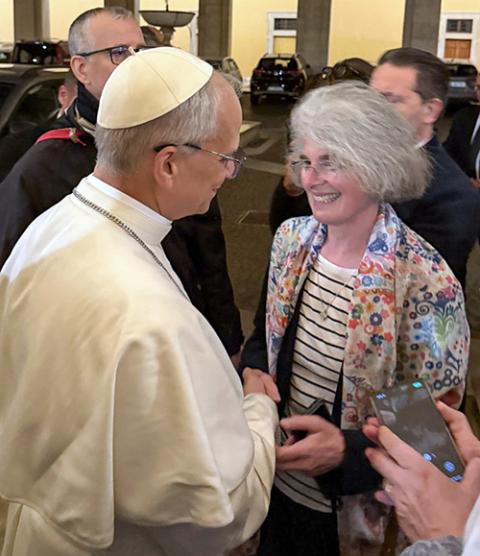
Xavière Sr. Nathalie Becquart, undersecretary of the Synod of Bishops, greets the newly elected Pope Leo XIV in Vatican City, May 8, 2025. (OSV News/Courtesy of Nathalie Becquart)
How much weight these European insights will carry at the Ecclesial Assembly in Rome in October 2028 remains to be seen.
Xavière Sr. Nathalie Becquart, a French theologian working at the synod's general secretariat, assured the Linz symposium that the church's synodal path was "entering a new phase" under Pope Leo XIV, who relies on it to foster peace and "serve the church's missionary renewal."
Wijlens, similarly, remains optimistic.
She sees Europe as resembling a bouquet of flowers, a place of infinite variety in which no one form or color should dominate others.
And she thinks the synodal process should be allowed to evolve, enabling the people of God to "learn by doing" across countries and continents.
"Far from following some fixed formula, synodality is developing as we go along, guided by the Holy Spirit," Wijlens told NCR.
"Although it took a few people to begin this process, everyone is now invited to participate in finding common themes. And if they feel it isn't going in the right direction, they should also come forward and talk about it."