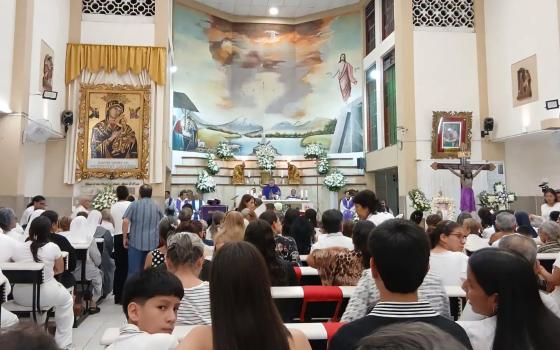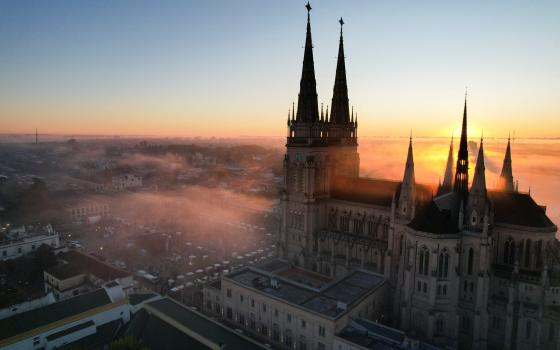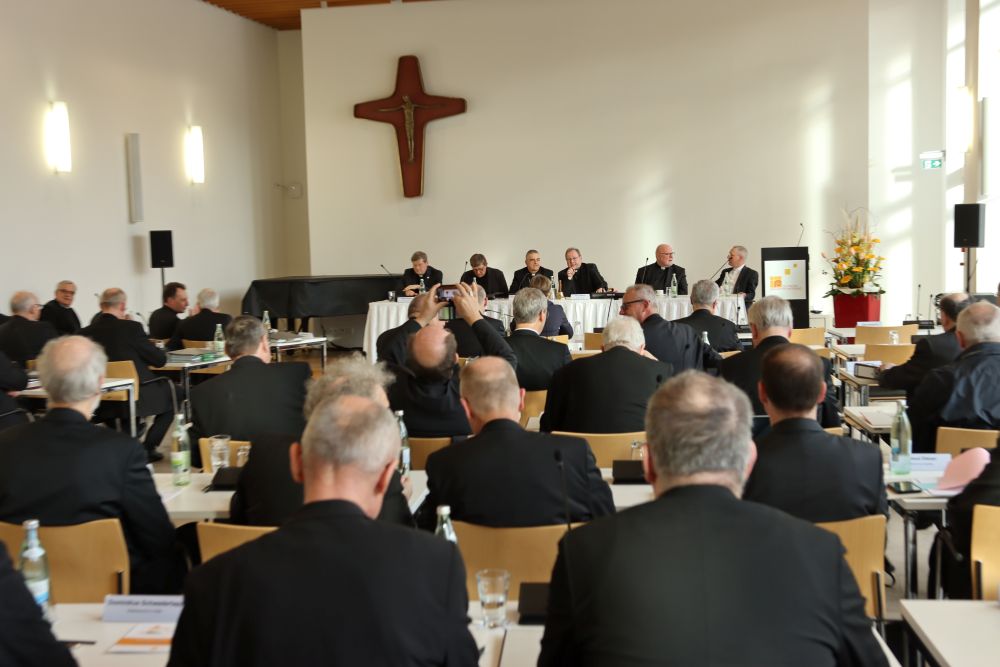
Bishops gather at the opening of the spring plenary assembly of the German Bishops' Conference in Würzburg, Germany, Feb. 23, 2026. (OSV News/Courtesy German bishops' conference)

Join the Conversation
Send your thoughts to Letters to the Editor. Learn more
Preaching the homily during the celebration of Mass is "intrinsically linked to the proclamation of the Gospel" and is therefore restricted to ordained priests and deacons, the Vatican has said.
In a press release published June 23, the Dicastery for Divine Worship and the Discipline of the Sacraments announced its rejection of a request made by the German bishops' conference to allow "in exceptional circumstances, a duly commissioned lay member of the faithful to preach in place of the homily during the celebration of the Eucharist."
Though not directed explicitly at women, the ruling denies women the capacity to preach the homily at Mass by extension since the Catholic Church does not ordain women as priests or deacons.
Though acknowledging "the pastoral concerns that inspired the request," the dicastery wrote that "the reservation of the homily to a priest or deacon is not a merely disciplinary norm but derives from the very nature of the liturgy," and therefore the church norms that only allow priests to preach at Mass cannot be altered.
In March, Germany's bishops requested Vatican permission to allow lay preaching after the reading of the Gospel during Mass. In a letter to the dicastery, Bishop Heiner Wilmer of Münster, president of the German bishops' conference, stated that lay preaching had already been practiced in Germany in exceptional cases since 1988.
Germany's 1988 guidelines for preaching, however, stated that a homily delivered by a layperson is to be delivered at the beginning of a service and before the Gospel reading takes place; the German bishops requested approval for a revised order of preaching which would allow a layperson to preach a homily after the Gospel reading.
In his response to the request, Cardinal Arthur Roche, prefect of the dicastery, wrote that "it is not apparent that the current situation constitutes such an emergency or a genuine pastoral need that would justify a deviation from a norm so closely linked to the nature of the liturgical act."
"This responsibility of the ordained minister is rooted in the very nature of the sacred liturgy itself, which is not merely an occasion for instruction but the privileged place where the faithful are drawn into the mystery of redemption," he wrote.
The 1983 Code of Canon Law states that, "Among the forms of preaching, the homily, which is part of the liturgy itself and is reserved to a priest or deacon, is preeminent."
The Vatican's rejection is the latest source of tension between Rome and Germany's bishops which Pope Leo XIV has only slightly waded into.
Asked after his Africa trip about the decision by Cardinal Reinhard Marx of Munich and Freising to publish guidelines for the blessing of same-sex couples in his diocese, the pope said the Vatican had spoken with German bishops on the issue and stated "the Holy See has made it clear that we do not agree with the formalized blessing of couples, in this case, homosexual couples."
The National Catholic Reporter's Rome Bureau is made possible in part by the generosity of Joan and Bob McGrath.
Advertisement