
Religion News Service
Join the Conversation
Send your thoughts to Letters to the Editor. Learn more
This election cycle is shaping up to be an unusually faith-fueled affair.
The shift has been especially striking on the Democratic side, where 12 pastors, former pastors and seminarians ran for Congress this year, with eight eventually emerging as Democratic nominees. Even more surprising: Most of their races have turned out to be unexpectedly competitive, with faith-forward Democrats mustering real challenges for seats long held by Republicans.
Meanwhile, Republicans have also fielded some clergy as candidates, albeit fewer than Democrats. The result is a series of closely watched contests where religion has become a major theme — and, often, a point of debate.
Here are 11 races featuring faith leaders that Religion News Service is watching between now and Election Day.
Kansas U.S. Senate race
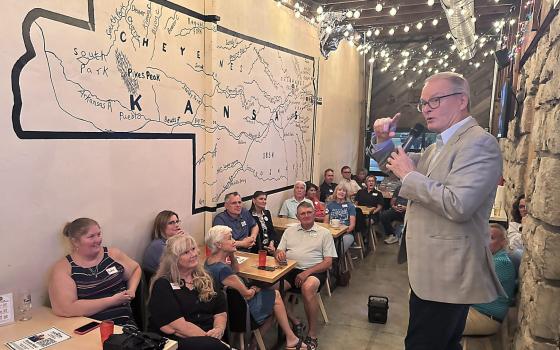
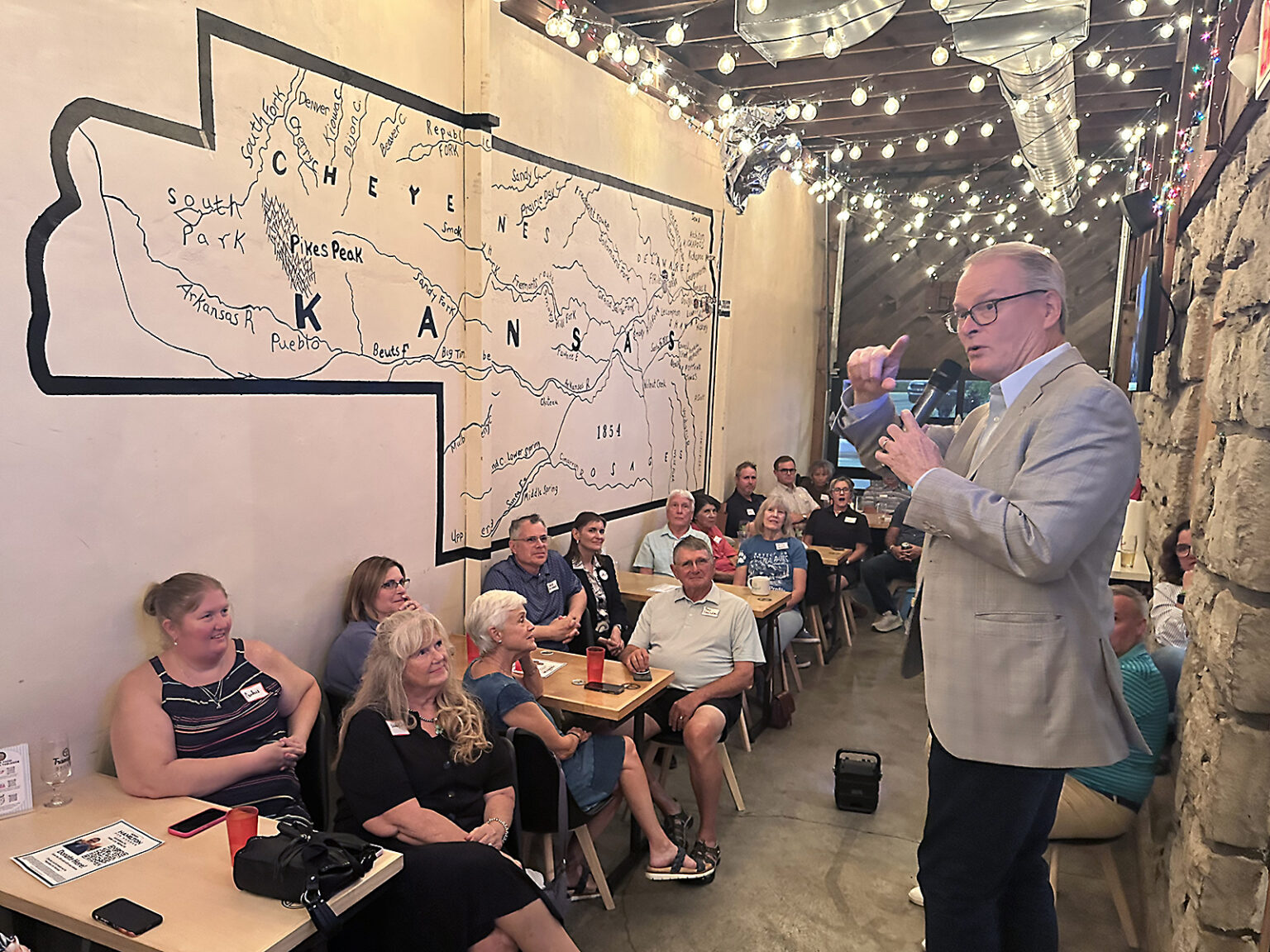
Could Kansas elect its first Democratic senator in nearly a century this year? That's the question surrounding the Rev. Adam Hamilton, the soft-spoken pastor of a United Methodist megachurch near Kansas City who made headlines in May when he launched his campaign for U.S. Senate. After cruising through the Democratic primary, Hamilton — whose church can attract north of 20,000 worshippers on an average Sunday — has captured national attention for emerging as a serious challenger to the state's incumbent Republican, Sen. Roger Marshall.
Hamilton's rise has triggered fierce pushback from Republicans, however. Attack ads portraying him as too "woke" for Kansas have been aired widely in the state, although Hamilton has argued the TV spots take his past sermons out of context. Both Vice President JD Vance and President Donald Trump have publicly attacked Hamilton's faith and religious credentials, with the president writing in a Truth Social post, "I wouldn't want Adam Hamilton being my pastor."
Yet Hamilton's U.S. Senate bid has already pushed conservatives to divert funds away from other races to Kansas, a deeply red state. And recent polls still show a close race: an Emerson College poll conducted in mid-September showed Hamilton with a slight edge over Marshall (45% to 43%), and a New York Times/Siena University poll conducted a few days later showed the two men tied (45%), with libertarian candidate David Graham a distant third (5%).
As a result, the Cook Political Report has changed its rating of the race three times in recent months, shifting from "Solidly Republican" to a status once thought unthinkable in Kansas: a toss-up.
Texas U.S. Senate race
When Texas State Sen. James Talarico began his U.S. Senate bid last September, his campaign launch video began with a shot of the candidate standing in front of a church. He then delivered remarks featuring multiple references to Christian Scripture and closing with a direct allusion to Jesus: "It's time to start flipping tables."
Since then, the campaign has leaned heavily on the faith of Talarico, a Presbyterian Church (USA) seminarian. After winning a hard-fought primary, he has offered Texas Democrats what appears to be their best chance in decades of electing one of their own to the U.S. Senate. His Republican opponent, Texas Attorney General Ken Paxton, has struggled to disentangle himself from a series of old and new scandals, including past allegations of fraud and bribery. Paxton has also received a tepid response from supporters such as President Donald Trump, who has made negative comments about the attorney general's appearance and demeanor even as he endorsed the Texas Republican.
Even so, Republican leaders and their religious allies have railed against Talarico, with Dallas megachurch pastor Robert Jeffress insisting Talarico is "not a Christian" and Paxton himself claiming his opponent espouses views that are "literally the opposite of Christianity." Some have highlighted Talarico's views on LGBTQ+ people and gender, such as his declaration that "God is nonbinary," with a National Republican Senatorial Committee official accusing him of "twisting Christian beliefs." Talarico, meanwhile, has distanced himself from some of his past remarks and said he opposes transgender student-athletes competing in girls' sports "if it endangers safety or fairness" — a position Talarico insists he's held for years, but is widely seen as a shift.
Talarico was also the subject of conservative speculation about a recent 12-day absence from the campaign trail, which his campaign has said was the result of a bad bout of flu.
Polls have repeatedly shown Talarico with an advantage over Paxton, with a new ReconMR—Siena Research Institute poll released on Tuesday (Oct. 13) showing the Presbyterian with a four-point lead (48%) over Paxton (44%). That's still within the margin of error, however, and the race may be tightening going into Election Day: In September, a New York Times/Siena University poll indicated a six-point lead for the Democrat (51% vs. 45%), and a September poll conducted by YouGov and the University of Massachusetts reported both candidates with 45% support.
Advertisement
Iowa's third congressional district
Rev. Sarah Trone Garriott, a state senator and ordained minister in the Evangelical Lutheran Church in America, is vying to unseat incumbent Republican Zach Nunn. Garriott, a onetime hospital chaplain who still preaches regularly, has long made faith a part of her political persona, and her latest campaign is no exception: Several of the Democrat's ads reference her experience as a chaplain and pastor.
Her campaign against Nunn has proven especially competitive, quickly becoming one of the most-watched races in the country. For her part, Garriott has focused on economic issues while on the stump, noting that Nunn has repeatedly backed the war in Iran, which has spiked gas prices. But like other clergy running as Democrats, Republicans have attacked Garriott's faith, referring to her as a "Pastor in Name Only" and falsely accusing her of officiating a Satanist wedding. (Garriott has spoken publicly about participating in a wedding for people who self-identified as Satanists, but says she did not officiate the wedding and that the service was conducted using Christian Scripture and liturgy.)
There are no recent publicly available polls in the race. But this month, Cook Political Report shifted its rating of the contest from "toss-up" to "Lean Democrat."
Iowa's second congressional district
The Rev. Lindsay James, an Iowa state representative and ordained minister in the Presbyterian Church (USA), is locked in a tight electoral battle with Republican Joe Mitchell over Iowa's second congressional district.
James, a former college campus chaplain, has incorporated religion into her ads and videos — including one in which she wears a clerical collar, and another that appears to feature James speaking from a church. Mitchell, who has attended evangelical churches, has sought to dismiss James' religious credentials, arguing she is not a "real" pastor and doesn't "profess the true gospel of Jesus Christ."
The district has grown increasingly conservative since 2020, when a Republican eeked out a victory over a Democrat by just six votes. There are no recent publicly available polls in the race, but Cook Political Report shifted its rating of the contest this month from "lean Republican" to "toss-up."
Texas' 30th congressional district
No matter how the close races turn out, Democrats are already expecting to send at least one additional ordained minister to Congress next year: the Rev. Freddie Haynes III, a Progressive National Baptist pastor who runs a historically Black megachurch in Dallas, Texas. As the Democratic nominee seeking to represent the state's deep-blue 30th congressional district — the seat previously filled by Jasmine Crockett, who campaigned for the state's U.S. Senate seat before losing to Talarico — a victory over his Republican opponent, Everett Jackson, is likely.
Three incumbents likely to keep seats
The raw number of pastors, former pastors and seminarians running for Congress this year is unusual, but they're hardly the first. Long-term incumbent Republican Rep. Mark Harris, who pastors a Southern Baptist church in addition to serving as a congressman for North Carolina's 8th district, is expected to keep his seat. So, too, is former pastor Rep. Tim Walberg, an evangelical Christian and Republican who serves Michigan's fifth district.
Rep. Emanuel Cleaver, a United Methodist minister and longtime Democratic congressman from Missouri's fifth district, is also now expected to keep his seat, thanks to a late September decision by the U.S. Supreme Court striking down Missouri's redistricting plans. Cleaver's district was initially altered in ways that benefited Republicans following a GOP-led redistricting effort in the state, but the Supreme Court ruling required Missouri to revert to older boundaries for now.
The long shots
Two faith-forward Democrats are fielding long-shot campaigns to unseat Republicans in deep-red districts: Pastor Robb Ryerse, a progressive evangelical pastor running in Arkansas' third congressional district, and Anna Golladay, a former United Methodist pastor running for Tennessee's similarly conservative third congressional district. Both races are currently categorized as "Solidly Republican" by Cook Political Report.
Meanwhile, Pastor John Elleson, a Republican who leads Lakewood Chapel church outside Chicago, is running an aspirational effort to win Illinois' 9th congressional district. His path to victory is difficult: The district — long represented by Rep. Jan Schakowsky, who is not seeking reelection — hasn't elected a Republican since the 1940s.