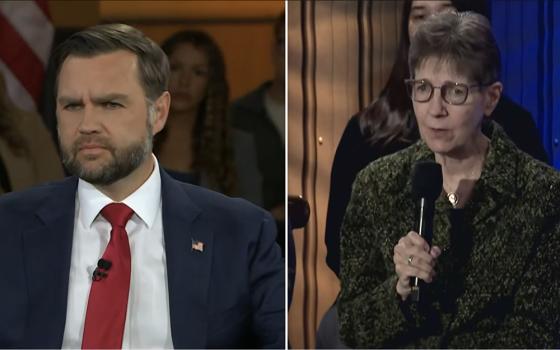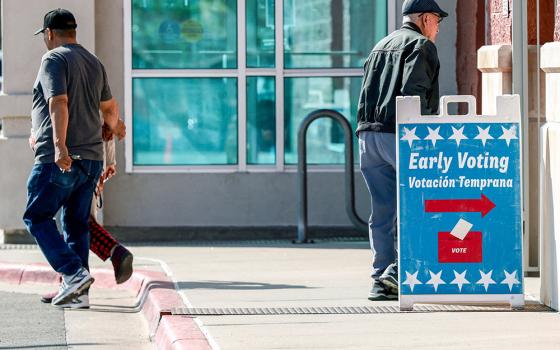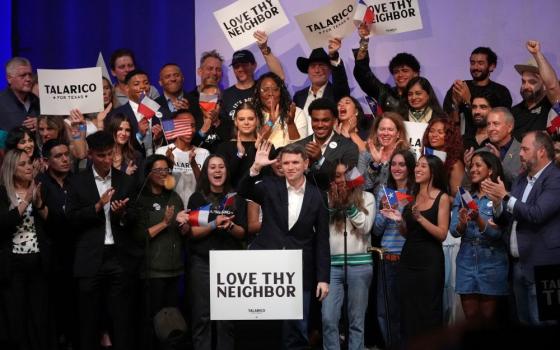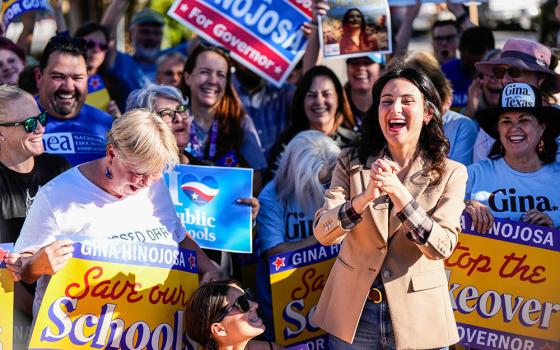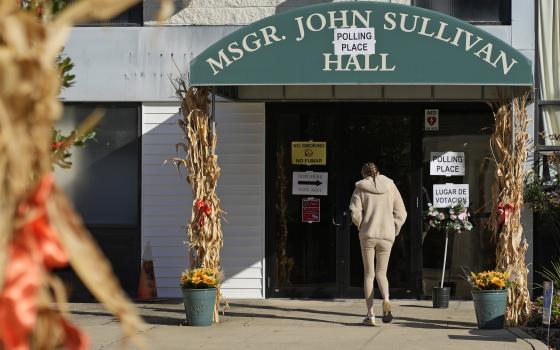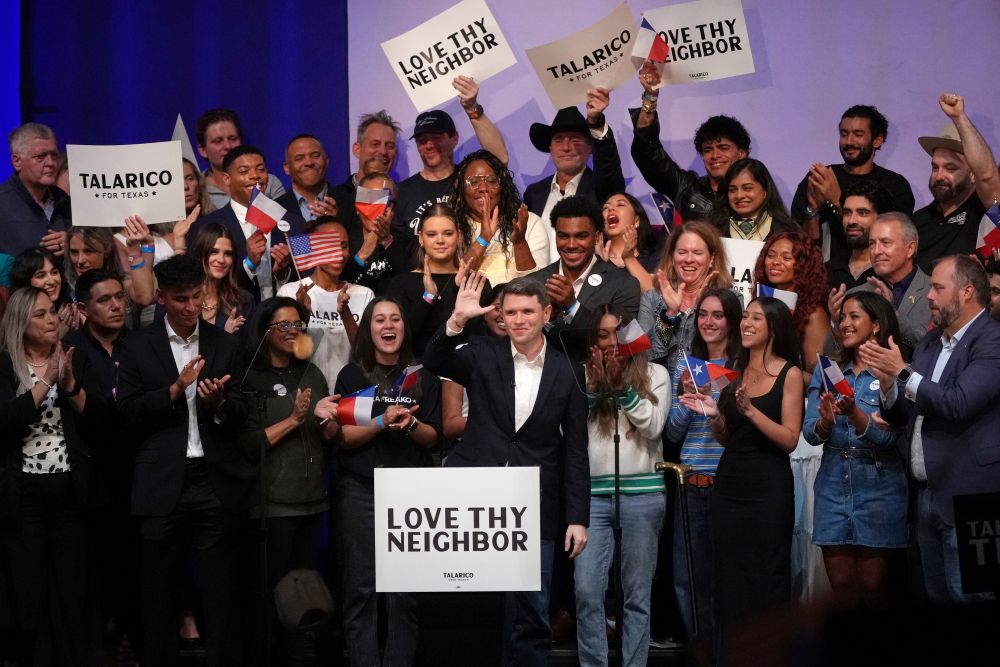
Democratic Senate candidate Texas state Rep. James Talarico concludes a speech at an election night event in Austin, Texas, Tuesday, Nov. 3, 2026. He was elected to the U.S. Senate. (AP/Eric Gay)

by Brian Fraga
Staff Reporter
Join the Conversation
Send your thoughts to Letters to the Editor. Learn more
The U.S. Catholic bishops will be operating in a new political reality when they convene later this month for their fall plenary assembly in Baltimore.
The nation's voters sent an overwhelming message on Nov. 3, repudiating President Donald Trump's administration in a landslide midterm election that saw Democrats win control of both chambers of Congress, according to multiple projections.
Those results — in which Democrats picked up Senate seats in key swing states and in typically strong Republican strongholds like Texas, South Carolina, Kansas and Iowa — will have significant ramifications for Trump, his policies and the GOP's electoral prospects in 2028.
The political landscape moving forward will also present challenges for the bishops, who will have to shift gears and find a way to work with a new generation of Democrats if the bishops hope to maintain any influence and relevance on Capitol Hill, several analysts told National Catholic Reporter. The bishops will meet Nov. 16-19.
"Just as the midterms unraveled the Republican electoral coalition and possibly forged a new Democratic one, they represented a dead end for the culture warrior approach to Catholic politics favored by the [U.S. Conference of Catholic Bishops] since the late 1990s," said Daniel Rober, a Catholic studies professor at Sacred Heart University in Fairfield, Connecticut.
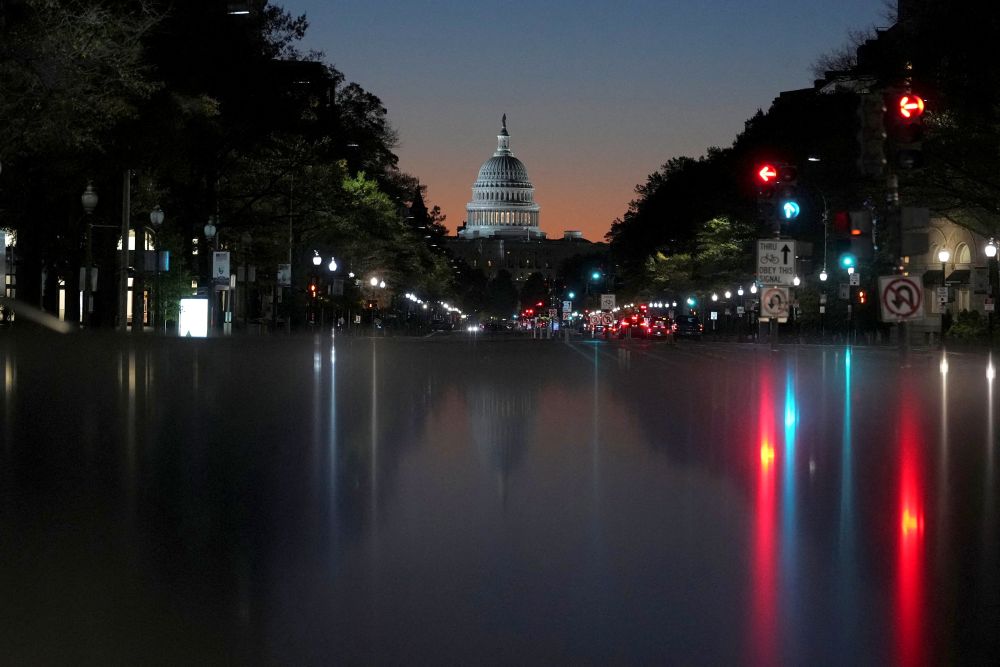
The sun rises behind the U.S. Capitol in Washington Nov. 4, 2026, the morning after the U.S. midterm elections. Democrats won control of both chambers of Congress. (OSV News/Reuters/Eric Lee)
Anthea Butler, a fellow at the Rothermere American Institute at Oxford University, also said the bishops need to jettison the culture wars in light of the midterms, adding that they have been "led astray" by their political alliances with fundamentalist evangelical Christians.
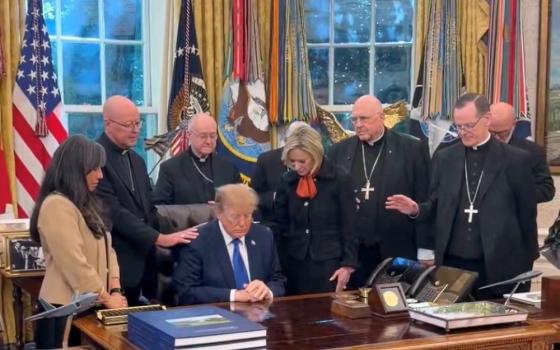
"They need to turn away from authoritarianism," said Butler, who also criticized a group of 12 Catholic bishops who were recorded praying over Trump in the Oval Office during a White House visit less than two weeks before the elections.
"Why would anyone trust any of them?" Butler said. "The American bishops look weak, ineffectual and they look like they're pawns of the Republican Party."
John Carr, who led the U.S. bishops conference's peace and justice office for years, said the image of the bishops praying and laying hands on Trump "should represent the end of an era, and make the case for a new kind of principled relationship with the Trump administration."
"The bishops are not chaplains for either political party or cheerleaders for any administration," Carr said. "They ought to be in fact champions of human dignity, which will require courage and persistence. One thing I would say to the bishops is to follow the lead of Pope Leo, who speaks clearly and respectfully to defend Catholic principles and human dignity wherever it is at risk."
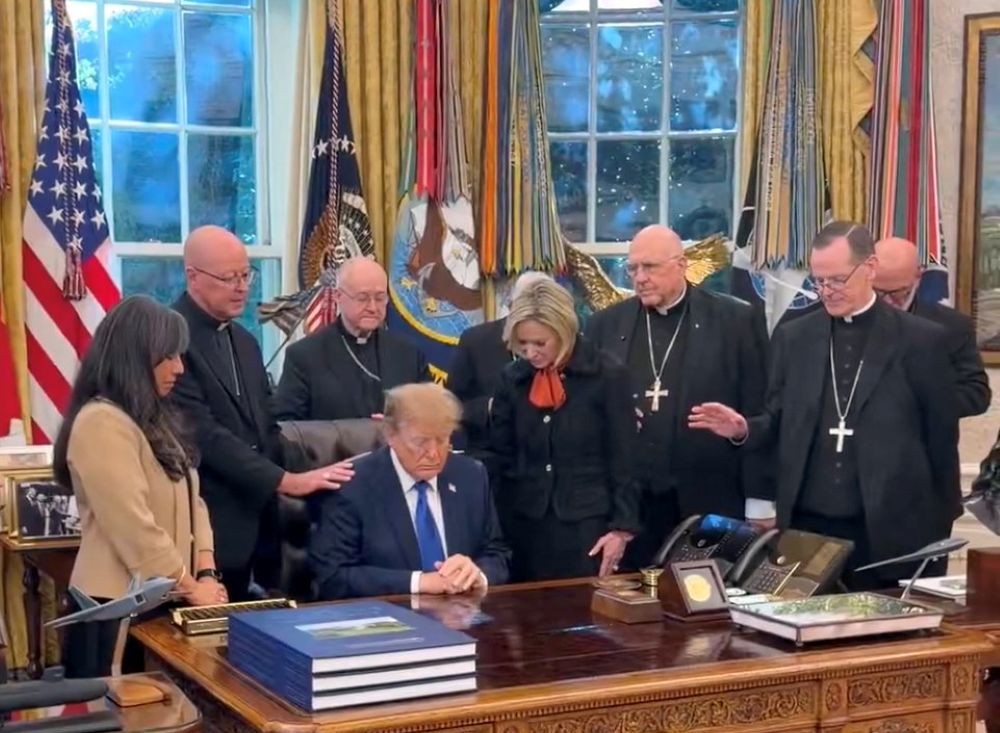
Denver Archbishop James Golka and a group of U.S. bishops pray over President Donald Trump in the Oval Office of the White House in Washington in a video posted on X Oct. 22, 2026, by the administration's communications staff. (OSV News screenshot/@MargoMartin47 on X)
In the weeks leading up to the midterms, the U.S. Conference of Catholic Bishops released videos from individual bishops urging voters to put their faith before their politics. On Nov. 4, the conference released a statement inviting Catholics to donate to the Catholic Campaign for Human Development, the bishops' domestic antipoverty program that for years has been vilified by right-wing Catholics.
The bishops will need to learn to engage new congressional Democrats who share many of their concerns about immigration and other social justice issues, but who speak the language of faith in a different key than old-line Catholic Democrats or Republican social conservatives.
"Pope Leo's popularity and appeal across a variety of social issues including especially things like AI safety and regulation should be front and center for those conversations," Rober said.
"They may also need to have some hard conversations about how the pro-life movement's focus on abortion restriction and alliances with Republicans have led it and them into dead ends," he said.
For years, the bishops conference has insisted, over the objections of a handful of prelates, on naming abortion as the "preeminent priority" in their political guidance to the nation's Catholics. That single-minded focus on abortion led the U.S. episcopate to be seen by many as being firmly in the Republican political camp.
"It used to be that the purists among the bishops would say, 'We can't say anything bad about the Republicans because we gotta get the Supreme Court changed,' " said Jesuit Fr. Tom Reese, a journalist who has covered the bishops conference for decades.
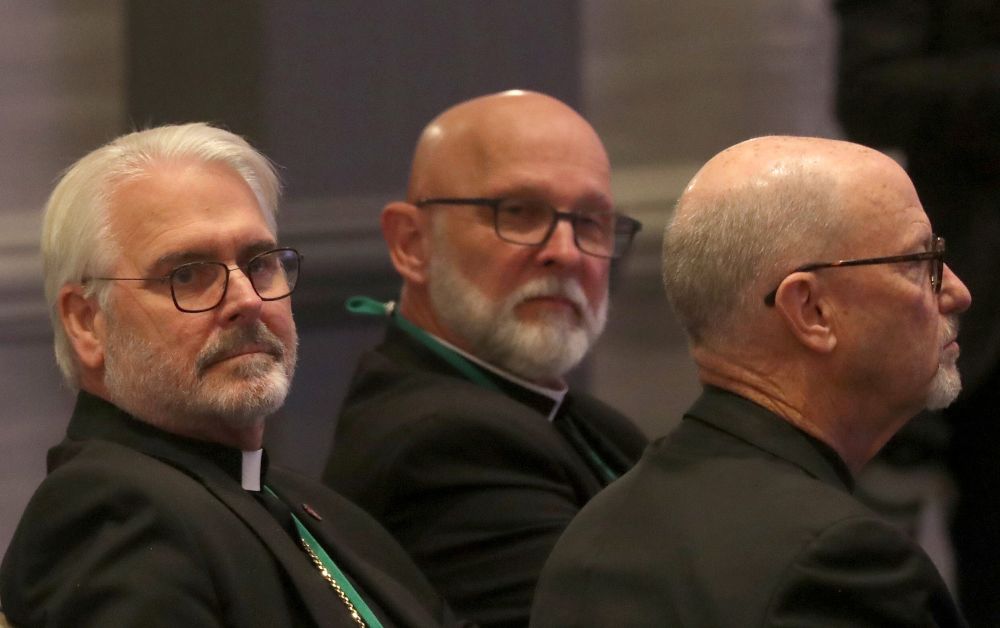
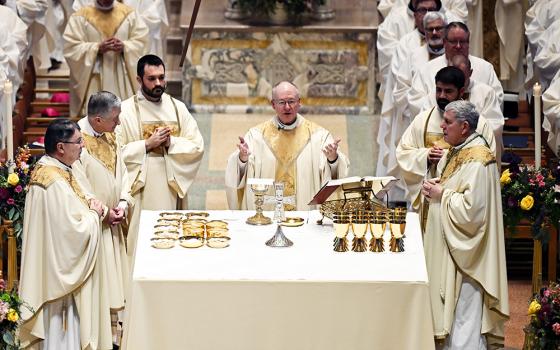
Archbishop Paul S. Coakley of Oklahoma City, left, looks on moments after being elected president of the U.S. Conference of Catholic Bishops Nov. 11, 2025. (OSV News/Bob Roller)
Since the U.S. Supreme Court overturned Roe v. Wade in 2022, Reese and other analysts do not see abortion having the same political salience it once did.
"The abortion issue is just not there anymore," Butler said.
Even Trump has tried to downplay abortion in recent years, framing it as now being an issue for the states to deal with. His administration has also not shown the political appetite to crack down on abortion medication as many in the antiabortion movement would like.
"After the Dobbs decision, abortion is no longer a national issue," Reese said. "The bishops got what they wanted and the Republicans are now no better than the Democrats on abortion at the national level. Republicans don't want to do anything, and if Trump had his way, they'd be funding in vitro fertilization, which is contrary to the whole pro-life perspective."
Massimo Faggioli, a theologian and church historian at Villanova University, told NCR that it is now "evident that the old set of issues, including abortion, have become a very distant second" to issues such as immigration and regulating artificial intelligence.
"I think the #1 issue from now on will be AI and making sure that this new oligarchy of technobros like [Elon] Musk and [Peter] Thiel doesn't take over. And this really requires a church that can talk to both sides" of the political aisle, Faggioli said.
Advertisement
In October, the bishops conference announced the formation of its Task Force on Preserving Human Dignity in the Age of Artificial Intelligence, including eight bishops and three academics, as a response to Pope Leo XIV's call in his encyclical, Magnifica Humanitas, to build forms of cooperation and cultivate a culture of shared responsibility concerning AI.
Bishop Oscar Cantù of San José, California, who leads the new AI task force, is expected to address the bishops at their upcoming meeting. And one year after issuing their Special Message on Immigration, the bishops will receive an update from the chairman of the Committee on Migration.
"Pope Leo's agenda of defending human dignity should be at the center of the bishops 'agenda,' " Carr said, "whether that's AI, whether that's immigrant rights, whether that's the federal budget or life issues."
Butler said she hopes to see the bishops become more outspoken on defending their flock from Trump's hardline immigration enforcement tactics, noting that even priests and religious sisters have been swept up in the administration's dragnet.
"If they want to get on the right side of things," Butler said, "now is the time."