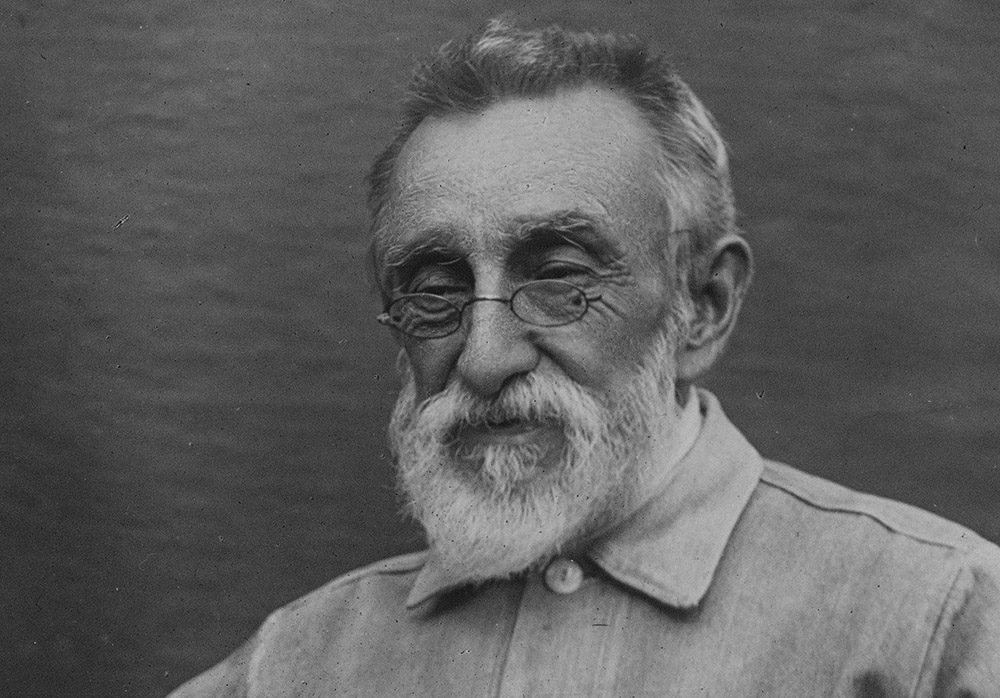
Joseph Dutton in 1921 (Courtesy of Hawaii State Archives)

by Jack Kiyonaga
Join the Conversation
Send your thoughts to Letters to the Editor. Learn more
Most of the patients sent to the Kalaupapa Hansen's disease settlement never got to grow old. They lived out their lives only with each other and those who cared for them. No one gave more than Joseph Dutton, who watched over the orphaned boys of Kalaupapa for 44 years.
This April, Hawaii Gov. Josh Green signed into law Brother Joseph Dutton Day, remembering Dutton, a layman, every April 27 for his decades of service. In addition to state recognition, Dutton has also been honored by the Catholic Church, when his sainthood cause was submitted to the Vatican in 2024.
Dutton is an interesting figure. Born Ira Dutton in Stowe, Vermont in 1843, he fought for four years in the Civil War, which was followed by a short-lived marriage. He was broke, broken and lost. "And then I drifted," Dutton said, in his 1931 memoir.
He fell into a self-described "degenerate decade." By day, he worked for government agencies reinterring soldiers' bodies from the battlefield. By night, he drank — primarily whiskey.
In July, 1876, Dutton honored the U.S. centennial with his own journey of independence. He quit drinking and smoking — no small task — and never relapsed. Instead, Dutton became fascinated with living a life of penance.
Advertisement
"I lived for some years a wild life," Dutton said in his memoir, "and felt that I should make some sort of reparation for it."
On his 40th birthday, Dutton converted to Catholicism, changed his name to Joseph, and entered the Trappist monastery in Gethsemane, Kentucky. During his 20 months in the monastery, Dutton discerned a vocation for service.
After reading about the work of Fr. Damien de Veuster, Dutton left Gethsemane and traveled to the isolated Hansen's disease settlement at the base of Molokai's sea cliffs.
When in 1886 he finally made it to Kalawao, the eastern portion of the Kalaupapa peninsula, he encountered Damien on the shore and told the Belgian priest: "My name is Joseph Dutton. I have come to help, and I've come to stay." With those words, Dutton embarked on the work that would define his life.
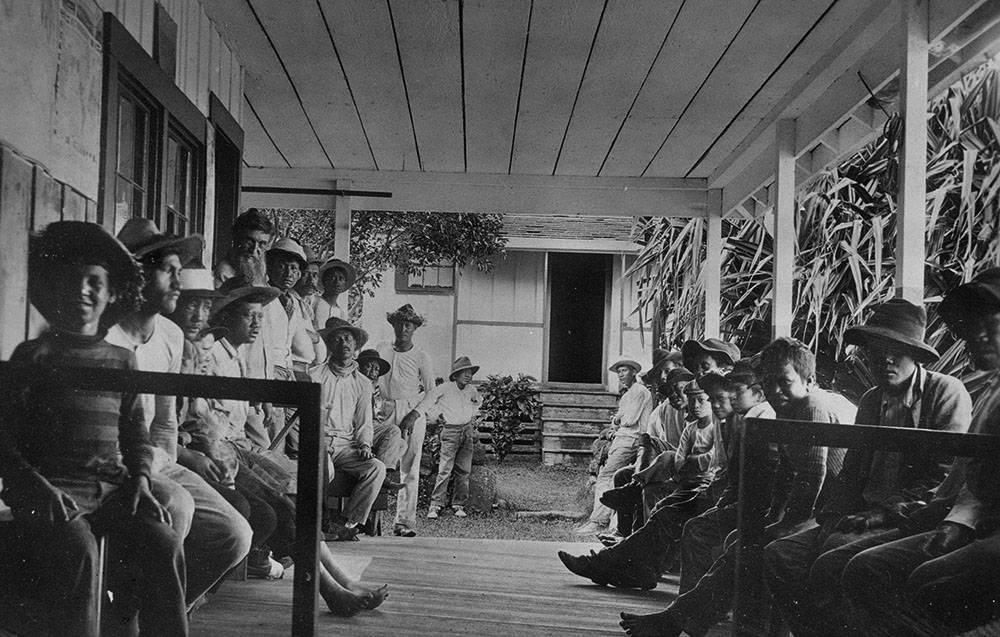
Joseph Dutton and the boys on the porch of the Baldwin Home in 1907, Kalawao, Molokai, Hawaii (Courtesy of Hawaii State Archives)
When he arrived, there were about 1,100 people living in the settlement. In the beginning, Dutton served as a sore dresser. He also helped run what was then called Damien's Boys' Home. When Damien was dying of Hansen's disease, commonly known as leprosy, in 1889, he gave responsibility for the home to Dutton. "I can die now," Damien said. "Brother Joseph will take care of my orphans."
Under Dutton's direction, Damien's Boys' Home soon became the Baldwin Home for Boys, with investment from sugar baron Henry Baldwin. The Baldwin Home was about 45 buildings, housing 144 boys and men. In the compound, there were schools, dorms, kitchens, a poi house, tailor shop, library and more. Dutton lived in a three-room cabin in the compound and every morning he would employ some of the boys to raise an American flag over his home.
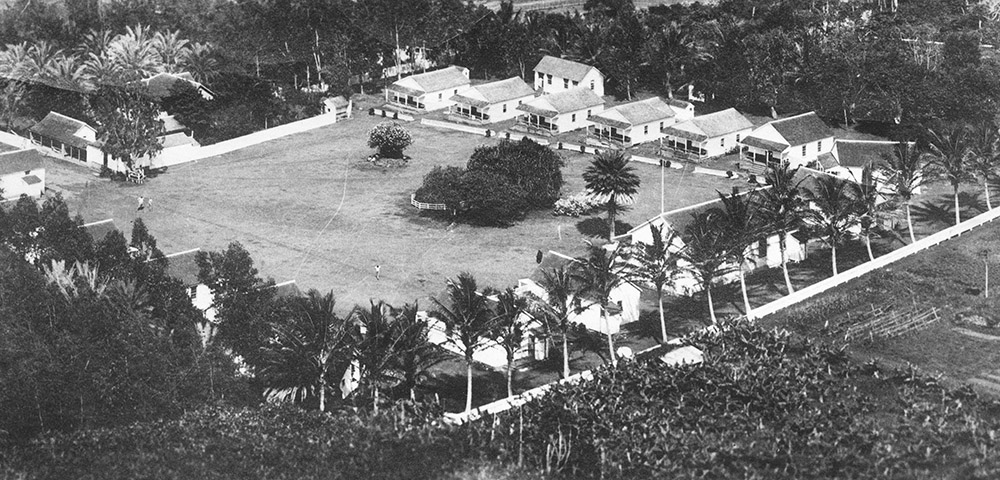
The Baldwin Home for Boys in Joseph Dutton's time (Courtesy of Hawaii State Archives)
Life at the Baldwin Home was almost life as usual, explained Patrick Boland, a Joseph Dutton Guild member and Kalaupapa historian, who said Dutton helped organize plays, sports, concerts and other activities for the boys.
"It was a combination of boarding house, school, hospital and reform school," said Boland. "Had some wild kids, too. They weren't all saints."
There are accounts of some pretty joyful times in Kalaupapa. When the author Jack London visited the settlement in 1907, he wrote about having a "disgracefully good time" among the patients watching shooting competitions, horse races and baseball games.
An 1898 newspaper article also reported that the Baldwin Home orphans had formed an "Aloha Aina boys" cohort and were donating money toward Hawaii's anti-U.S.-annexation efforts.
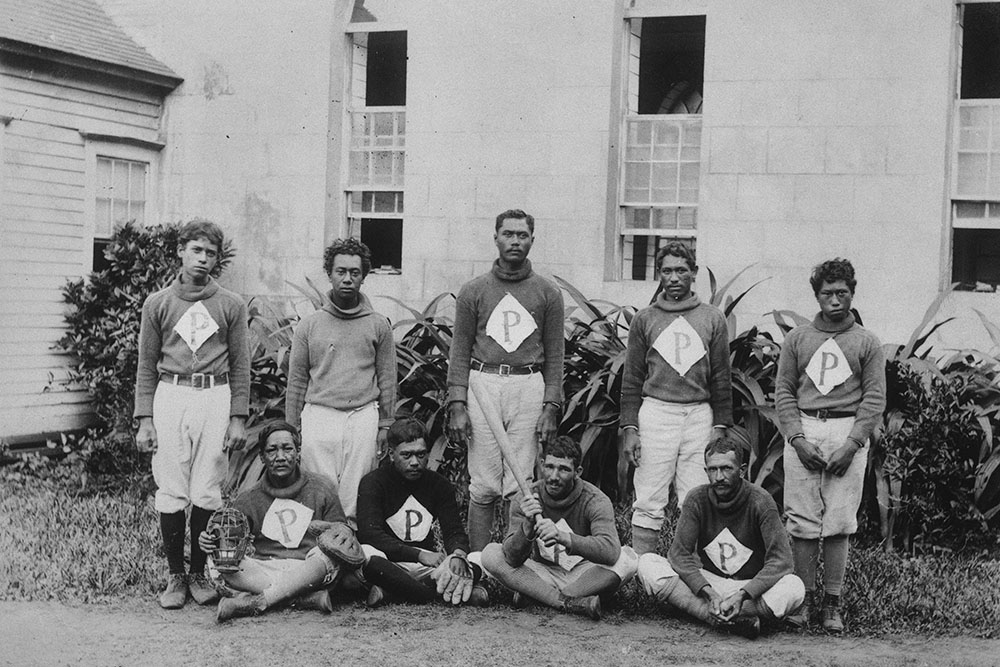
Baseball was one of the activities Joseph Dutton organized at the Baldwin Home for Boys in Kalawao, Molokai, Hawaii. (Courtesy of Hawaii State Archives)
But amid joy in the settlement was true pain, loneliness and loss.
"News from the land of suffering," James Palakiko, a Baldwin Home resident, wrote in a 1912 letter to a newspaper, though he explained "the Brothers take good care of all of us ... the boys of the home have become true brothers." Palakiko is among the approximately 1,400 boys that Dutton cared for.
Dutton often wrote about the Baldwin Home boys in his letters, Boland said. For example, Dutton described how one, Peter Akim, brimmed with intelligence. Akim, who was sent to Kalaupapa in 1900 at the age of 6, was one of the fortunate few to be reexamined and discharged. Many were not as lucky. There was no cure for Hansen's disease until the 1940s. According to Boland, life expectancy for patients during Dutton's time was only 8-10 years.
"Life is so short," said Dutton, "and there is so much to work for."
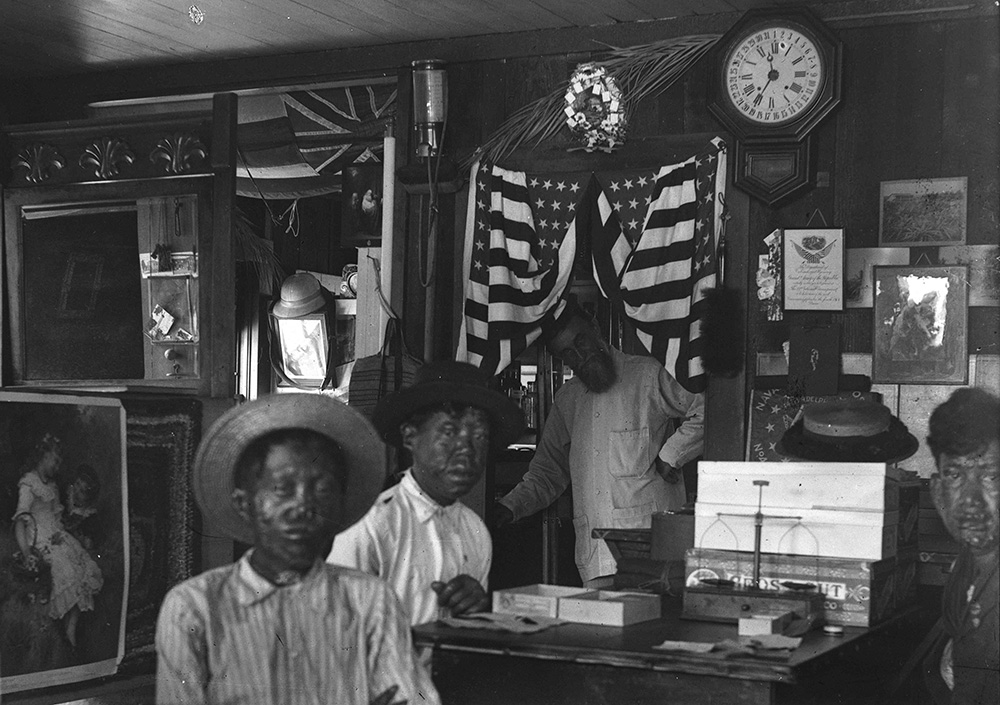
An undated photo shows Joseph Dutton with leprosy patients in his office at the Baldwin Home for Boys in Kalawao Molokai, Hawaii. (Courtesy of Hawaii State Archives)
In his 44 years of service, Dutton only left Kalaupapa for an eye operation and ultimately to die in Honolulu in 1931. Even still, he never forgot the rest of the world. While in Kalaupapa, Dutton exchanged letters with Presidents Calvin Coolidge, Warren Harding and Theodore Roosevelt. Writers London and Robert Louis Stevenson wrote proudly of their visits to Kalaupapa and encounters with Dutton. Maria von Trapp, the Austrian woman portrayed by Julie Andrews in "The Sound of Music," journeyed to Molokai to sing at Dutton's grave.
Though sequestered, Dutton was never alone, and from his seclusion, he demanded the world know the story of Kalaupapa.
It's a story that continues to be told. This May, one of the last three Kalaupapa patient residents, Meli Watanuki, died. She and Dutton are buried in Kalaupapa with about 8,000 patients. But before Watanuki died, she and the other patient residents of Kalaupapa testified in support of the bill creating Brother Joseph Dutton Day.
One of Watanuki's last acts was to thank Dutton once again for his decades of "selfless and dedicated service to our people, the people of Kalaupapa."