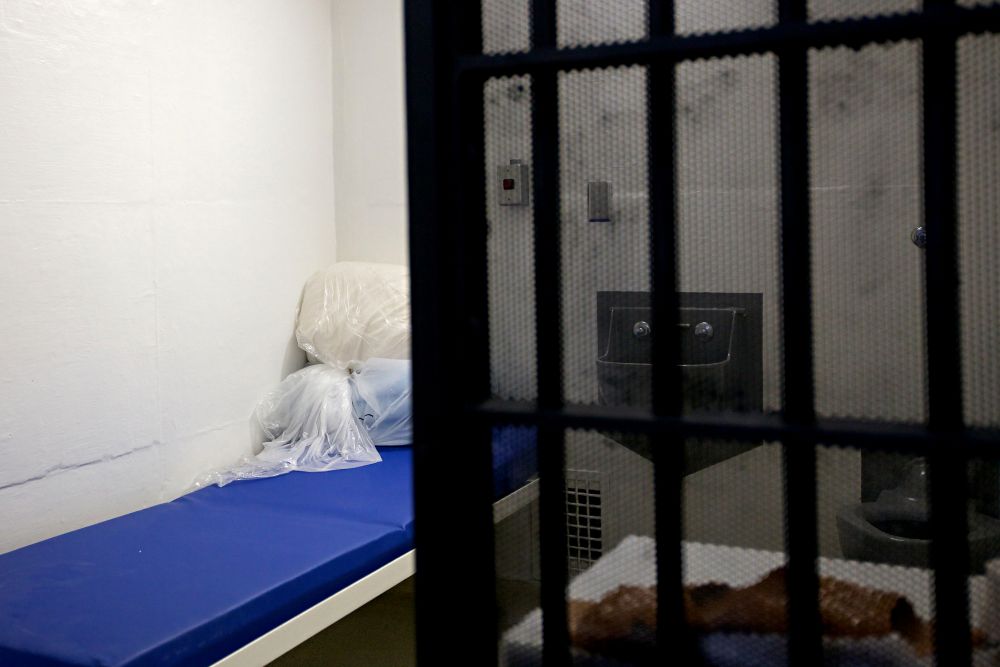
Briley Piper, the only prisoner on South Dakota's death row, could be executed by the end of 2026. The final holding cell for death row prisoners to be executed at the South Dakota State Penitentiary is pictured in 2012. (AP/Amber Hunt)

Join the Conversation
Send your thoughts to Letters to the Editor. Learn more
Editor's note: This is the second of a three-part series about Briley Piper, the only prisoner on South Dakota's death row, and the Catholic conversion he experienced while incarcerated. The first part followed Piper's life from a troubled childhood through his 2008 baptism. This second part examines the community that formed around him afterward, the changes his Catholic companions say they have witnessed and the prospect that South Dakota may soon carry out his death sentence.
One of the most important relationships in Briley Piper's conversion to Catholicism while on death row began with a request that had little apparent connection to religion.
In the autumn of 2007, Piper was teaching himself Spanish and asked the priest who was doing prison ministry at the South Dakota State Penitentiary, where Piper was serving his sentence, if he knew anyone willing to practice the language with him by phone. The priest called Caminando Juntos, a ministry serving immigrants in Sioux Falls, and Presentation Sr. Gabriella Crowley volunteered.
Only after Crowley agreed to help did she learn that her prospective student was on death row.
The two began speaking weekly. Spanish lessons gradually became conversations about books, Scripture, prayer and the lives each of them was leading on opposite sides of the prison walls. By the time Piper decided to become Catholic; Crowley was one of only two Catholics he knew personally.
He asked her to become his godmother.
She agreed immediately.
Prison rules ordinarily restricted death-row visitors to relatives, spouses and clergy. Crowley didn't belong to any of those categories, and, until the day before the baptism, it was unclear whether she would be admitted. An exception was eventually approved, allowing her to meet Piper in person for the first time on the day he entered the church.
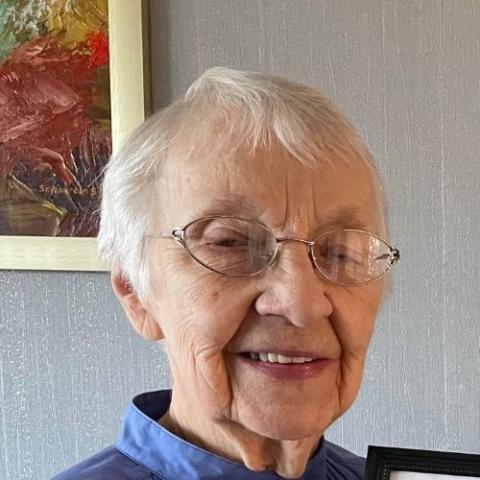
Presentation Sr. Gabriella Crowley began speaking by phone with death row prisoner Briley Piper in 2007. (Courtesy of Presentation Sisters)
Crowley remembers being led through a prison space that seemed to her like a cavern. Armed officers were everywhere. The restraints struck her as excessive for a man surrounded by guards.
For Bishop Paul Swain of Sioux Falls, who had asked to administer the sacraments himself, the moment felt natural. Crowley remembered him as kind and unhurried, behaving as though he had nowhere else to be.
Piper, 46, was baptized in April 2008, on his parents' wedding anniversary. He was 28.
Inside the small room, Piper sat chained to the wall. A towel was placed across his lap, with a nonbreakable bowl of water resting on it. Swain lifted water from the bowl and poured it over Piper's head three times.
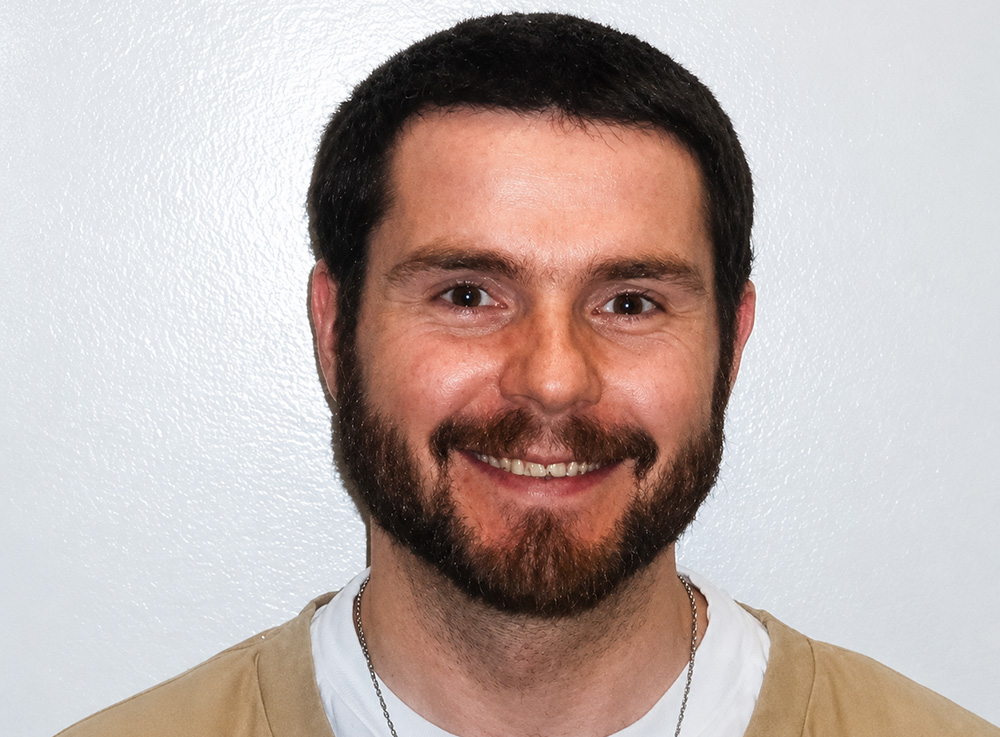
Briley Piper in a 2025 picture at the South Dakota State Penitentiary (Courtesy of Briley Piper)
"To say that something washed over me is kind of watering down the experience," Piper recalled. "It was such a rush of emotion, that it almost [borders] on indescribable."
He felt it begin, he said, in the center of his chest and move outwards. "My life has fundamentally changed," he remembered thinking. The others noticed the silence.
Crowley also remembered the bishop being very attentive and present to the moment. She believed something had happened within Piper that went beyond the ceremony's physical constraints.
Years later, asked what she had given him as his godmother and longtime friend, she said she was the one who received something."I am humbled to say that he taught me," she said.
"Briley was all about helping someone else, learning everything he could to help others," she added. "He had a heart for others to succeed and a drive to make things better. I'm grateful for Briley in my life and he has been an inspiration all these years."
A community assembled at a distance
Catholic life on death row bore little resemblance to life in a parish.
Piper could not ordinarily attend Mass, join a retreat or sit in a room with other Catholics. The priest brought him Communion at his cell, generally once a week. Crowley continued calling. Gradually, other Catholics entered the circle.
Deacon Dennis "Denny" Davis, a hospice chaplain and longtime opponent of capital punishment in South Dakota, began visiting the prison after receiving clearance that allowed him to move through its units. Davis said he did not begin by questioning Piper about the crime. He considered that approach incompatible with the kind of ministry he intended to offer.
"Yes, obviously he's done something seriously wrong," Davis said. "They're carrying enough shame, they're carrying enough burden. I want to meet them as human beings," he said of the prisoners.
Davis let inmates guide the conversation. With Piper, that often meant talking about the rosary, devotion to Mary, education and the possibility of using a life sentence to help other prisoners. They prayed together and Davis gave him a blessing before leaving.
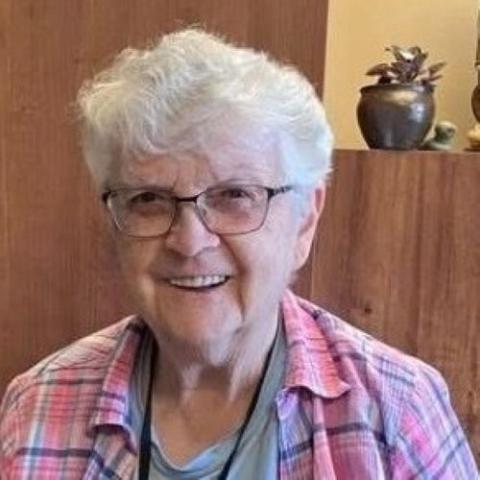
Briley Parker calls Presentation Sr. Patrick Murphy his "godaunt." (Courtesy of Presentation Sisters)
Presentation Sr. Patrick Murphy, whom Piper came to call his "godaunt," also maintained contact with the men on death row. From a distance, she observed an informal community among prisoners who could speak across barriers even when they could not freely gather.
"They supported each other. They chided each other. They encouraged each other," Murphy said. Piper, she recalled, assumed something of a leadership role, urging other prisoners to earn high school equivalency diplomas and supporting them spiritually.
Education remained central to his own life. After years of correspondence courses and disputes with administrators over access, Piper completed a bachelor's degree through Ohio University in 2019. The achievement carried particular significance because of his earlier academic struggles and his difficult relationship with his father.
"I think the one person I did it for the most was my father," Piper said. His mother later told him that the graduation was the closest she had seen his father come to tears.
Piper's religious companions describe education and conversion as related rather than separate developments. College taught him to follow arguments, challenge assumptions and communicate more carefully. Catholicism gave him a framework within which to examine what he had done with his life and what, if anything, he could still do with it.
The priest who instructed him — and who asked not to be identified by name — remains careful not to romanticize that transformation.
"There is no question that the criminal events that led to Piper's conviction, imprisonment and sentence are vile and reprehensible," he said. Piper was arrested in 2000 and pleaded guilty a year later to five crimes, including first-degree felony murder, for his role with two others in the kidnapping, robbery, torture and killing of 19-year-old Chester Allan Poage near Spearfish, South Dakota.
Yet, after more than 20 years of contact with him, he said he had found no reason to regard Piper's faith as "fake or just a con game."
"However this eventually plays out," the priest said, "I am rather certain Briley is a better person than when he came into prison."
The limits of change
For most of his incarceration, Piper lived apart from the general population, unable to attend meals, classes or worship with other inmates. He described the isolation not simply as solitude but as an official declaration that he could not belong to the prison community, regardless of his conduct.
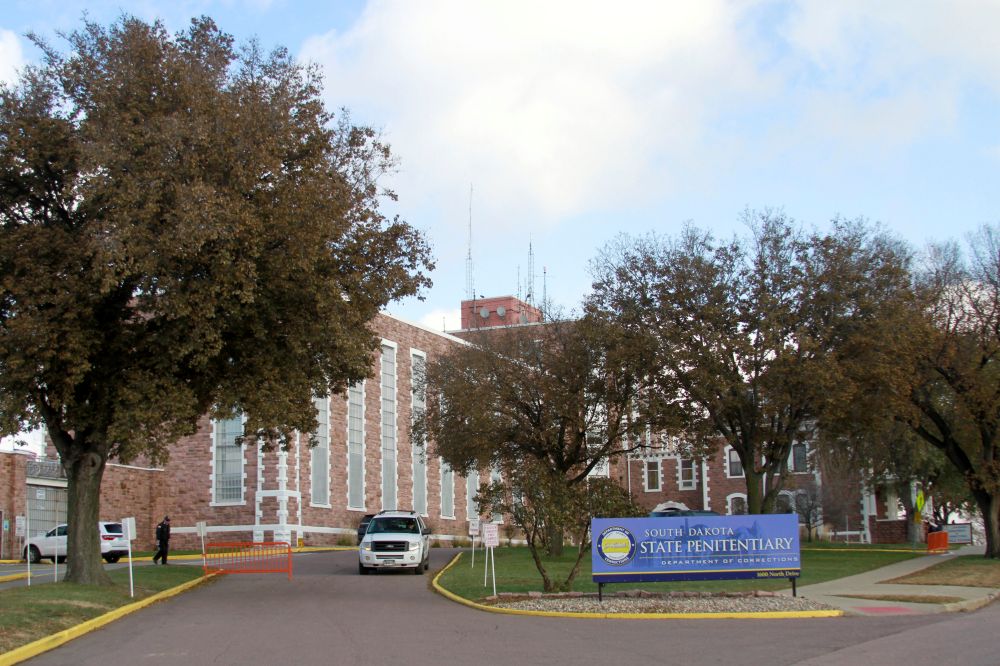
Briley Piper is on death row at the South Dakota State Penitentiary in Sioux Falls, S.D. Piper was sentenced to death for his role in the 2000 kidnapping, robbery, torture and killing of a 19-year-old man; he may be executed by the end of 2026. (AP/Stephen Groves)
"To have an external force push that upon you, no matter how well you behave or not, it can take its toll after so many years," he said. "There are times when I didn't know if I was going to be able to make it through living in isolation like I did. This is where my faith has saved my life."
For approximately two months in 2024, prison officials moved him into the general population. The experience allowed him to attend Mass and move without the chains routinely used when he left his death-row cell. Piper said he was returned to isolation after he said he had been falsely suspected of being recruited into a plot against prison staffers. He said the two months in general population offered a provisional form of freedom and it was "incredibly painful" to be returned to isolation.
Despite these restrictions, Piper married in 2021 after a former prisoner introduced him over the phone to the woman who would become his wife. Their relationship developed over more than a year through near-daily calls and letters, without physical contact. The couple used a Kansas proxy-marriage process, marrying by conference call because prison restrictions prevented an in-person wedding.
Piper said he did not meet his wife in person until his temporary move into the general population allowed them two contact visits — the only occasions on which they have been able to physically embrace. Since his return to isolation, their marriage has again been sustained through monitored calls, letters, photographs, poems and music he plays for her on his guitar, forms of intimacy he described as both genuine and deeply connected to his Catholic faith.
Earlier in his sentence, before becoming Catholic, he had contemplated suicide but a friend persuaded him to wait another day. Piper said he now credits his survival to his prison experience. "One of the greatest ironies in my life was that being sentenced to death saved my life," he said. Without prison, he believes his drug use and self-destructive behavior would have killed him before he turned 21.
Advertisement
Turning his life around also enabled him to show a lighter side of his personality. Mo Irvine, a lay Catholic prison minister employed by the Diocese of Sioux Falls, said Piper can discuss theology at length but also uses food, conversation and small favors to draw other inmates into the community. Once, Piper prepared food to be distributed across the unit. Some prisoners objected when he included a man they disliked.
"'Him?! He gets food too?! Why?'" Irvine recalled them asking.
"Because God said to," Piper answered.
Irvine, who has met with Piper since 2019, said he has referred other prisoners to religious ministers after they questioned him about his faith.
"He's very intelligent, he can talk to anybody, and he will talk to anybody if you give him a chance," she said. "I can't tell you how many guys he's sent my way."
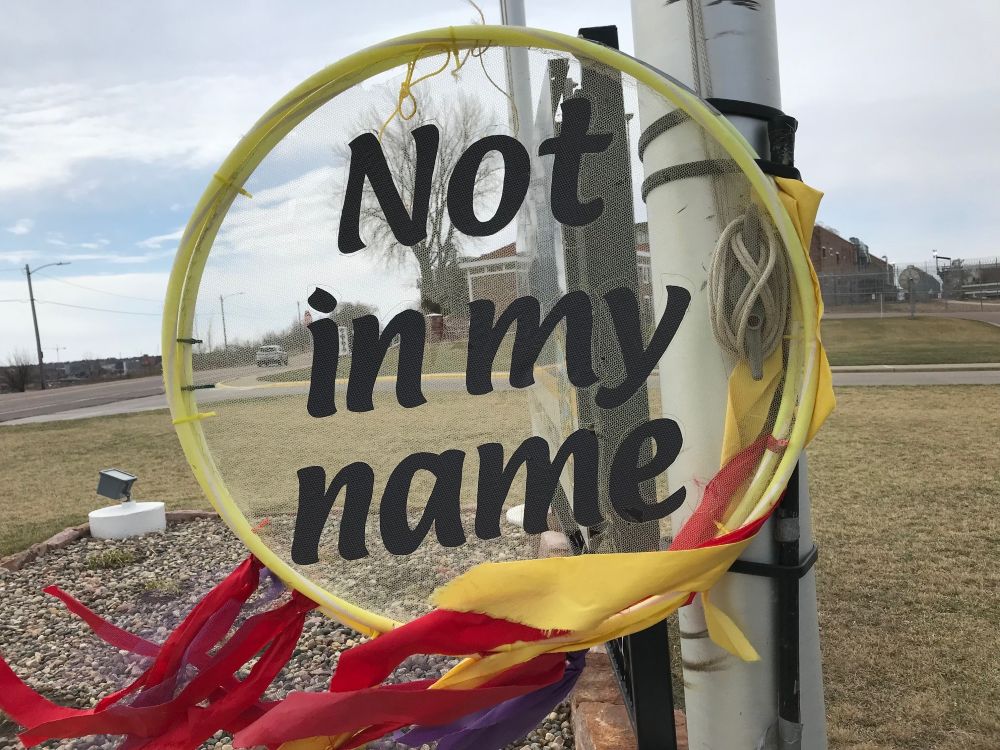
A sign opposing the death penalty is displayed during the Presentation Sisters' annual gathering, held each Good Friday, at the South Dakota Penitentiary. (Courtesy of Presentation Sisters)
Fr. Andrew Dickinson, one of the priests who now regularly ministers to Piper, first encountered him not as a notorious prisoner but as an energetic Catholic eager to discuss a story he was writing.
"My first impressions of Briley: creative and a storyteller who will talk your ear off," Dickinson said.
The priest said he was grateful "not to know him as a sentence, not to know him as a crime," but first as a Catholic requesting Communion.
That distinction has become harder to sustain as Piper's appeals approach their end, Dickinson said.
Waiting for a date
On May 4, 2026, the Eighth U.S. Circuit Court of Appeals rejected six claims in Piper's latest federal appeal. Court records show that Piper had sought to introduce new expert evidence concerning possible brain damage, extensive childhood trauma and fetal alcohol spectrum disorder, which he argued could have affected his reasoning, impulse control and ability to form intentions at the time of the crime, when he was 19.
The record also raised the broader question of whether the sentencing jury had received a complete account of Piper's neurological development and whether his subsequent maturation and educational transformation had ever been fully considered by a decision-maker. No execution date has been set yet, although South Dakota Attorney General Marty Jackley said after the May ruling that an execution could take place in late 2026.
The prospect of an execution has changed Piper's regular conversations with Dickinson. Since late 2025, the priest said, Piper has spoken more directly about fear and the possibility that his final legal efforts will fail.
Piper even asked whether the priest would be present at his execution.
"You can't be ready for that, you just have to be there," Dickinson said, pausing before continuing. "I don't want him to be there, but if he's got to go there, I'm going to be there with him."
Davis described a similar mixture of hope and helplessness.
"Sometimes I cry. I hurt; I get this pain in my gut," the deacon said. "There's pain, and yet there's joy."
Irvine said she feels the tension each time she considers what may come next.
"I think I experienced this profound gratitude for knowing him and getting to be a part of the last seven years of his life, but also this great sorrow," she said. "So there's sadness, there's gratitude, and also this great hope that nothing has been wasted."
Piper does not claim that his conversion completed the work. "I don't know that I'm redeemed," he said. "I think I'm a work in progress, and I'm working on it every day."
Nor does he say that grace is something he has earned.
"I acknowledge that I don't deserve any graces that I've received," he said, "but I think that's the most wonderful thing about graces. You're given them when you least deserve them, because they can be life changing."
Editor's note: This story mentions suicide. If you or someone you know needs help, the national suicide and crisis lifeline in the U.S. is available by calling or texting 988. There is also an online chat at 988lifeline.org.
Up next: The third part of this series, next week, will focus on South Dakota's political approach to the issue of the death penalty, featuring interviews with local bipartisan politicians and national advocates commenting on Briley Piper's case. The series will also include a reporter's notebook with the writer's perspective and specific challenges in writing these articles.