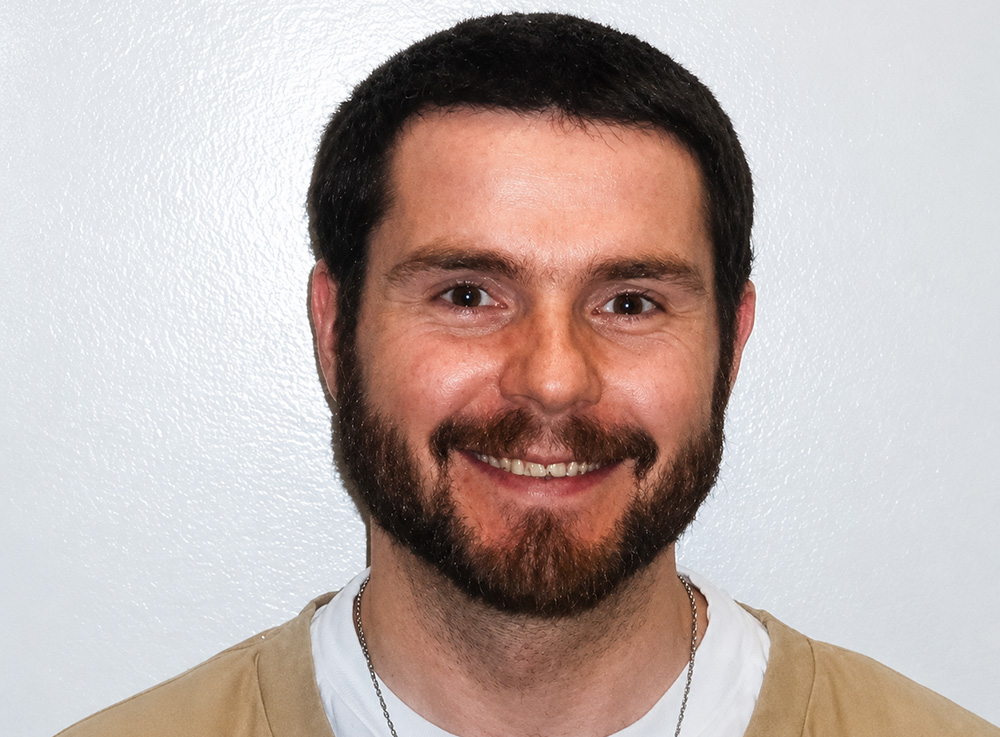
Briley Piper in a 2025 picture at the South Dakota State Penitentiary (Courtesy of Briley Piper)

Join the Conversation
Send your thoughts to Letters to the Editor. Learn more
Editor's note: This is the first of a three-part series about Briley Piper, the only prisoner on South Dakota's death row, and the Catholic conversion he experienced after being sentenced to death for his role in the 2000 murder of Chester Allan Poage. This first installment traces Piper's childhood, early years in prison and gradual religious awakening, culminating in his baptism on death row in 2008.
On the morning of his baptism, Briley Piper paced back and forth inside his death row cell in Sioux Falls, South Dakota.
In another part of the South Dakota State Penitentiary, the Catholic bishop of Sioux Falls, a priest and a 73-year-old woman religious were being escorted through locked doors and controlled corridors toward Piper's cell.
Before Piper could join them, officers locked down the section. He extended his hands through the cuff port in his cell door. His wrists were restrained, a chain was secured around his waist and shackles were fastened to his ankles. He was taken to a small room and attached by a chain to the wall.
The priest who had prepared Piper to be baptized and officially enter the Catholic Church — and who asked not to be identified by name — found him still pacing before the ceremony and asked whether he was ready.
Piper answered with a comparison the priest said he would never forget.
"I'm more nervous today than the day I went to court and received the death penalty."
Inside the room, Piper sat across from the priest, Bishop Paul Swain and Presentation Sr. Gabriella Crowley, who had spoken with Piper regularly by telephone, first helping him learn Spanish and later discussing his developing faith. They had never met in person.
Piper spoke for much of the next hour, telling the bishop about his education, his years in prison and the unlikely route that had brought him to Catholicism. Swain, a reserved man, mostly listened.
Then the bishop began a simple baptismal rite.
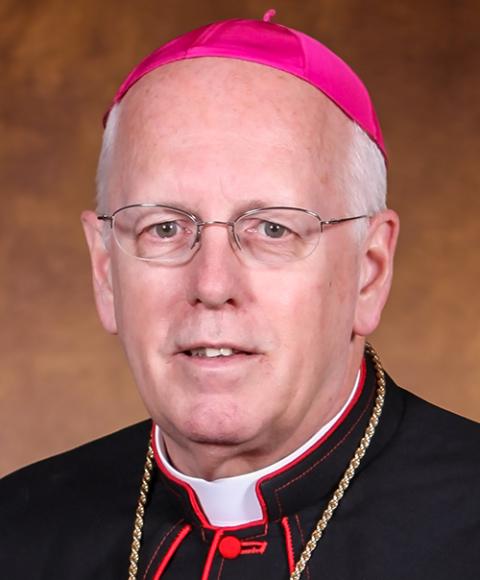
Bishop Paul Swain of Sioux Falls, South Dakota (Courtesy of Sioux Falls Diocese)
A prison towel was spread across Piper's lap. On it rested a nonbreakable bowl filled with warm water. His cuffed hands remained beneath the towel. Piper leaned over the bowl and Swain lifted water over his head three times.
"The room became filled with silence with the only sound coming from the dripping water off Briley's head and face," the priest recalled.
"He stayed in that position for some time. I remember thinking I had never before experienced the life and death message of baptism in such a tangible way."
It was April 2008. Piper was 28 years old and had spent most of the past decade under a death sentence.
Today, he is the only prisoner on South Dakota's death row. He was arrested in 2000 and pleaded guilty the following year to five crimes, including first-degree felony murder, for his role with Elijah Page and Darrell Hoadley in the kidnapping, robbery, torture and killing of 19-year-old Chester Allan Poage near Spearfish, South Dakota.
Page was also sentenced to death and was executed in 2007; Hoadley received life imprisonment. Piper's initial death sentence was later vacated because a jury had not determined his punishment, but a new jury sentenced him to death again in 2011. In May 2026, a federal appeals court rejected his latest challenge, leaving him with narrowing avenues of review for possible commutation to life in prison. No execution date had been announced at the time of this reporting.
This story is based on nine on-the-record telephone interviews with Piper from prison, along with approximately a dozen interviews with Catholic priests, sisters, deacons and lay diocesan ministers, all instrumental in Piper's radical discovery of faith while in death row. Together, they describe a conversion that unfolded through years of conversation, study and relationships inside a prison system that offers condemned inmates few opportunities for education, rehabilitation or communal religious life.
Their accounts did not diminish the brutality of Poage's death or absolve Piper of legal responsibility. They tell a narrower story: how a man who arrived in prison at the age of 20, with almost no cultural and religious formation, began reconsidering his past and constructing a different life within the severe limits of death row.
That story began far from South Dakota, in Anchorage, Alaska.
Piper was born nearly three months prematurely in March 1980, the youngest of four children. His mother had come to Alaska from Louisiana. His father worked in the oil fields, part of an industry that brought the family relative stability but frequently took him away from home.
Piper's parents were Baptists and believed in God, but the family's church life was intermittent. They moved between congregations without finding one that became a permanent spiritual home. Piper sometimes attended with his parents, but faith occupied little space in his imagination.
Advertisement
Catholicism was even more remote. He knew priests and nuns largely as figures from films. He had no understanding of Catholic theology, sacramental life or church history and he had no personal desire for this.
Anchorage, hemmed in by mountains and water, began to feel isolating as Piper grew older. By his teenage years, he was restless to leave Alaska and see the world beyond it. That impulse soon combined with a growing hostility toward authority.
During middle school he had repeated suspensions and disciplinary referrals. He disrupted classes, resisted teachers and struggled to understand the intensity of his own reactions. Looking back, Piper connects some of those difficulties to dyslexia, learning disabilities and the possible developmental effects of his premature birth. At the time, however, neither he nor the adults around him had an adequate explanation.
At 13, he ran away from home and stole a firearm that he intended to sell for the price of a plane ticket out of Alaska. His mother sent one of his brothers to find him. The brothers fought and Piper was arrested. He spent several months in juvenile detention before entering an alternative education program.
He had acquaintances, but few durable connections.
"I didn't understand the concept of friendship and so I didn't know what it meant to have a real friend," he said.
In the alternative school, a teacher recognized his learning difficulties and helped him develop different ways to absorb information. Piper completed more than two years of academic work in roughly one school year and returned to public high school as a sophomore.
But his reputation had preceded him. Teachers knew about the suspensions, juvenile detention and stories that had circulated through the school system. Some of the stigma, Piper now acknowledges, had been earned. Yet he also came to believe that he was expected to remain the person he had been, even when he tried to behave differently.
He eventually left public school and earned his diploma through a program at the University of Alaska.
One early encounter would take on greater significance only in retrospect. The mother of a girl Piper knew in elementary school often saw him sitting in the school office after disciplinary incidents. Instead of treating him as a problem to avoid, she spoke to him and once invited him to dinner. When one of her children questioned why she had brought home a boy who was always in trouble, she suggested that he might simply need love from someone outside his family.
Years later, after Piper's arrest, the woman wrote to him in jail. She encouraged him to reconnect with Jesus and to begin reading the Gospel of John.
Piper remembered the kindness, but he did not yet follow the advice.
After Poage's murder, Piper, who was 20, was sent to jail and spiritual questions were eclipsed by the uncertainties of criminal prosecution.
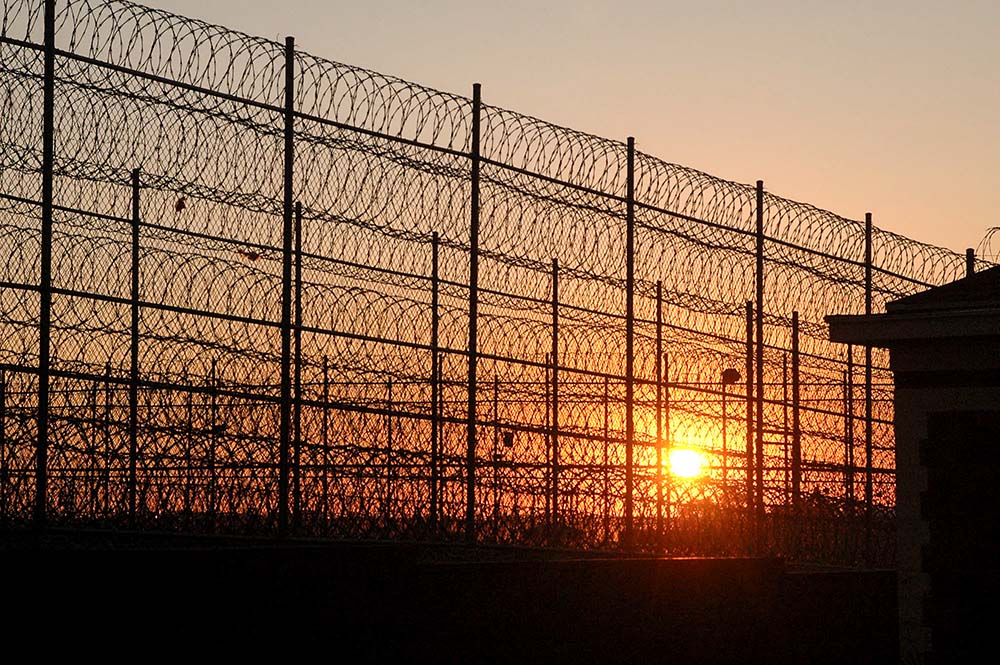
The sun sets behind the razor wire at the South Dakota State Penitentiary in Sioux Falls July 11, 2007, as the execution of Elijah Page, one of Briley Piper's codefendants, approached. (AP/Doug Dreyer)
He was held first in Alaska and then extradited to South Dakota. His days were governed by confinement, restricted communication with his family, and meetings with lawyers. He cycled through anger, disbelief and denial as the possibility of a death sentence became real.
The first years on death row offered little evidence of transformation.
Piper said he largely abandoned concern for his future. He committed disciplinary infractions, returned repeatedly to segregation and adopted the logic that, because the state intended to kill him, little of what he did in the meantime mattered.
Religious volunteers passed through the prison. Family members encouraged him to read the Bible. Other inmates participated in Bible studies, but Piper said he remained suspicious.
A preliminary change came in 2003, during a stay of almost three months in the prison's disciplinary segregation unit, commonly called "the hole."
Alone in his cell, Piper began considering where his behavior was leading. He concluded that he could return to the unit and continue the habits that had carried him from adolescent misconduct into prison discipline, or he could reject them. He chose the second course.
When other inmates again urged him to break rules or participate in schemes, Piper refused. Several relationships disappeared and he came to see that they had been situational alliances rather than friendships.
Before Piper entered prison, the mother of his girlfriend had contacted officials repeatedly, asking them to provide him with something constructive to do. A prison employee eventually gave Piper information about correspondence courses through Ohio University. He lost the first pamphlet but requested another after leaving segregation.
The administration initially resisted allowing a death-row prisoner to enroll. Piper said he had to assume responsibility for tuition, materials and correspondence and press the issue until officials relented.
He began cautiously with business mathematics and introductory psychology. He had imagined that psychology might help him recognize conflict before it overwhelmed him; the first textbook quickly showed him how little he knew. Because of his dyslexia, reading demanded time and concentration, but prison supplied an abundance of both.
Education altered the rhythm of his sentence. Days that had been empty acquired deadlines, assignments and accumulating subjects of interest. He studied social sciences, literature and history, eventually completing a bachelor's degree in 2019. More immediately, coursework taught him to examine claims, compare ideas and remain with difficult questions.
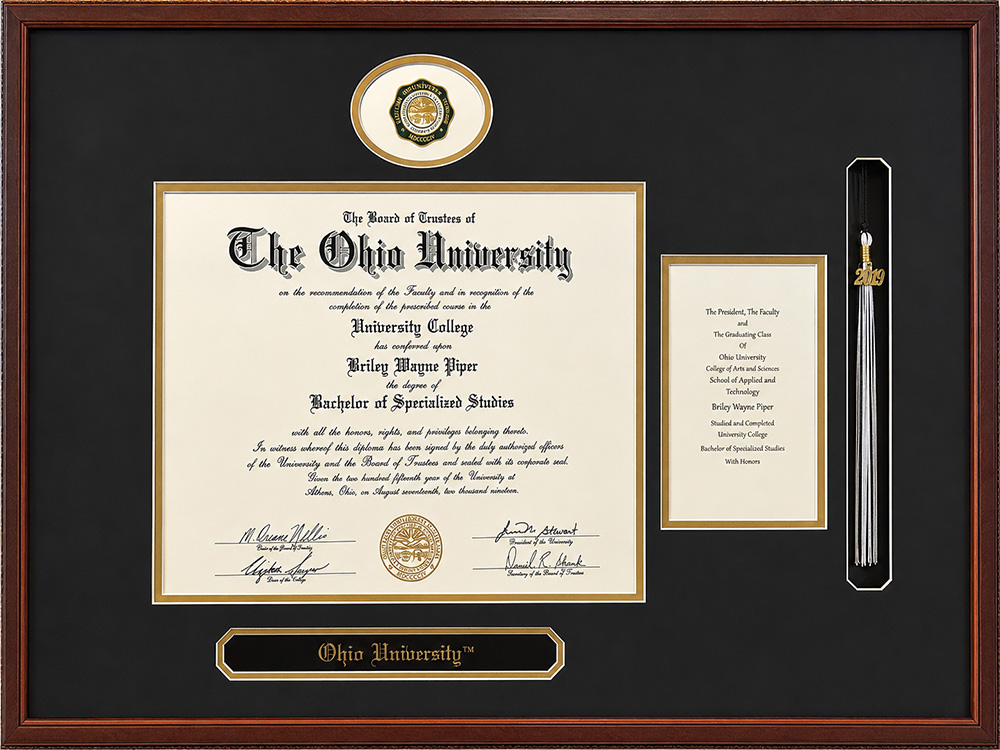
Briley Piper's college diploma from his 2019 bachelor's degree. He studied social sciences, literature and history at Ohio University. (Courtesy of Briley Piper)
The Catholic priest who would later baptize Piper first encountered him during visits to prisoners in disciplinary segregation. The priest carried newspapers, books and puzzles from cell to cell. Piper, naturally talkative, called out and began a conversation.
The exchanges continued intermittently. Piper was interested in Irish and Celtic history, and that curiosity produced questions about the church that had shaped much of Ireland's culture. The priest found that he responded to Catholicism intellectually before he responded to it devotionally.
"He asked lots of questions, a sign of an active developing mind," the priest recalled. "It was apparent to me that Briley was discovering and enjoying the process of learning, which was different from being in school."
Their conversations ranged across science, sociology, politics, poetry, prison life and theology. Piper's favourite novel was The Count of Monte Cristo, in which an imprisoned man forms a consequential relationship with a priest.
"There's always a concern in the prison to be aware of being conned," he said. "This discussion with the unit manager made me cautious and extra vigilant but there was never any apparent motive in Briley's interest in our visits other than just learning and enjoying our conversations."
The decisive moment came on July 11, 2007, when South Dakota executed Elijah Page, Piper's codefendant. It was the state's first execution in 60 years. The prison was placed on lockdown, and live television coverage made it nearly impossible not to be fully aware of the event. Officers and mental-health staff repeatedly walked past the cells of the other condemned men, checking their reactions.
Page's execution turned the death penalty from a distant legal outcome into something Piper could imagine happening inside the same institution, under the authority of the same state.
Late in the afternoon, Piper paced inside his cell, then stopped.
"I just remember looking up, and I said: 'How can this be what you want?' " Piper recalled praying. But no answer came, he said.
The following day, the Catholic priest arrived at his cell and told him he had heard that Piper wanted to speak with him. Piper immediately objected. He had made no such request and disliked having words attributed to him.
The priest accepted the denial without argument and began to leave, but Piper stopped him.
Since the priest was already there, he said, he had a question.
Piper no longer remembers its precise wording. He believes it concerned Page's execution and why a merciful God would permit it. The conversation lasted approximately half an hour. The priest then proposed meeting privately, away from the cellblock, where the two could speak without other prisoners overhearing.
Those meetings required a lockdown, handcuffs, a belly chain, ankle shackles and Piper's restraint to the wall of a small room. Within that setting, the two men began discussing suffering, responsibility, institutional religion and the possibility of mercy.
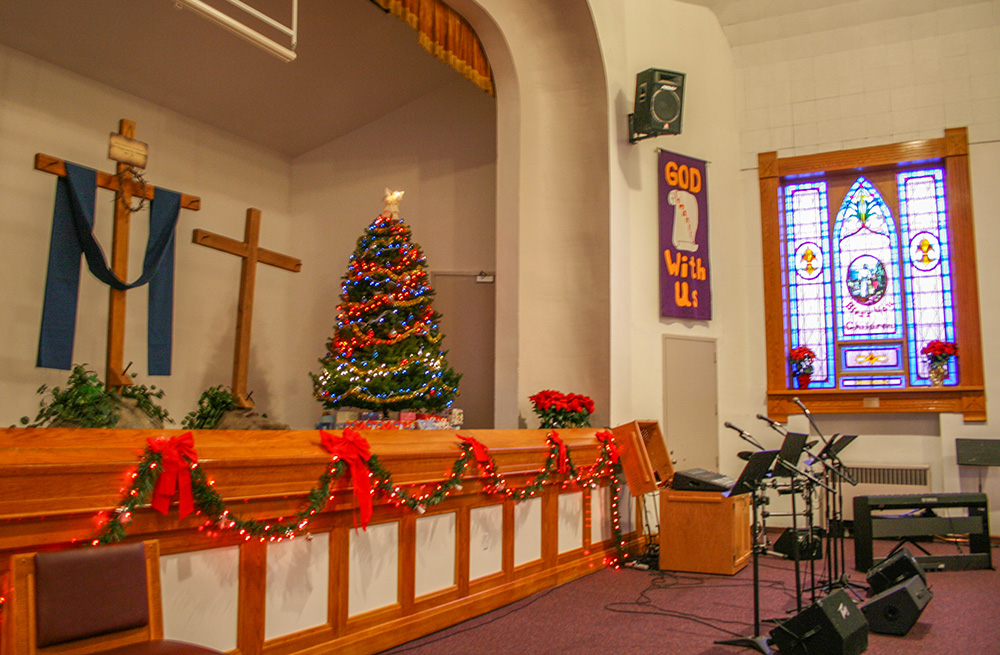
The church at the South Dakota State Penitentiary in Sioux Falls, S.D., is seen decorated for Christmas on Dec. 7, 2012. In 2007, a priest started to meet privately and regularly with Briley Piper, who could not attend Mass with the general prison population. (AP/Kristi Eaton)
The priest did not initially assume that Piper would become Catholic. He was conscious of the suspicion that attends prison conversion — he said that "religion in prison is often used and misused for purposes other than its intended value" — and of Piper's limited alternatives. A condemned inmate could not attend parish Mass, participate in ordinary religious education, or share the life of a Catholic community.
Piper, for his part, did not want faith adopted out of fear to be mistaken for conviction. Recalling his first confession, he said he was "scared to death" by the vulnerability of speaking to another person, wanting to "approach it with an open mind, full heart." When a visiting non-Catholic minister told him he did not need those sacraments to be loved or forgiven by Jesus, he replied, "I know I don't have to do anything — I'm choosing to do this because it's the right thing for me." Years later, he said, it remains "the one choice" he has never questioned.
Yet the questions continued.
By the autumn of 2007, the conversations between Piper and the priest were no longer only about whether Christianity could explain the execution of Piper's friend and accomplice. Instead, they discussed church teachings, what being a member of the church required, and whether a man in his circumstances could become part of the church at all.
The priest started to meet privately and regularly with Piper, who could not attend Mass with the general prison population. To remove him from his cell, officers first locked down the unit and then proceeded with the usual security measures. During these meetings, Piper and the priest worked through the catechism, Scripture, the lives of saints, and the history of the Catholic Church.
"He asked lots of questions, a sign of an active, developing mind," the priest said. "It was apparent to me that Briley was discovering and enjoying the process of learning, which was different from being in school."
The questions ranged from the institutional to the personal. Piper wanted to understand the church's hierarchy, its claims of continuity with early Christianity, and the meaning of its sacraments.
By early 2008, after months of instruction, Piper requested baptism and confirmation. Before receiving them, he made his first confession.
"I went into depth in my first confession about all aspects of my past," Piper said, "and it was the first time in my life where I had been that open, that vulnerable, that fully exposed to another human being about everything that I had gone through in my life."
Up next: The second part of this series will focus on Piper's faith journey on death row as seen from the eyes of the Catholic clergy and lay prison ministers who have been supporting him.