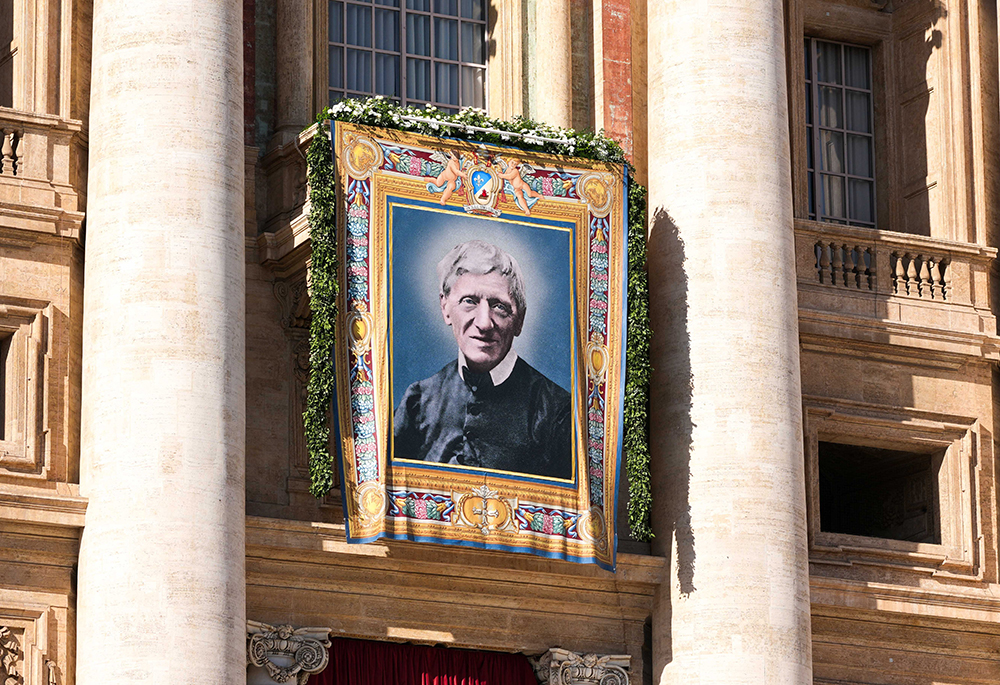
A tapestry of St. John Henry Newman hangs from the facade of St. Peter’s Basilica at the Vatican Nov. 1, 2025, during the Mass in which Pope Leo XIV declared the 19th-century English cardinal and theologian a doctor of the church. (CNS/Lola Gomez)
by Jonathan Luxmoore
Join the Conversation
Send your thoughts to Letters to the Editor. Learn more
When St. John Henry Newman was proclaimed a doctor of the church last year, it was said to have placed the English convert-theologian on a par with history's greatest saints.
Yet reactions have been notably muted from the university where he achieved fame, which is celebrating the event on Nov. 19, just over one year later.
"They've attracted some big names, so perhaps this explains the delay — but given Newman's enormous importance, I'm surprised it hasn't been arranged sooner," said Monica Fox, president of Oxford University's Newman Society.
"Although the university's colleges mark anniversaries with huge celebrations, nothing comparable has been done for Newman. Maybe he's not as well known here as we thought."
Newman's Nov. 1, 2025, elevation made him the first English church doctor since St. Bede the Venerable in the eighth century and the first ex-Protestant to hold the title.
When he was also named co-patron of Catholic education with St. Thomas Aquinas, it was viewed as one of the greatest distinctions ever conferred on a former Oxford student. Yet local reactions have varied.
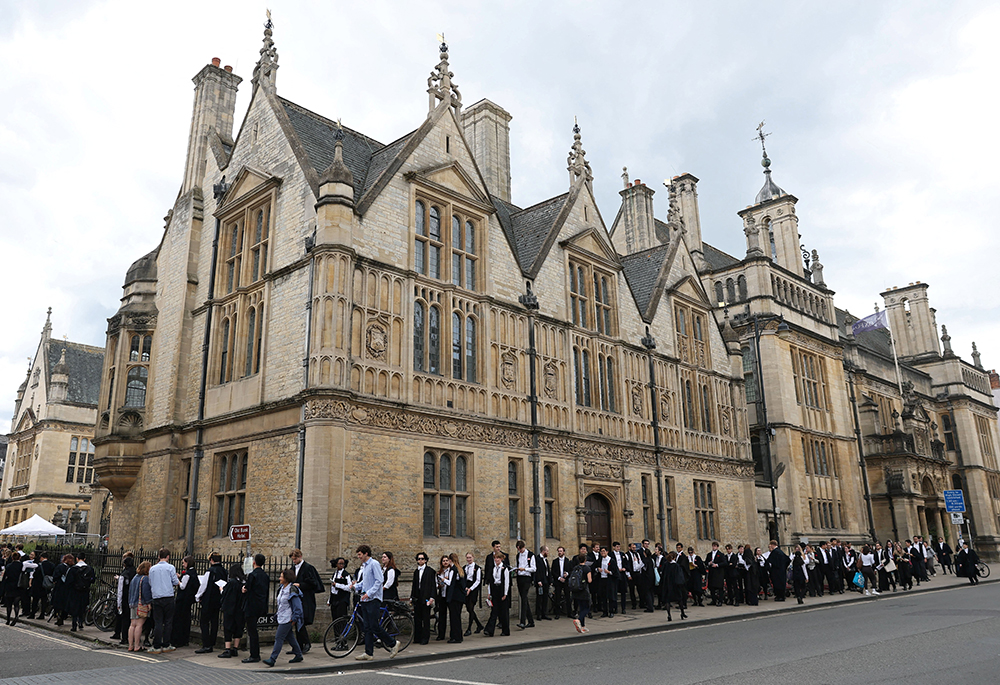
Students wait in line as they arrive to take their final examination at Oxford University in Oxford, England, June 6, 2025. (OSV News/Reuters/Toby Melville)
The university's Trinity College, where the future saint studied as an undergraduate in 1816-1822, held a lecture and exhibition, while Oriel, where he served as a fellow until 1845, arranged a series of seminars.
When Oriel's provost led a delegation to a private Vatican audience with the pope this September, marking the college's seventh centenary, Leo XIV praised the educational ideas set out in Newman's 1850s classic The Idea of a University, and commended Oriel for remaining "firm in its Christian identity."
Yet the saint's proclamation was not even mentioned on Oxford University's news website, which lists awards and promotions. Nor was it referred to by the university's Catholic vice chancellor, Irene Tracey, in her annual orations for 2025 or 2026.
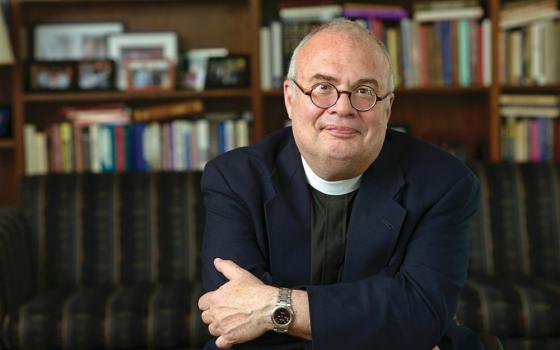
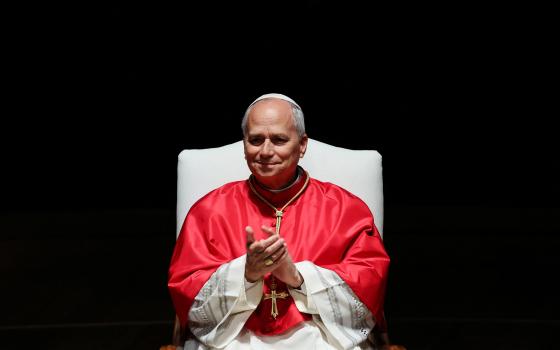
On Nov. 19, Tracey will be chairing a two-hour event at the university's new Schwarzman Centre, which will include a lecture by Newman specialist Msgr. Roderick Strange, with contributions from an Anglican bishop and Oxford's former chancellor, Lord Chris Patten, as well as from Oxford's Dominican cardinal, Timothy Radcliffe.
Stephen Rouse, the university's head of communications, told NCR the "most highly prestigious" panel would discuss Newman's "lasting legacy on faith and higher education," and would honor his "profound influence on many aspects of the intellectual and religious life of Oxford."
Advertisement
Even days before the event was taking place, however, it was not listed on the Schwarzman Centre's program.
Joseph Shaw, an Oxford-educated philosopher who chairs the conservative Latin Mass Society, said he's not surprised by Newman's reception.
"While some Protestants still lay claim to Newman as someone who once belonged in their ranks, others regard him as a turncoat who gave up on them," Shaw told NCR.
"Yet there are also plenty of people who think theology shouldn't be taught here at all, who see it as a shameful relic of the past which should be atoned for as superstitious nonsense."
At his 2019 canonization, Newman became the first British non-martyr saint for six centuries, after giving his name to numerous schools and colleges, as well as an Oratory and university in Birmingham, where he lived in later life.
Yet Catholics were excluded from Oxford University under post-Reformation rules for most of Newman's life; and although restrictions were eased under a 1829 Relief Act, historic recusancy laws remained in place, enabling Catholics to enroll only in the 1890s with the foundation of a chaplaincy and two private Catholic halls.
Among its alumni the university has 57 beatified Catholic martyrs and nine martyr-saints, including the patron saint of politicians, St. Thomas More.
Meanwhile, Oxford's five Catholic parishes have reported an upturn in Catholic conversions, as well as a growing interest in local sites associated with Newman's life of witness.
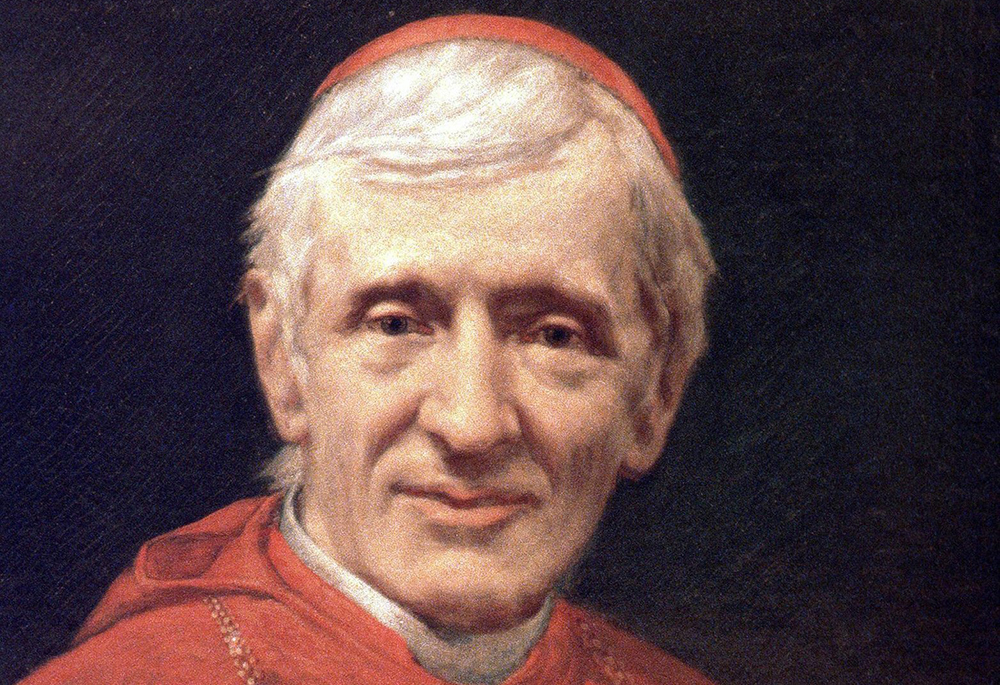
St. John Henry Newman, a British-born scholar who dedicated much of his life to the combination of faith and intellect at universities, is pictured in an undated portrait. (OSV News file photo/Crosiers)
However, in an interview at the time of his canonization, Oxford's former church history professor, Diarmaid MacCulloch, warned that university colleagues held "different views on Newman," with some questioning his historic importance.
"Newman was a remarkably accomplished writer, with a beautiful literary style, who cleverly developed an idea of development which justified Catholic doctrines," said MacCulloch, now working as fellow and archivist at Oxford's Catholic Campion Hall.
"While his conversion to Rome was a sensation at the time, however, some consider him highly overrated as a theologian. I've never felt he said anything of particular interest or originality," he said.
Newman's postulator, Oratory Fr. George Bowen, declined to comment, saying it was up to the Catholic Church to spread Newman's teachings and demonstrate what they could offer contemporary educators.
Jesuit Fr. William Pearsall, who helps run Oxford's Catholic Chaplaincy, concedes there's a lingering reluctance at Oxford "to have any dealings with religion and Catholicism." He hopes "old animosities" won't be reanimated by the university's obvious lack of interest.
"The Catholic Church is hardly flavor of the month here, and this has long been the case — but nor is the Church of England," Pearsall told NCR.
"Our presence is acknowledged at the university, but not much beyond that — and it's taken a long time for Catholics to be accepted as part of college life here. Against such a background, making complaints could prove counterproductive," he said.
Joseph Shaw, the philosopher and Latin Mass Society chairman, agreed.
"In the past, when the university was entirely Protestant, its students and lecturers would have been even less friendly to Newman — so perhaps we should be thankful that even this brief delayed celebration is possible."