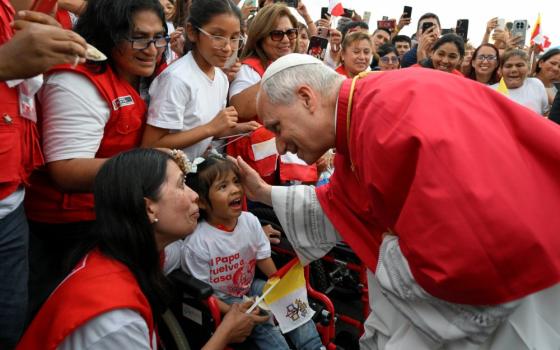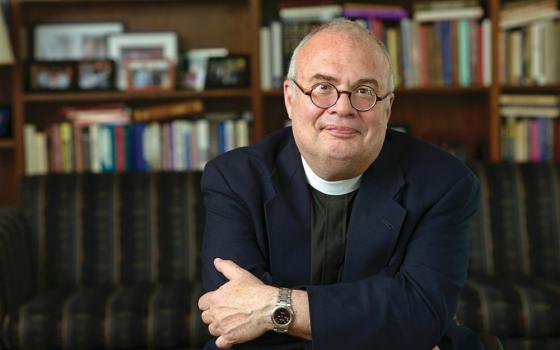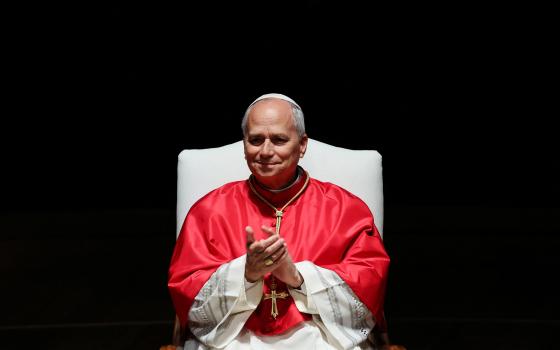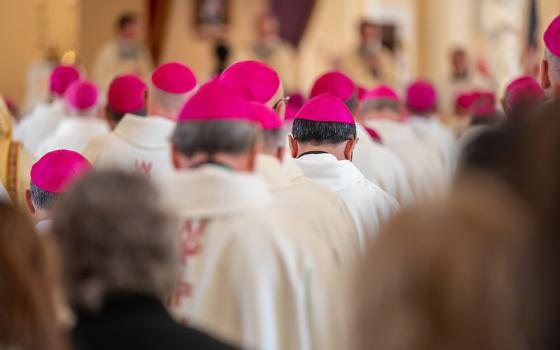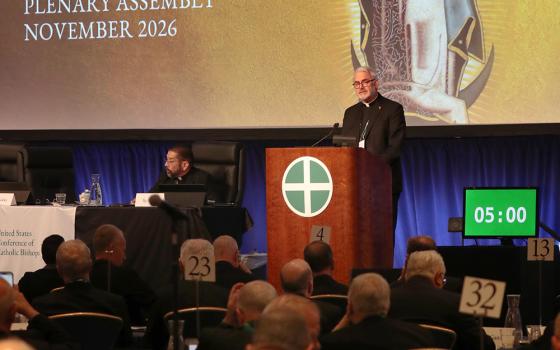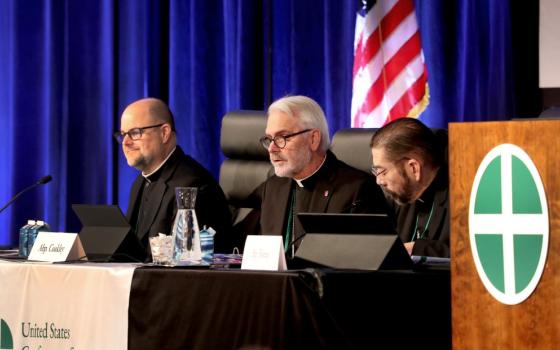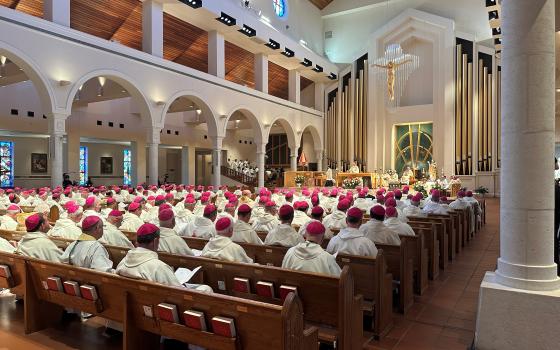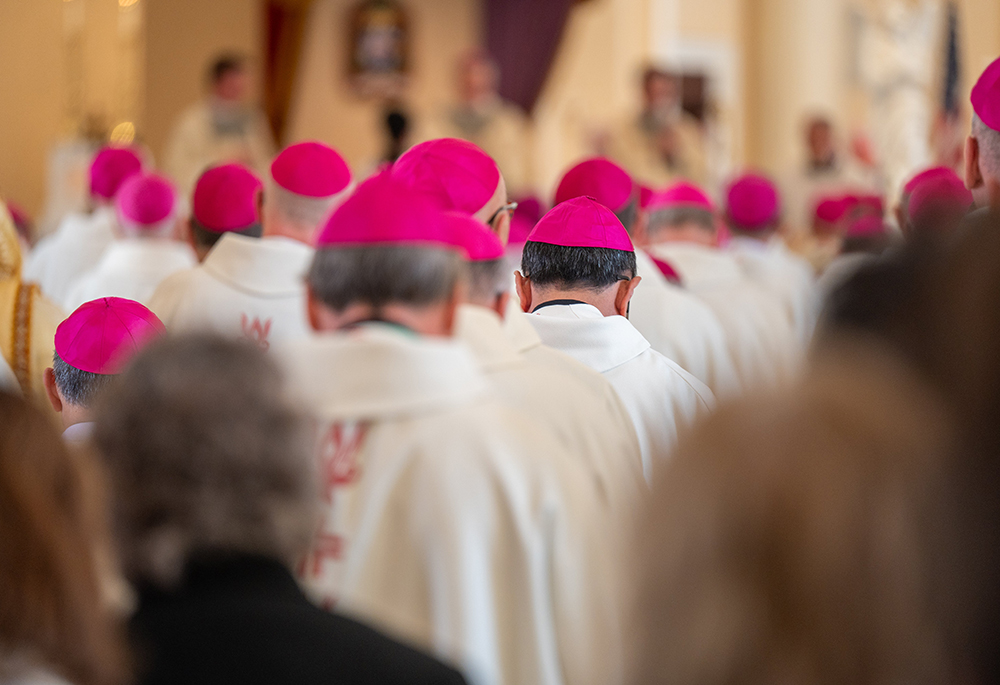
Bishops from around the country gather at the Basilica of the National Shrine of the Assumption of the Blessed Virgin Mary in Baltimore Nov. 10, 2025, for the opening Mass of the U.S. Conference of Catholic Bishops' fall plenary assembly. (OSV News/Catholic Review/Kevin J. Parks)

Join the Conversation
Send your thoughts to Letters to the Editor. Learn more
Greetings from Baltimore, where Brian Fraga and I are reporting on this week's plenary meeting of the U.S. bishops' conference. Look for additional postings throughout the next couple of days from both of us as we see if these typically opaque meetings nonetheless reveal something about the direction of the Catholic Church in this country.
One of the issues that is foundational to many others has to do with this question: How should the church engage the culture? The culture warrior model perfected by leaders like Archbishops Charles Chaput and Joseph Naumann has proven a failure. Not only has it added to the polarization within the church, it reduced our ecclesial identity to a brief litmus test of ethical issues, wrongly called "the nonnegotiables." In what sense are any of the church's teachings "negotiable"?
In the culture war model, public figures either agreed with the church on fraught issues, or they were pariahs, to be denied Communion and banned from any acknowledgement of the good they do on other issues. It embroiled the church in the nastiness of the political realm. Besides, poking people in the chest with your rhetorical finger, as Chaput, Naumann and their many acolytes did and do, is not a very effective way to persuade people.
Some prelates are at pains to chart a different course. Recently, Cardinal Blase Cupich was criticized when the archdiocese of Chicago awarded its Nostra Aetate award to Michael Sacks, even though Sacks is pro-choice on abortion. "Refusing to honor or engage with Jews solely because they hold conflicting religious or political positions can risk mimicking historic patterns of antisemitism through exclusion and bigotry, which, frighteningly, is on the rise," Cupich responded. "Nostra Aetate urges us to be proactive in separating personal and community respect from doctrinal agreement, ensuring that disagreement does not regress into hostility or social ostracization. This we cannot tolerate."
The issue is not what the church teaches about abortion. The issue is how we engage a pluralistic culture in which many people do not share our views on various issues.
Which brings me to a point Massimo Faggioli made in his new book Leo XIV and the Global Church which I reviewed last Friday. Faggioli writes of "a battle" over:
…very different political visions, including within the Western Christian world itself regarding types of politics, legitimizing sources, the scope of constitutions, and relationships between order and chaos. The United States is at the center of this conflict regarding the theology of politics, a conflict that is more radical and fundamental than were the culture wars of the last three or four decades.
In one sense, of course Faggioli is right. Even the long battle over abortion occurred within agreed upon constitutional and democratic parameters. It was the "legitimizing sources" that were increasingly divergent.
Abortion was the totem of the culture wars. What was at issue was not only abortion itself, but what it said about our society that we could bracket our solidarity so as to exclude an unborn child from any moral claims on us? There was a shift in the United States from an understanding of liberalism being about common interests (largely opposed to the moneyed interest) to a more libertarian liberalism, in which volition — "choice" — and personal experience were dominant. It is the difference between Arthur Schlesinger Jr. and John Stuart Mill.
This shift in political understanding mirrored a shift in theology. As Faggioli writes earlier in his book, "Prevost embodies the difference between social Catholicism and liberal Catholicism — a difference that remained below the surface in America and Europe during the first post-conciliar period but which had now emerged in the twenty-first century."
Conservatives face similar conundrums. Edmund Burke, the Irish MP who had supported the American colonies in the defense of their traditional rights, but opposed the French Revolution because of its antipathy to tradition, crafted a thoughtful kind of conservatism that saw politics as an organic expression of a people's identity, rooted in tradition, suspicious of innovation, and hostile to radical revolutionary impulses. In American history, conservatism was always more pro-business than pro-Burke. With Trump, conservatism has abandoned its principles for his personality, more cult than conscience. The Republican Party has its work cut out for itself as it charts a post-Trump landscape.
To be clear, these are not the discussions the bishops are having here in Baltimore about how to engage the culture. But if they want to consign the culture war model to history and become effective evangelizers of the culture without adding fuel to the fires of polarization, these are the underlying issues that will frame their understanding of the culture they seek to engage. It would be helpful if the theological community set aside its bizarre fascination with decolonialism and deconstructionism and helped the bishops think about how to engage the culture constructively and respectfully.
Editor's note: You are reading a selection from Michael Sean Winters' weekly newsletter. To get the full edition — including the "In the News" link roundup — delivered 24 hours before it appears online, sign up here!
Advertisement