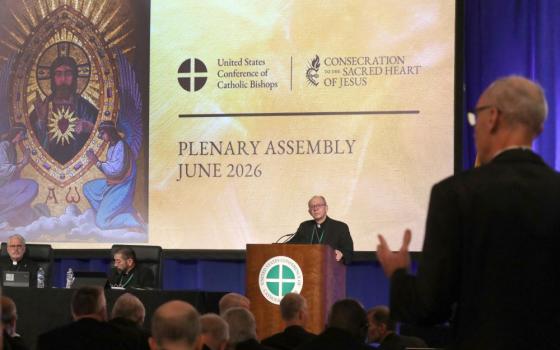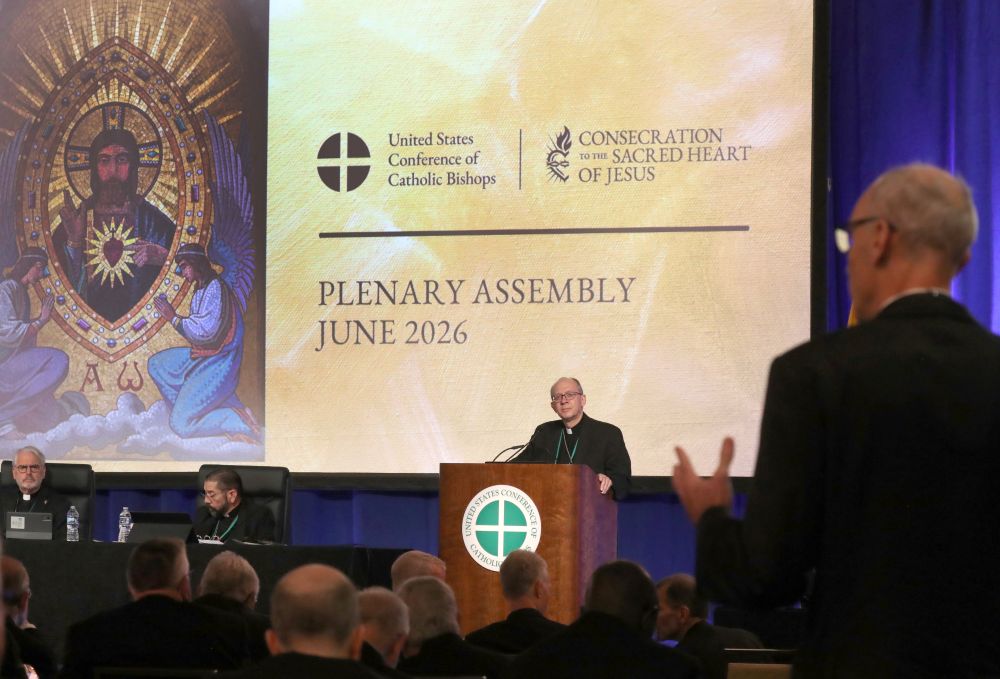
Bishop Barry Knestout of Richmond, Va., chairman of the bishops' Committee on the Protection of Children and Young People, listens as Baltimore Auxiliary Bishop Adam Parker asks a question during a June 11, 2026, session of the annual spring meeting of the U.S. Conference of Catholic Bishops in Orlando, Fla. (OSV News/Bob Roller)

by Brian Fraga
Staff Reporter
Join the Conversation
Send your thoughts to Letters to the Editor. Learn more
After considerable debate, the U.S. Catholic bishops voted June 11 to update their "Charter for the Protection of Children and Young People," including adding language that emphasizes "the right of an accused to the presumption of innocence."
During the second day of the bishops' spring plenary in Orlando, a handful of bishops sought to delay a vote on updating the 2002 document on clergy sexual abuse allegations and prevention.
The revised text includes a new glossary of terms and language on the right of accused clergy, according to Bishop Barry Knestout of Richmond, Virginia, the chairman of the bishops conference's Committee on the Protection of Children and Young People.
In a prepared statement, Knestout said the addition of "presumed innocence" draws "from the revisions of Book VI of the Code of Canon Law."
Other changes that Knestout mentioned in his June 10 presentation on the revisions included "the clear allowance for electronic letters of suitability," also known as Letters of Good Standing, that clergy receive from bishops or religious superiors, as well as "an added reference to the protection of information under the seal of the Sacrament of Penance," meaning that information divulged during confession would not be part of the official record.
Commonly known as the Dallas Charter, the document consists of policy commitments that the bishops created in 2002 at their meeting in Dallas amid a wave of reports about the clergy sex abuse crisis in the United States. The charter has been revised three times since.
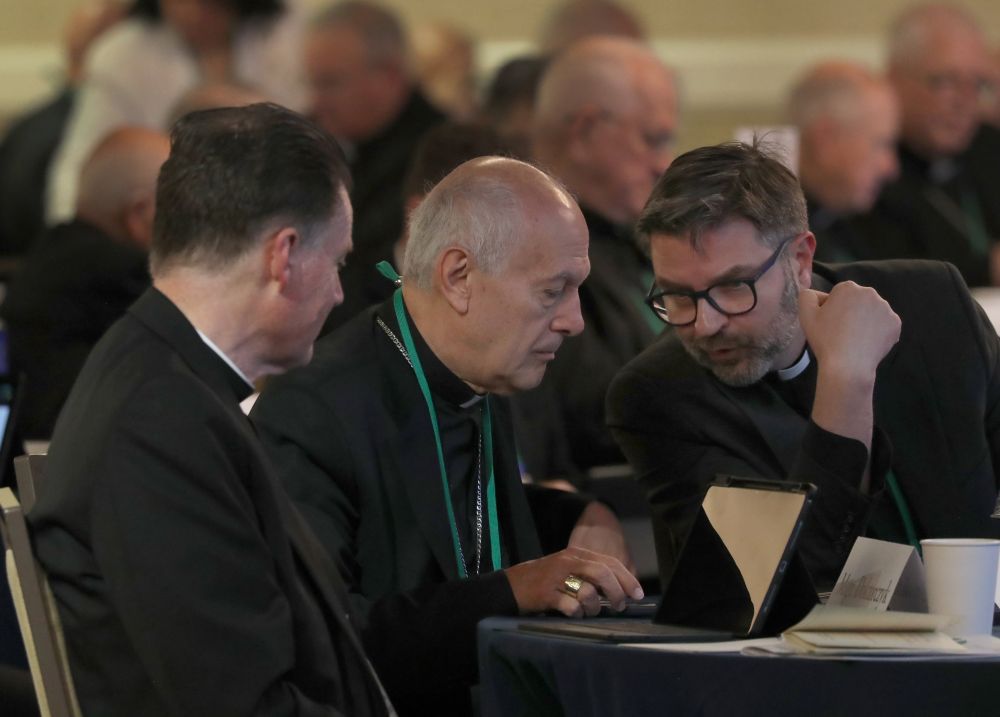
Archbishop Gabriele Caccia, the Vatican's new apostolic nuncio to the United States, chats with another prelate during a June 11, 2026, session of the annual spring meeting of the U.S. Conference of Catholic Bishops in Orlando, Fla. (OSV News/Bob Roller)
The revisions do not include language that some survivor advocacy groups had sought, namely that the charter's scope should have been expanded to include the sexual abuse of adults in the church.
Knestout said June 10 that his committee's position is that the sexual abuse of adults is "outside of the scope of the charter." He said the committee on clergy, consecrated life and vocations will develop a new document "focusing on standards of professional behavior for both clergy and laity with adults."
The omission still disappointed groups such as Awake, a Wisconsin-based nonprofit that supports and advocates for sex abuse survivors in the Catholic Church.
"Unfortunately, these proposed revisions do not address an urgent issue: the abuse of adults by Catholic leaders," Sarah Larson, executive director of Awake, said in a statement. Larson said that adults continue to experience "devastating abuse in situations of vulnerability" with few safeguards in place to protect them from abuse in the church.
"Many survivors who have been abused as adults have been deeply wounded not only by the abuse itself, but also by the refusal of some Church leaders and community members to acknowledge that what occurred was, in fact, abuse," Larson said.
Larson added that the Catholic Church in the United States has made "real progress" in the last 20 years to protect children, but added that it is "high time for the US bishops to seriously commit to protections for adults. This cannot wait."
Terence McKiernan and Anne Barrett Doyle of BishopAccountability.org, a website that tracks the clergy sex abuse crisis, said in a statement that a draft of the revised charter, initially reported by The Pillar, an online Catholic newsletter, reveals "subtle signs that the bishops are backing away from their commitment to survivors and the value of accountability."
"There is a general tone of retreat from the systems and vigor of the original Charter and in particular the original National Review Board," they said, referring to the lay committee that advises the bishops on the implementation of the charter. McKiernan and Doyle also said that in the revised charter, "a self-satisfied, even self-congratulatory tone has replaced the shock and horror of 2002."
Advertisement
On June 10, Archbishop Shawn McKnight of Kansas City, Kansas, pushed back during Knestout's presentation on the revisions and urged the bishops to take more time to consult survivors and priests.
" I am worried how the language presently in the draft will impact our known victims as well as our unknown victims," McKnight said. "I'm also concerned about how our priests are going to respond."
After the bishops approved several amendments to the revised charter, McKnight sought to postpone voting on the document until the bishops' plenary meeting in November in order to allow for more consultations at the local level.
"I just think it's so important … This document is too important," McKnight said. Other bishops agreed, including Seattle Archbishop Paul Etienne, who added: "I personally would like the opportunity to share this document as amended with my review board."
Knestout said there had been "a lot of consultation already" regarding the proposed revisions to the charter. After a majority of the bishops voted against postponing the vote, more than two-thirds voted to approve the revisions to the charter.