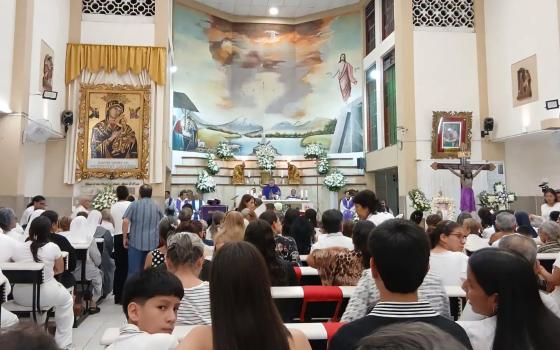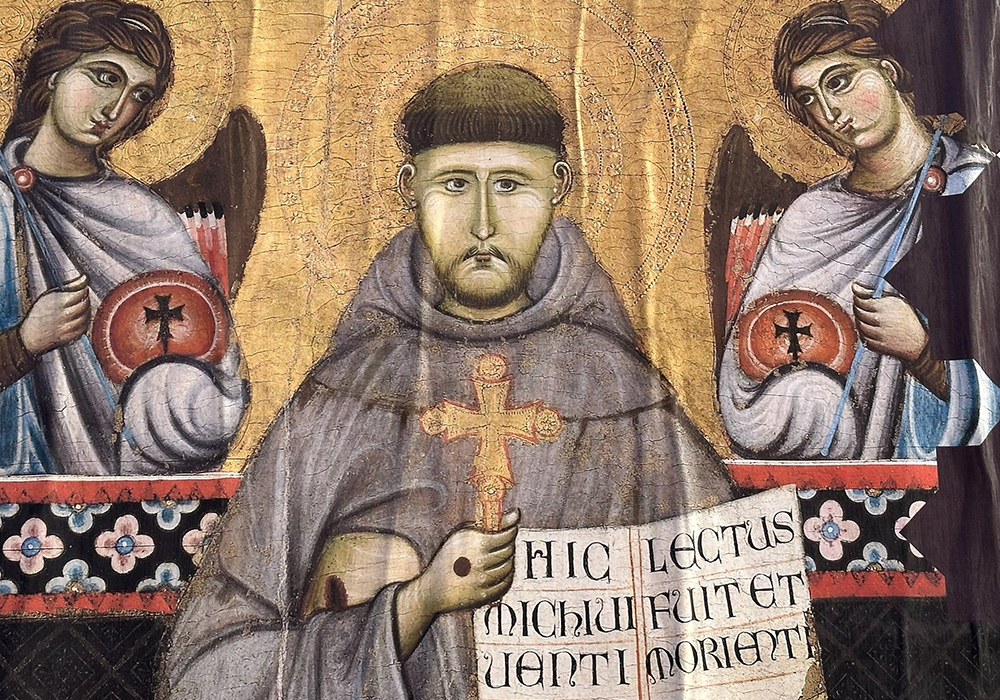
A 12th-century painting of St. Francis with Angels by an unknown artist known as the Master of St. Francis is on display at the Basilica of St. Mary of the Angels in Assisi, Italy, Feb. 22, 2026. The basilica encompasses the chapel called the Porziuncola where the saint founded the Franciscan order. (OSV News/Courtney Mares)

by Daniel P. Horan
Join the Conversation
Send your thoughts to Letters to the Editor. Learn more
It has been nearly two years since I shared publicly in NCR that I had decided to leave religious life after a lengthy period of prayer, reflection and dialogue. I had been a member of the Franciscan order for 20 years and an ordained priest for more than a dozen years, and as an academic and public figure beyond pastoral ministry, I was used to sharing my thoughts and ideas with the broader world.
However, as a private person by disposition, I rarely talked about my personal life in columns or other public settings, choosing instead to focus on matters of theology, culture, church and politics. So, relaying this deeply personal news in such a public context was a new experience for me and one that brought many unexpected graces.
As I shared in my 2024 column announcing my discernment and transition (or transitus in Latin, as I explained then) from religious life to lay life, I felt deeply supported by my Franciscan community in general and those in leadership in particular. This was further evidenced by the overwhelming number of texts, phone calls, emails and letters of support I received from fellow Franciscans, as well as clergy, laity and even a number of bishops in the United States and around the world. I was humbled and remain grateful for this show of care and support.
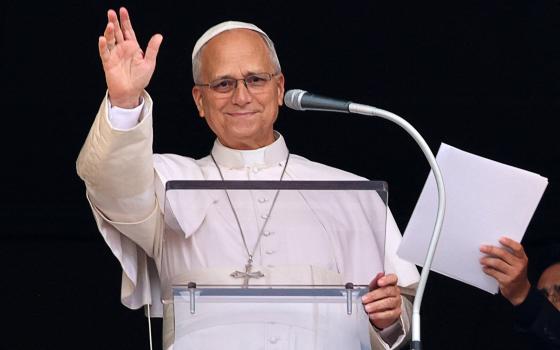
Just a few months after I made the news public, the process that I had already begun at the time to request formal dispensation from my religious vows and what canon law calls "the obligations of Holy Orders," concluded with the support of the newly elected bishop of Rome. Pope Leo XIV granted my prayerful request, opening up the pathway for a new chapter in my spiritual journey as a Franciscan in mind and heart if no longer a friar by profession.
Being released from your religious vows is rather straightforward. However, the matter of Holy Orders is a bit more complicated. The church's sacramental theology is very clear: You cannot undo a valid sacrament. Therefore, not even the pope can "unordain" a validly ordained priest. Instead, I was granted dispensation from the "obligations" of Holy Orders (mandatory celebration of the Liturgy of the Hours, clerical celibacy, etc.).
Advertisement
While it is right to say that I have formally left religious life, it is perhaps best to think, as I sometimes do, about retiring from priestly ministry. I have no regrets about my decades of public ministry, but those days and the public celebration of the sacraments are behind me like a physician who retires from practicing medicine or a military officer returning to civilian life.
Speaking of new chapters, one of the updates I have to share is my celebration of another sacrament, this time of marriage! Among the many graces I have experienced over the last two years has been the blessing and opportunity to explore my relationship with a dear friend whom I have known for almost 15 years. While not the reason for my vocational discernment and ultimate departure from religious life, once that decision was formalized, the Holy Spirit opened up this other possibility.
I know it's a cliché to talk about "marrying your best friend," but in my case, there is no better way to describe the experience of this other transition, from close friends and colleagues to partners in marriage. My now-wife is also a Catholic theologian and professor, someone who is committed to her faith as well as to social justice and advocating for those at the margins of society and the church.
We have worked together over the years and known each other as friends, so it felt less like we were starting something new and more like deepening a love, connection and spirit of mutual respect that already had a firm foundation. Neither of us would have expected our lives to turn out as they did, but we are so happy and grateful that they have. And that was confirmed when earlier this year we were married in the church in a liturgy celebrated by a Jesuit priest who is a friend and colleague along with our immediate family members.
While it may seem to some that it would be strange to go from a profound sense of God's calling to one state in life as a religious and a ministerial priest to an equally profound sense of God's calling to married life, all I can say is that it has felt grace-filled and genuinely inspired by the Holy Spirit. God is indeed good, but God is also mysterious and full of surprises.
In addition to these updates, there is at least one observation that I want to share about my experience over these last two years. In a way I did not anticipate, dozens of men and women have reached out to me, written to me, and approached me at public events to share their own experiences and stories of leaving religious life or diocesan priesthood. I have had many conversations over coffee or meals with people who shared with me that they had never seen someone be so transparent or share publicly their experience of discernment and departure from religious or ordained life.
While some of these folks had positive experiences similar to mine, where their religious congregation or diocesan bishop were supportive and accompanied them pastorally, the majority of the stories were heartbreaking. In such cases, religious superiors and bishops made their lives difficult, immediately cut off financial and spiritual support, and in some instances refused to support their petitions to the Vatican to be formally dispensed from their vows or the obligations of Holy Orders.
For a number of decades, particularly during the long pontificate of John Paul II, it was the Vatican that refused to acknowledge these cases and withheld dispensation, which meant that many of these men and women would not be allowed to be married in the church. They were in ecclesiastical limbo, trapped between the public ministry they were no longer permitted to exercise and the ordinary lay life they felt called now to live.
Hearing these stories has been saddening, not the least because nearly every one of these former religious or diocesan priests continued to be people who practiced their faith, attended Mass regularly, and were engaged in their parish communities. Despite the disrespect and cruelty they experienced, these men and women forged their own way forward, and some eventually found resolution to the unjust canonical circumstances they had suffered for decades.
Although everybody's story is distinctive, there was one theme that continually surfaced in these conversations: shame.
While each person I spoke with felt they were following God's will with integrity, nearly all of them spoke about how they were often made to feel ashamed. To be clear, it was not that the individuals leaving were ashamed of their discernment or decision, it was how they were made to feel as a result of religious superiors or bishops or other members of their community who communicated in overt and tacit ways that they should feel badly about the path their spiritual journey and life had taken. As a result, the message they received was loud and clear: Do not talk about this, do not acknowledge this, just move forward quietly.
But, as I shared with each of them when talking about my own experience, I did not feel that way, nor was I made to feel ashamed or pressured to regret my decades of religious life and ministry. This is why I had no reservations about sharing my story publicly, giving witness to how — through lots of prayer, spiritual direction, counseling and dialogue — I came to a place where I could see this transition not as a reversal or repudiation, but as a new chapter of life and faith led by the Spirit. And I grew in my gratitude for the fraternal and spiritual support shown to me by my own religious order.
Yet I'm left thinking about what we, the church, owe to those who voluntarily and faithfully left ordained ministry and religious life but were met with a very different reception than I was. Their stories bear witness to yet another example of the church's dangerous culture of shame and silencing; to a sinful legacy of disrespect, cruelty and abandonment; and to the deep-seated clericalism that motivates these sorts of tragic behaviors. We need to do better in loving and caring for the thousands of women and men around the world who, despite such pressures, continue to keep the faith and live their lives with integrity and love.