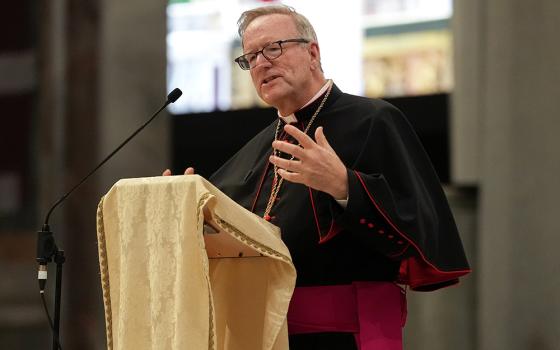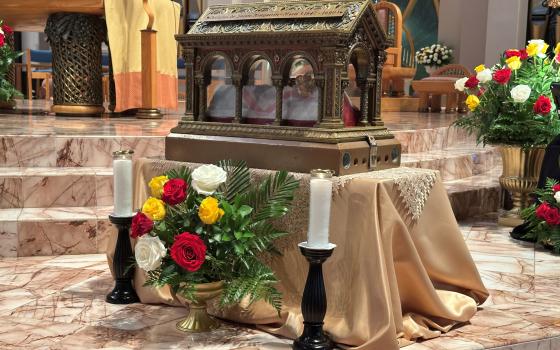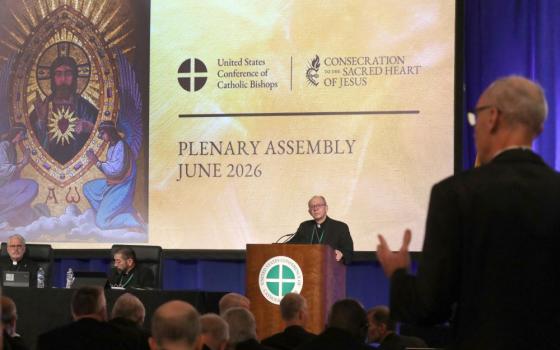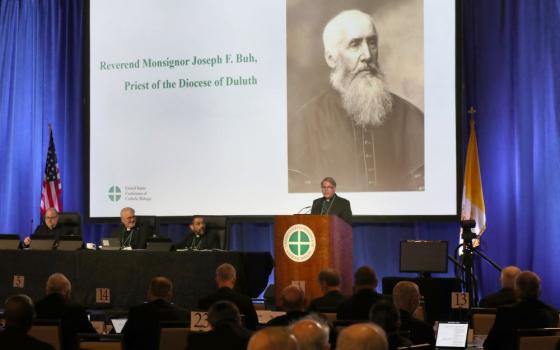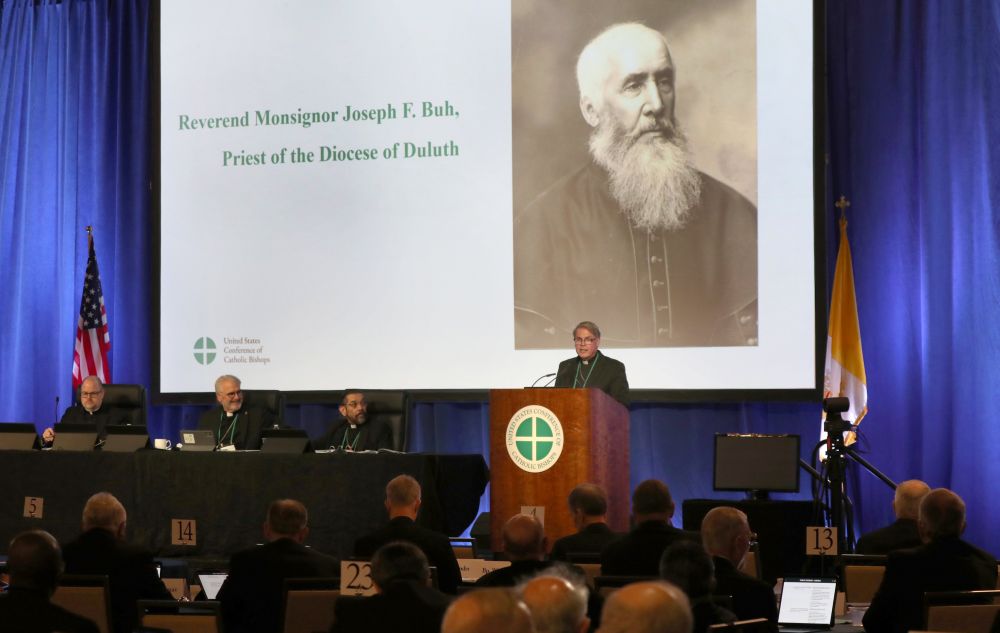
Bishop Daniel Felton of Duluth, Minn., speaks about the sainthood cause for Msgr. Joseph Francis Buh during a June 10, 2026, session of the annual spring meeting of the U.S. Conference of Catholic Bishops in Orlando, Fla. Buh was a missionary priest who served Northeastern Minnesota and his cause was first opened in 2023. (OSV News/Bob Roller)
by Brian Fraga
Staff Reporter
Join the Conversation
Send your thoughts to Letters to the Editor. Learn more
Six months after the U.S. bishops overwhelmingly approved a "special pastoral message" that expressed their solidarity with migrants amid the Trump administration's mass deportation campaign, the group's new president said the message remained important.
"The concern, the grief over how people are being treated expressed in our message remains as relevant now six months later, as it did last November," said Oklahoma City Archbishop Paul Coakley, who was elected president of the bishops conference in November.
Speaking June 10, the opening day of the U.S. bishops' spring assembly in Orlando, Florida, Coakley said the message demonstrated the bishops' united concern as pastors "for the dignity of every person, especially our migrant brothers and sisters."
He said the bishops recognize the right of nations to regulate their borders and that the bishops continue to advocate for "meaningful reform of our nation's immigration laws and procedures."
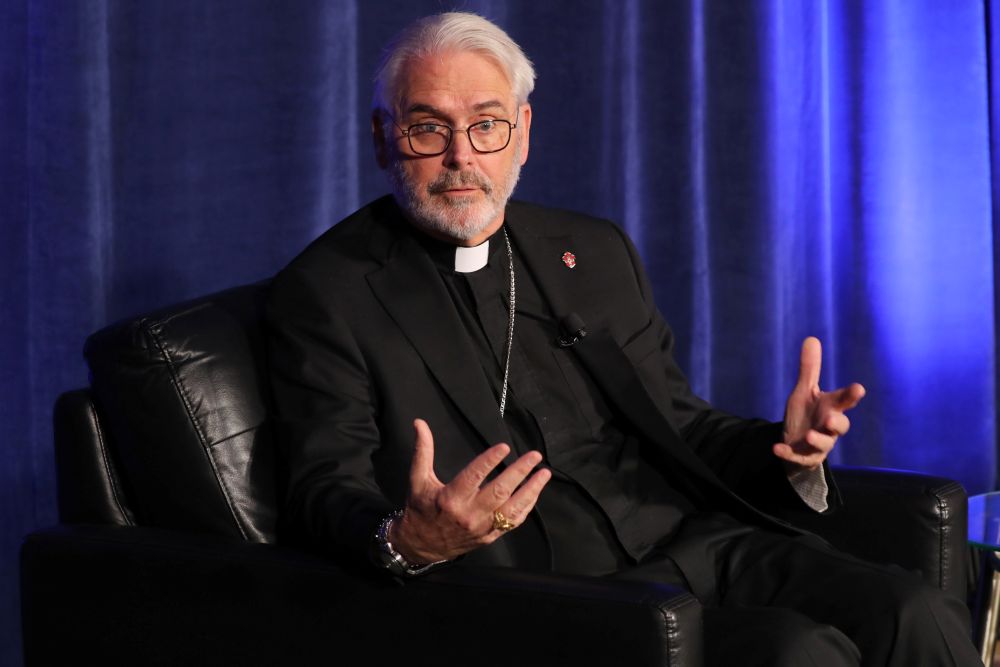
Archbishop Paul Coakley of Oklahoma City, president of the U.S. Conference of Catholic Bishops, gestures during a news briefing during a June 10, 2026, session of the annual spring meeting of the USCCB in Orlando, Fla. (OSV News/Bob Roller)
In an "age of constant flux, of forced migration, polarization, disruptions, climatic and economic upheavals, artificial intelligence and wars, in a time when so many are wondering what it even means to be a human person, to restore hope, in such a time as this, the truth of Christ must be proclaimed all the more confidently," Coakley said.
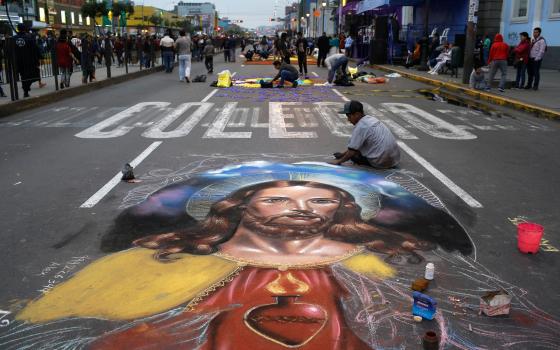
Archbishop Gabriele Giordano Caccia, papal nuncio to the United States, reflected on the themes of peace, communion and mission, encouraging the bishops to root their ministry in the Sacred Heart of Jesus.
"Our consecration of this nation, and of ourselves, to the Sacred Heart can help anchor our episcopal ministry in a relationship with Christ," Caccia said. "Rooted in our own communion with Jesus, we can become builders of peace and communion among ourselves and with others."
The speeches were delivered during the first of two public sessions the bishops are holding this week in Orlando. The plenary's relatively light agenda includes items pertaining to canonization causes, liturgical texts and an update on World Youth Day 2027 in Seoul. The bishops will also vote on revising the "Charter for the Protection of Children and Young People." On June 11, they will consecrate the United States to the Sacred Heart of Jesus in advance of the nation's 250th anniversary.
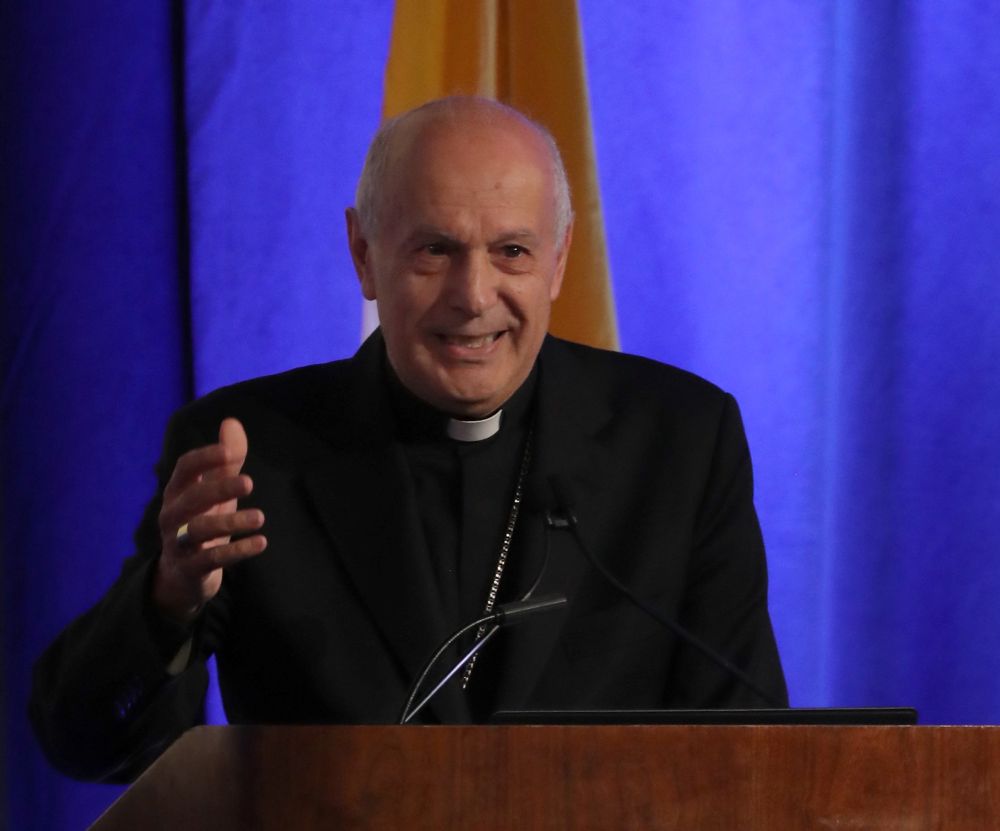
Archbishop Gabriele Caccia, the Vatican's new apostolic nuncio to the United States, speaks June 10, 2026, during the annual spring meeting of the U.S. Conference of Catholic Bishops in Orlando, Fla. (OSV News/Bob Roller)
In his address, Caccia touched on the church's need for renewal, the importance of dialogue and encounter and the wounds of the clergy sex abuse crisis.
"I see the election of Pope Leo as a gift of the Holy Spirit," Caccia said, "encouraging the church in this country, on one hand to foster what is best in her tradition and on the other to continue facing with determination those wounds in her recent history that have caused much suffering especially through the cases of abuse."
Caccia commended his predecessor, Cardinal Christophe Pierre, who served as the Vatican's ambassador to the United States from 2016 until earlier this year.
"For many years, he served the Holy Father and the church in the United States with generosity and devotion, traveling throughout the country so that he could experience the reality of your local Churches. I am grateful for the path he walked with you," Caccia said.
He expressed his "great esteem for the church in America," which he said "has given so much to the universal Church — even giving us our pope!" Caccia also presented himself as a humble "brother bishop" to the American prelates.
"In that sense, I hope you will feel free to speak with me in open conversation and dialogue, being assured that my service here is one of listening, trust, and shared discernment within the church that we are all serving together," Caccia said.
Coakley spoke on the defense of human dignity, highlighting the unborn, the elderly and the vulnerable. He said human dignity is threatened by, among other things, "the scourge of racism, by abuse, disdain and contempt, especially towards the poor, the stranger, the condemned and the outcast."
Advertisement
"Society tends to disregard and cast aside what it deems useless," Coakley said, "but life, human life, can never be adequately valued based on it being useful or useless, or a burden or unworthy of protection."
Coakley spoke on the need to counter polarization through dialogue and encounter. He mentioned his visit to the White House in January, adding that the bishops recognize "the need for further progress" and the importance to "stay in the conversation."
"Together we are working on ways to promote faithful citizenship," Coakley said, "through dialogue, deeper realization of who is our neighbor, and by placing faith before politics — a faith that inspires hope, respect, and the pursuit of the common good."
Coakley also referenced Pope Leo XIV's new encyclical, Magnifica Humanitas, and lauded the large numbers of people who recently entered the Catholic Church as he reaffirmed the bishops' commitments to dialogue and building bridges.
"We must never give up on those who are different or see things differently," Coakley said.