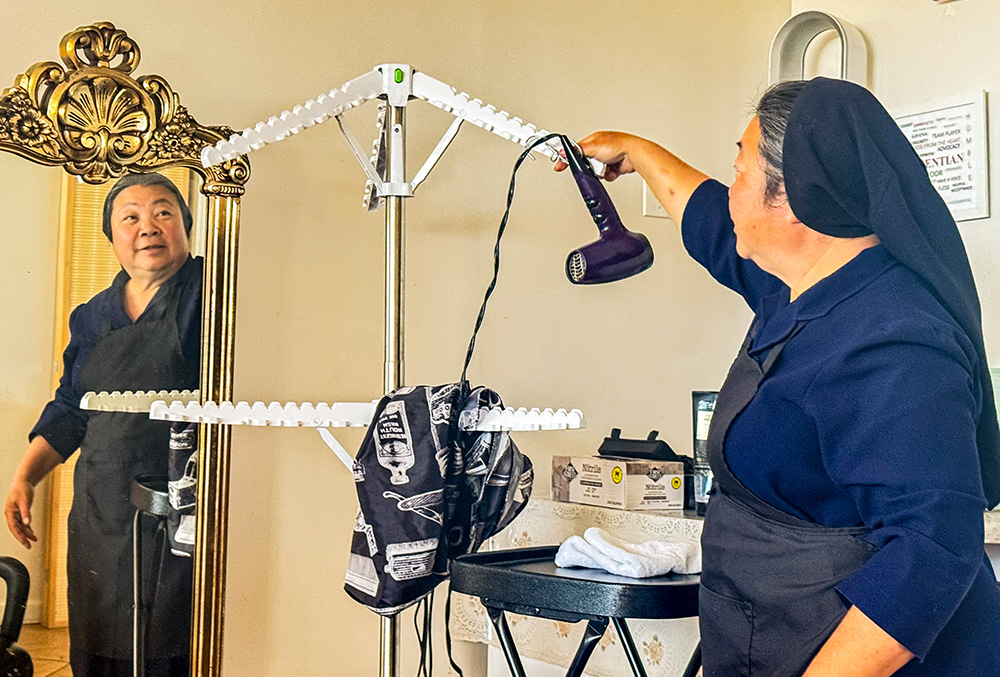
Daughter of Charity Sr. Oanh Tran cleans up her hair styling station at the Fr. Virgil Cordano Center June 10, 2026, in Santa Barbara, California. (GSR photo/ Rhina Guidos)

by Rhina Guidos
Join the Conversation
Send your thoughts to Letters to the Editor. Learn more
In the bustling room of a strip mall, Daughter of Charity Sr. Oanh Tran mixes bath salts with warm water in a plastic basin, much in the same way she mixes the worlds of cosmetology, faith and her love of God into her daily ministry: with tenderness.
Though she's a nun and a nurse, to those who come into contact with Tran in her cosmetology and health ministry at the Fr. Virgil Cordano Center, which serves Santa Barbara's poor, Tran doesn't represent an imposing health authority nor a distant spiritual figure. She is the one who restores their dignity, washing and sometimes mending their feet, and cutting like a surgeon through matted hair to treat itchy scalps from conditions such as lice infections, prevalent among folks who live in shelters.
And often, like her fellow hairdressers, she also listens to her clients' stories, which, for them, involve the trials and triumphs of the poor.
"I love this work. It makes my prayers real," Tran told Global Sisters Report.
Before she devoted her life to God, Tran devoted her time to studying beauty treatments, including hair styling, skin and nail care. After arriving in 1989 to the U.S. from her native Vietnam, Tran began studying the trade as part of a plan of achieving the American dream.
"When we came here, we had empty hands," she said, recalling the need to have a backup plan with a second job.
Cosmetology seemed like a popular and stable industry to fall back on, so she started working toward earning a license that would allow her to practice.
Advertisement
Back then, Tran had briefly considered religious life, but it meant giving up too much of what she wanted in life, and she put it off to the side. Later, while praying through the stress of her cosmetology exam, she began having vivid dreams of a mysterious statue of a man. In conversations with the Blessed Virgin Mary during prayer, and in her dreams, she would ask: "Who is that guy?"
The answer came when she visited a friend discerning with the Daughters of Charity in San Jose, California. Entering the sisters' chapel, she saw a statue, immediately recognizing the figure from her dreams: St. Vincent de Paul, one of the founders of the congregation whose charism focuses on active service of the poor.
"My body was shaking," she recalled of this moment of clarity. "I'm scared, but at the same time, I was happy. I said, 'God, I will be your daughter of charity. I will follow you.' At that moment, I made the decision."
She finished getting her cosmetology license, but instead of using it to pursue an economic dream, she used it to follow a divine one: She entered the congregation in 2001 and began cutting sisters' hair. Then she used her skills serving poor and elderly communities in various parts of the country, wherever the congregation sent her.
These days, she uses her cosmetology skills among those who need her at the Cordano Center, where her community has teamed up with Franciscan friars from the Old Mission of Santa Barbara to provide food, clothing, healthcare and other social services for those who couldn't otherwise afford them.
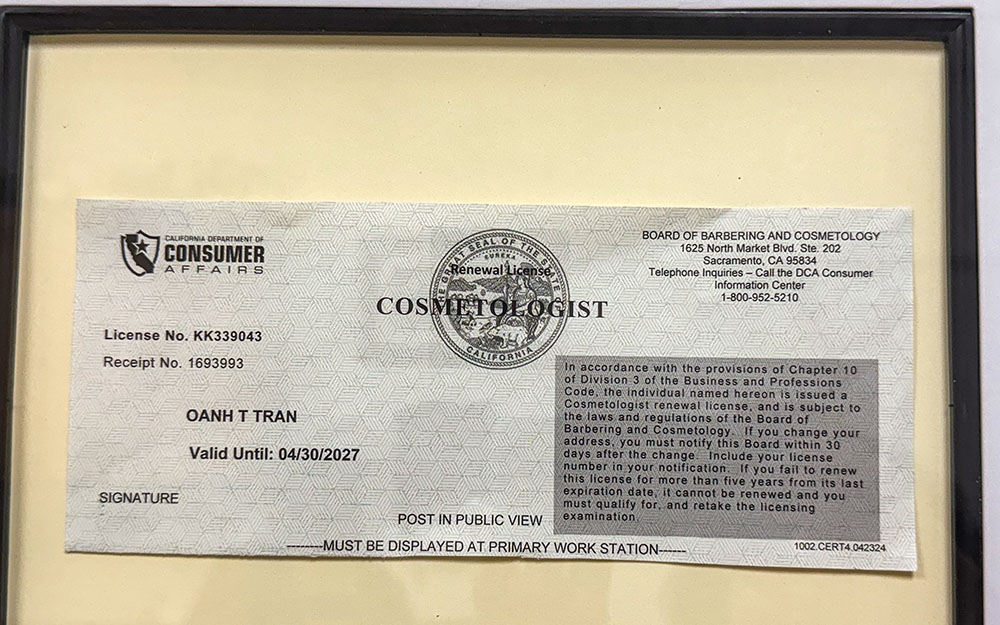
Daughter of Charity Sr. Oanh Tran displays her cosmetology license near her hair styling station at the Fr. Virgil Cordano Center in Santa Barbara, California. (GSR photo/Rhina Guidos)
Several days a week, Tran puts an apron over her blue habit and veil, and gets behind a styling chair. That's where clients, some battling addiction, alcoholism or mental illness, talk to her as she works. She recently welcomed a regular after a long absence and asked him where he'd been.
She recalled, "One guy said, 'I've been in jail. I slept at the beach. It was too cold. ... I tore off the fabric [from a beach umbrella] and used it as a blanket to keep myself warm and I didn't know that they had a camera. I'm not wrong. I just protected myself from death.' "
Sometimes while clients talk or rest during a haircut or while they soak their feet in a warm water basin to prep for a pedicure, she checks their ears, cleans wounds, dispenses fungus medication, and hands out clean socks and shoes. If an injury is beyond her scope of nursing, she tries to lead them toward urgent care.
The work requires a thick skin and a patient heart. She recalls a man who came in with a deep, infected wound, oozing with pus. As a nurse, she tried to tell him how important it was to change the dressing daily and urged him to return, but after healing slightly, he disappeared.
"At first, I was upset," she admitted. "But later on, I said, 'That's the way of life.' I don't have to get upset about it."
That's because for many, the center is a rare safe zone and a welcoming place in a wealthy area where the poor are unwanted in public spaces.
"They come here to sleep, to rest," Tran said. "Some don't pray or anything, but the people [at the center] welcome them, love them, accept them for who they are."
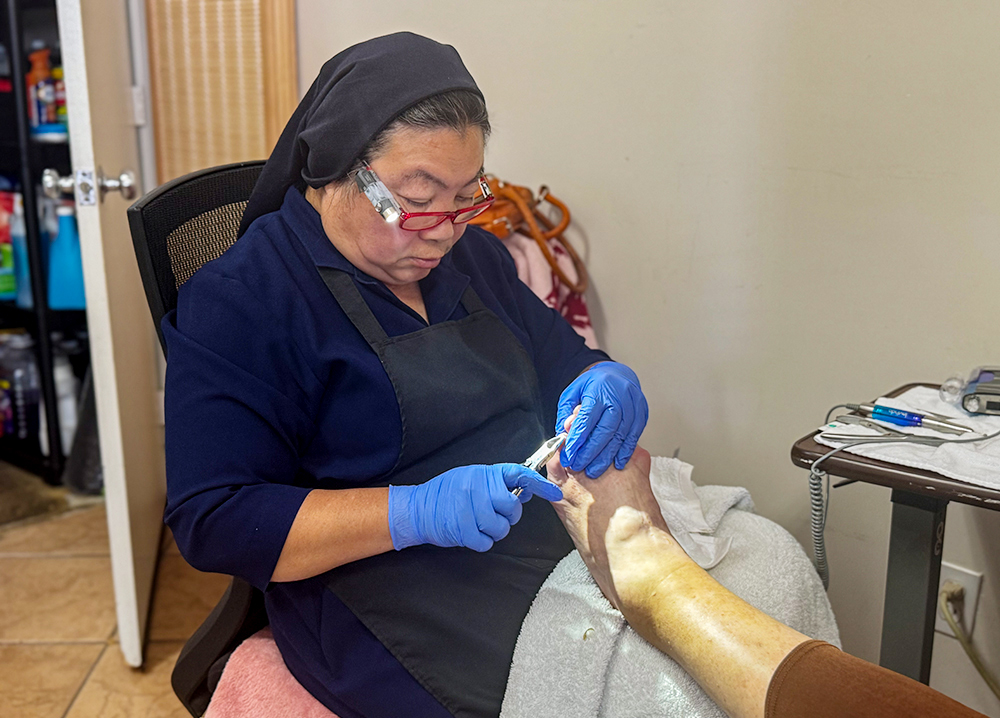
Daughter of Charity Sr. Oanh Tran clips the nails of a diabetic woman June 10, 2026, at the Fr. Virgil Cordano Center in Santa Barbara, California. (GSR photo/Rhina Guidos)
Sometimes she records their physical transformations in before-and-after photos on her phone and happily shows them off. One photo shows a man with long, matted hair looking serious; the next shows him handsome, clean-cut and smiling.
"Oh God, I could not recognize myself," she remembers him saying.
Like anyone who gets a haircut, some want to look like a movie star after a trim, but for those who couldn't otherwise pay for a cut, her work gives them something beyond the superficial: confidence.
Because they've come to know her, they've also learned to care for her, too. It's a two-way street, she said of her ministry. Tran, who loves to fish, said she comes into contact with some of the visitors to the center at nearby rivers or streams, but instead of being concerned about being alone in isolated places, she feels she has allies and friends watching out for her, guarding, making sure she'll be OK.
Those encounters have profoundly affected her faith, she said. In 2025, she graduated from nursing school, which she took up so she could better help "the people who bring me closer to God."
Now her salon chair offers something a standard clinic cannot: professional medical assessment along with the love of God.
"When I cut their hair, I think that I touch Jesus so I feel I am closer to him more," she told GSR. "At the same time the person who receives the haircut, they feel God is touching them. ... I put my heart and my soul and my mind into it and they can feel the love of God. They feel comfort. They feel that God is there and gives them hope and comfort."
"They help me and I help them."