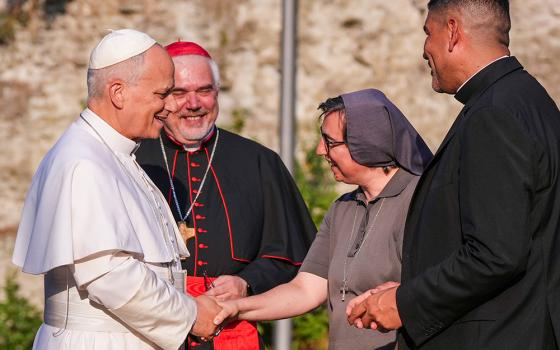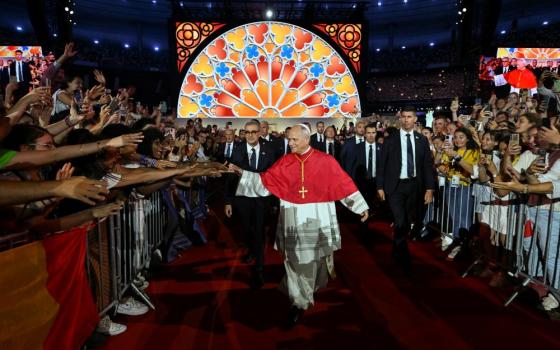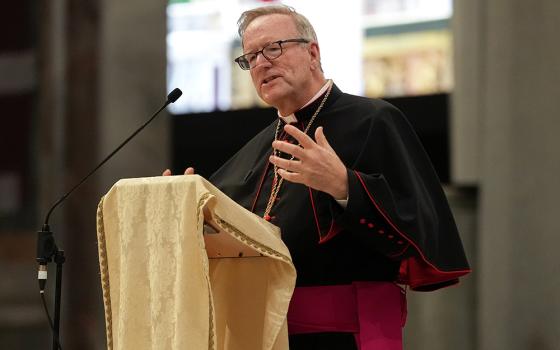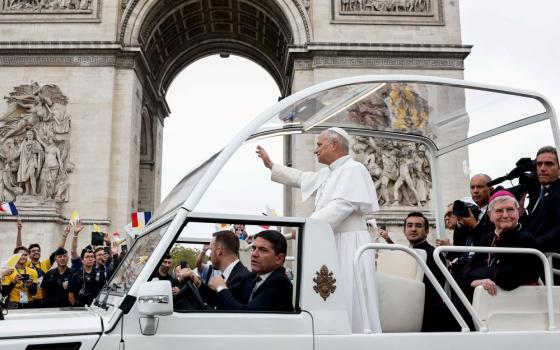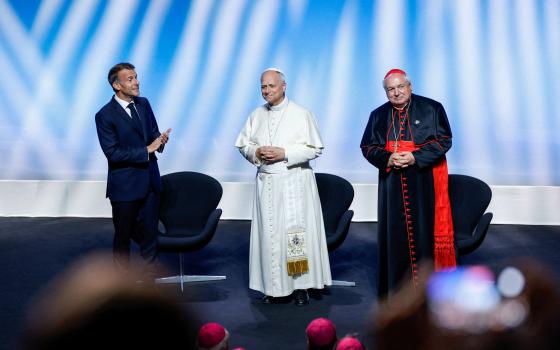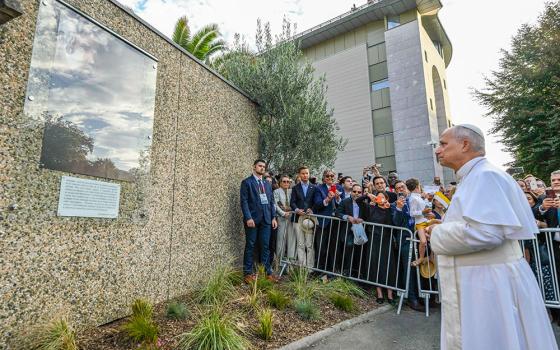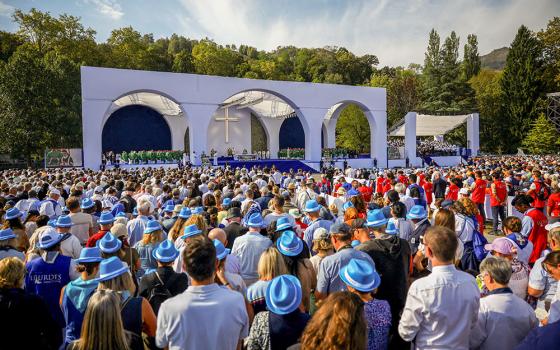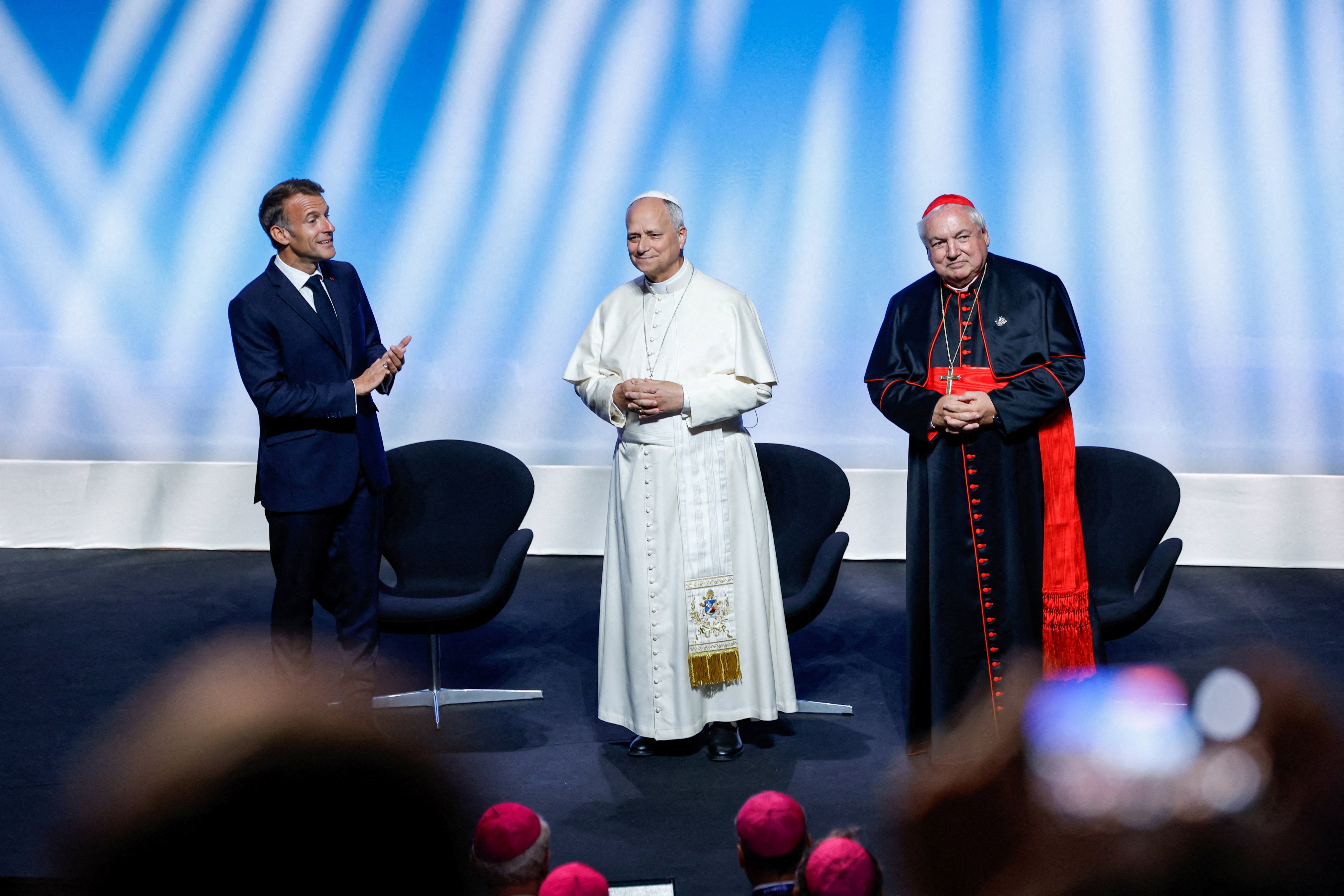
French President Emmanuel Macron, Pope Leo XIV and Cardinal Jean-Marc Aveline attend a meeting titled "At the Roots of Europe for Peace and Unity" at the Robert Schuman convention center in Metz Sept. 28, 2026, as part of Pope Leo's four-day apostolic journey to France. (OSV News/Reuters/Remo Casilli)

Join the Conversation
Send your thoughts to Letters to the Editor. Learn more
At a moment in history when relations between nations "are becoming increasingly barbaric," dialogue and multilateralism remain "the best antidote to the desire for domination, which lies at the root of every conflict," Pope Leo XIV said on the last of his four days in France from a town near the German border.
From Metz, which has changed hands between France and Germany after various wars throughout its history, the pope said on Sept. 28 that the pursuit of peace throughout the world "must not be confused with a naïve form of pacifism" and that world leaders must "guard against the illusion that rearmament is the answer."
Following the war in Ukraine and the Trump administration's reduction in military support for Europe, both France and Germany have pledged to ramp up their military spending as part of a larger trend in European rearmament.
Leo, who has repeatedly pushed back against the logic of stockpiling arms to ensure peace, said in Metz that world leaders must ask themselves whether they are truly working for peace or seeking to "better prepare ourselves for wars that we assume are still to come."
In today's international order, where "the value of keeping one's word is dismissed" and "people boast of lies and deceit," the pope said that Europe can "break this cycle through the respect for others that it has learned to cultivate and preserve."
The city of Metz is strongly associated with its most famous resident, Robert Schuman, the Franco-Luxembourgish statesman considered a founding father of modern Europe and whose cause for sainthood is open in the Catholic Church. He is principally remembered for proposing to link France and Germany's coal and steel industries in 1950 to make war between the two nations impossible, a move which laid the groundwork for the creation of the European Union.
Speaking in a conference center bearing Schuman's name, Cardinal Jean-Marc Aveline of Marseille, president of the French bishops' conference, said in his introduction that when he had met the pope to discuss his visit to France, he had proposed multiple destinations in addition to Paris and Lourdes, where the pope had visited over the previous three days, before suggesting that a visit to Metz "would make it possible to discuss war and peace, Europe, and reconciliation."
When it came time to choose, the pope told the cardinal that he had settled on Metz, "for the cause of Europe!" Aveline said. Rather than visit cities where European institutions are based, such as in Brussels or Strasbourg, the cardinal stressed the symbolic significance of the pope's visit to a region where the land had been "bloodied by wars and hatred," and "the bold aspirations for reconciliation among peoples took root."
Advertisement
French President Emmanuel Macron, who met with the pope in Paris and traveled to Metz for the occasion, said before the pope's speech that contemporary Europe must have the courage "not to give in to isolationism, to hatred of others, or to the resurgence of divisive nationalism."
Though Macron has championed multilateralism and a strong Europe throughout his nine years in office, current polls ahead of the April 2027 French presidential election show far-right parliamentarian Marine Le Pen, who has been fiercely critical of the European Union, currently leading the pack of candidates.
Prior to meeting with political leaders, the pope met with interreligious leaders at the conference center in Metz, where he said that "to invoke God’s name in order to justify violence or oppression is to profane that name."
"Nothing that disfigures human dignity can claim to be inspired by God," Leo said prior to celebrating Mass in Metz before returning to Rome. "Religious discourse must constantly call for the disarmament of hearts and words."
The National Catholic Reporter's Rome Bureau is made possible in part by the generosity of Joan and Bob McGrath.
Advertisement