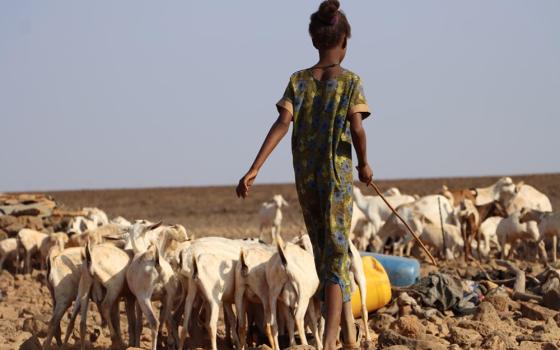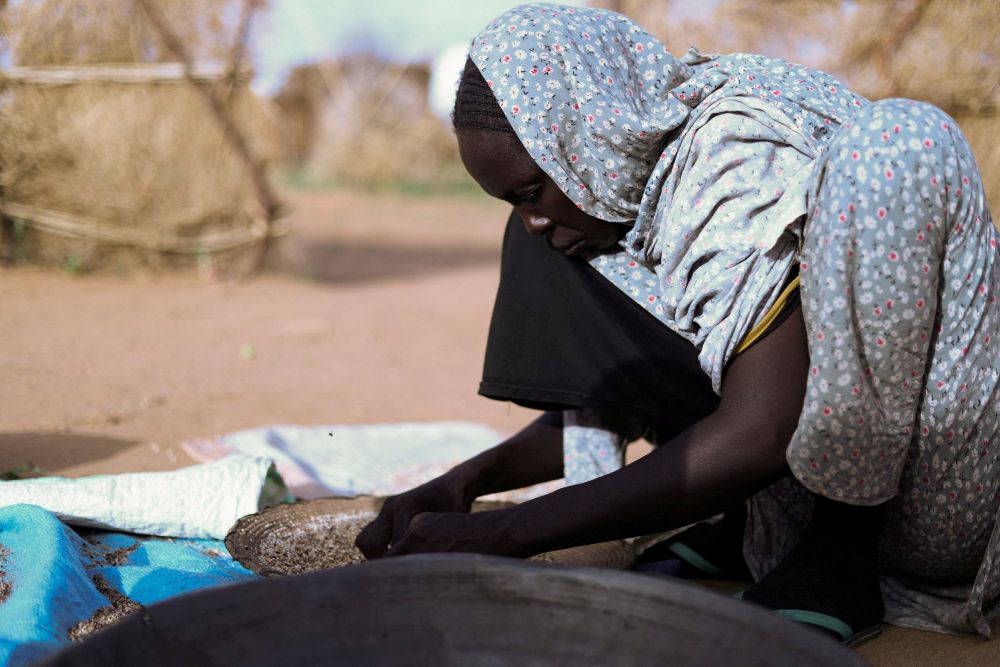
Hanan Adam Hassan, a displaced Sudanese mother of five, prepares food at a camp shelter amid the ongoing conflict between the paramilitary Rapid Support Forces and the Sudanese army, in Tawila, North Darfur, Sudan, July 30, 2025. (OSV News/Reuters/Mohamed Jamal)

by John Dear
Join the Conversation
Send your thoughts to Letters to the Editor. Learn more
On this week's episode of "The Nonviolent Jesus Podcast," I reflect with my friend John Ashworth on his lifelong work for peace in Sudan. We discuss his new book, Journeying Towards Nonviolence: My Life in Sudan.
Originally from England, John has worked since 1983 with the church in Sudan and South Sudan, teaching and doing humanitarian work. For the last 20 years, he has been working full time in advocacy for peace and reconciliation.
We first met in Rome at the 2016 Vatican conference on nonviolence. A former priest, John recently retired with his wife, Jane, to rural Kenya. His books include Faith on the Margins; Stop Fighting, Start Talking; and The Voice of the Voiceless: The Role of the Church in the Sudanese Civil War 1983-2005.
More than 2.5 million people have been killed or died from conflict-related starvation and disease in Sudan and South Sudan in recent decades.
In the podcast, John describes his years in the war zones of Sudan.
"We were living on the front lines for many years with regular shellings and raids. We were kidnapped, taken hostage, sentenced to death and faced a firing squad," he said. "If I had a firearm, I would be dead. They were ready to kill, and I wasn't. I survived because of dialogue; instead of challenging them I was compliant, calm, peaceful, friendly and built a relationship with them."
"What is going on in Sudan is connected with you whether you like it or not," John said. "Training in nonviolence is now happening everywhere in South Sudan. We now have the language and theology of nonviolence. If nonviolence can work in Sudan, it can work anywhere. Defending Jesus with violence from being arrested, tortured and murdered seems justified, but Jesus doesn't win by violence, only by nonviolence. We can live with nonviolence because the strength of the resurrection is greater than violence and death."
Advertisement